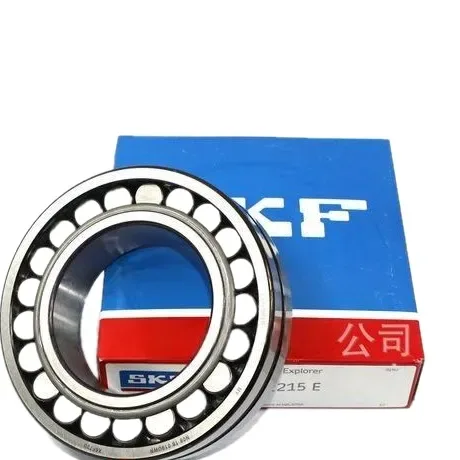
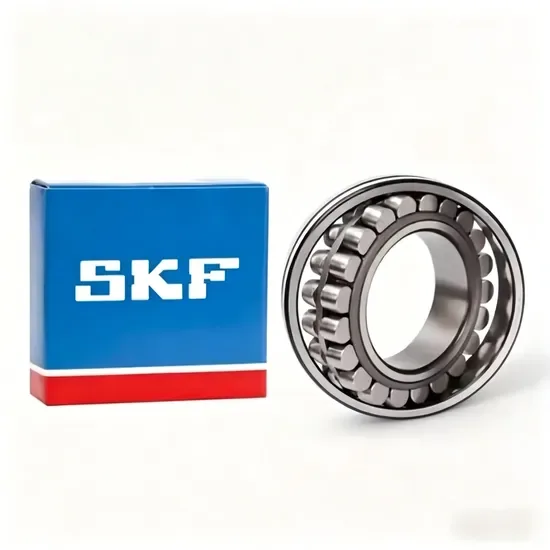
Description
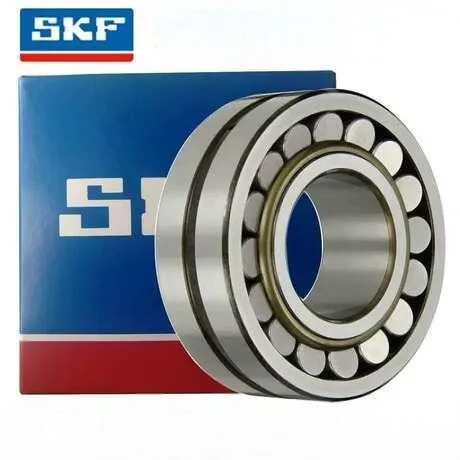
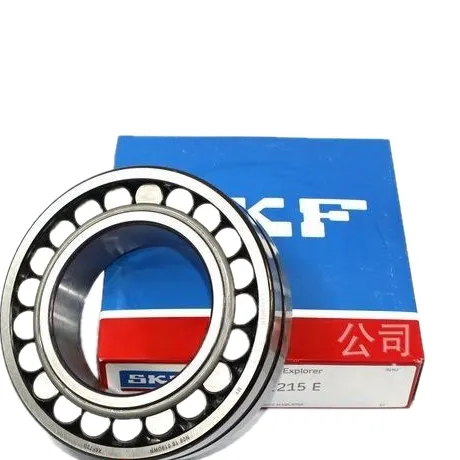
Traceable Channel Sourcing — Every 22320EK we dispatch ships with batch-level documentation linking it back through authorized distributor inventories.
Technical Specifications
| Parameter | Value |
|---|---|
| Designation | 22320EK Spherical Roller Bearing |
| Bearing Type | Spherical Roller Bearing |
| Bore Diameter (d) | 100 mm |
| Outside Diameter (D) | 215 mm |
| Width (B) | 73 mm |
| Bore Type | Tapered Bore (1:12) |
| Internal Design | Reinforced (E suffix) |
| Cage Material | To be confirmed per batch |
| Clearance Class | Standard unless specified |
| Precision Class | Standard |
| Seal or Shield Type | Open |
| Number of Rows | Two |
| Origin | To be confirmed per batch |
Cage material, clearance class, and country of origin are subject to the specific batch sourced; our team confirms these against the manufacturer catalog before quotation.
Application Suitability
| Industry | Typical Applications |
|---|---|
| Mining and Crushing | Crusher eccentric shaft / Vibrating screen exciter |
| Steel and Metallurgy | Continuous caster guide roller / Conveyor drive pulley |
| Industrial Machinery | Paper machine dryer roll / Kiln trunnion |
What a Tapered Bore Saves on a Crusher Eccentric Shaft
The K suffix on the 22320EK spherical roller bearing is not just a mounting preference — it determines whether the shaft survives the next shutdown.
I once stood next to a jaw crusher in a Jiangsu aggregate plant watching a maintenance crew pull a cylindrical bore spherical roller bearing off the eccentric shaft. The shaft journal was scored beyond salvage because the press-fit interference had to be extreme enough to prevent creep under shock loads. With a tapered bore mounted on an adapter sleeve, that same crew would have tightened the lock nut to a measured axial drive-up, dialed in residual clearance, and walked away in a fraction of the time. Instead, the plant absorbed an unplanned 36-hour outage and a shaft repair bill that dwarfed what a proper tapered bore 22320EK spherical roller bearing would have cost. Counterfeit spherical roller bearings with soft inner rings and cloned QR codes are now circulating through unverified middlemen, making this failure pattern worse [NEED_CITE: counterfeit bearing infiltration in heavy machinery supply chains]. A bearing that looks right on paper but has a soft inner ring will collapse under the first major shock load cycle in a vibrating screen or crusher.
Matching the 22320EK to Crushing and Screening Environments
Vibrating screens and jaw crushers generate combined radial and axial loads with severe shock components. The E suffix on this bearing signals a reinforced internal geometry — larger rollers, optimized roller count, and a window cage designed to handle those peaks. When the application involves sustained temperatures above 80°C, the correct clearance suffix becomes critical; a standard CN clearance will collapse as the inner ring thermally expands against the shaft, eliminating the operating clearance entirely. We cross-reference the exact suffix combination — bore type, internal design, clearance, and cage material — against the OEM equipment manual before sourcing, so the replacement performs identically to what the engineer originally specified.
Operating Conditions That Decide Whether This Bearing Survives
Shock loads from crusher jaw closures transmit through the eccentric shaft at irregular intervals, demanding a bearing that tolerates momentary overload without roller edge spalling. Operating temperatures in steel mill conveyor zones regularly exceed 100°C, which means the inner ring grows against the shaft fit and the operating clearance must accommodate that expansion without going negative. Lubrication choice matters enormously here: circulating oil systems in paper machine dryer sections provide both cooling and contamination flushing, while grease-lubricated vibrating screens need a grease with adequate mechanical stability to resist throw-out under high-frequency oscillation [NEED_CITE: lubricant selection for vibrating screen spherical roller bearings]. The open design of the 22320EK places responsibility for external sealing entirely on the housing — labyrinth seals with purgeable grease cavities are typical in mining installations to prevent silica dust ingress.
Decoding the Suffix Stack on This Bearing
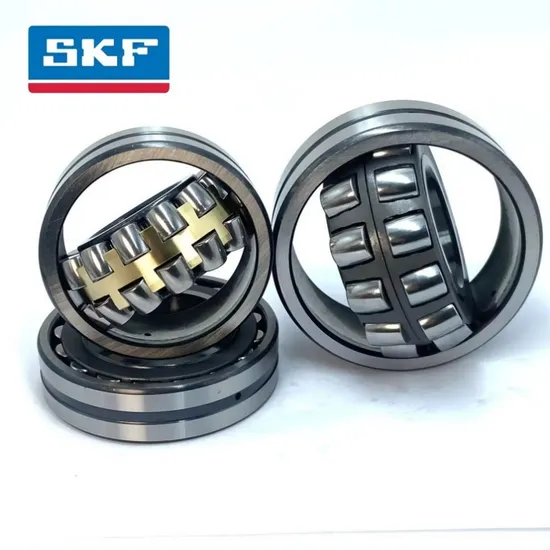
The K suffix specifies a 1:12 tapered bore, which means the bearing mounts on a matching adapter sleeve (such as an H-series sleeve) or a stepped shaft with a tapered seat. The axial drive-up distance during mounting directly controls residual internal clearance — too tight and the rollers bind under thermal expansion, too loose and the inner ring creeps on the sleeve. The E suffix indicates a reinforced internal design: more and larger rollers share the load, which raises the dynamic load rating and extends calculated L10 life under identical operating conditions. Together, E and K make this bearing well-suited for heavy radial loads with shock components, mounted on shafts where press-fit of a cylindrical bore would be impractical or where field replacement speed matters.
The Hidden Cost of Ignoring the Clearance Suffix
Specifying the 22320EK spherical roller bearing with the wrong clearance class in a high-temperature application is one of the most common selection errors in heavy industry procurement. The failure sequence is predictable: thermal expansion collapses the internal clearance, roller-raceway contact stress spikes, lubricant film breaks down, and the cage fractures — often within weeks of installation. ISO 15243 classifies this failure mode under thermal damage and smearing, and it is entirely preventable with correct clearance specification at the ordering stage [NEED_CITE: ISO 15243 bearing damage classification thermal effects]. Beyond the replacement bearing cost, the real expense is the unplanned line stoppage, the labor to break down the housing, and the shaft inspection that follows every seized bearing event.
Why Procurement Engineers Confirm the Suffix Stack With Us
We source the 22320EK through authorized distributor channels rather than unverified open-market stock, so the cage material and clearance class are confirmed against the manufacturer’s documentation before anything ships. Our cross-reference database aligns not just the base designation but every suffix — clearance, cage type, bore configuration — across SKF, NSK, FAG, TIMKEN, NTN, and KOYO equivalents, preventing the mismatches that cause field failures. Batch-level traceability accompanies each shipment, and we provide country-of-origin documentation for import clearance. When a procurement engineer sends us an OEM equipment number, we verify the exact suffix combination the original equipment builder specified, including details that generic catalog searches overlook. For buyers in regions where counterfeit exposure is a persistent concern, we guide authenticity verification through QR code pathways and official brand applications.
Documentation & Authenticity
- Supplier Certificate of Conformity referencing the specific 22320EK batch number and confirmed K tapered bore specification
- Third-party dimensional inspection report verifying bore taper ratio, outer diameter, and width against catalog tolerances before dispatch
- Material certificate confirming ring and roller steel grade and heat treatment condition for the shipped batch
- Country-of-origin documentation with HS code classification for import and customs clearance
- Batch and lot traceability records linking each bearing to its production source through authorized distributor channels
Storage, Handling & Mounting
- Retain the original sealed packaging until the 22320EK is ready for mounting; premature opening exposes the open-type raceways to moisture and particulate contamination
- For the tapered K bore, use a calibrated hydraulic nut or lock nut with measured axial drive-up to achieve the specified residual clearance — never rely on feel alone
- When mounting on an adapter sleeve, verify the sleeve seating surface is clean and free of burrs before driving the tapered bore bearing onto it, as debris creates localized stress points
- Large-format spherical roller bearings in this size range should be stored horizontally on flat supports to prevent cage distortion from prolonged static loading on one roller set
- After installation, confirm the correct lubricant type and fill quantity before energizing the equipment; the open bearing design requires the housing seals and lubrication system to function correctly from the first rotation
Request a Verified Quote for Your Application
Share your operating parameters — load spectrum, shaft speed, sustained temperature range, and mounting configuration — so we can confirm the correct clearance and cage specification for the 22320EK spherical roller bearing your equipment requires. If you have an OEM equipment number or an existing bearing part number from a previous replacement, send it along and we will run a full suffix-level cross-reference against the six major brands.
Frequently Asked Questions
Q: How do I verify the authenticity of a 22320EK spherical roller bearing before installation?
A: Authenticity verification starts with traceable sourcing documentation — a Certificate of Conformity linked to a verifiable batch number. Beyond paperwork, many major brands provide official mobile applications that scan QR codes on the bearing and packaging to confirm production origin. We source exclusively through authorized distributor channels and provide the verification pathway with each shipment so your maintenance team can confirm authenticity on the warehouse floor.
Q: What does the K suffix mean and how does it affect installation?
A: The K suffix on this bearing designates a tapered bore with a 1:12 taper ratio. This allows direct mounting on an adapter sleeve or a tapered shaft seat, and installation requires controlled axial drive-up to achieve the correct residual internal clearance. The lock nut must be tightened to a measured distance rather than an arbitrary torque value.
Q: How do I match cross-reference equivalents across different brands for the 22320EK?
A: A reliable cross-reference must align every suffix, not just the base number. Bore type (K tapered), internal design (E reinforced), clearance class, and cage material must all match between brands to ensure equivalent performance. We maintain a cross-reference database covering SKF, NSK, FAG, TIMKEN, NTN, and KOYO that checks each of these parameters so substitutions are safe.
Q: What installation precautions are specific to tapered bore spherical roller bearings?
A: The critical step is measuring axial drive-up distance during mounting to leave the correct residual clearance. Too much drive-up eliminates operating clearance and causes thermal binding; too little allows the inner ring to creep on the sleeve under load. Always clean the adapter sleeve surface before mounting and verify lock nut engagement after the first run-in period.
Source Your 22320EK With Full Documentation
Send your application parameters or OEM equipment number to our engineering team for suffix-verified sourcing, cross-reference matching, and shipment with complete traceability documentation.