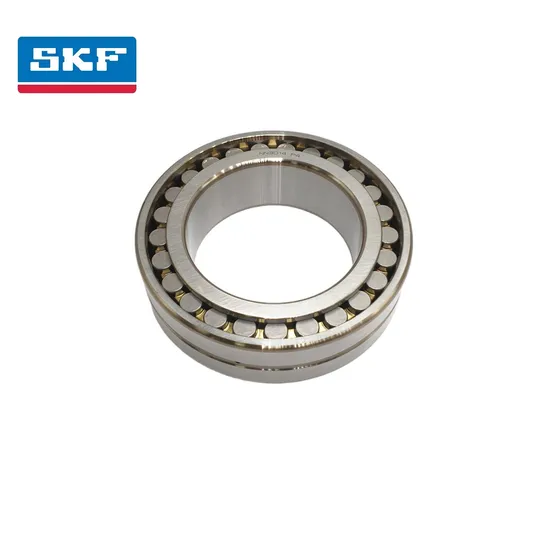


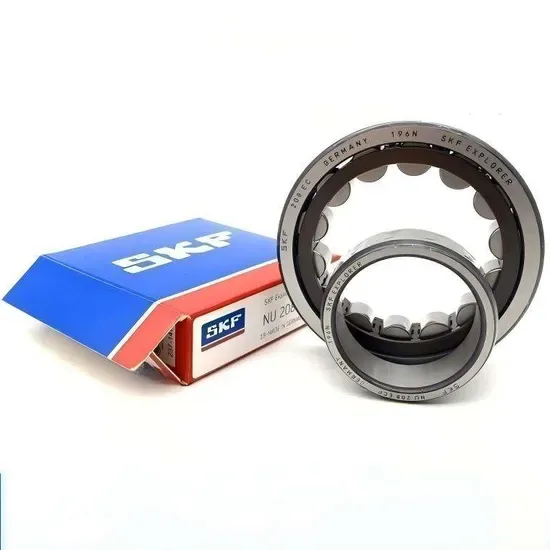


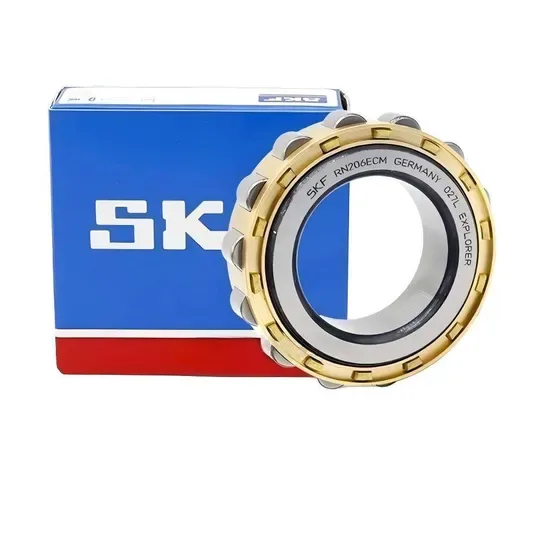
Description
Traceable Batch Sourcing — Every SKF N 1016 KPHA/VM1251 cylindrical roller bearing ships with Certificate of Conformity tied to its production lot for full supply chain transparency.
Technical Specifications
| Parameter | Value |
|---|---|
| Designation | SKF N 1016 KPHA/VM1251 |
| Bearing Type | Single Row Cylindrical Roller Bearing |
| Bore Diameter (d) | 80 mm |
| Outside Diameter (D) | 125 mm |
| Width (B) | 22 mm |
| Weight | 0.86 kg |
| Cage Material | Machined Brass (PHA) |
| Seal or Shield Type | Open |
| Clearance Class | Standard |
| Precision Class | SP / UP |
| Bore Type | Tapered (1:12) |
| Arrangement | Single Row |
| Number of Rows | 1 |
| Origin | China |
Note: PHA and /VM1251 suffixes indicate specialized cage and internal design variants; exact specifications should be cross-referenced with SKF technical documentation for application-critical installations.
Application Suitability
| Industry | Typical Applications |
|---|---|
| Machine Tool Manufacturing | High-speed spindle rear support, precision boring bar bearings |
| Heavy-Duty Gearbox Production | Input shaft positioning, planetary gear carrier support |
| Steel Rolling Mills | Work roll neck bearings, backup roll chock assemblies |
| Traction Motor Assembly | Rotor shaft support in AC/DC traction motors |
What Makes Tapered Bore Precision Critical on Spindle Applications
The K suffix isn’t optional when thermal expansion demands precise interference fit control.
I’ve seen maintenance crews in Riyadh swap a standard cylindrical bore bearing into a spindle housing designed for tapered seats, then wonder why runout climbs after three hours of cutting. The tapered bore with 1:12 taper ratio allows the inner ring to be driven axially onto the shaft journal, creating a controlled interference fit that eliminates micro-movement at the shaft-bearing interface. When you skip the tapered bore requirement or install a mismatched clearance class, you’re not just losing precision — you’re setting up for thermal binding once the spindle reaches operating temperature. [NEED_CITE: cylindrical roller bearing tapered bore installation principles per ISO 15]
Counterfeit cylindrical roller bearings with soft inner rings and cloned markings are now circulating through unverified middlemen in Middle Eastern and African markets. These pass casual visual inspection but fail catastrophically under sustained radial loads, leaving procurement engineers scrambling for root cause analysis after the damage is done.
How This Bearing Meets Precision Spindle Demands
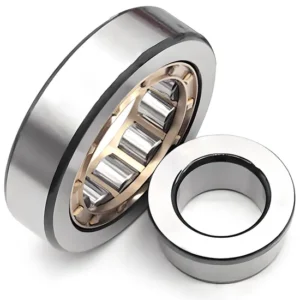
The SKF N 1016 KPHA/VM1251 cylindrical roller bearing targets applications where radial rigidity and axial displacement capability must coexist. The single-row cylindrical design handles heavy radial loads while the open configuration allows maintenance teams to select grease or oil lubrication based on actual speed-temperature profiles. The SP/UP precision class delivers the running accuracy that machine tool spindles demand, where even P5 grade would introduce unacceptable vibration signatures at sustained high speeds.
When I worked with a gearbox manufacturer near Doha, they needed bearings that could handle shock loads from gear mesh while maintaining shaft positioning accuracy. The machined brass cage in the PHA variant provides the fatigue resistance that pressed steel cages simply cannot match under those cyclic loading conditions.
Operating Environment Challenges and Performance Requirements
Radial loads dominate in cylindrical roller applications, but the real challenge comes from thermal gradients that shift clearance requirements mid-operation. A spindle running at sustained high RPMs generates heat at the inner ring faster than the outer ring dissipates it, which means standard CN clearance can close up and cause roller skidding. The tapered bore design allows precise preload adjustment during mounting, compensating for anticipated thermal expansion without requiring custom-matched clearance classes.
Temperature stability also affects lubrication selection. Open bearings in rolling mill environments face scale contamination that destroys grease lubrication within weeks, requiring oil-air systems with external sealing provisions. [NEED_CITE: bearing lubrication failure modes in contaminated environments per ISO 15243]
Installation method matters equally. Tapered bore bearings require controlled axial drive-up during mounting, with the interference fit measured by the reduction in internal clearance. Cold mounting with a hammer and drift — still shockingly common in workshops I’ve visited — introduces brinelling damage that shortens L10 life before the bearing even starts rotating.
Inside the Engineering: Cage, Precision, and Bore Geometry
The PHA suffix indicates a machined brass cage design, which provides superior guidance and fatigue resistance compared to pressed steel alternatives. In high-speed spindle applications, cage stability directly affects vibration signatures and ultimately the surface finish quality of machined parts. Brass cages maintain their geometry under thermal cycling better than polyamide variants, making them the default choice where operating temperatures exceed the thermal limits of polymer materials.
SP and UP precision classes represent the tightest running accuracy tiers for cylindrical roller bearings, with UP being even more stringent than SP. These grades control radial runout, bore diameter tolerance, and outer ring diameter variation to levels that standard P5 or P6 bearings simply cannot achieve. For machine tool spindles, this translates directly to workpiece surface finish and dimensional accuracy.
The 1:12 tapered bore geometry serves a specific mechanical function: it allows the inner ring to expand slightly when driven onto the tapered shaft seat, creating a uniform interference fit around the entire circumference. This eliminates the localized stress concentrations that occur with cylindrical bore press fits, while also allowing fine adjustment of residual internal clearance through controlled axial positioning.
The Real Cost of Precision Compromises
A procurement decision based on unit price alone ignores the downstream costs that accumulate when precision bearings fail prematurely. Unplanned spindle downtime in a machine shop costs far more in lost production than the price differential between a genuine SP-grade bearing and a questionable substitute. Catastrophic failures can damage shaft journals and housing bores, turning a bearing replacement into a complete spindle rebuild.
ISO 281 provides the framework for calculating L10 bearing life, but those calculations assume correct installation, proper lubrication, and genuine materials that meet specification. When any of those assumptions breaks down, the theoretical life calculation becomes meaningless. [NEED_CITE: bearing life calculation methodology per ISO 281]
Warranty claims also become problematic when failure analysis reveals counterfeit materials or incorrect precision grades. Manufacturers will void coverage when root cause investigation shows the installed bearing didn’t match the specified designation, leaving the end user absorbing the full replacement cost.
Why Procurement Engineers Choose Our Supply Chain
We source SKF N 1016 KPHA/VM1251 cylindrical roller bearings through authorized distributor channels with complete batch traceability, not through gray market brokers who cannot verify what they’re selling. Each shipment includes Certificate of Conformity documentation tied to the specific production lot, giving you the paper trail that your quality management system requires.
Our cross-reference database goes beyond basic designation matching. When you need to verify interchange compatibility, we check clearance class, cage material, and precision grade together — because a base number match with wrong suffixes will fail in the field just as surely as a completely wrong bearing.
For international shipments, we provide country-of-origin documentation and HS code support that smooths import clearance. We’ve dealt with enough customs holds to know what documentation prevents delays, and we include it proactively rather than scrambling after your shipment is detained.
QR code verification through SKF’s official apps is available for authenticity confirmation, giving you a direct verification path that doesn’t depend on trusting supplier claims. We also support third-party dimensional inspection for critical applications where independent verification is contractually required.
Documentation & Authenticity
- Certificate of Conformity with batch and lot traceability for every SKF N 1016 KPHA/VM1251 shipment
- Machined brass cage material certification confirming PHA variant specifications
- SP/UP precision class dimensional inspection reports documenting radial runout and bore tolerance
- QR code verification pathway through SKF official mobile applications
- Country-of-origin documentation with HS code classification for import compliance
Storage, Handling & Mounting
- Maintain original sealed packaging until installation; early exposure risks contamination of the open bearing configuration
- Store in climate-controlled environment with stable temperature to prevent condensation inside the tapered bore
- Use clean cotton gloves when handling; fingerprint acids can initiate corrosion on the precision-ground SP/UP surfaces
- Tapered bore mounting requires controlled axial drive-up with clearance measurement; never use impact force on the 80mm bore inner ring
- Verify shaft taper geometry matches 1:12 ratio before installation; mismatched tapers create point contact that destroys the interference fit
- Open bearing design requires external sealing responsibility from the equipment manufacturer; confirm housing seal integrity before commissioning
Ready to Verify Specifications?
Share your application parameters — load spectrum, operating speed, temperature range, and mounting envelope dimensions — so we can confirm the SKF N 1016 KPHA/VM1251 cylindrical roller bearing matches your requirements. If you’re cross-referencing from an OEM equipment number, provide that along with any existing bearing markings for interchange verification.
Request the complete documentation package including Certificate of Conformity, dimensional inspection reports, and country-of-origin papers before you commit. Confirm batch availability and typical lead times for your required quantity.
Frequently Asked Questions
Q: How do I verify the authenticity of an SKF bearing through official channels?
A: SKF provides QR code verification through their official mobile applications. Scan the QR code on the bearing packaging or the bearing itself, and the app will confirm whether the code matches SKF’s production database. Counterfeit bearings sometimes have cloned QR codes that lead to fake verification websites, so always ensure you’re using the official SKF app downloaded from verified app stores.
Q: What does the K suffix mean for installation on a cylindrical roller bearing?
A: The K suffix indicates a tapered bore with 1:12 taper ratio. This requires the bearing to be mounted on a matching tapered shaft seat or adapter sleeve. The axial drive-up during installation creates the interference fit and allows precise adjustment of residual internal clearance. Never attempt to press-fit a tapered bore bearing into a cylindrical housing — the geometry mismatch will damage both components.
Q: How do I cross-reference this bearing with other brands while maintaining precision requirements?
A: Cross-referencing must match three parameters simultaneously: base dimensions, clearance class, and precision grade. A bearing with the same 80×125×22 mm dimensions but standard precision instead of SP/UP will not perform equivalently in precision spindle applications. Cage material also matters — if your application requires the fatigue resistance of machined brass, substituting a pressed steel cage variant introduces failure risk even if the base designation cross-references correctly.
Q: What is the difference between SP and UP precision classes?
A: UP represents tighter running accuracy tolerances than SP class. Both are super-precision grades suitable for machine tool spindles and high-speed applications, but UP imposes stricter limits on radial runout, bore diameter variation, and outer ring diameter tolerance. The choice between them depends on your specific accuracy requirements and operating speed — applications running at sustained high RPMs often specify UP to minimize vibration signatures.
Q: Can I use this bearing in applications with significant axial loads?
A: Single-row cylindrical roller bearings like the N 1016 design primarily handle radial loads. They can accommodate limited axial displacement in both directions but are not designed for sustained axial loading. If your application has significant axial load components, you may need a different bearing type or a combined bearing arrangement. Share your complete load spectrum for proper selection guidance.
Confirm Your Application Fit
Send us your operating parameters and OEM equipment number for technical verification and interchange cross-reference. Contact our engineering team for the SKF N 1016 KPHA/VM1251 cylindrical roller bearing documentation package and current batch availability.