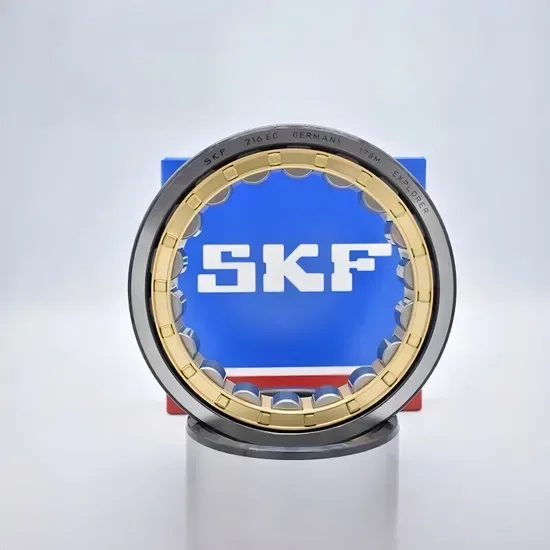
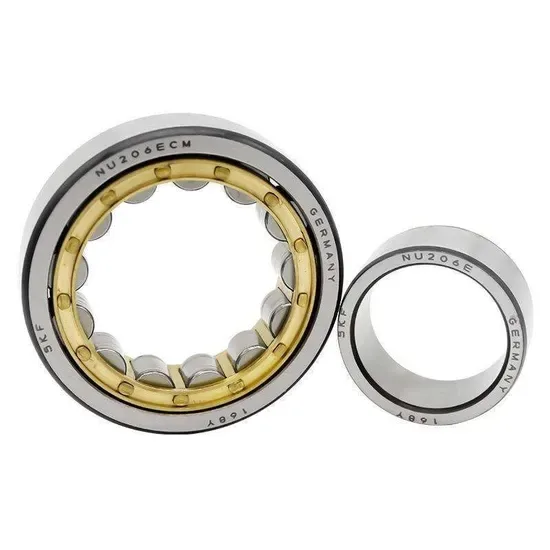



Description
Authorized Channel Procurement — Every NN3016 KTN/SPVR522 shipped carries full batch traceability documentation back to SKF authorized distributor inventory, verified before dispatch.
Technical Specifications
| Parameter | Value |
|---|---|
| Designation | SKF NN3016 KTN/SPVR522 |
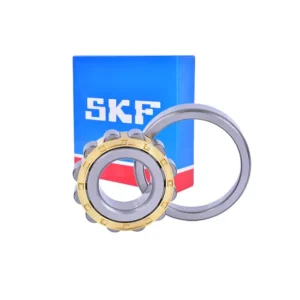
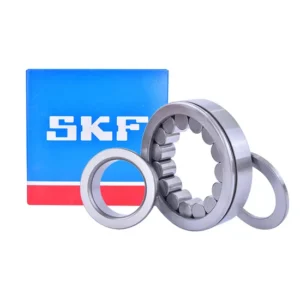
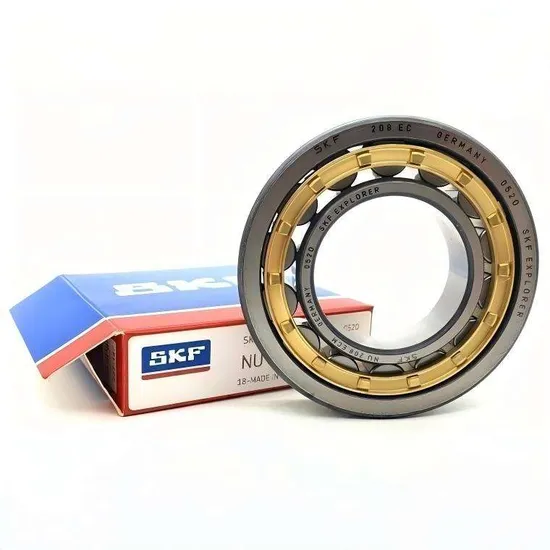
| Bearing Type | Double Row Cylindrical Roller Bearing |
| Bore Diameter (d) | 80 mm |
| Outside Diameter (D) | 125 mm |
| Number of Rows | Double Row |
| Seal or Shield Type | Open |
| Weight | 0.100 kg |
| Precision Class | SP, UP |
| Origin | China |
| Standards | ISO 15, ISO 492 |
Note: Suffixes KTN, SP, and VR522 require confirmation against the manufacturer catalog for complete decoding; SP precision class is verified per product documentation.
Application Suitability
| Industry | Typical Applications |
|---|---|
| Machine Tool Manufacturing | CNC lathe main spindle rear support, machining center spindle cartridge |
| Precision Industrial Equipment | High-speed grinding wheel head, precision boring bar support |
| Heavy Vehicle & Automotive Repair | Transmission test bench spindle, dynamometer rotor support |
What Happens When SP Precision Gets Swapped for Standard Grade on a Spindle
A standard P0 cylindrical roller bearing will physically fit where an SP or UP grade is required — until the spindle reaches operating temperature.
I watched a client’s CNC spindle destroy itself because someone matched the base number NN3016 but ignored the precision suffix entirely. The replacement bearing had correct bore and OD dimensions but standard running accuracy. Within weeks, vibration levels climbed past acceptable thresholds, surface finish on machined parts degraded, and the spindle cartridge required complete rebuild. The downtime cost dwarfed the price difference between precision grades many times over [NEED_CITE: spindle bearing precision requirements per ISO 492]. This failure pattern repeats across machine shops worldwide when procurement focuses on base designation while overlooking suffix accuracy.
Matching the NN3016 KTN/SPVR522 Double Row Cylindrical Roller Bearing to Spindle Duty Profiles
Precision spindle applications demand bearings that maintain geometric accuracy under combined radial loads and high rotational speeds. The NN3016 KTN/SPVR522 double row cylindrical roller bearing addresses this through enhanced radial rigidity that minimizes deflection during heavy cutting operations. When a European gear manufacturer needed to upgrade their hobbing machine spindle support, we cross-referenced their OEM specification against available precision grades, confirming the SP rating met their runout requirements while the open design allowed integration with their existing oil-mist lubrication system. This application-matching approach prevents the costly trial-and-error that plagues maintenance teams sourcing replacement spindle bearings.
Thermal Expansion and Radial Rigidity Under Continuous Cutting Loads
Spindle bearings face a punishing combination of radial cutting forces, high-speed rotation generating internal heat, and thermal growth that alters internal clearances. The double row configuration provides substantially higher radial stiffness than single row alternatives, critical when cutting forces push the spindle nose off-center [NEED_CITE: cylindrical roller bearing rigidity comparison]. Operating temperatures in high-speed spindles typically elevate the inner ring above outer ring temperature, reducing effective internal clearance — making precision class selection essential for maintaining preload stability. The open design permits oil-air or oil-mist lubrication delivery directly to the rolling elements, managing heat generation while avoiding the friction penalties of contact seals. Installation on tapered shaft sections requires controlled axial drive-up to achieve specified residual clearance, demanding experienced fitters familiar with precision spindle assembly procedures.
Decoding the SP and UP Precision Classes for Spindle Performance
Precision classes SP and UP represent SKF’s designation system for machine tool spindle bearings, sitting above standard P5 accuracy in both dimensional and running accuracy requirements. The SP grade provides tight control over bore diameter variation, outer ring roundness, and radial runout — essential for achieving the geometric accuracy that precision machining demands. UP grade tightens these tolerances further, targeting high-speed applications where even minor runout generates unacceptable vibration at elevated RPM. The double row cylindrical roller design inherently provides high radial load capacity through line contact between rollers and raceways, while the precision grinding of SP and UP classes ensures this capacity translates into stable, repeatable spindle positioning [NEED_CITE: SKF precision class dimensional tolerances]. For spindle designers, selecting between SP and UP hinges on maximum operating speed and the vibration sensitivity of the machining process — gear finishing operations typically demand UP, while rough turning may function adequately on SP.
The Expensive Consequences of Ignoring Suffix Details
Correct precision class selection backed by authentic documentation prevents the cascade of failures that follow incorrect spindle bearing installation. When maintenance teams install standard clearance bearings where C3 thermal clearance was specified, or fit P0 grade where SP precision was required, the bearing may rotate freely during hand-spin tests but fail catastrophically under operating conditions. Premature cage failure, thermal binding, and raceway spalling all trace back to these specification mismatches — failures classified systematically under ISO 15243 [NEED_CITE: rolling bearing failure mode classification per ISO 15243]. The warranty voidance that follows improper specification selection leaves equipment owners bearing full replacement costs for damaged spindle cartridges, often running into five-figure territory. Sourcing from verified authorized channels eliminates the counterfeit risk that introduces soft inner rings and cloned markings into the supply chain.
How We Support Spindle Bearing Procurement Beyond Simple Supply
Our authorization chain documentation provides complete traceability from SKF distributor stock to your receiving dock, with Certificate of Conformity accompanying every shipment. When cross-referencing competitor designs, we verify clearance class, cage material, and precision suffix alignment — not just base dimension matching — preventing the substitution errors that cause field failures. Our engineering team reviews application parameters including load spectrum, speed range, and operating temperature to confirm specification suitability before quotation. Country-of-origin documentation supports your import compliance requirements, while QR code verification pathways let your quality team authenticate products through brand official applications. For facilities managing multiple spindle types, we provide interchange charts that maintain precision grade equivalency across the six major brands we source, ensuring replacement bearings meet original equipment specifications regardless of manufacturer changes.
Documentation & Authenticity
- Certificate of Conformity with batch lot traceability linking to SKF authorized distributor records
- Third-party dimensional inspection reports confirming SP/UP running accuracy before dispatch
- QR code verification pathway through SKF official authentication applications
- Country-of-origin documentation supporting customs clearance and import compliance
- Material certificates documenting bearing steel specification and heat treatment compliance
Storage, Handling & Mounting
- Maintain original sealed packaging until installation to preserve factory-applied corrosion inhibitor on the open-type bearing surfaces
- Store in climate-controlled environment with stable temperature to prevent condensation on precision-ground SP/UP raceways
- Use lint-free gloves during handling to prevent fingerprint corrosion on the 80mm bore and 125mm OD surfaces
- For tapered shaft installations, follow SKF axial drive-up procedures to achieve specified residual internal clearance
- Implement oil-air or oil-mist lubrication immediately after mounting, as the open design provides no integral contamination protection
- Verify shaft and housing seating surfaces meet geometric tolerances required for SP precision class performance
Technical Inquiry and Specification Confirmation
Share your spindle operating parameters — maximum speed, typical radial loads, operating temperature range, and lubrication method — for application-specific suitability review of the NN3016 KTN/SPVR522 double row cylindrical roller bearing. Provide OEM equipment numbers or existing bearing designations for cross-reference verification against our interchange database, confirming precision class and clearance alignment. Request the complete documentation package including Certificate of Conformity and origin papers to support your import planning. Contact our technical team to confirm current batch availability and typical multi-week lead times for precision grade spindle bearings.
Frequently Asked Questions
Q: How do I determine whether my spindle application requires SP or UP precision grade?
A: SP grade suits most general machining spindle applications with moderate speed requirements, while UP grade targets high-speed operations demanding minimal vibration and tighter runout control. Review your spindle’s maximum operating speed and the surface finish requirements of your machining process — operations like gear finishing and precision grinding typically require UP class accuracy.
Q: What dimensional differences exist between SP and UP precision grades per ISO 492?
A: UP precision tightens both bore diameter tolerance and radial runout specifications compared to SP grade, though exact values depend on the bearing size range. For the NN3016 80mm bore size, UP class provides measurably tighter control over inner ring runout and bore diameter variation than SP class, directly impacting spindle vibration characteristics at high speeds.
Q: How should I select lubrication for this open-type high-speed spindle bearing?
A: Open bearings require external lubrication systems delivering controlled oil quantities directly to the rolling elements. Oil-air and oil-mist systems suit high-speed spindle applications, providing cooling while minimizing churning losses. Consult your spindle OEM specifications for recommended oil viscosity and delivery rates based on your operating speed range.
Q: What cross-reference considerations matter when substituting this bearing with another brand?
A: Match the precision class equivalent, internal clearance designation, and cage material — not just the base NN3016 designation. Different manufacturers use varying suffix systems for precision grades, and overlooking these details leads to installing standard tolerance bearings where spindle precision was required. Our cross-reference database verifies complete specification alignment across SKF, NSK, FAG, and other major brands.
Q: What installation practices ensure proper performance for double row cylindrical roller bearings in spindle applications?
A: Precision spindle installation demands controlled fitting procedures including verification of shaft and housing geometric tolerances, proper heating methods for interference fits, and controlled axial positioning for tapered bore variants. Clean assembly conditions and immediate lubrication system activation prevent early-life failures from contamination or dry startup conditions.
Request Technical Review for Your Spindle Application
Submit your operating parameters and OEM specifications for application-specific suitability analysis and complete documentation package.
Contact through authorized distributor channels for batch availability confirmation and origin documentation support.