
Description
Verified Distribution Sourcing — Every 21316EK unit ships with batch-level Certificate of Conformity and authorized channel traceability.
Technical Specifications
| Parameter | Value |
|---|---|
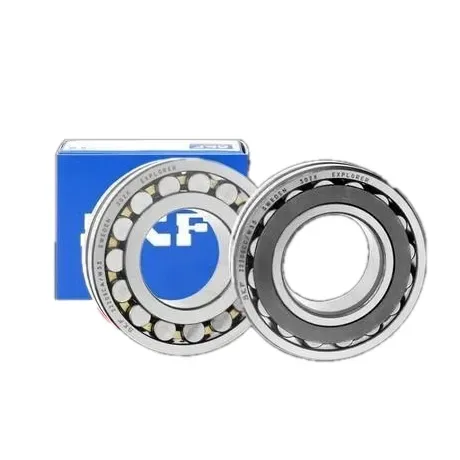
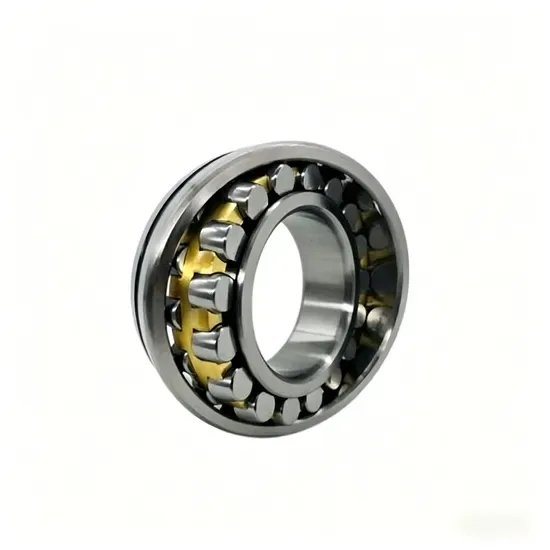
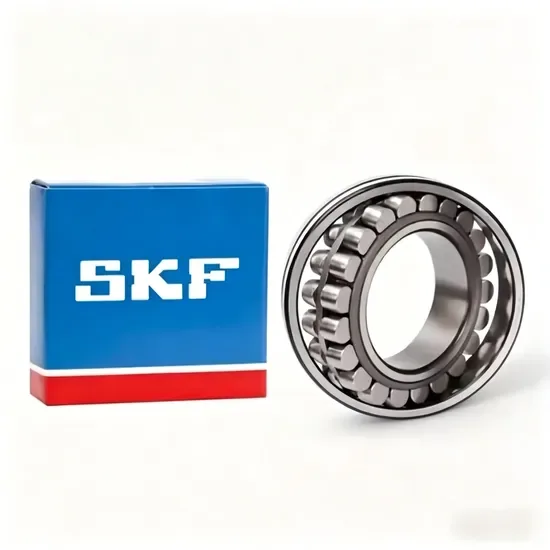
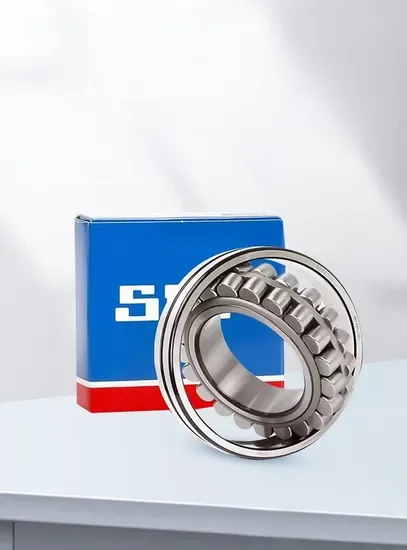
| Designation | 21316EK Spherical Roller Bearing |
| Bearing Type | Spherical Roller Bearing |
| Width (B) | 39mm |
| Bore Type | Tapered (1:12 taper) |
| Internal Design | Optimized geometry |
| Cage Material | Pressed steel cage (standard) |
| Seal or Shield Type | Open |
| Arrangement | Single row |
| Number of Rows | Two rows of rollers |
| Standards | ISO 15 / ISO 76 / ISO 281 |
| Origin | Authorized distributor channels |
Application Suitability
| Industry | Typical Applications |
|---|---|
| Mining & Crushing | Crusher eccentric shafts, jaw crusher pitman bearings |
| Heavy Machinery | Vibrating screen main shaft, dewatering screen exciters |
| Steel & Metallurgy | Rolling mill guide rollers, continuous caster segments |
| Paper Manufacturing | Paper machine dryer rolls, press section rollers |
The Tapered Bore Problem Nobody Checks Until the Shaft Slips
A K-bore without the correct adapter sleeve torque is functionally a loose fit waiting for catastrophic fretting.
I once reviewed a failure report from a South American copper mine where a spherical roller bearing on a vibrating screen lasted four months. The replacement matched the base designation perfectly, but the installation crew reused a worn adapter sleeve and skipped the hydraulic nut torque sequence. The inner ring crept on the shaft, generating enough heat to anneal the raceway. This is the kind of field failure that never shows up in a catalog cross-reference check — and it happens far more often than buyers expect when sourcing 21316EK spherical roller bearing replacements through unverified supply chains [NEED_CITE: bearing inner ring creep failure mechanisms per ISO 15243].
How the EK Suffix Matches High-Vibration Heavy Equipment
The tapered bore on this bearing is engineered for adapter sleeve mounting, which creates an interference fit without requiring tight machining tolerances on the shaft itself. In vibrating screen applications where shock loads repeatedly hammer the shaft interface, that controlled interference from proper sleeve draw-up prevents the micro-movement that destroys cylindrical bore fits over time. The optimized internal geometry distributes roller contact stress more evenly across the raceway, which matters when equipment runs at full amplitude six days a week. When we cross-reference an OEM equipment number against multiple brands, we verify that the bore taper, internal clearance reduction after mounting, and cage design all align with the application demands — not just the base number match.
Load Profiles and Thermal Drift in Crusher Environments
Crusher eccentric shafts impose combined radial and axial loading with severe shock components from rock fragmentation. The spherical roller design accommodates shaft deflection under these asymmetric loads without edge-loading the rollers. Temperature swings in outdoor mining installations cause shaft expansion that directly affects the residual internal clearance after the tapered bore is seated on the adapter sleeve. If the initial clearance specification doesn’t account for this thermal growth, the bearing runs preloaded — generating heat that degrades grease life and accelerates roller wear. Lubrication intervals in these environments must also account for contaminant ingress; open bearings rely entirely on the equipment’s external sealing system, which often degrades faster than the bearing itself [NEED_CITE: spherical roller bearing clearance reduction calculation for tapered bore mounting].
What the Tapered Bore and Internal Design Actually Control
The 1:12 taper ratio means that for every unit of axial displacement during installation, the inner ring expands radially by a precise fraction — this is the mechanism that sets the mounted clearance. Over-driving the adapter sleeve eliminates the operating clearance entirely; under-driving it leaves the fit loose enough for fretting corrosion. The optimized internal geometry referenced in the EK designation improves roller-to-raceway contact profiles, reducing stress concentrations at roller ends where edge loading typically initiates spalling. Width of 39mm places this bearing in a medium-series capacity range suitable for applications where envelope dimensions are constrained by existing housing designs. The two-row roller arrangement provides both high radial capacity and moderate axial load handling in either direction, which is critical when equipment generates bidirectional thrust during startup or direction reversal.
What Wrong Sourcing Decisions Actually Cost
The visible price difference between a genuine bearing and a counterfeit with a soft inner ring might be a few hundred dollars. The hidden cost arrives when that soft ring deforms under load, the rollers skew, and the cage fractures — taking down a vibrating screen that halts an entire crushing circuit. ISO 281 establishes the L10 rating life framework, but that calculation assumes correct material properties and geometry; a bearing with cloned markings but inferior steel never achieves its calculated life [NEED_CITE: counterfeit bearing detection methods in industrial supply chains]. Mismatched clearance classes compound the problem — a standard clearance bearing installed where C3 thermal expansion allowance was specified will run hot and fail prematurely, while the warranty claim gets denied because the failure analysis shows improper application selection.
Why Procurement Engineers Verify With Us
Every 21316EK spherical roller bearing we source moves through authorized distributor channels with complete batch traceability documentation. Our cross-reference database matches not just the base designation across SKF, NSK, FAG, TIMKEN, NTN, and KOYO — we verify clearance class, cage material, and precision suffix alignment before proposing any interchange. When import compliance requires country-of-origin documentation, we provide it with the shipment rather than scrambling after customs holds the container. For buyers who have been burned by soft inner rings and cloned QR codes, we walk through authenticity verification steps including official brand app validation pathways. Our technical team reviews application parameters — load, speed, temperature, mounting envelope — before confirming a selection, because catching a cage material mismatch before shipment costs nothing compared to catching it after a crusher goes down.
Documentation & Authenticity
- Supplier Certificate of Conformity with batch and lot traceability linking each 21316EK unit to its production run
- Third-party dimensional inspection confirming bore taper geometry and width tolerances before dispatch
- Country-of-origin documentation prepared for customs clearance in Middle East, African, and Latin American markets
- Official brand app QR verification pathway provided with shipment for anti-counterfeit confirmation
- Material certificate documentation available upon request for quality management system compliance
Storage, Handling & Mounting
- Keep the 21316EK in original sealed packaging until installation — the tapered bore surface must remain uncontaminated to achieve proper interference fit with the adapter sleeve
- Verify adapter sleeve condition before mounting; worn sleeve threads or damaged lock washers compromise the axial draw-up force needed to set correct residual clearance
- Use hydraulic nut or approved mechanical tightening sequence to achieve specified drive-up distance on the tapered bore, then measure residual clearance with feeler gauges through the roller set
- Store in temperature-stable environment to prevent condensation on the open bearing surfaces, which lack integral seals and are vulnerable to corrosion damage before installation
Request Technical Verification Before Ordering
Share your equipment OEM number or application parameters — load spectrum, operating speed, ambient temperature range, and existing housing dimensions — so we can confirm the 21316EK selection and cross-reference against alternative brands if lead time is a constraint. Request the documentation package preview including country-of-origin and batch traceability before committing to a bulk order.
Frequently Asked Questions
Q: What does the EK suffix indicate on this spherical roller bearing?
A: The E designation refers to an optimized internal design with improved roller and raceway geometry for enhanced load distribution. The K suffix indicates a tapered bore with 1:12 taper ratio, designed for mounting on adapter sleeves or tapered shaft seats rather than cylindrical shafts.
Q: How do you verify authenticity when counterfeits can clone QR codes?
A: We source exclusively through authorized distributor channels and provide the official brand app verification pathway specific to each manufacturer. Beyond QR scanning, we guide buyers through physical inspection checkpoints including marking quality, cage construction details, and surface finish characteristics that counterfeiters typically fail to replicate accurately.
Q: Can you cross-reference this bearing to equivalent models from other brands?
A: Yes, we match across SKF, NSK, FAG, TIMKEN, NTN, and KOYO — but we verify that clearance class, cage material, and internal design suffixes align with your application requirements before proposing any interchange, not just the base designation number.
Q: What adapter sleeve fits this tapered bore bearing?
A: The appropriate adapter sleeve designation depends on the shaft diameter in your specific installation. Share your shaft dimensions and we will confirm the correct sleeve, lock washer, and hydraulic nut combination for proper mounting torque and drive-up distance.
Q: What documentation ships with a bulk order for import compliance?
A: Each shipment includes Certificate of Conformity, batch traceability records, country-of-origin documentation, and HS code classification support. Material certificates and dimensional inspection reports are available upon request for your quality management records.
Request Technical Selection Review
Send your application parameters or OEM equipment number, and we will confirm the correct bearing selection with full cross-reference verification before quoting lead time and pricing.
[Contact our technical team to initiate the selection review process]