


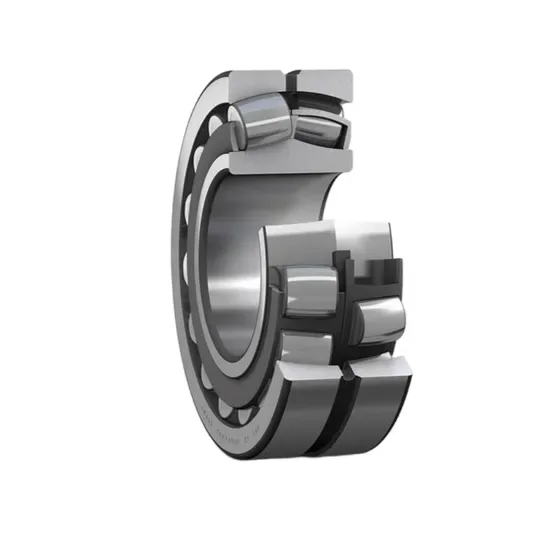
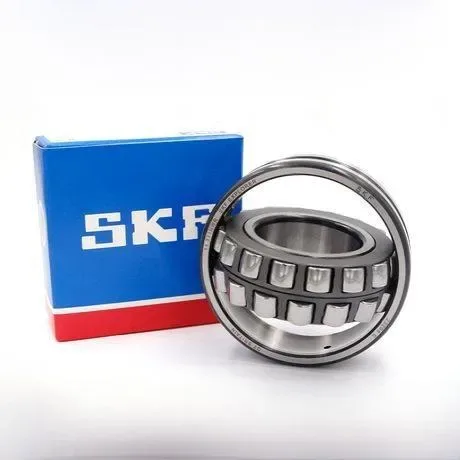
Description
Authorized Channel Sourcing — Every 22212EK shipment leaves with batch-matched certificate of conformity, traceable back through authorized distributor networks to the manufacturer’s production facilities.
Technical Specifications
| Parameter | Value |
|---|---|
| Designation | 22212EK |
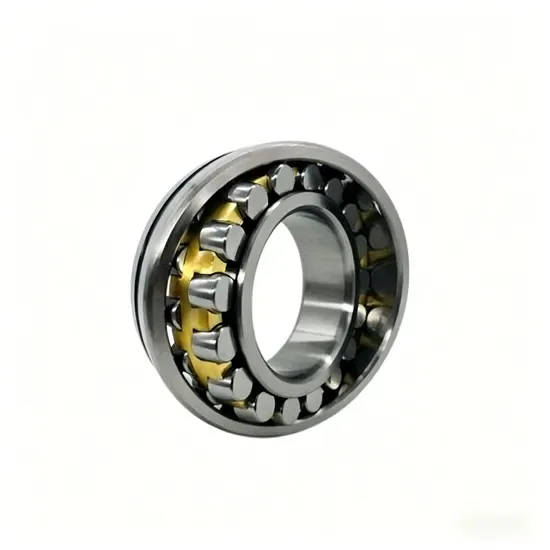
| Bearing Type | Spherical Roller Bearing |
| Bore Diameter (d) | 60 mm |
| Outside Diameter (D) | 110 mm |
| Width (B) | 28 mm |
| Bore Type | Tapered (1:12 taper, K suffix) |
| Internal Design | Reinforced (E suffix) |
| Number of Rows | Two |
| Cage Material | To be confirmed per brand variant* |
| Seal or Shield Type | Open |
| Clearance Class | Standard (verify C3 requirement for thermal expansion applications) |
| Precision Class | P0 (verify higher grade for precision spindle applications) |
| Origin | Available with country-of-origin documentation |
*Specific cage material designation (pressed steel, machined brass, or polyamide) varies by manufacturer and must be confirmed against the manufacturer catalog prior to ordering.
Application Suitability
| Industry | Typical Applications |
|---|---|
| Mining and Crushing | Crusher eccentric shaft, jaw crusher toggle seat |
| Steel and Metallurgy | Continuous caster guide roller, ladle turret pivot |
| Industrial Machinery | Vibrating screen exciter, paper machine felt roll |
What a Tapered Bore Gets Wrong on Crusher Shafts
The K suffix demands correct axial drive-up distance — ignore it and you mount a bearing that fails before the first maintenance window.
On vibrating screens and crusher eccentric shafts, the 22212EK spherical roller bearing is specified for its tapered bore because adapter sleeve mounting allows field-adjustable clearance. Yet procurement teams routinely match only the base designation 22212, overlook the K taper, and receive straight-bore replacements that cannot seat on the sleeve. I have seen replacement orders arrive on-site with cylindrical bores while the shaft was machined for adapter sleeves — the entire strand went down until the correct taper units were flown in. Cross-reference errors like this account for a significant share of premature field failures in heavy machinery, and they happen because the suffix gets treated as optional rather than load-bearing. [NEED_CITE: rolling bearing failure mode classification per ISO 15243]
How the 22212EK Handles Misalignment Under Impact Loads
The 22212EK spherical roller bearing accommodates shaft deflection and housing misalignment through its sphered outer ring raceway — critical when crusher frames flex under repeated impact. On vibrating screens running at sustained oscillation, the reinforced internal design (E suffix) spreads roller load across a larger contact area, reducing edge stress on the inner ring ribs. When we cross-reference this designation for steel mill continuous caster guide rolls, we verify that the replacement matches not just bore and OD but also the E-type roller complement, because substituting a non-reinforced variant cuts load capacity where the caster roll sees combined radial and axial thrust.
Operating Conditions That Decide Cage and Clearance Selection
Vibrating screen exciters subject bearings to high-frequency cyclic loading with moderate speeds, making cage fatigue a governing failure mode. Machined brass cages withstand sustained vibration better than pressed steel alternatives, particularly when grease lubrication intervals stretch under contaminated conditions. Temperature swings on crusher frames — ambient morning starts to friction-heated afternoon runs — mean thermal expansion can close internal clearance; specifying C3 instead of standard CN preserves operational clearance through the full thermal cycle. Tapered bore mounting on adapter sleeves also introduces a drive-up variable: each increment of axial displacement reduces residual clearance, so installation torque directly governs whether the 22212EK runs with adequate internal gap or binds under load. [NEED_CITE: adapter sleeve mounting drive-up and residual clearance relationship]
Reading Between the Suffixes: E, K, and What They Mean in Service
The E suffix denotes a reinforced internal design with an optimized roller set that increases load-carrying capacity compared to earlier non-E configurations. In practice, this means more rollers sharing the radial load, which matters most on vibrating screens where every roller carries peak cyclic stress twice per revolution. The K suffix specifies a 1:12 tapered bore, engineered for adapter sleeve or withdrawal sleeve mounting on cylindrical shafts rather than direct press-fit onto a tapered journal. This two-piece mounting approach lets maintenance crews adjust seating position and residual clearance during installation — an advantage over straight-bore bearings that lock in clearance once pressed. Together, E and K make the 22212EK a field-serviceable, high-capacity unit suited to applications where downtime windows are short and replacement shafts are not on the shelf.
The Hidden Cost When Cross-References Miss the Suffix
A base-number-only cross-reference might land you a 22212 with straight bore, standard internal geometry, and CN clearance — technically the same family, functionally a different bearing. Wrong bore type means the adapter sleeve will not seat. Missing the E reinforcement means lower dynamic capacity under the exact load profile the application demands. Standard CN clearance in a thermally cycling crusher frame closes to zero, causing roller skidding and cage failure within weeks. Per ISO 281 life calculation frameworks, these deviations compound: reduced load capacity and inadequate clearance multiply to noticeably shorten L10 life, often manifesting as unplanned downtime well before the next scheduled overhaul. [NEED_CITE: ISO 281 bearing life calculation under clearance and load variation]
How We Source 22212EK Bearings Differently
We procure through authorized distributor channels with full batch traceability, so the 22212EK units you receive carry documentation linking back to the manufacturer’s production lot. Our cross-reference database matches not just the base number but every active suffix — bore type, internal design, cage material, and clearance class — so a substitution from SKF to FAG or NSK arrives with verified interchange equivalence. For import buyers, we provide country-of-origin documentation and HS code support that clears customs without delay. Every shipment includes a Certificate of Conformity and dimensional inspection report, and authenticity verification is available through official brand QR code systems. When application conditions deviate from catalog norms — unusual thermal cycling, sustained vibration above typical thresholds — we provide engineering selection guidance rather than just shipping a catalog number.
Documentation & Authenticity
- Supplier Certificate of Conformity issued per batch, listing manufacturer lot numbers for the 22212EK units in your shipment
- Material certificate confirming GCr15 or 100Cr6 bearing steel composition for inner and outer rings
- Third-party dimensional inspection verifying bore taper geometry (1:12) and outside diameter tolerance before dispatch
- Country-of-origin documentation and HS code classification prepared for import customs clearance
- QR code verification pathway through official brand applications to confirm authenticity on receipt
Storage, Handling & Mounting
- Retain factory sealed packaging until the mounting shift begins; early exposure to humid workshop air promotes surface corrosion on the open-type 22212EK raceways
- Store adapter sleeves and lock nuts alongside the bearing in the same controlled environment so thermal equilibrium is matched before assembly
- Use clean lint-free gloves when handling the tapered bore — fingerprint residue on the 1:12 taper surface interferes with sleeve seating and can cause uneven drive-up
- Apply induction heating for inner ring expansion only when specified; the K taper design relies on controlled axial drive-up against the adapter sleeve to achieve target residual clearance
- Confirm residual clearance with feeler gauge after final lock nut torque, because each millimeter of additional axial displacement measurably reduces the internal gap in this reinforced roller set
Start Your 22212EK Technical Review
Share your operating parameters — shaft speed, radial and axial load magnitude, ambient and operating temperature range — so we can confirm clearance class, cage material, and whether the E-suffix reinforced design meets your L10 life target. If you are replacing an existing bearing, provide the OEM equipment number or the full designation from the nameplate and we will run a complete cross-reference check across all six supported brands. Request the documentation package and country-of-origin confirmation upfront so your procurement and compliance teams can review before the order is placed.
Frequently Asked Questions
Q: How do I verify that a 22212EK spherical roller bearing is genuine using official QR systems?
A: Each supported brand operates a verification app that reads the QR code on the bearing label or packaging. Scan the code on receipt and cross-check the batch number, designation, and production facility against the app’s database. Counterfeit units often carry cloned QR codes that resolve to generic pages rather than a specific production lot — if the scan does not return traceable batch data tied to your bearing’s serial sequence, flag the unit for further inspection before mounting.
Q: When cross-referencing 22212EK across SKF, FAG, and NSK, what must match beyond the base number?
A: A reliable interchange requires alignment on four points: bore type (K tapered, 1:12), internal design (E reinforced), clearance class, and cage material. Mismatches in any of these suffixes can lead to thermal binding, reduced load capacity, or cage fatigue under vibration. Our cross-reference database checks all active suffixes simultaneously rather than substituting on base designation alone.
Q: Should I specify a K tapered bore or a straight bore for my application?
A: The K suffix is correct when your shaft uses an adapter sleeve or withdrawal sleeve for mounting, which is standard on vibrating screens, crushers, and many conveyor drive shafts. Tapered bore mounting allows axial adjustment during installation to set residual clearance. If your shaft is machined with a direct cylindrical seat and press-fit housing, a straight-bore variant is the appropriate choice.
Q: What material certificate should I request to verify the bearing steel grade?
A: Request a material certificate specifying GCr15 (GB/T standard) or 100Cr6 (ISO/DIN equivalent) for the inner and outer rings. The certificate should reference the production heat number traceable to the bearing batch. This documentation confirms the through-hardening steel composition required for the contact fatigue resistance that spherical roller bearings depend on under heavy radial loads.
Q: What lead time should I expect for the 22212EK, especially with less common suffix combinations?
A: Availability depends on current stock levels across authorized distributor channels. Standard configurations typically ship faster, while specific cage material or clearance class variants may require sourcing from regional warehouses. Submit your full suffix requirements early so we can confirm batch availability and provide a realistic delivery window before your maintenance shutdown date.
Source Genuine 22212EK Spherical Roller Bearings with Verified Documentation
Send us your application parameters or OEM equipment number, and receive a matched quotation with full interchange documentation and origin certification within one business cycle.