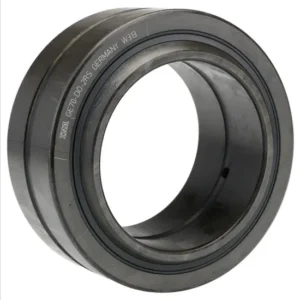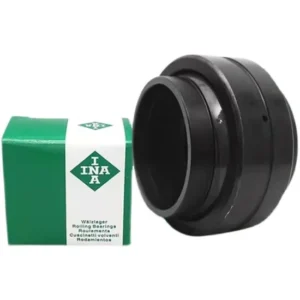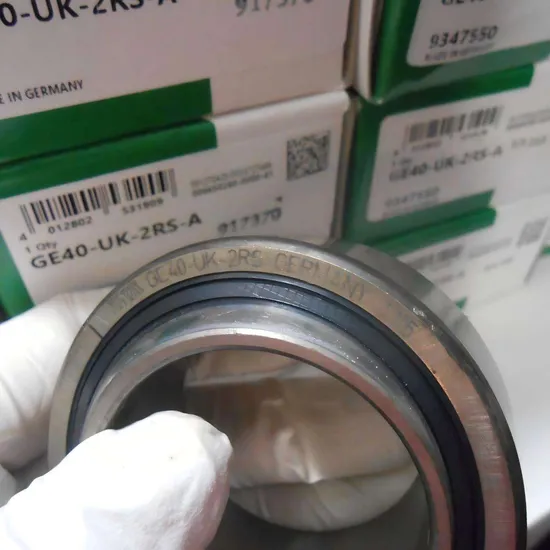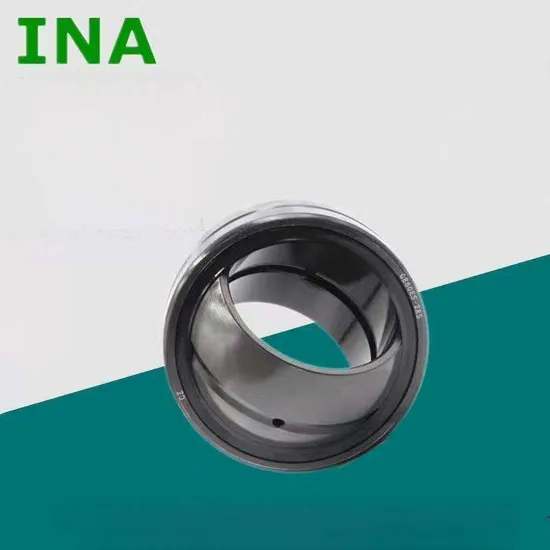
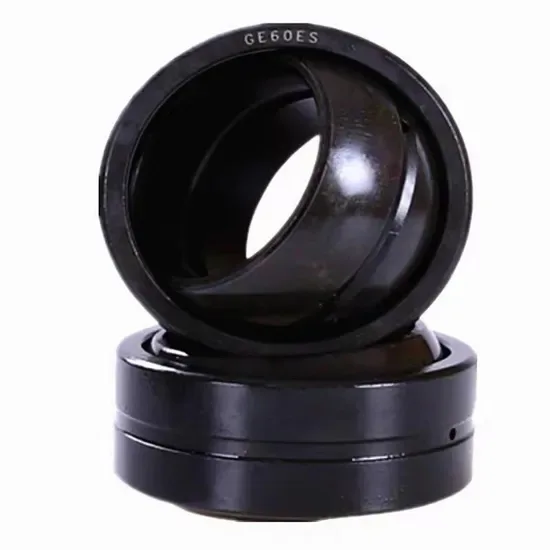
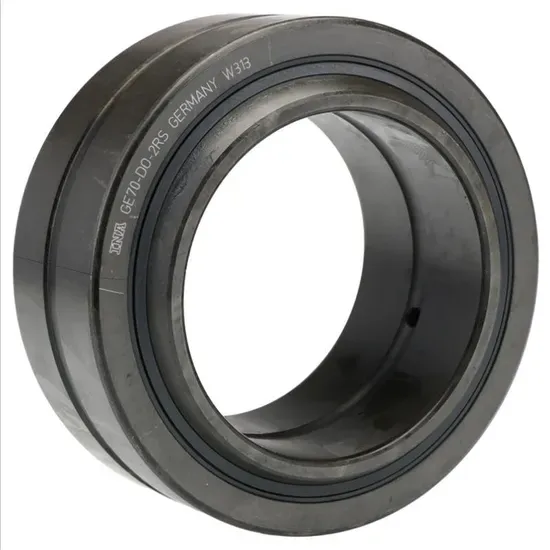
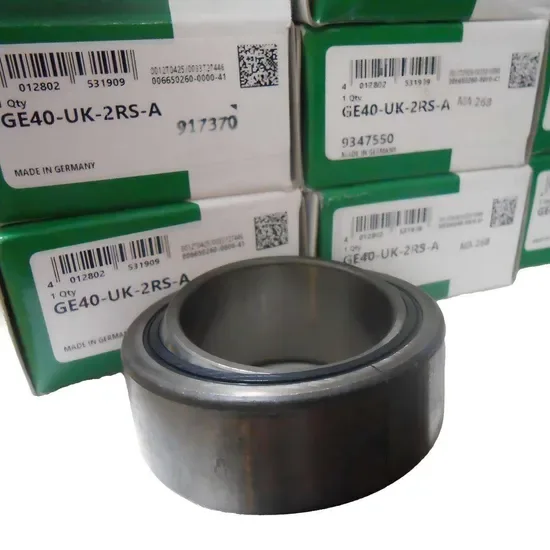
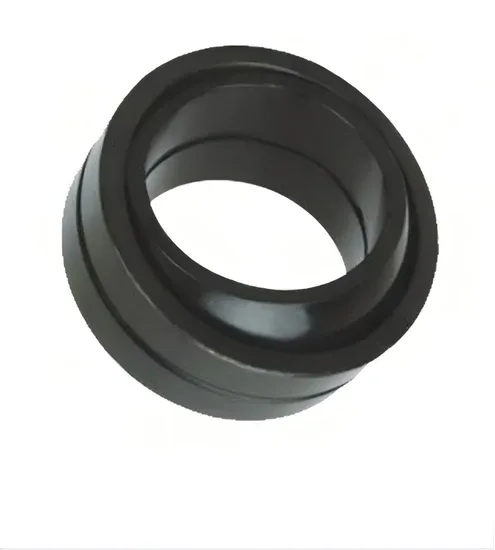
Description
Traceable Channel Sourcing — Every FAG GE400-DO we ship carries batch-linked documentation from authorized distributor stock, ensuring origin transparency before it reaches your hydraulic cylinder assembly line.
Technical Specifications
| Parameter | Value |
|---|---|
| Designation | FAG GE400-DO |
| Bearing Type | Radial Spherical Plain Bearing |
| Bore Diameter (d) | 400 mm |
| Outside Diameter (D) | 540 mm |
| Width (B) | 218 mm |
| Inner Ring Width (C) | 160 mm |
| Sliding Surface | Steel-on-Steel, Phosphated |
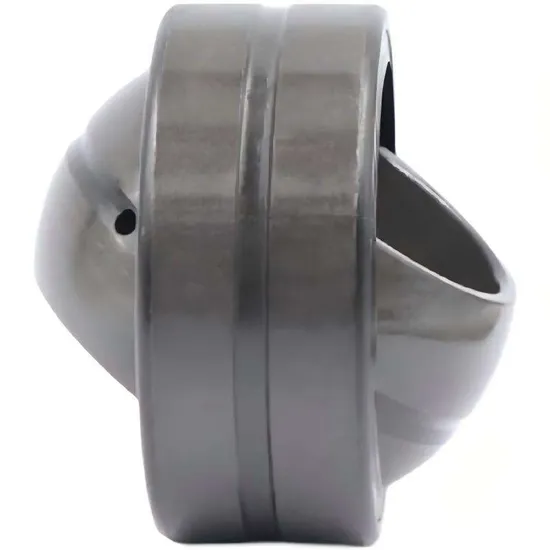
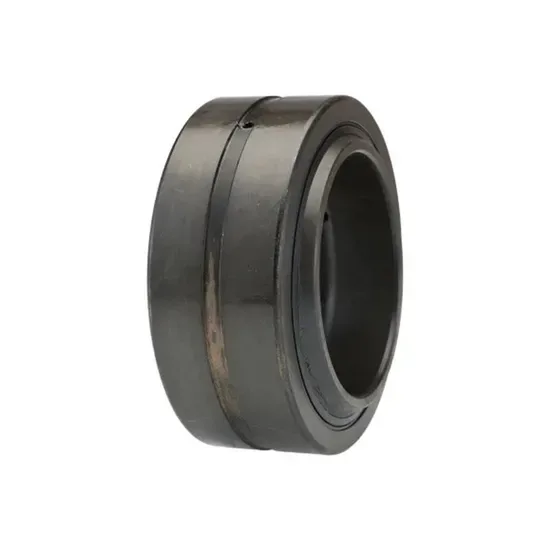
| Lubrication Features | Lubrication Groove and Holes in Outer Ring |
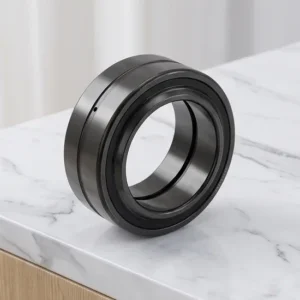
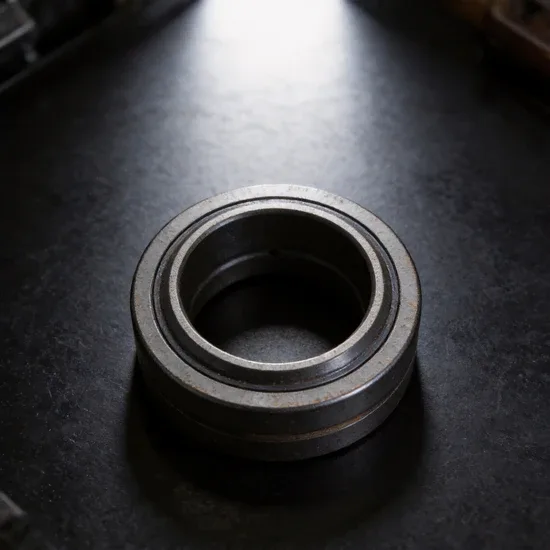
| Outer Ring Design | Double Outer Ring with Spherical Sliding Surface (DO) |
| Origin | China |
Application Suitability
| Industry | Typical Applications |
|---|---|
| Heavy Duty Mining | Excavator boom pivot joints, hydraulic roof support cylinders |
| Industrial Machinery | Forging press tilting saddles, heavy shear blade pivots |
| Construction Equipment | Articulated hauler steering knuckles, crane pedestal bearings |
| Material Handling | Shiploader luffing cylinder eyes, stacker-reclaimer slew pivots |
Why the DO Suffix is the Difference Between Service Life and Cylinder Blowout
Missing the lubrication groove designation on a 400 mm spherical plain bearing isn’t a paperwork error — it is a field catastrophe waiting to happen.
Early in my time handling shipping documents for bearing exports, I saw what happens when cross-reference matching stops at the base number. A West African mining operation ordered spherical plain bearings for hydraulic cylinders on their excavators. The bore, OD, and width matched perfectly on paper. What wasn’t verified was the lubrication groove suffix. The bearings ran dry within weeks under continuous oscillating load, scored the rod ends, and ultimately the cylinder failed on site [NEED_CITE: spherical plain bearing failure modes under inadequate lubrication per ISO 15243]. The downtime cost far exceeded the bearing price. When you are sourcing a FAG GE400-DO spherical plain bearing, the DO is not optional decoration. It tells you the outer ring has lubrication holes and a groove — the only path for grease to reach the sliding contact zone under heavy radial and axial loads.
Matching the GE400-DO to High-Load Oscillating Pivot Points
This bearing’s geometry — a 400 mm bore riding inside a 540 mm outer ring with 218 mm width — suits pivot joints where slow oscillation meets extreme load. In hydraulic cylinder eyes and forging press saddles, the motion profile rarely reaches continuous rotation speeds. Instead, the sliding contact surface endures repeated directional reversal under loads that would crush standard rolling element bearings. The phosphated steel-on-steel interface on the FAG GE400-DO spherical plain bearing provides a run-in surface that reduces friction during initial operation while supporting the high static loads typical of mining and construction equipment. When we quote this size class, we cross-check the application’s oscillation angle and relubrication access against the DO suffix features to confirm grease can actually reach the loaded zone.
Load Spectra, Contamination, and Relubrication Demands in the Field
The operating environment for a 400 mm spherical plain bearing is rarely clean. Mining pit hydraulics face silica dust ingress, water spray from dust suppression, and shock loads when bucket teeth hit unblasted rock. The load profile combines steady radial force from cylinder pressure with axial components from misalignment. Temperature swings between night shifts and midday operation affect grease viscosity and the phosphated surface’s boundary lubrication effectiveness [NEED_CITE: effect of contamination on spherical plain bearing service life]. The DO design addresses this directly: lubrication holes in the outer ring allow maintenance crews to purge contaminated grease and replenish without disassembly. For hydraulic cylinder applications, the relubrication interval depends on oscillation frequency, load magnitude, and contamination severity — factors we review when confirming the FAG GE400-DO spherical plain bearing suits your specific duty cycle.
Reading the Core Specifications Beyond the Bore Number
The phosphated steel-on-steel sliding surface is the load-carrying interface. Phosphating creates a micro-porous manganese or zinc phosphate layer that retains lubricant film during boundary conditions — the moments when hydrodynamic film breaks down at reversal points. Without this treatment, bare steel-on-steel would gall under the contact pressures found in 400 mm bore heavy machinery pivots. The double outer ring with spherical sliding surface allows angular misalignment between the rod eye and cylinder housing, absorbing assembly tolerances and structural deflection under load. The lubrication groove machined into the outer ring bore distributes grease circumferentially, ensuring the loaded zone receives fresh lubricant even when the bearing operates at small oscillation angles. The 160 mm inner ring width versus the 218 mm outer ring width reflects the asymmetric loading common in cylinder applications where the inner ring is clamped on the pin and the outer ring is pressed into the housing eye.
The Hidden Cost of Substituting Without Verifying the Suffix
Correct specification plus traceable sourcing prevents a cascade of failures that begins with surface scoring and ends with structural damage. A spherical plain bearing without the DO lubrication features in a heavy mining cylinder forces maintenance teams into reactive replacement cycles, each involving crane time, hydraulic fluid disposal, and machine idle hours [NEED_CITE: unplanned downtime cost multipliers in heavy mining equipment maintenance]. Counterfeit or relabeled bearings may show correct external dimensions but lack proper phosphating depth, leading to accelerated wear that mimics lubrication failure. ISO 15243 classifies these progressive damage patterns — from adhesive wear to surface fatigue — and each points back to either specification mismatch or material non-conformance. The FAG GE400-DO spherical plain bearing must arrive with the groove and holes physically present, not just listed on the purchase order.
How Our Sourcing Process Protects Your Procurement Chain
We source through authorized distributor channels, meaning every FAG GE400-DO spherical plain bearing we quote traces back to documented inventory with batch numbers. Cross-reference work goes beyond matching bore and OD: we verify the DO suffix against your application’s relubrication access, confirm the phosphated surface treatment matches the load spectrum, and flag any clearance or tolerance deviations before the order is placed. For import buyers, we prepare origin documentation and HS code details to clear customs without delay. Material certificates and dimensional inspection reports ship with the product, not weeks after delivery. Our team reviews application parameters — load, oscillation angle, temperature, contamination level — before confirming suitability, because a 400 mm bearing failure in a hydraulic cylinder is never just a bearing failure.
Documentation & Authenticity
- Supplier Certificate of Conformity (COC) linking the GE400-DO batch number to the production lot for full traceability through authorized channels
- Material certificate confirming the steel grade and phosphated sliding surface treatment specification for the inner and outer rings
- Dimensional inspection report verifying bore diameter, OD, width, and outer ring groove geometry against the manufacturer’s published tolerances
- Country-of-origin documentation and HS code classification prepared for import customs clearance in destination markets
- QR code or batch verification pathway guidance using the brand’s official verification tools where applicable
Storage, Handling & Mounting
- Keep the GE400-DO in original wrapping until installation; the phosphated surface can corrode if exposed to humid workshop air for extended periods before mounting
- Handle with clean gloves and support the 400 mm inner ring evenly during lifting — point loads on the outer ring can chip the phosphated sliding surface at the groove edges
- Verify the outer ring lubrication holes are clear of protective wax or transport coating before connecting grease lines during cylinder assembly
- Press-fit the outer ring into the housing eye using controlled force on the outer ring face only; driving through the inner ring transfers load across the sliding surface and damages the phosphate layer
- After mounting, purge grease* appears at the seal gap, confirming the groove is fully charged before first operation
Request a Quotation with Full Technical Verification
Share your hydraulic cylinder drawing or OEM equipment number so we can confirm the FAG GE400-DO spherical plain bearing matches your pivot geometry, relubrication routing, and load spectrum. We will return a quotation with confirmed lead time, batch availability, and the complete documentation package for your import and inspection requirements.
Frequently Asked Questions
Q: What does the DO suffix mean on GE-type spherical plain bearings?
A: The DO suffix indicates a double outer ring with a spherical sliding surface that includes lubrication holes and a lubrication groove machined into the outer ring bore. This design allows relubrication of the sliding contact zone without disassembling the bearing from the housing, which is essential for heavy-duty applications where contamination purging and grease replenishment extend service life.
Q: How do I verify the authenticity of a branded spherical plain bearing?
A: Authenticity verification involves checking batch traceability through the manufacturer’s official channels, inspecting the physical presence of specified features such as the lubrication groove on DO variants, and confirming the phosphated surface treatment quality on the sliding contact faces. We provide documentation packages that support these checks, including COC, material certificates, and guidance on using official brand verification tools.
Q: Steel-on-steel versus PTFE-lined sliding surfaces — when is phosphated steel the right choice?
A: Phosphated steel-on-steel sliding surfaces suit applications with high static and dynamic loads where relubrication is possible and expected as part of maintenance routines. PTFE-lined bearings serve maintenance-free applications with lower loads or where relubrication access is impossible. For mining hydraulic cylinders and forging equipment pivots, the load magnitude and the need to purge contamination favor the steel-on-steel design with regular relubrication.
Q: What relubrication intervals apply to spherical plain bearings in mining service?
A: Relubrication intervals depend on oscillation frequency, load magnitude, contamination level, and grease type. There is no universal schedule — each application requires assessment of these factors. The DO suffix ensures the lubrication path exists; the interval is determined by field conditions and maintenance monitoring.
Q: Can I cross-reference the GE400-DO to other brands, and what must I verify?
A: Cross-referencing requires matching not only bore, OD, and width but also the sliding surface type, lubrication features, and outer ring design. A base number match without confirming the DO suffix equivalent means you may receive a bearing without lubrication grooves. We perform this multi-parameter comparison across SKF, NSK, FAG, TIMKEN, NTN, and KOYO product lines to ensure full interchangeability.
Confirm Your GE400-DO Sourcing with Full Documentation
Send us your application parameters or OEM part number to receive a verified quotation with batch traceability and import documentation. Contact our engineering team through your established sales channel to begin the technical review.