
Description
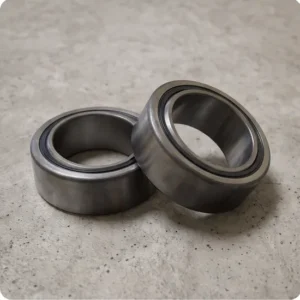
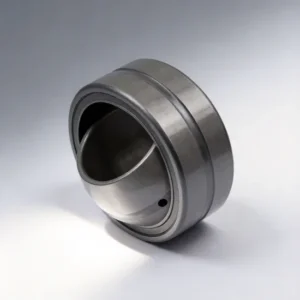
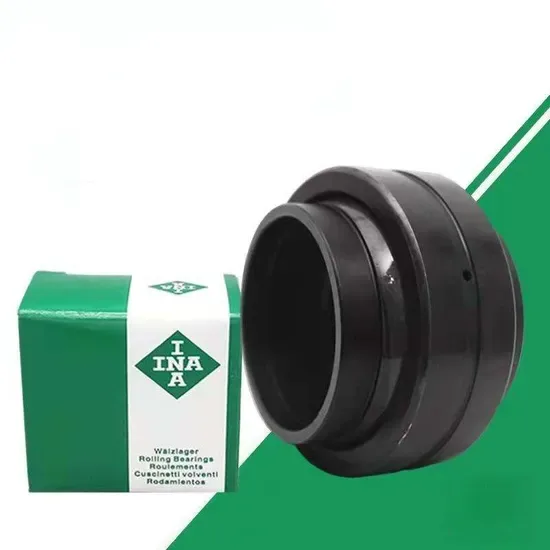
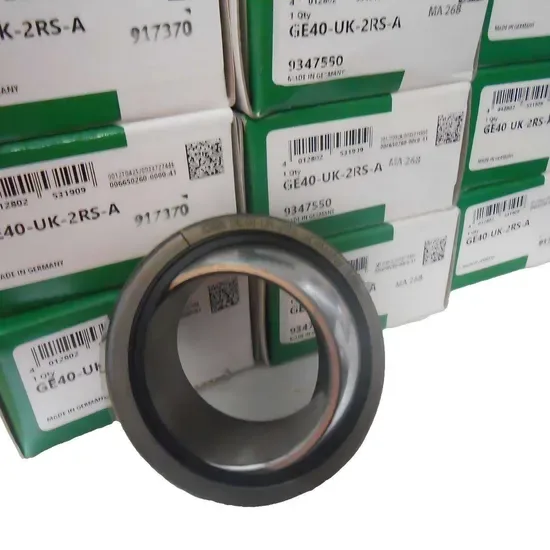
Traceable Batch Sourcing — Every GE25-ZO spherical plain bearing rod end ships with lot-level origin documentation and supplier Certificate of Conformity tied to its specific production batch.
Technical Specifications
| Parameter | Value |
|---|---|
| Designation | GE25-ZO (generic) |
| Bearing Type | Spherical Plain Bearing — Rod End |
| Bore Diameter (d) | 25.4 mm |
| Outside Diameter (D) | 41.275 mm |
| Eye Thickness (B) | 22.225 mm |
| Ball Diameter | 35.5 mm |
| Weight | 0.120 kg |
| Body Material | Bearing Steel |
| Ball Material | Bearing Steel |
| Precision Class | P2 |
| Rolling Element Arrangement | Single Row |
| Origin | China |
ZO suffix designation is not mapped to a standard catalog convention; surface treatment details should be confirmed against the manufacturer’s technical documentation before final procurement.
Application Suitability
| Industry | Typical Applications |
|---|---|
| Marine & Offshore | Deck crane winch sheave pivot points, anchor windlass linkage joints |
| Construction & Earthmoving | Excavator bucket linkage pins, loader arm oscillating joints |
| Agricultural Machinery | Combine harvester header tilt cylinders, sprayer boom pivot mounts |
| Material Handling | Conveyor transfer arm joints, overhead crane equalizer beam pivots |
What Zinc Coating Gets Wrong on a Marine Winch Bearing
Most corrosion failures on steel-on-steel plain bearings start at the sliding contact surface, not the outer ring.
When a deck crane sits idle between voyages, salt aerosol settles into the micro-gaps between the ball and body raceways. Standard zinc plating on the exterior does nothing for the internal sliding interface. I once traced a seized marine winch joint back to a spherical plain bearing where the zinc coating was intact on the outside, but the unlubricated inner contact zone had corroded solid within three months of saltwater exposure. The replacement cost was minor; the crane downtime during a port call was not. [NEED_CITE: corrosion-induced seizure mechanisms in oscillating plain bearings per ISO 15243]
How the GE25-ZO Rod End Meets Marine Oscillation Demands
Marine winch applications subject rod end bearings to slow oscillation under heavy radial load, often with angular misalignment from cable wrap geometry. The GE25-ZO spherical plain bearing rod end addresses this through its bearing steel body and ball construction, which provides the compressive strength needed for sustained static loads during mooring or anchor handling. The single row spherical contact geometry allows the inner ring to a*flection without edge-loading the raceway. When sourcing replacement rod ends for hydraulic cylinders on construction equipment or pivot joints on agricultural booms, confirming the exact bore diameter and eye thickness is essential to avoid fit-up gaps that accelerate fretting corrosion.
Load Profile, Salt Exposure, and the Lubrication Gap
Steel-on-steel spherical plain bearings in marine and outdoor environments face a specific combination of challenges. The load is predominantly radial with intermittent axial components from shock loading — think of a winch drum snatching a taut mooring line. Oscillation speeds are low, often just a few degrees per second, which means the bearing operates in a boundary lubrication regime where metal-to-metal contact is inevitable during startup. Temperature swings between deck-level ambient and below-deck hydraulic heat cause condensation inside unsealed joints. Without regular re-lubrication intervals, the grease film degrades and the sliding surfaces score. [NEED_CITE: boundary lubrication failure modes in slow-oscillation plain bearings] The zinc coating on the GE25-ZO provides external corrosion protection during transport and storage, but field longevity depends on the maintenance team’s re-greasing discipline and the use of water-resistant lithium-complex or calcium-sulfonate greases.
Reading the Specs That Actually Matter
The 25.4 mm bore diameter is an inch-equivalent dimension, which signals compatibility with imperial shaft designs common in older marine and construction equipment. The 41.275 mm outside diameter and 22.225 mm eye thickness define the housing envelope — undersize housing bores will distort the outer ring and restrict articulation, while oversize bores allow the bearing to walk under load. Bearing steel construction for both body and ball means hardness in the range typical for through-hardened raceway components, providing resistance to brinelling under static loads that can occur when a crane boom rests at a fixed angle for extended periods. The P2 precision class indicates dimensional accuracy held to tighter-than-standard tolerances, which matters when the rod end is pressed into a precision linkage where accumulated stack-up error causes binding across multiple joints.
What Wrong Sourcing Decisions Actually Cost
A dimensionally correct but metallurgically suspect rod end bearing will pass a caliper check on the receiving dock and fail six months later on a fishing trawler in the North Atlantic. Counterfeit or substandard plain bearings often use low-carbon steel for the ball element, which scores rapidly against the body raceway and generates particulate contamination that accelerates wear across the entire joint. Incorrect material heat treatment leads to soft raceway surfaces that deform under load, increasing friction until the joint seizes entirely. These failures do not announce themselves gradually — they manifest as sudden binding during a critical lift or maneuver. Classification societies and port state control inspectors increasingly scrutinize replacement component traceability, and a bearing without proper documentation can void equipment warranty or delay vessel certification. [NEED_CITE: counterfeit bearing detection and supply chain verification methods]
How We Source and Verify Before Shipment
We procure through authorized distributor channels rather than operating as a single-brand agent, which means our inventory spans SKF, NSK, FAG, TIMKEN, NTN, and KOYO with traceable paperwork back to the production facility. For the GE25-ZO spherical plain bearing rod end, we provide batch-level traceability documentation so you can verify the manufacturing origin independently. Our cross-reference database matches not just the base designation but also the surface treatment, precision class, and dimensional envelope — preventing situations where a standard uncoated GE25 is substituted where a zinc-treated version is required for the application environment. Every shipment includes dimensional inspection against the bore, OD, and eye thickness tolerances, and we supply country-of-origin documentation for your import compliance requirements.
Documentation & Authenticity
- Supplier Certificate of Conformity linked to the GE25-ZO production batch number, confirming material grade and heat treatment compliance
- Third-party dimensional inspection report verifying the 25.4 mm bore, 41.275 mm OD, and 22.225 mm eye thickness within P2 tolerances before dispatch
- Country-of-origin certificate for customs clearance and import duty classification under the applicable HS code for spherical plain bearings
- Batch and lot traceability sheet enabling downstream verification of the manufacturing facility and production date
- Material test certificate confirming bearing steel composition for both body and ball elements
Storage, Handling & Mounting
- Keep the GE25-ZO in its original sealed packaging until installation; premature exposure to humid shipyard or workshop air accelerates surface corrosion on the uncoated sliding interface
- Store rod end bearings horizontally on shelving rather than hanging from the shank; prolonged cantilever load on the eye can distort the bore above 25 mm diameter
- During press-fit installation into the housing, apply force to the outer ring only — transmitting insertion force through the ball transfers shock loads to the sliding contact surface and can initiate micro-cracking
- After mounting, purge the joint with water-resistant grease through the lubrication fitting before the equipment enters service; the factory-applied preservative compound is not a substitute for operational lubrication
- In high-salt or chemical spray environments, apply an additional corrosion inhibitor to the exposed external surfaces after installation, since the zinc coating is designed for transport and storage protection
Send Us the Operating Parameters
If you are replacing an existing rod end on a winch, crane, or hydraulic cylinder, share the OEM equipment number or the original bearing marking so we can cross-reference the exact specification including surface treatment requirements. For new applications, providing the load magnitude, oscillation angle range, and environmental exposure allows us to confirm whether the GE25-ZO spherical plain bearing rod end matches your duty cycle or whether an alternative material pairing or lubrication specification is warranted. We will respond with availability, lead time, and the full documentation package for your procurement review.
Frequently Asked Questions
Q: How can I verify the material authenticity and heat treatment quality of a spherical plain bearing?
A: Request a material test certificate that confirms the steel grade for both body and ball elements, and cross-check the batch number against the manufacturer’s production records. Hardness readings on the raceway surfaces should fall within the expected range for through-hardened bearing steel — soft spots indicate inadequate heat treatment that will lead to rapid wear under oscillating loads.
Q: What are the critical dimensions and tolerances I should inspect on the GE25 rod end?
A: The bore diameter of 25.4 mm, outside diameter of 41.275 mm, and eye thickness of 22.225 mm are the three envelope dimensions that determine fit and function. At P2 precision, these values are held to tighter tolerances than standard production, so any deviation beyond the specified limits indicates either damage during handling or a non-conforming part.
Q: What lubrication is recommended for steel-on-steel spherical plain bearings in marine service?
A: Water-resistant greases such as lithium-complex or calcium-sulfonate types perform well in saltwater exposure conditions. The re-lubrication interval depends on oscillation frequency and load magnitude — slow oscillation under heavy load demands more frequent re-greasing than high-speed rotation applications.
Q: How do I ensure cross-reference accuracy when substituting brands for rod end bearings?
A: Confirm that the substitute matches not only the base bore, OD, and width dimensions but also the surface treatment, precision class, and material specification. A standard uncoated bearing substituted for a zinc-treated version in a marine environment will corrode prematurely regardless of dimensional compatibility.
Q: What does the ZO suffix indicate on this bearing designation?
A: The ZO suffix is not universally standardized across spherical plain bearing catalogs and may indicate a specific surface treatment variant; we recommend confirming the exact meaning with the manufacturer’s technical documentation or through our cross-reference verification before placing a production order.
Request a Quotation with Full Documentation
Share your OEM part number or application parameters, and we will return a quotation with lead time, batch availability, and the complete traceability documentation package for your review.