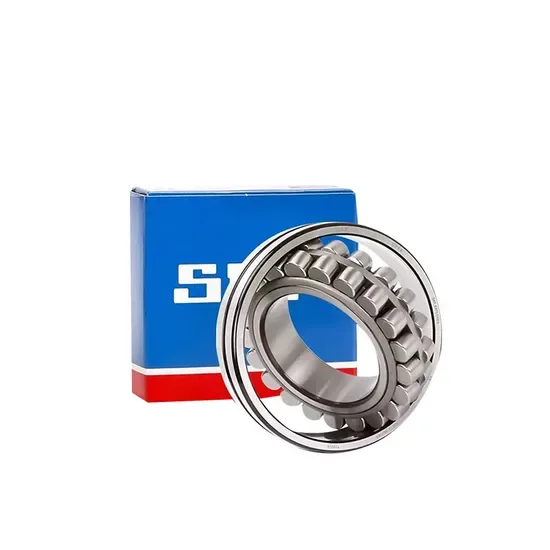
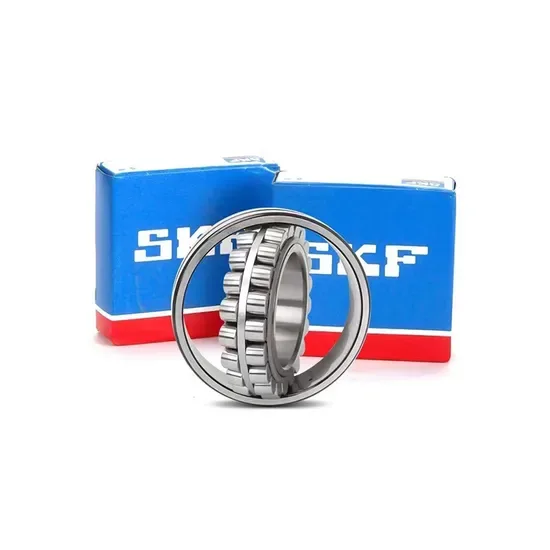
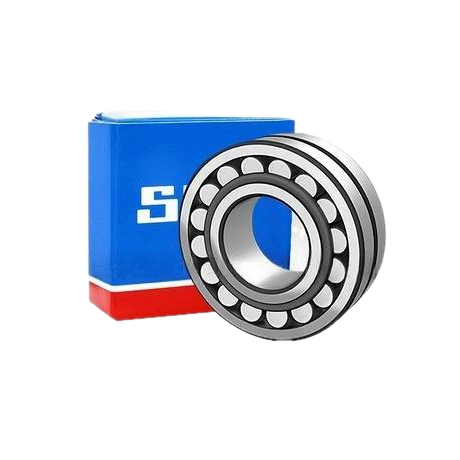
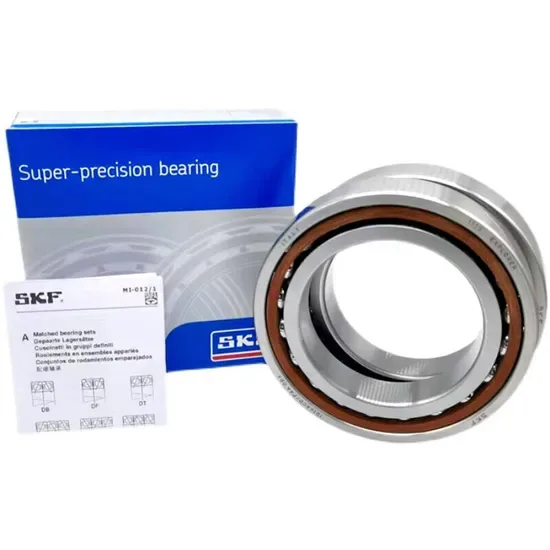
Description
Authorized Channel Sourcing — Every 23236CC/W33 spherical roller bearing we ship carries batch-level traceability back through our verified distributor network.
Technical Specifications
| Parameter | Value |
|---|---|
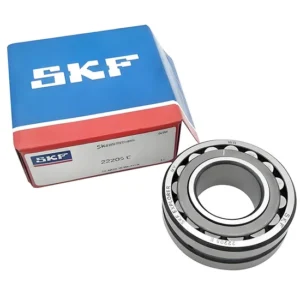
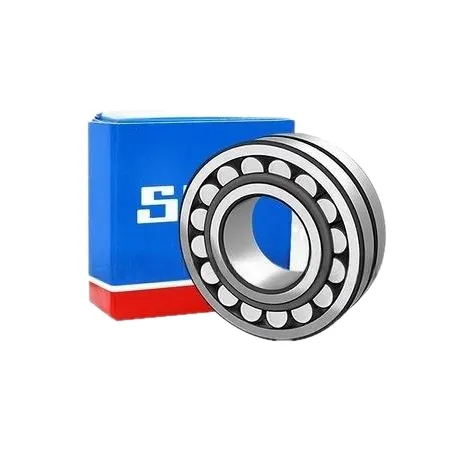
| Designation | 23236CC/W33 (Generic) |
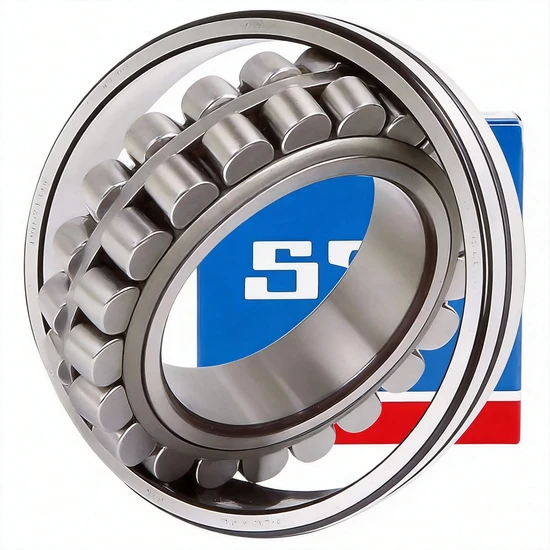
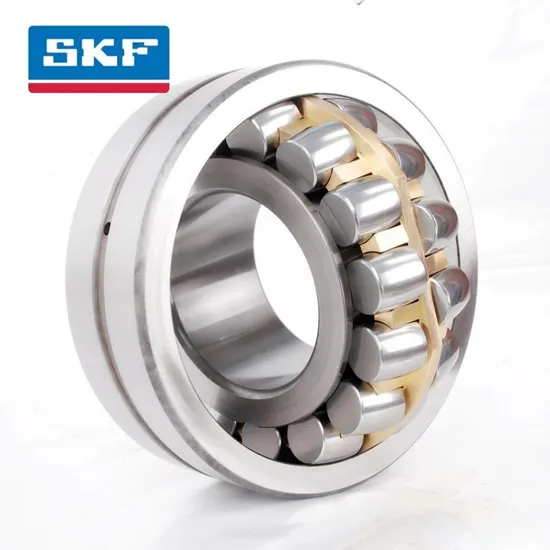
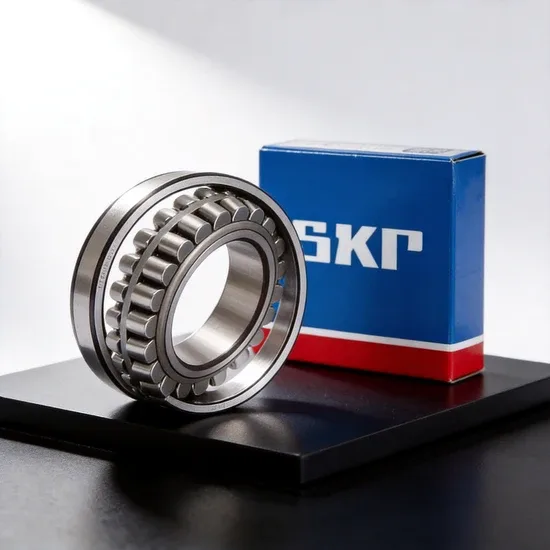
| Bearing Type | Spherical Roller Bearing |
| Weight | 32 Kg |
| Cage Material | Stamped Steel Cage |
| Lubrication Feature | W33 — Annular groove and three lubrication holes in outer ring |
| Seal or Shield Type | Open |
| Number of Rows | Two |
| Standards | ISO 15 / ISO 76 / ISO 281 |
Note: The CC suffix appears on this designation but remains unverified against a specific manufacturer’s catalog; confirm exact cage geometry and internal design with the originating brand documentation before finalizing order.
Application Suitability
| Industry | Typical Applications |
|---|---|
| Mining and Crushing | Crusher eccentric shaft, vibrating screen main bearing |
| Steel and Metallurgy | Continuous caster guide roller, rolling mill work roll neck |
| Industrial Machinery | Paper machine dryer cylinder, kiln support roller |
What Happens When a W33 Groove Gets Ignored on a Vibrating Screen
The lubrication path fails silently before the cage fails loudly.
On a double-deck vibrating screen processing aggregate, the eccentric shaft bearings endure continuous high-frequency oscillation. When a maintenance team replaces a specified 23236CC/W33 spherical roller bearing with a plain 23236 variant lacking the annular groove and lubrication holes, re-lubrication grease has no direct path into the load zone. The cage runs dry, roller skewing increases, and within weeks the stamped steel cage shows fracture initiation at the rivet holes [NEED_CITE: vibration-induced cage fatigue in spherical roller bearings]. The screen goes down during a peak production shift — a failure that traces back not to the bearing itself, but to a missing three-letter suffix on the purchase order.
Matching the 23236CC/W33 to High-Vibration, Heavy-Load Circuits
Vibrating screens and crushers demand bearings that tolerate misalignment while carrying heavy combined loads under continuous shock. The 23236CC/W33 spherical roller bearing addresses this through its two-row roller arrangement and outer ring spheroid raceway, which accommodate shaft deflection without edge-loading the rollers. The W33 lubrication groove ensures fresh grease reaches the roller-raceway contact zone even when the bearing operates in a tilted orientation — common on inclined screen decks. When we cross-reference this designation for a mining customer, we verify not just the bore and OD but confirm that the substitute also carries the W33 feature, because a base-number-only match would strip away the re-lubrication capability the application depends on.
Shock Loads, Heat Buildup, and Contamination Ingress
These bearings typically face heavy radial loads with moderate axial components, compounded by impact spikes each time material drops onto the screen deck. Operating temperatures climb as vibration generates friction heat, which in turn demands adequate internal clearance to prevent thermal binding — a C3 or C4 clearance class is often specified for these circuits, though the exact class must match the original equipment design. Contamination from dust and slurry is relentless, making the W33 re-lubrication path essential for purging debris from the raceway. Mounting on large shafts usually involves induction heating for cylindrical bore variants or controlled axial drive-up for tapered bore versions, with drive-up distance directly affecting residual clearance [NEED_CITE: spherical roller bearing mounting drive-up and residual clearance relationship].
Decoding the Cage and Groove Specifications
The stamped steel cage in this 23236CC/W33 spherical roller bearing provides adequate roller guidance under heavy radial loads at moderate speeds — typical for vibrating screens running between 800 and 1000 RPM. Stamped cages are lighter than machined brass alternatives, reducing centrifugal loading on the rollers, but they sacrifice some durability under extreme shock or high-speed conditions where a brass cage would be specified. The W33 feature — an annular groove cut into the outer ring with three equispaced lubrication holes — creates a direct grease path from the housing into the bearing interior, enabling effective re-lubrication without disassembly. For a 32 Kg bearing in this size range, the load distribution across two rows of barrel-shaped rollers keeps contact stress within acceptable limits per ISO 281 life calculations, provided clearance and lubrication are correctly maintained.
The Downtime Multiplier Behind a Wrong Suffix Substitution
Specifying the correct 23236CC/W33 spherical roller bearing from a verified source avoids a cascade of hidden costs. A substitute lacking the W33 groove forces maintenance crews to rely on seal-face grease migration — insufficient for contaminated, high-vibration environments — accelerating cage wear and roller surface distress classified under ISO 15243 as lubrication-related failure [NEED_CITE: rolling bearing failure mode classification per ISO 15243]. Counterfeit bearings with soft inner rings and cloned markings compound the risk: raceway spalling appears far earlier than L10 predictions, unplanned downtime interrupts production schedules, and warranty claims are voided because the installed part cannot be traced to an authorized channel.
What We Bring to Every 23236CC/W33 Inquiry
Every bearing we source moves through authorized distributor channels, so batch traceability is intact before the pallet leaves the warehouse. Our cross-reference database aligns clearance class, cage material, and lubrication suffixes — not just the base number — so when a customer needs to interchange to an SKF 23236CA/W33, NSK 23236R, FAG 23236B, TIMKEN 23236CCK40W33, or KOYO 23236RHA, we verify that every functional suffix carries over. Authenticity verification guidance accompanies each shipment, including QR code verification pathways through the brand’s official application. For import buyers, we prepare country-of-origin documentation and HS code support so customs clearance does not stall the delivery.
Documentation & Authenticity
- Supplier Certificate of Conformity referencing the specific 23236CC/W33 batch number for traceability
- Country-of-origin documentation prepared for import compliance, matching the shipping invoice and packing list
- QR code verification pathway guidance so receiving inspectors can confirm authenticity via the brand’s official app
- Pre-shipment dimensional inspection report confirming bore, OD, and width against ISO 15 tolerances
- Material certificate available upon request, documenting the steel grade used in rings and rollers
Storage, Handling & Mounting
- Keep the 23236CC/W33 in its original sealed packaging until mounting day; early exposure risks contaminating the open bearing and the W33 lubrication holes with workshop dust
- Store horizontally on a flat surface given the 32 Kg weight; vertical stacking risks brinelling the raceway under the roller set’s own mass
- When mounting via induction heating, monitor temperature carefully — overheating degrades the stamped steel cage’s dimensional stability and alters internal clearance
- Align the housing lubrication fitting with the W33 annular groove during installation; misalignment defeats the entire re-lubrication pathway
- After mounting, pump fresh grease through the housing fitting until it purges from the seal lips, confirming the W33 groove is delivering lubricant into the roller paths
Request a Quotation for the 23236CC/W33
Share your operating parameters — load magnitude, vibration frequency, ambient temperature, and housing sealing arrangement — so we can confirm clearance class and verify the cross-reference matches your application. If you are replacing an OEM-installed bearing, provide the equipment serial number or the original part marking for a full suffix-by-suffix comparison. We will return a quotation with lead time, minimum order quantity, and the complete documentation package available for your import requirements.
Frequently Asked Questions
Q: How can I verify that a 23236CC/W33 spherical roller bearing is genuine before accepting delivery?
A: Authenticity verification starts with requesting batch traceability documentation tied to an authorized distributor channel. On receipt, scan the QR code or serial marking using the brand’s official mobile application — cloned codes on counterfeit bearings often redirect to look-alike websites rather than the manufacturer’s verification server. Visual inspection of the raceway surface finish, cage rivet quality under magnification, and weight comparison against the documented 32 Kg specification provide additional checkpoints.
Q: Why must I match clearance, cage, and lubrication suffixes — not just the base 23236 number — during cross-referencing?
A: The base number identifies bore, OD, and width, but functional suffixes determine whether the bearing survives your specific application. A vibrating screen requiring W33 re-lubrication and C3 clearance will experience thermal binding and cage failure if the replacement arrives with standard CN clearance and no lubrication groove. Our cross-reference process aligns these suffixes across SKF, NSK, FAG, TIMKEN, NTN, and KOYO equivalents so the substitute performs identically.
Q: What does the W33 lubrication feature actually do in service?
A: The W33 designation means the outer ring has an annular groove connected to three lubrication holes drilled through to the bearing interior. In service, grease pumped through the housing fitting enters this groove and flows directly into the roller-raceway contact zone, flushing contaminants and replenishing the lubricant film without disassembly — essential for high-contamination environments like mining and crushing.
Q: Is a stamped steel cage suitable for my vibrating screen, or should I specify brass?
A: Stamped steel cages perform well under heavy radial loads at moderate speeds, which describes most vibrating screen applications. Machined brass cages offer superior durability under extreme shock loads or higher speeds but add cost and weight. The correct choice depends on your specific vibration amplitude, shaft speed, and shock load profile — share these parameters and we will advise accordingly.
Confirm Availability for Your Next Shipment
Send your bearing requirements with application details or OEM equipment numbers, and receive a complete cross-reference and quotation.
Contact our technical sales team through the inquiry form or your existing account channel.