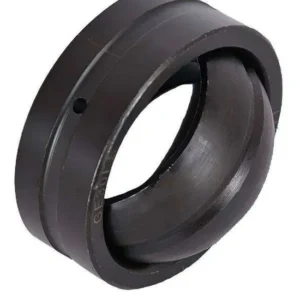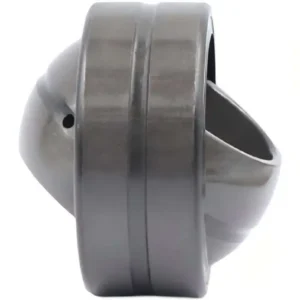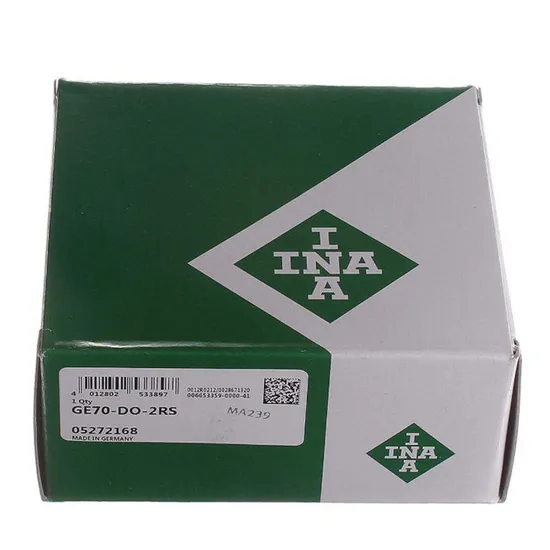

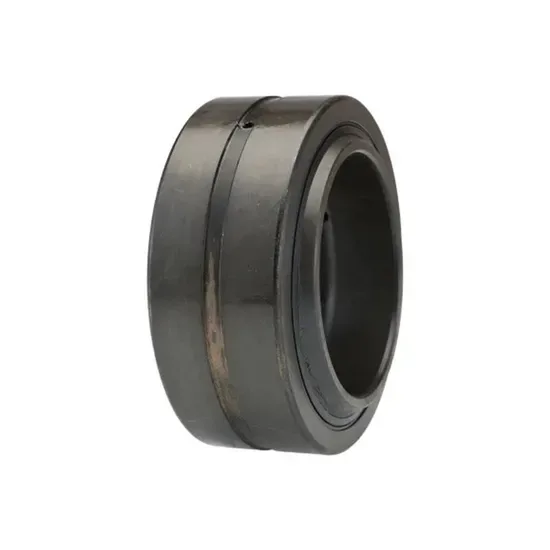
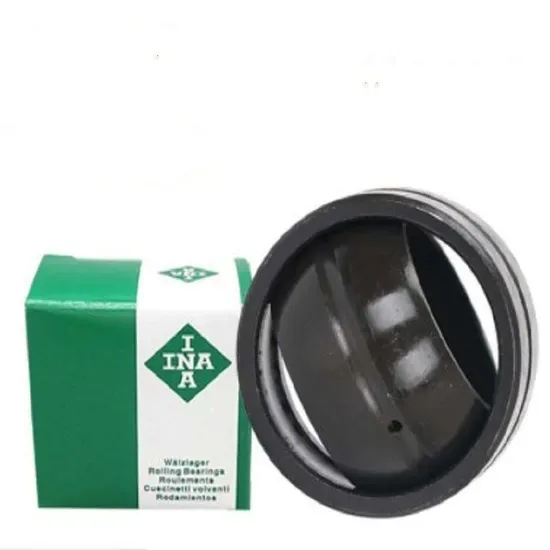
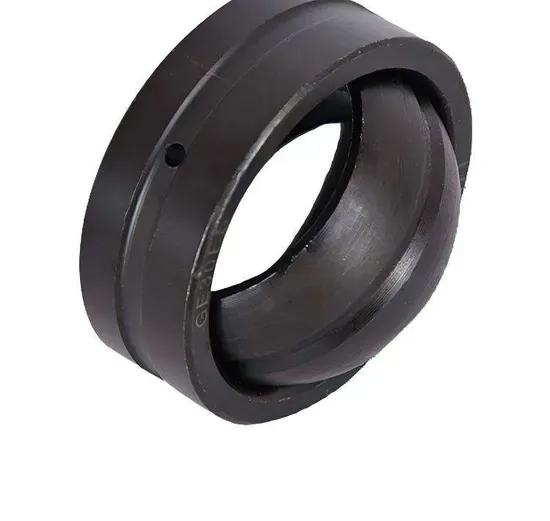

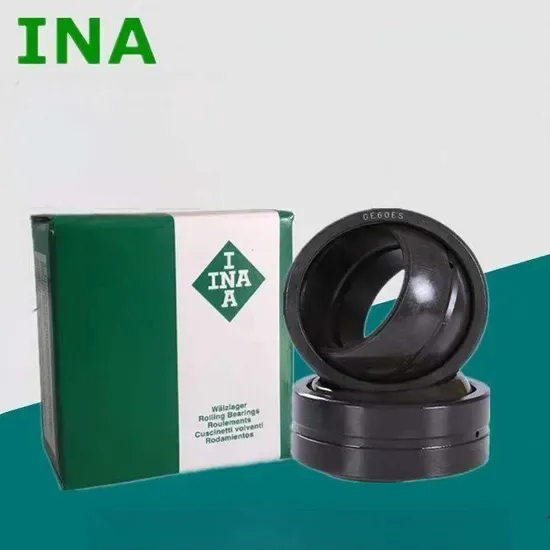
Description
Authorized Channel Sourcing — Every INA GE30-HO-2RS-C2 we ship is backed by distributor-level traceability documents confirming material origin and batch authenticity.
Technical Specifications
| Parameter | Value |
|---|---|
| Designation | INA GE30-HO-2RS-C2 |
| Bearing Type | Spherical Plain Bearing |
| Bore Diameter (d) | 30 mm |
| Outside Diameter (D) | 47 mm |
| Seal or Shield Type | 2RS (Contact seal on both sides) |
| Clearance Class | C2 (Reduced radial internal clearance) |
| Lubrication | PTFE (Maintenance-Free) |
| Material | Bearing Steel |
| Precision Class | P0 |
| Number of Rows | Single Row |
| Weight | 0.150 kg |
| Origin | China |
| Standards | ISO 12240 |
Note: The HO suffix in GE30-HO-2RS-C2 is not verified against the current INA catalog and should be confirmed with manufacturer documentation before final specification lock-in.
Application Suitability
| Industry | Typical Applications |
|---|---|
| Construction and Earthmoving | Excavator boom pivot joints, loader linkage rods |
| Agricultural Machinery | Tractor three-point hitch linkages, sprayer boom articulation |
| Mining and Crushing | Hydraulic cylinder rod ends on jaw crusher adjustment systems |
| Material Handling | Forklift tilt cylinder connections, conveyor diverter pivots |
| Automotive and Heavy Vehicle Repair | Steering linkage joints, suspension tie-rod ends |
What Happens When Clearance and Liner Selection Get Ignored on a GE30
A seized spherical plain bearing rarely fails from overload — it fails from contamination eating through an inadequate seal or the wrong clearance class binding under thermal expansion.
I watched a hydraulic cylinder rod bend sideways on a Nigerian quarry site because someone replaced a specified PTFE-lined, reduced-clearance spherical plain bearing with a standard steel-on-steel GE30. Dust penetrated the unprotected sliding surface within weeks, the inner ring welded itself to the raceway, and the cylinder was done. The bearing didn’t fail — the specification did [NEED_CITE: spherical plain bearing failure modes related to contamination ingress and lubrication breakdown]. That cylinder repair cost far more than the correct part would have, and the machine was down for days waiting on a replacement rod.
How the INA GE30-HO-2RS-C2 Matches Oscillating Cylinder and Linkage Loads
The INA GE30-HO-2RS-C2 spherical plain bearing is built for the exact conditions that destroy generic replacements: slow oscillating motion under radial load where full-film hydrodynamic lubrication never establishes. The PTFE maintenance-free liner provides consistent friction characteristics without relying on grease replenishment — critical when the pivot point is buried inside a cylinder clevis where no maintenance technician is reaching with a grease gun. The C2 reduced clearance keeps the fit tight under the low-speed, high-load oscillation typical of hydraulic rod ends, preventing the micro-movement that accelerates wear on standard-clearance parts. We once cross-referenced a competitor’s open-type GE30ES for a customer’s agricultural sprayer boom — the missing seals meant grit ingestion every time the boom folded, destroying the bearing in a single season.
Contamination, Heat, and the Seal Decision That Matters Underground
Radial loads on cylinder rod-end bearings are rarely steady — they spike with every stroke reversal and drop to near-zero on retraction. The operating temperature stays moderate in most hydraulic applications, but the real threat is particulate contamination: silica dust at quarry faces, fertilizer grit on sprayer linkages, iron fines around crushing circuits. The dual-lip contact seals on the 2RS configuration create a physical barrier at the sliding surface boundary. Contact seals add marginal friction compared to open or shielded designs, but on a spherical plain bearing operating at oscillating speeds, that friction penalty is negligible against the contamination protection gained [NEED_CITE: seal effectiveness trade-offs in oscillating spherical plain bearing applications]. Where ambient temperatures exceed sustained high ranges, thermal expansion of the inner ring can close the already-reduced C2 clearance further — making correct shaft and housing fits essential during installation.
Reading the Suffixes: PTFE Liner, C2 Clearance, and 2RS Seals
The PTFE maintenance-free liner bonded to the sliding contact surface eliminates relubrication entirely. Unlike standard steel-on-steel spherical plain bearings that demand periodic grease injection, the PTFE compound provides a low-friction transfer film that sustains itself across the bearing’s rated life. The C2 clearance class specifies radial internal clearance smaller than normal (CN) — this matters in applications where the inner ring is press-fitted onto a shaft, as the interference fit reduces operating clearance further. Installing a standard CN clearance bearing where C2 was specified allows excess play that manifests as knocking under load reversal. The 2RS contact seals on both sides retain the PTFE interface integrity by blocking moisture and particulate intrusion, which would otherwise abrade the liner surface and accelerate wear [NEED_CITE: PTFE liner wear mechanisms in contaminated environments per ISO 12240 application guidance].
What the Wrong Replacement Part Actually Costs on Site
Specifying a standard GE30 without the PTFE liner, correct clearance, and seals may save marginally on unit cost, but the downstream consequences are severe. Unplanned downtime on a hydraulic cylinder in a mining circuit doesn’t just mean a bearing swap — it means pulling the cylinder, replacing a scored rod, flushing contaminated hydraulic fluid, and losing production shifts. Premature failure from incorrect clearance selection shows up as thermal binding or accelerated liner wear, neither of which triggers warranty coverage when the root cause traces to specification error. Catastrophic damage to mating components — bent rods, scored housings, damaged clevis bores — compounds the repair bill well beyond the bearing itself [NEED_CITE: rolling bearing failure mode classification per ISO 15243].
Sourcing Verification That Goes Beyond a Catalog Number
We source the INA GE30-HO-2RS-C2 through authorized distributor channels with full batch documentation, not through unverified trading intermediaries. Each shipment carries a Certificate of Conformity traceable to the production lot, and we provide cross-reference matching that verifies not just the base GE30 designation but the complete suffix string — PTFE liner type, clearance class, and seal configuration must all align. Counterfeit spherical plain bearings are increasingly convincing: cloned markings, replicated packaging, even fake QR codes that redirect to lookalike verification pages. Our authentication process includes QR code validation through official brand applications and material verification against declared specifications. When a customer needs to substitute across brands, we compare the full parameter set — sliding surface material, clearance, seals, dimensional tolerances — rather than declaring equivalence on the bore diameter alone.
Documentation & Authenticity
- Supplier Certificate of Conformity with batch lot number traceable to the INA GE30-HO-2RS-C2 production run
- PTFE liner material declaration confirming maintenance-free sliding surface composition per ISO 12240
- Third-party dimensional inspection report covering bore diameter, outside diameter, and width tolerances at P0 precision
- Dual-lip 2RS seal integrity verification confirming contact seal retention before dispatch
- Country-of-origin certificate supporting import compliance and customs documentation requirements
- QR code verification pathway documented for end-user authenticity checks through official channels
Storage, Handling & Mounting
- Retain factory-sealed packaging until the moment of installation — early opening exposes the PTFE liner on the GE30-HO-2RS-C2 to airborne moisture that compromises the maintenance-free surface
- Store flat in a temperature-stable environment away from direct UV exposure, which degrades the 2RS elastomeric contact seals over extended periods
- Handle with clean lint-free gloves; fingerprints on the exposed inner ring bore introduce acidic contaminants that attack the bearing steel before the shaft fit is established
- Press-fit the inner ring using controlled force aligned to the shaft axis — misaligned installation on the 30 mm bore can damage the C2 clearance geometry and induce binding
- Never apply induction heating to the PTFE-lined spherical plain bearing; excessive heat destroys the bonded maintenance-free liner irreversibly
- Verify shaft and housing tolerances before mounting; incorrect fits negate the specified C2 reduced clearance and lead to either looseness or thermal seizure
Request a Specification Review Before Ordering
Share your application parameters — load profile, oscillation frequency, operating temperature range, and contamination exposure level — so we can verify the INA GE30-HO-2RS-C2 is the correct match for your specific installation. If you are replacing an existing bearing, provide the OEM equipment number or the full marking string from the failed part so we can cross-reference and confirm suffix alignment across clearance, liner, and seal type. Request the documentation package including Certificate of Conformity, dimensional report, and country-of-origin paperwork before committing to volume quantities. Confirm batch availability and lead time for your required quantities, especially for projects requiring multiple units from a single production lot for traceability consistency.
Frequently Asked Questions
Q: What does the C2 clearance designation mean for spherical plain bearings and when is it required?
A: C2 specifies radial internal clearance smaller than the standard CN class. It is required in applications where the inner ring is installed with an interference fit that reduces operating clearance, or where oscillating motion under load demands a tighter fit to prevent micro-movement and fretting wear. Installing a standard clearance bearing where C2 is specified introduces play that accelerates wear under load reversals.
Q: How to verify authenticity of INA spherical plain bearings through official channels?
A: Genuine INA bearings carry traceable batch markings and QR codes that link to the manufacturer’s verification system. We supply each GE30-HO-2RS-C2 with a Certificate of Conformity and recommend end-users validate QR codes through the official brand application rather than third-party scanning tools, which counterfeiters can redirect to fraudulent confirmation pages.
Q: What is the difference between maintenance-free PTFE liners and standard steel-on-steel spherical plain bearings?
A: PTFE-lined bearings have a bonded polymer transfer film on the sliding contact surface that operates without external lubrication. Standard steel-on-steel designs require periodic relubrication through grease fittings to maintain a protective film. In sealed or inaccessible installations — such as hydraulic cylinder rod ends — maintenance-free PTFE eliminates the risk of lubrication neglect causing seizure.
Q: How to cross-reference GE-series spherical plain bearings across INA, SKF, and other brands?
A: Cross-referencing requires matching more than the base GE30 designation. The sliding surface material (PTFE vs. steel-on-steel vs. bronze), clearance class (C2 vs. CN vs. C3), seal type (2RS vs. open), and precision class must all align for functional equivalence. We provide complete parameter comparison across INA, SKF, and other catalog brands so substitutions are verified on application-critical specifications, not just dimensional interchange.
Q: What are the storage and handling requirements for PTFE-lined bearings to avoid liner damage before installation?
A: PTFE-lined spherical plain bearings must remain sealed in original packaging until installation. Exposure to moisture, UV light, or abrasive particulate degrades the liner surface before the bearing ever sees load. Never apply heat during mounting — the PTFE compound is heat-sensitive and will lose its low-friction properties if subjected to induction heating or flame torching.
Confirm Your GE30-HO-2RS-C2 Specification
Send us your application parameters or OEM equipment number, and we will return a verified cross-reference with complete documentation package and batch availability within one business day. Contact our engineering team through your established inquiry channel to initiate the technical review.