



Description
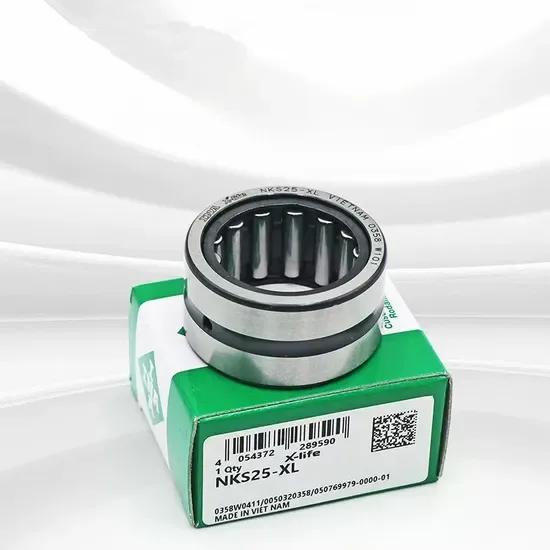
Authorized Channel Procurement — Every INA NK25/16-XL needle roller bearing we supply is backed by batch-level traceability documents linking the physical unit to its original distributor invoice and production lot.
Technical Specifications
| Parameter | Value |
|---|---|
| Designation | INA NK25/16-XL |
| Bearing Type | Needle Roller Bearing |
| Bore Diameter (Fw) | 25 mm |
| Outside Diameter (D) | 33 mm |
| Width (B) | 16 mm |
| Weight | 0.032 kg |
| Material | Bearing Steel |
| Seal or Shield Type | Open |
| Number of Rows | Single Row |
| Style | Without Outer Ring, Without Inner Ring |
| Load Direction | Radial Bearing |
| Bore Type | Plain |
| Origin | Traceable upon request |
The XL suffix on this designation is understood to reference the X-Life series, which indicates optimized internal geometry for extended operational life; exact performance parameters should be verified against the manufacturer catalog for your specific application.
Application Suitability
| Industry | Typical Applications |
|---|---|
| Textile Machinery | Linkage frame pivot points, fabric tension guide rollers |
| Industrial Automation | Compact radial motion assemblies, pick-and-place arm joints |
| Material Handling | Conveyor roller end supports, transfer table pivot bearings |
| Agricultural Machinery | Seeder linkage joints, sprayer boom pivot points |
What Happens When Needle Rollers Fail Inside a Thin-Section Envelope
A scoring raceway on a 16 mm wide bearing can shut down an entire textile line within hours.
I once inspected a set of substitute needle rollers pulled from a linkage frame at a weaving mill in East Africa. The outer dimensions matched perfectly, but the rollers themselves were undersized and the cage pockets showed uneven wear after just four months of service. The fabric tension drifted enough to cause visible defects in the finished cloth. When you are running high-cycle oscillation in a compact 25×33×16 mm envelope, there is almost no margin for internal geometry deviations. Counterfeit or mis-sourced INA NK25/16-XL needle roller bearing units with soft rollers and cloned markings are a recurring problem in regional supply chains [NEED_CITE: counterfeit bearing circulation in emerging market supply chains]. The damage is rarely obvious until the machine is already producing off-spec output.
Matching the Bearing to High-Cycle Textile Linkage Loads
The INA NK25/16-XL needle roller bearing is designed for applications where radial space is severely constrained but load demands remain high. In textile linkage mechanisms, the bearing cycles through repeated oscillating motion rather than continuous rotation, which places different stresses on the roller-to-shaft contact zone. The drawn cup design without inner or outer ring means the shaft itself serves as the inner raceway, requiring adequate surface hardness and finish to prevent premature wear. We typically review the OEM equipment documentation alongside the buyer’s operating parameters to confirm that the shaft preparation meets the minimum requirements before shipment.
Operating Conditions That Push Thin-Section Needle Rollers to Their Limits
The load profile in linkage applications is predominantly radial with frequent direction reversals, which means the rollers experience impact loading at each stroke transition. Speed tends to be moderate, but the oscillating motion prevents full hydrodynamic film formation, placing the contact in the mixed lubrication regime [NEED_CITE: needle roller bearing lubrication regime under oscillating conditions]. Temperature is usually ambient, though frictional heating in poorly lubricated units can raise local temperatures enough to degrade grease consistency. Because this is an open type bearing, external lubrication access is straightforward, but it also means the application environment must be relatively clean or supplemented with external sealing. Installation demands care: pressing a thin-section drawn cup bearing into a housing without proper tooling can ovalize the cup and create uneven roller loading from day one.
Decoding the Critical Specifications for This Bearing
The without-inner-ring configuration means the shaft journal must be hardened to at least 58 HRC and ground to a surface finish suitable for direct roller contact. Skipping this requirement is one of the most common causes of early shaft scoring in the field. The single row arrangement concentrates all load capacity into one plane of needles, which is appropriate for pure radial loads but offers no axial locating capability. The open seal type eliminates seal friction entirely, giving the bearing a speed advantage over sealed variants, but shifts the responsibility for contamination exclusion to the housing design. At 0.032 kg, this is an extremely light component, which reflects the minimal material in a drawn cup cross-section — there is simply no room for manufacturing shortcuts in the cage or roller profiling.
The Downtime Cost of a 16 mm Bearing Failure
When a needle roller bearing fails in a linkage assembly, the consequence is rarely limited to the bearing itself. Misalignment propagates through the mechanism, accelerating wear on adjacent pivots and guide surfaces. In a textile mill, unplanned line stoppage during peak production can mean days of backlog. ISO 15243 classifies needle roller failures into categories including surface distress, cage fracture, and roller skewing — each pointing to different root causes from selection error to lubrication starvation [NEED_CITE: rolling bearing failure mode classification per ISO 15243]. Sourcing a verified INA NK25/16-XL needle roller bearing through traceable channels addresses the counterfeit risk, but correct installation practices and lubrication discipline are equally essential to achieving the expected service life.
How We Reduce Sourcing Risk for Compact Needle Roller Bearings
Our procurement process for the INA NK25/16-XL needle roller bearing starts with authorized distributor channels that provide batch-linked documentation, not secondary market stock of uncertain provenance. We cross-check dimensions against published INA specifications before dispatch, paying particular attention to the drawn cup diameter and roller complement. When buyers need to substitute across brands, we perform cross-reference matching that accounts for cage material, roller profiling, and dimensional tolerances rather than relying on base designation alone. For import buyers, we prepare country-of-origin documentation and HS code classification to smooth customs clearance. Every shipment can include a Certificate of Conformity tied to the specific production batch, giving maintenance teams the traceability they need for their asset records.
Documentation & Authenticity
- Supplier Certificate of Conformity referencing the specific INA production batch and lot number for this NK25/16-XL bearing
- Third-party dimensional inspection report verifying Fw 25 mm, D 33 mm, and B 16 mm tolerances before dispatch
- INA official app QR code verification pathway printed on original packaging for authenticity confirmation
- Country-of-origin certificate prepared for import compliance at the destination port
- Material certification confirming bearing steel specification for rollers and drawn cup
Storage, Handling & Mounting
- Keep the NK25/16-XL in its original sealed packaging until the moment of installation; the thin drawn cup is vulnerable to corrosion and surface damage if exposed to humid workshop air
- Handle with clean gloves to prevent fingerprint residue on the open bearing surfaces, which can initiate pitting on the roller contact zones
- Use a purpose-made installation sleeve when pressing the 33 mm OD drawn cup into the housing; misaligned pressing force will ovalize the cup and cause uneven needle loading
- Apply the recommended grease immediately after mounting since the open type has no factory fill; delayed lubrication exposes the bare steel rollers to atmospheric moisture
- Verify shaft journal hardness and surface finish before installation, as the without-inner-ring design requires the shaft itself to function as the raceway
Start Your Technical Review
Share your application parameters including load magnitude, oscillation frequency, and shaft preparation details so we can confirm the INA NK25/16-XL needle roller bearing is correctly matched to your linkage assembly. If you are replacing an existing bearing, provide the OEM equipment number and we will run a full cross-reference check covering dimensions, cage type, and clearance class. We can also prepare a documentation package preview including origin certification and batch traceability for your import planning.
Frequently Asked Questions
Q: How can I verify the authenticity of an INA needle roller bearing after receiving it?
A: INA provides an official mobile app with QR code scanning capability that links each bearing to its production record. We supply every INA NK25/16-XL needle roller bearing in original packaging with an intact QR label. If the QR code does not resolve to a valid production entry, or if the packaging shows signs of resealing, the unit should be treated as suspect. We can guide you through the verification process and, if needed, arrange a replacement through verified channels.
Q: What does the XL suffix indicate on INA needle roller bearings?
A: The XL suffix is associated with INA’s X-Life series designation, which refers to optimized internal geometry and surface finishing intended to extend operational life. For the NK25/16-XL specifically, the precise performance characteristics under this designation should be confirmed against the current manufacturer catalog, as X-Life parameters can vary across bearing families and size ranges.
Q: What shaft requirements apply when using a needle roller bearing without an inner ring?
A: Without an inner ring, the shaft journal becomes the inner raceway. It must be hardened to a minimum of 58 HRC, ground to the appropriate surface roughness, and held within the specified diameter tolerance. If the shaft surface is too soft or too rough, the needles will score the journal and generate debris that accelerates cage and roller wear. We can provide the manufacturer’s shaft preparation specifications upon request.
Q: How do cross-reference substitutions work for needle roller bearings across brands?
A: A valid cross-reference must match not only the Fw, D, and B dimensions but also the cage material, roller profile, and precision class. Some substitute bearings share the base dimensions but use a different cage design that changes the roller complement and load distribution. We maintain cross-brand comparison data across the major manufacturers and can advise whether a specific alternative is suitable for your application before you commit to a purchase.
Q: What lubrication approach is recommended for open-type needle roller bearings in textile machinery?
A: Open-type bearings rely on the machine’s lubrication system or manual regreasing intervals. In textile linkage applications where oscillating motion limits full film formation, a grease with good mechanical stability and anti-wear additives is typically preferred. The regreasing interval depends on cycle frequency, ambient temperature, and contamination exposure. We can discuss lubrication recommendations based on your specific operating conditions.
Secure Your INA NK25/16-XL Sourcing with Full Traceability
Send us your application details or OEM equipment number to begin the technical review and receive a quotation with confirmed lead time and documentation package.