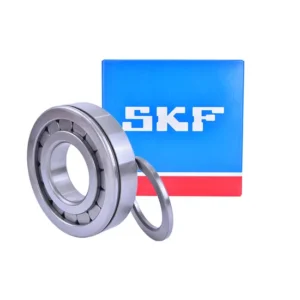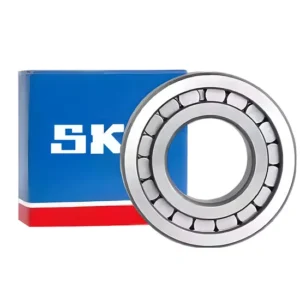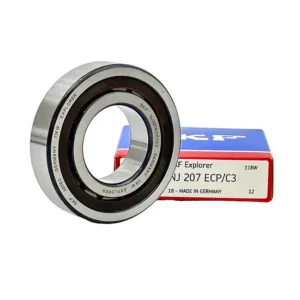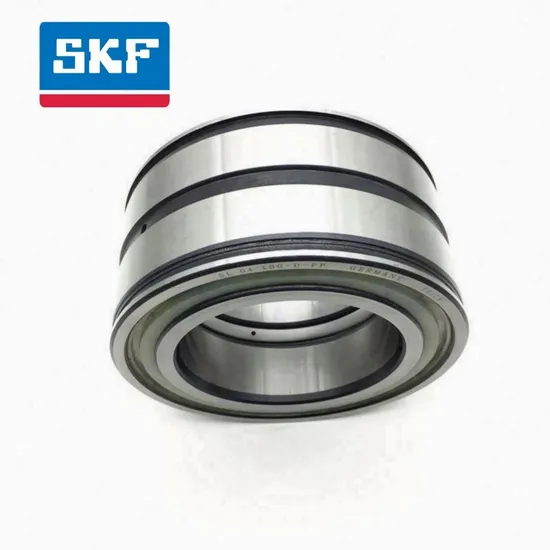


Description
Authorized Channel Sourcing — Every N1017KTN9/SPVR522 unit ships with batch-traceable documentation tied to the manufacturer’s production lot, verified before dispatch.
Technical Specifications
| Parameter | Value |
|---|---|
| Designation | SKF N1017KTN9/SPVR522 |
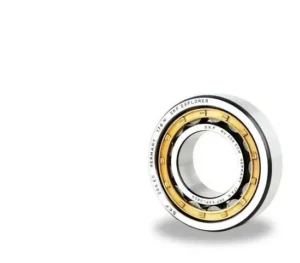
| Bearing Type | Single Row Cylindrical Roller Bearing |
| Bore Diameter (d) | 85 mm |
| Bore Type | Tapered (1:12) |
| Cage Material | Polyamide 6,6 (TN9) |
| Precision Class | SP (Super Precision) |
| Seal or Shield Type | Open |
| Number of Rows | Single |
| Origin | China |
The /SP and /VR522 suffixes require confirmation against the manufacturer’s current catalog for exact tolerance class and internal design variant details.
Application Suitability
| Industry | Typical Applications |
|---|---|
| Machine tool manufacturing | High-speed spindle shafts requiring minimal runout |
| Industrial gearboxes | High-speed shaft positions in heavy-duty gear drives |
| Traction motor systems | Rotor shaft support in electric traction motors |
| Steel and metallurgy | Precision guide rollers in rolling mill equipment |
What Happens When a SP-Class Bearing Arrives with Standard Tolerances
A single precision mismatch can scrap a spindle rebuild before it reaches operating speed.
On a dubai spindle overhaul, a shop received cylindrical rollers that matched the base designation but carried standard clearance instead of the super precision specification the application demanded. Within hours of commissioning, thermal expansion eliminated the internal clearance, locking the rollers against the raceway. The resulting downtime cost far more than the bearing itself. Procurement engineers sourcing the SKF N1017KTN9/SPVR522 super precision single row cylindrical roller bearing face this exact risk when suppliers match only the base number and ignore suffix verification. Counterfeit units with soft inner rings and cloned markings compound the problem — they pass visual inspection but fail under sustained load [NEED_CITE: rolling bearing failure mode classification per ISO 15243].
Matching the N1017 to High-Speed Spindle Demands
Machine tool spindles operate under a narrow window where radial stiffness, minimal runout, and controlled friction must coexist. The tapered bore allows precise interference fit adjustment during mounting, letting the technician dial in the exact residual clearance by controlling the axial drive-up distance on the shaft. This matters when the spindle demands the tighter dimensional accuracy that SP classification provides. Our cross-reference database checks not just the bore and OD but also cage material, clearance class, and precision suffix — so when a buyer needs interchange options across NSK or FAG equivalents, the substitute actually fits the application envelope rather than just the mounting dimensions.
Operating Conditions That Define Selection
Spindle shafts and traction motor positions expose bearings to sustained high-speed rotation where friction heat generation becomes the limiting factor. The open bearing design places lubrication responsibility on the housing system — typically circulating oil or oil-air mist in spindle applications, which carries heat away from the contact zones. Thermal expansion of the shaft during run-up changes the interference fit and reduces internal clearance, which is why precision class and clearance specification must be verified together rather than independently [NEED_CITE: thermal expansion effects on bearing internal clearance in high-speed applications]. The 85 mm tapered bore requires controlled mounting procedures; excessive drive-up eliminates clearance entirely, while insufficient fit allows creep under load.
Cage Material, Bore Geometry, and Precision — What the Suffixes Actually Control
The TN9 polyamide cage carries specific operational boundaries. Glass fiber reinforced polyamide 6,6 offers low weight and reduced friction compared to machined brass alternatives, making it the preferred choice where speed dominates the load profile. However, TN9 cages have temperature ceilings and chemical compatibility constraints — certain synthetic lubricants and extreme operating temperatures require brass cage substitution. The K suffix indicates the 1:12 tapered bore, which serves a functional purpose beyond mounting convenience: it enables the installer to set precise preload and residual clearance by controlling axial displacement on the tapered shaft seat. The SP precision designation addresses dimensional and running accuracy requirements that standard production tolerances cannot satisfy — specifically the tighter bore diameter, OD, and runout limits that high-speed spindles demand to prevent vibration-induced surface finish defects.
What Procurement Errors Actually Cost in the Field
Selecting a standard-clearance bearing for an application that requires SP precision does not simply reduce service life — it creates failure modes that ISO 15243 classifies as geometrically initiated rather than fatigue-initiated. Thermal seizure from clearance loss produces catastrophic roller and raceway damage that destroys adjacent components. Counterfeit bearings with case-hardened rather than through-hardened rings show surface spalling within weeks under loads that genuine units sustain for years. Warranty claims on failed assemblies get voided when post-failure metallurgy reveals non-conforming material [NEED_CITE: bearing warranty voidance conditions related to counterfeit components]. The cost of one unplanned spindle teardown typically exceeds the entire bearing procurement budget for that machine.
How We Handle Verification Before Shipment
Every SKF N1017KTN9/SPVR522 super precision single row cylindrical roller bearing order goes through suffix-by-suffix verification against the manufacturer’s documentation before we confirm availability. Our sourcing runs through authorized distributor channels, meaning the batch number on the bearing box traces back to a specific production run with documented quality records. We provide QR code verification pathways so buyers can confirm authenticity through the manufacturer’s official application before installation. When cross-referencing to alternative brands for availability or cost reasons, our interchange comparison matches clearance class, cage material, and precision designation — not just the base bore and OD numbers. Origin documentation accompanies each shipment for customs compliance, and dimensional inspection reports confirm that the SP tolerance class was actually achieved in production.
Documentation & Authenticity
- Supplier Certificate of Conformity linking the bearing batch number to the specific SKF production lot and quality inspection records
- Dimensional inspection report confirming SP-class bore diameter, outside diameter, and running accuracy tolerances before dispatch
- QR code verification pathway enabling on-site authenticity confirmation through the manufacturer’s official mobile application
- Country-of-origin certificate supporting import documentation requirements and customs clearance procedures
- Material certification documenting bearing steel grade and heat treatment compliance with applicable ISO standards
Storage, Handling & Mounting
- Retain original sealed packaging until the moment of installation — the SP precision surfaces on the 85 mm bore and OD are vulnerable to corrosion staining that degrades running accuracy
- Tapered bore mounting requires measurement of axial drive-up distance against the shaft taper seat to achieve specified residual clearance; use calibrated dial indicators rather than torque-only methods
- Open bearing design means the housing sealing system must prevent contamination ingress — verify labyrinth or contact seal condition in the spindle housing before pressing the new bearing into position
- Polyamide TN9 cage requires compatibility verification with the specific spindle oil or grease formulation in use; certain EP additive packages degrade polyamide at sustained elevated temperatures
- Handle with clean lint-free gloves during unpacking — fingerprints on precision-ground raceway surfaces initiate corrosion pits that propagate under high-speed contact stress [NEED_CITE: bearing handling contamination effects on fatigue life per ISO 281]
Requesting Technical Confirmation
Share your spindle or gearbox operating parameters — shaft speed, radial and axial load estimates, operating temperature range, and lubrication type — so we can verify that the N1017KTN9/SPVR522 specification matches your application envelope. If you have an OEM equipment number or existing bearing designation from a previous installation, provide it for cross-reference validation including suffix-level alignment. We can then confirm batch availability, lead time, and the documentation package that will accompany your shipment.
Frequently Asked Questions
Q: How do I verify SKF bearing authenticity using official channels?
A: SKF provides mobile applications that scan the QR code or barcode on the bearing packaging to confirm production batch, manufacturing location, and distribution chain origin. We supply bearings through authorized distributor channels with traceable batch documentation, and we guide buyers through the verification process before installation.
Q: What does the /SP precision suffix mean for cylindrical roller bearings?
A: SP designates Super Precision, which imposes tighter limits on bore diameter, outside diameter, and running accuracy compared to standard production classes. This precision level is specified for applications like machine tool spindles where minimal runout and vibration are critical to process quality.
Q: When should I choose a K-suffix tapered bore over a straight cylindrical bore?
A: The 1:12 tapered bore allows the installer to adjust internal clearance by controlling the axial position on the tapered shaft seat. This capability is essential in spindle applications where thermal growth during operation must be accommodated through precise initial clearance setting.
Q: What are the temperature and lubricant limitations of TN9 polyamide cages?
A: Glass fiber reinforced polyamide 6,6 cages operate effectively within moderate temperature ranges and are compatible with most mineral and synthetic oils. However, certain aggressive EP additives and sustained temperatures above the material threshold require substitution with machined brass cages. Verify lubricant compatibility with your specific spindle oil formulation before installation.
Q: How does cross-brand interchange work for super precision cylindrical roller bearings?
A: Genuine interchange requires matching not just bore and OD dimensions but also precision class, cage material, and internal clearance designation. A substitute bearing that matches only the base number while differing in these parameters will not deliver equivalent performance in precision applications.
Confirm Your SKF N1017KTN9/SPVR522 Specification Match
Share your application parameters and OEM reference numbers to receive suffix-verified availability confirmation with complete documentation package details.
[NEED_CITE: authorized distributor channel verification procedures for super precision bearings]