

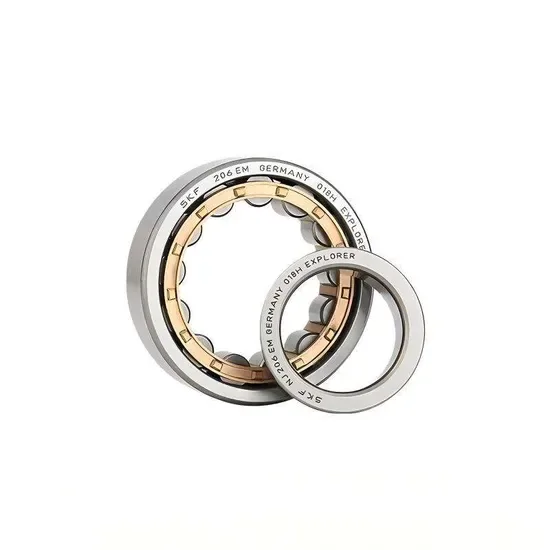

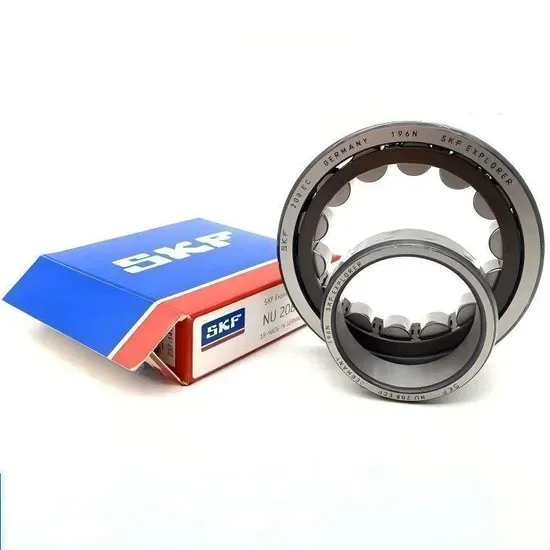
Description
Authorized Channel Sourcing — Every SKF NN 3007K/SP we ship traces back to the manufacturer’s production facilities through verified distribution pathways with batch-level documentation.
Technical Specifications
| Parameter | Value |
|---|---|
| Designation | SKF NN 3007K/SP |
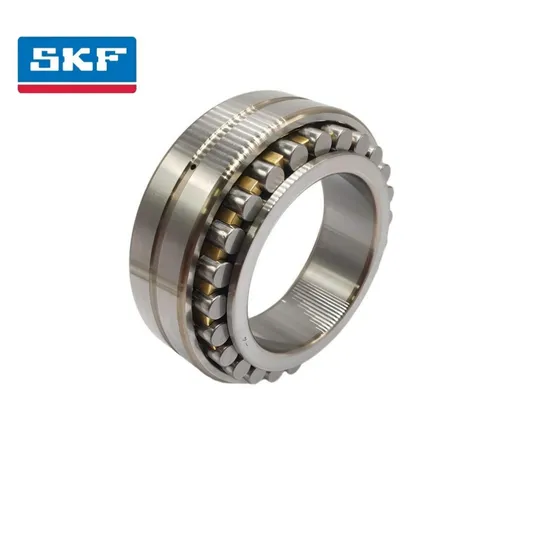
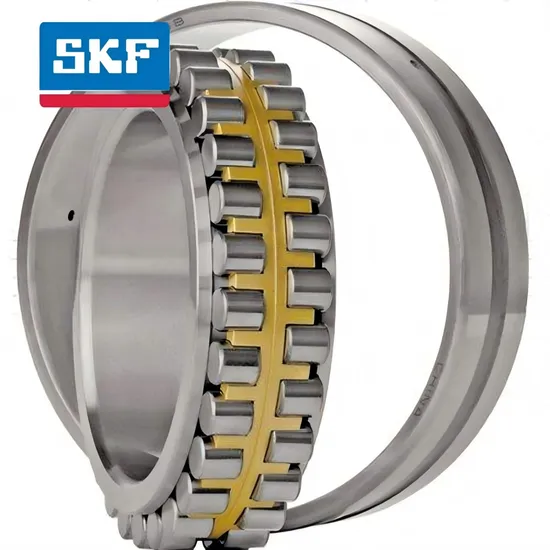
| Bearing Type | Double Row Cylindrical Roller Bearing |
| Bore Diameter (d) | 35 mm |
| Outside Diameter (D) | 62 mm |
| Width (B) | 20 mm |
| Bore Type | Tapered Bore (1:12) |
| Arrangement | Double Row |
| Number of Rows | Two |
| Seal or Shield Type | Open |
| Weight | 0.250 kg |
| Origin | China |
/SP suffix classification requires manufacturer catalog confirmation before final application approval.
Application Suitability
| Industry | Typical Applications |
|---|---|
| Machine Tool Manufacturing | High-speed spindle front and rear support journals |
| Precision Gearboxes | Input and output shaft radial positioning in helical gear sets |
| Printing and Converting Machinery | Impression cylinder bearing seats requiring minimal radial runout |
| Textile Machinery | High-twist spindle carriers and yarn guide roller assemblies |
What the /SP Precision Class Actually Demands from a Spindle Journal
Super-precision spindle support relies on the journal itself, not just the bearing.
I watched a furniture plant in Binh Duong ignore the P4 call on an NN 3020 spindle fit and press in a P0 grade instead. Two hundred hours later the tapered bore lost preload, thermal binding seized the spindle, and a full batch of precision-cut panels went to scrap. The SKF NN 3007K/SP double row cylindrical roller bearing sits in that same family of unforgiving applications. When the inner ring seats on a tapered journal, any deviation in shaft roundness or surface finish transfers directly into rolling contact stress [NEED_CITE: spindle bearing installation sensitivity to journal geometry per ISO 492]. A cloned marking on a counterfeit inner ring hides soft material that collapses under radial load, and no visual inspection catches it before the spindle starts vibrating at speed.
Matching the Bearing to High-Speed Spindle Duty Cycles
The SKF NN 3007K/SP double row cylindrical roller bearing is built for radial rigidity where angular contact pairs handle thrust. In a typical machine tool spindle, this bearing sits at the rear or middle support position while angular contact bearings at the front manage axial cutting forces. The open design allows direct oil-air mist or oil jet lubrication, which is the only viable cooling method when surface speeds push grease beyond its thermal limit. We once cross-referenced a competitor’s closed spindle housing where grease-packed cylindrical rollers failed within weeks because the housing trapped heat; switching to an open configuration with circulated oil resolved it entirely.
Operating Environment and Performance Demands
Radial loads on spindle bearings are continuous and high-frequency, with occasional shock pulses during interrupted cuts or tool engagement. Speeds regularly reach the upper boundary of grease lubrication, making oil circulation or oil-air mist mandatory for thermal management. Temperature gradients across the spindle housing cause differential expansion between the inner ring and shaft, which is precisely why the tapered bore exists — it allows axial adjustment of internal clearance after mounting [NEED_CITE: thermal expansion effects on spindle bearing preload]. The open configuration places full responsibility for contamination exclusion on the spindle housing seals, meaning labyrinth or lip seal integrity upstream is non-negotiable. Mounting demands controlled axial drive-up on the tapered journal to set the correct residual clearance, and that procedure requires a dial indicator on the inner ring expansion, not guesswork.
Decoding the Critical Specifications
The tapered bore with a 1:12 ratio is the defining feature of the K suffix. When the inner ring is driven axially onto the matching tapered journal, it expands radially and takes up internal clearance. This is how preload or zero-clearance is achieved without any external locking device — the shaft itself becomes the adjustment mechanism. The double row cylindrical roller arrangement provides radial load capacity and rigidity that single row designs cannot match, which matters when cutting forces induce bending moments on the spindle. The open seal configuration eliminates friction-generating contact seals, allowing the bearing to reach higher limiting speeds while relying on the spindle housing for contamination defense. The SP precision class sits between P4 and P5 in the SKF hierarchy, specifying tighter dimensional and running accuracy than standard tolerance grades, which directly controls radial runout at the spindle nose [NEED_CITE: SKF super-precision tolerance class definitions].
The Hidden Cost of Ignoring Suffix Accuracy
Fitting a standard clearance NN 3007 where a K taper bore was specified means the bearing simply will not mount on a tapered journal — yet I have seen workshops attempt to force cylindrical bore bearings onto adapter sleeves meant for different taper ratios. A precision mismatch where SP is replaced by P0 results in excessive radial runout that manifests as chatter marks on machined surfaces, often diagnosed as a tooling problem rather than a bearing problem. Counterfeit inner rings with inadequate case hardness spall under load, and per ISO 15243 that failure mode classifies as surface fatigue initiated by material deficiency, not application error [NEED_CITE: bearing failure mode classification per ISO 15243]. The downstream cost is never just the bearing — it is unplanned downtime, scrapped workpieces, and in severe cases, damage to the spindle housing bore that requires line-boring to recover.
Sourcing Reliability for Super-Precision Cylindrical Rollers
We source the SKF NN 3007K/SP double row cylindrical roller bearing through authorized distributor channels, which means every unit arrives with traceable batch documentation rather than a repackaged box of unknown origin. Our cross-reference database aligns bore taper ratio, precision class, and internal clearance simultaneously — not just the base number — so when an NSK or FAG equivalent is proposed as a substitute, the full suffix stack matches. Before shipment, we can provide dimensional inspection reports confirming running accuracy, which matters when the spindle assembly cannot tolerate field rework. Origin documentation accompanies every shipment for import compliance, and QR code verification through the manufacturer’s official application is available for authenticity confirmation on received stock.
Documentation & Authenticity
- Supplier Certificate of Conformity referencing the specific batch and lot number of each SKF NN 3007K/SP shipped
- Dimensional inspection report confirming bore taper geometry and outer diameter roundness within SP tolerance band
- Country-of-origin certificate supporting import documentation and customs clearance procedures
- QR code verification pathway enabling end-user authenticity confirmation via the official SKF application on arrival
- Material certificate traceable to the production heat number for the bearing rings and rollers
Storage, Handling & Mounting
- Keep the SKF NN 3007K/SP in original sealed packaging until the moment of mounting; the open configuration exposes precision-ground raceways to ambient dust and moisture immediately upon unsealing
- Tapered bore mounting requires a calibrated dial indicator measuring inner ring expansion during axial drive-up to achieve correct residual radial clearance
- Store horizontally in a temperature-stable environment; thermal cycling in uncontrolled warehouses causes condensation on the exposed raceways of this open-type bearing
- Handle with lint-free gloves to prevent fingerprint corrosion on the SP-class ground surfaces, which are more susceptible to contact corrosion than standard tolerance finishes
- Confirm spindle journal taper matches 1:12 ratio before mounting; forcing a K-bore onto a different taper ratio damages the inner ring bore permanently
Request Technical Verification Before Ordering
Share your spindle drawing or OEM equipment number so we can confirm the tapered bore ratio, precision class, and internal clearance match your specific assembly requirements. If you are evaluating a cross-brand substitution, provide the full existing designation including all suffixes so our interchange comparison covers clearance, precision, and bore geometry — not just the base number. We will return a formal quotation with confirmed lead time, available documentation package, and batch traceability details for your procurement records.
Frequently Asked Questions
Q: What does the /SP suffix indicate on this bearing?
A: The /SP suffix in the SKF designation system indicates a super-precision tolerance class that specifies tighter dimensional and running accuracy requirements than standard grades. It sits between P4 and P5 in the hierarchy. The full specification should be confirmed against the manufacturer’s current catalog for your particular application parameters.
Q: How do I verify the authenticity of a received SKF NN 3007K/SP?
A: Each bearing carries a QR code that can be scanned through the official SKF application to confirm authenticity and batch traceability. We also supply a Certificate of Conformity and can arrange third-party dimensional verification before shipment upon request.
Q: Can I substitute an NSK or FAG equivalent for this SKF tapered bore cylindrical roller bearing?
A: Cross-brand substitution is possible, but the replacement must match three parameters simultaneously: the 1:12 tapered bore ratio, the SP precision class equivalent, and the correct internal clearance for your spindle thermal operating range. We provide a full cross-reference comparison covering all three before recommending any interchange.
Q: How is internal clearance set on a tapered bore cylindrical roller bearing?
A: The inner ring is driven axially along the tapered journal, which causes it to expand radially and reduce internal clearance. The correct drive-up distance is measured by monitoring inner ring expansion with a dial indicator until the target residual clearance is achieved. This procedure requires trained personnel and proper mounting tools.
Q: What lubrication method is appropriate for the open design?
A: The open configuration is designed for oil-air mist, oil jet, or oil circulation systems that provide both lubrication and cooling. Grease lubrication is generally unsuitable for high-speed spindle applications using this bearing type because heat dissipation through the grease matrix is insufficient at operating speeds.
Confirm Your SKF NN 3007K/SP Spindle Bearing Requirements
Send us your spindle OEM number or application parameters — load, speed, and operating temperature — for a confirmed quotation with full documentation.