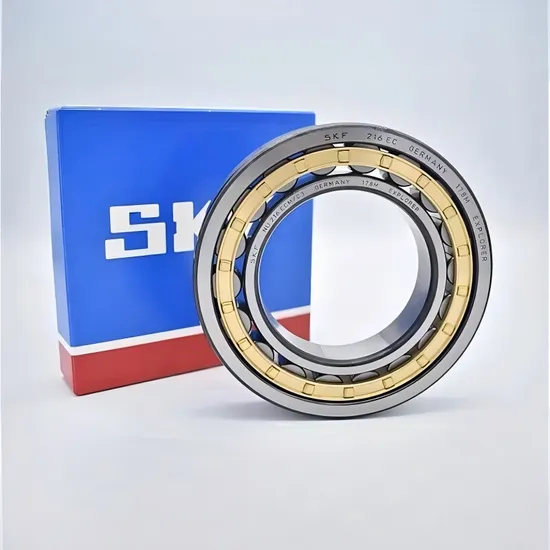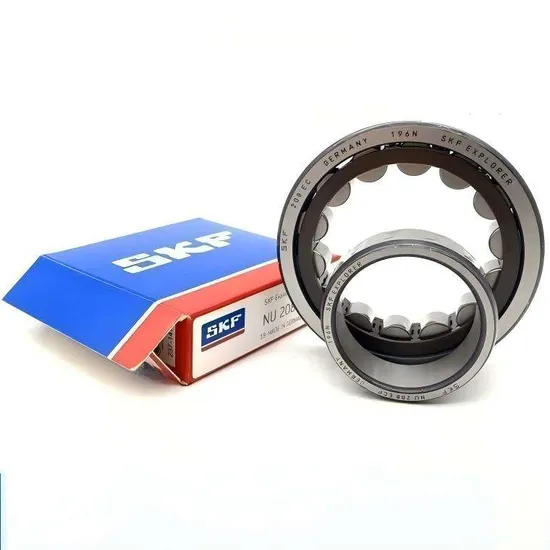


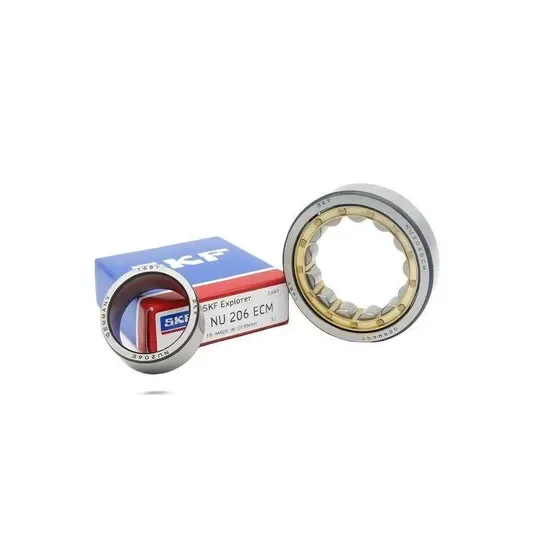


Description
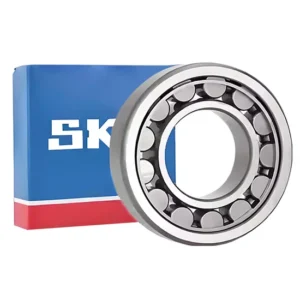
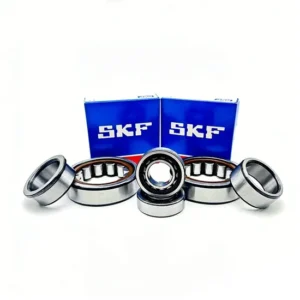
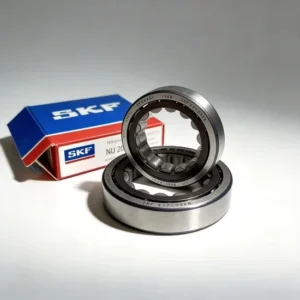
Authorized Channel Sourcing — Every SKF NN 3014 KTN/HC5SP we ship carries traceable documentation back to the manufacturer’s distribution network, not an unverified third-party reseller.
Technical Specifications
| Parameter | Value |
|---|---|
| Designation | SKF NN 3014 KTN/HC5SP |
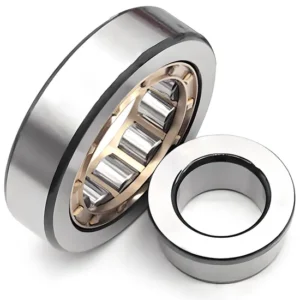
| Bearing Type | Double Row Cylindrical Roller Bearing |
| Bore Diameter (d) | 70 mm |
| Outside Diameter (D) | 110 mm |
| Width (B) | 30 mm |
| Weight | 0.250 kg |
| Cage Material | Injection molded glass fiber reinforced polyamide 6,6 |
| Seal or Shield Type | Open |
| Bore Type | Tapered, taper 1:12 |
| Number of Rows | Double Row |
| Origin | China |
| Precision Class | SP |
Note: The /HC5 suffix designation requires confirmation against the manufacturer’s official catalog for exact hybrid ceramic rolling element specifications before final procurement.
Application Suitability
| Industry | Typical Applications |
|---|---|
| Industrial Machinery | CNC lathe main spindle rear support |
| Precision Equipment | High-speed grinding spindle shaft |
| General MRO | Replacement for OEM machine tool rebuilds |
The Hidden Cost of a Missed Suffix on a 15,000 RPM Spindle
A single overlooked suffix can turn a precision spindle into scrap metal in under sixty seconds.
I was sitting in a workshop in Sharjah when a customer called about a seized CNC spindle. They had sourced an NN 3014 based on the base number alone, ignoring everything after the slash. What they installed had standard steel balls and a P5 tolerance class. The spindle was designed for hybrid ceramic rollers at SP precision. At operating speed, the thermal expansion mismatch caused the inner ring to grip the shaft, the cage distorted, and the shaft scored beyond repair. A week of unplanned downtime and a complete reshaft job followed. That failure mode is cataloged under ISO 15243 as thermal seizure, and it is entirely preventable with correct suffix verification [NEED_CITE: rolling bearing failure mode classification per ISO 15243]. Counterfeit bearings with soft inner rings and cloned packaging continue to circulate through unverified middlemen, making the SKF NN 3014 KTN/HC5SP double row cylindrical roller bearing a component where sourcing discipline matters as much as the engineering itself.
Matching the Spindle Load Spectrum
The SKF NN 3014 KTN/HC5SP double row cylindrical roller bearing is engineered for the specific demands of machine tool spindles where radial rigidity and rotational accuracy define part quality. The double row cylindrical configuration handles the high radial loads generated during heavy cutting passes while maintaining the shaft guidance needed for tight dimensional tolerances on finished components. When a buyer in Riyadh needed to cross-reference this exact bearing for a lathe rebuild, we matched not just the base number but the tapered bore, polyamide cage, and SP precision class together—ensuring the replacement behaved identically under load.
Operating Environment and Performance Demands
Spindle bearings operate in a narrow window where thermal growth, lubrication breakdown, and vibration intersect. At sustained high speeds, the polyamide cage must withstand centrifugal forces while maintaining roller spacing, and the open design relies on the machine’s external oil-air or oil-mist lubrication system to carry heat away from the contact zone [NEED_CITE: high-speed spindle bearing lubrication requirements]. The tapered bore allows the bearing to be driven axially onto a matching tapered journal, where the interference fit is adjusted by controlling the drive-up distance—directly setting the operating internal clearance. If that clearance is set too tight, friction heat spikes; too loose, and the spindle loses rigidity under cutting forces. Ambient temperature swings in an unclimatized workshop further shift the clearance window, making the initial mounting procedure critical to achieving the intended L10 life.
Inside the Engineering of the NN 3014 Designation
The K suffix denotes a tapered bore with a 1:12 taper ratio, allowing direct mounting on a tapered shaft journal where the drive-up distance sets residual clearance. This is the preferred method for spindle applications because it eliminates the need for an adapter sleeve and provides a stiffer, more concentric seat. The TN9 cage is injection molded from glass fiber reinforced polyamide 6,6, a material chosen for its low weight and favorable sliding properties against the rollers at high speeds where a brass cage would generate excessive centrifugal load. The SP precision class sits above P5 and below UP, specifying tighter running accuracy and dimensional tolerances suited to spindle applications where runout directly transfers to the workpiece surface finish. The double row arrangement provides high radial rigidity in both directions, which is essential when the spindle experiences alternating radial loads during multi-axis machining operations [NEED_CITE: cylindrical roller bearing rigidity in machine tool spindles].
What a Wrong Bearing Really Costs the Workshop
Correct specification paired with genuine sourcing delivers the L10 life predicted by ISO 281 under the actual load and speed conditions. A bearing that appears identical on paper but carries the wrong internal clearance, a standard precision class instead of SP, or steel rollers where hybrid elements were specified will fail prematurely—often catastrophically. The direct costs include the replacement bearing and labor, but the hidden costs dominate: scrapped workpieces during the failure event, collateral damage to the shaft and housing, missed delivery deadlines, and warranty voidance on the machine tool itself. Sourcing the genuine SKF NN 3014 KTN/HC5SP double row cylindrical roller bearing through a verifiable channel eliminates these risks at the procurement stage rather than absorbing them on the shop floor.
Sourcing Discipline Behind Every Shipment
We source the SKF NN 3014 KTN/HC5SP double row cylindrical roller bearing through authorized distributor channels, meaning the documentation chain traces back to the manufacturer’s own logistics network rather than an unverified intermediary. Every shipment includes batch and lot traceability so you can confirm production origin. Our cross-reference database matches clearance, cage material, and precision class simultaneously—not just the base designation—so substitution decisions are made with full technical context. For buyers managing import compliance, we provide country-of-origin documentation and HS code support tailored to your destination port requirements. Authenticity verification guidance is included with every order, covering QR code validation pathways through the brand’s official application and physical inspection checkpoints that distinguish genuine components from high-quality counterfeits [NEED_CITE: counterfeit bearing identification methods].
Documentation & Authenticity
- Supplier Certificate of Conformity referencing the specific batch number of your SKF NN 3014 KTN/HC5SP shipment
- QR code verification instructions for validation through the official SKF app before installation
- Third-party dimensional inspection report confirming SP class running accuracy and tapered bore geometry
- Country-of-origin certificate aligned with the manufacturing facility listed on the bearing packaging
- Material and heat treatment documentation for the inner and outer rings upon request
Storage, Handling & Mounting
- Retain the original sealed packaging until the moment of mounting to protect the open bearing design from dust and moisture ingress
- Use clean, lint-free gloves when handling the polyamide TN9 cage, as skin oils can degrade the cage material over extended storage
- For tapered bore (K suffix) installation, calculate the required axial drive-up distance to achieve the target residual clearance before beginning the mounting procedure
- Apply the manufacturer-specified lubricant through the spindle’s external oil system after mounting, as the open design requires external lubrication from first rotation
- Store horizontally in a temperature-stable environment to prevent uneven thermal distortion of the thin-section rings before installation
Request a Technical Quotation
Share your spindle operating parameters—speed, radial load, and lubrication method—so we can verify the suitability of this designation for your application. If you are replacing an existing bearing, provide the OEM equipment number or the full designation printed on the original packaging for cross-reference confirmation. We will return a quotation with confirmed lead time, available documentation package, and batch origin details.
Frequently Asked Questions
Q: How can I verify the authenticity of the SKF NN 3014 KTN/HC5SP I receive?
A: Genuine bearings carry a QR code on the packaging that links to the manufacturer’s official verification application. Scan the code upon receipt to confirm batch traceability and production origin. We also provide a Certificate of Conformity with every shipment and can supply third-party inspection reports upon request.
Q: What does the /HC5 suffix indicate on this cylindrical roller bearing?
A: The /HC5 designation typically refers to a hybrid configuration with ceramic rolling elements, but the exact specification for this suffix should be confirmed against the current manufacturer catalog before placing a final order. We provide this confirmation as part of our technical review process.
Q: Can I cross-reference this bearing to another brand if lead time is an issue?
A: Cross-referencing is possible, but the match must account for the tapered bore (K), polyamide cage (TN9), and SP precision class simultaneously—not just the base number NN 3014. We provide a full interchange comparison covering SKF, NSK, FAG, and other major brands with all suffix parameters aligned.
Q: What are the mounting requirements for the tapered bore (K suffix)?
A: The tapered bore requires a matching tapered shaft journal. The bearing is driven axially onto the taper to a calculated distance that sets the internal clearance. This procedure requires a hydraulic nut or precision locknut and a dial indicator to measure the drive-up distance accurately.
Q: Is the polyamide TN9 cage suitable for high-temperature spindle applications?
A: Polyamide 6,6 cages have an upper continuous operating temperature limit, typically around 120°C. For spindle applications where sustained operating temperatures exceed this threshold, a brass or machined steel cage alternative should be evaluated. Contact us with your operating temperature data for a suitability review.
Secure Your Spindle Rebuild With Verified Specifications
Submit your application parameters or OEM equipment number, and we will confirm availability, documentation scope, and lead time within one business day.