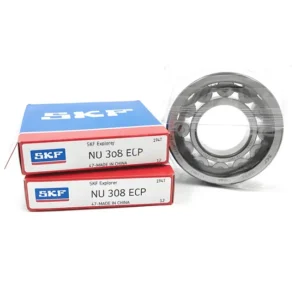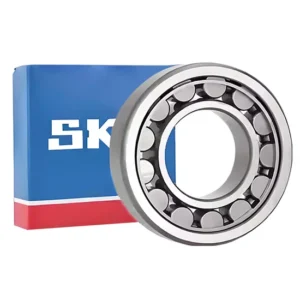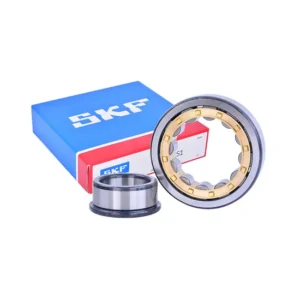
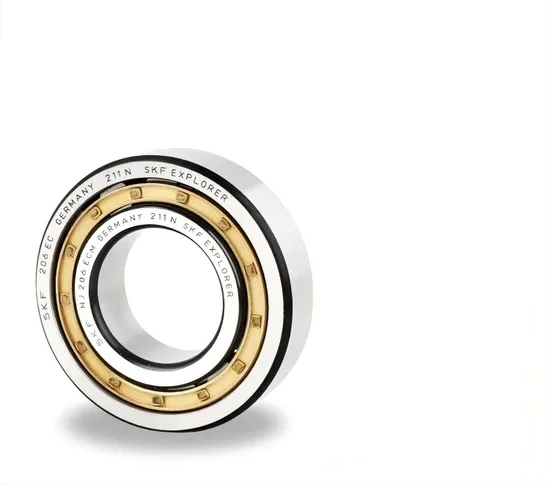
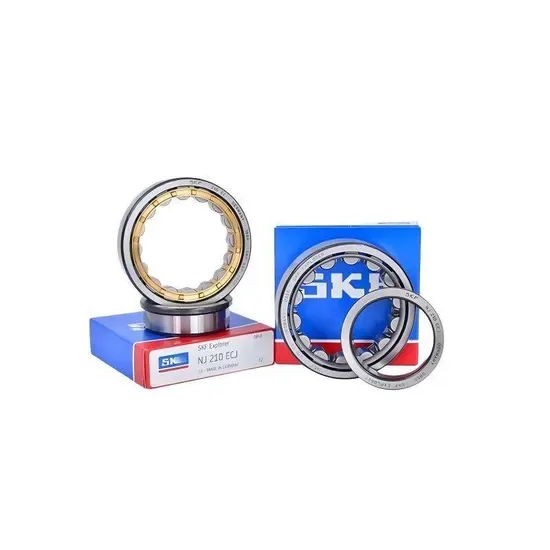
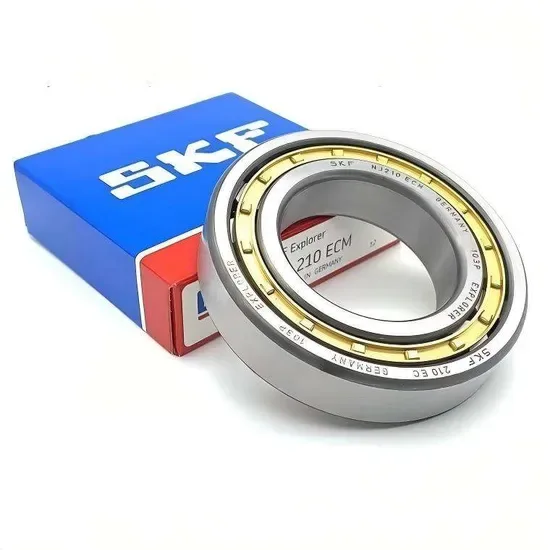
Description
Authorized Channel Sourcing — Every SKF NN 3021KTN9/SP unit ships with traceable batch documentation confirming origin and conformance.
Technical Specifications
| Parameter | Value |
|---|---|
| Designation | SKF NN 3021KTN9/SP |
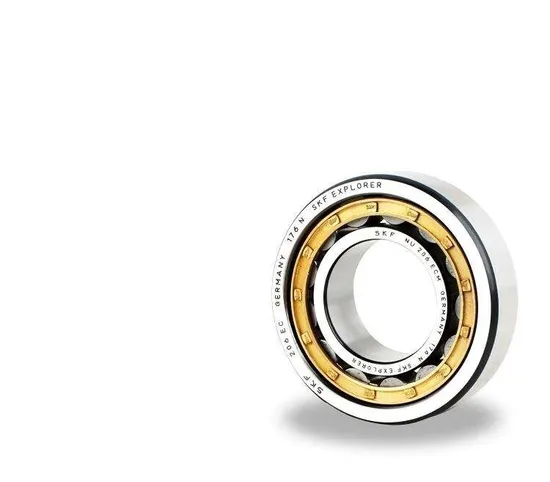
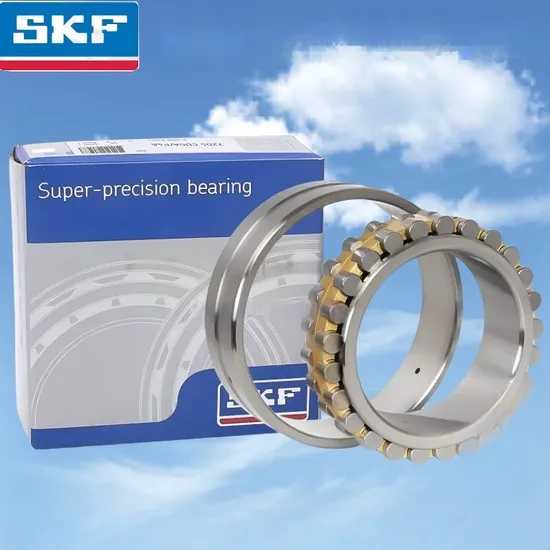
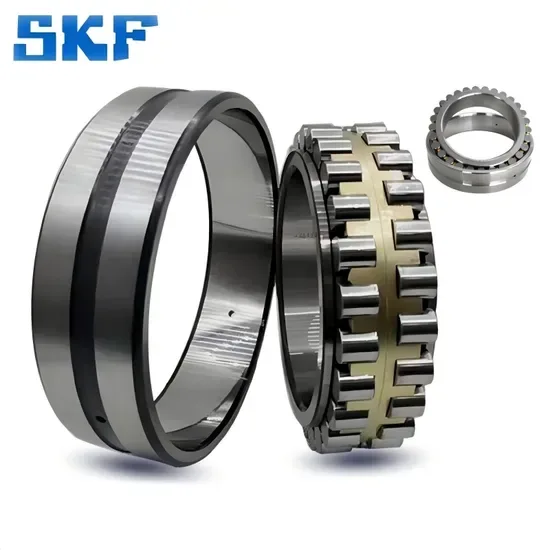
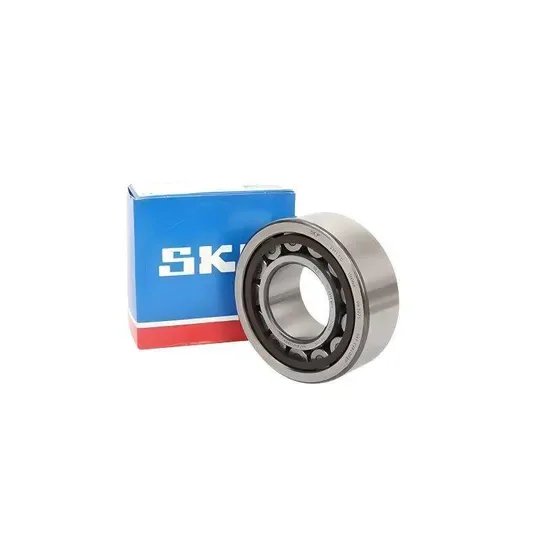
| Bearing Type | Double Row Cylindrical Roller Bearing |
| Bore Diameter (d) | 105 mm |
| Outside Diameter (D) | 145 mm |
| Width (B) | 41 mm |
| Number of Rows | Double Row |
| Bore Type | Tapered (1:12) |
| Seal or Shield Type | Open |
| Cage Material | Polyamide 66 (Glass Fiber Reinforced) |
| Precision Class | SP |
| Weight | 2.66 kg |
| Origin | China |
Note: The suffix ‘9’ within TN9 and the ‘SP’ precision designation appear in SKF’s super-precision catalog; confirm application-specific tolerance and speed limits against the current manufacturer datasheet before finalizing specifications.
Application Suitability
| Industry | Typical Applications |
|---|---|
| Machine Tool Manufacturing | Main spindle rear support, high-speed milling spindle shaft |
| Industrial Gearbox Production | Precision gear set intermediate shaft, high-rigidity output stage |
| Printing & Textile Machinery | Gravure cylinder bearing seat, high-speed roller shaft |
| General Industrial Equipment | Rotary table positioning axis, precision drive shaft |
What Happens When Precision Suffixes Get Ignored on a 105 mm Spindle Bearing
The SP suffix is not decorative — it defines the running accuracy envelope that keeps your spindle from thermally locking up at speed.
I recall a machine tool shop in Suzhou that replaced an NN3021KTN9/SP with a standard-precision equivalent matched only on the base number. Within weeks, the spindle exhibited thermal binding during continuous high-speed cuts. The inner ring expanded against the tapered shaft seat, clearance collapsed, and the polyamide cage began shedding material into the oil film. That single overlooked suffix cost them unplanned downtime, a replacement shaft, and a delayed customer delivery [NEED_CITE: super-precision bearing running accuracy requirements per ISO 492]. Procurement shortcuts on suffix verification create field failures that no L10 life calculation can predict.
Matching the SKF NN 3021KTN9/SP to High-Rigidity Spindle Duty
Machine tool spindles demand radial rigidity with minimal deflection under cutting loads. The SKF NN 3021KTN9/SP delivers this through its double-row cylindrical geometry, which distributes radial forces across a wider contact zone than single-row alternatives. The tapered bore allows direct interference fitting onto the shaft taper or via adapter sleeve, enabling on-site clearance adjustment during assembly — critical when thermal growth must be compensated at operating temperature. We cross-check bore taper, cage type, and precision class together when matching OEM equipment numbers, because a base-number-only swap misses the parameters that actually govern spindle behavior under load.
Thermal, Speed, and Lubrication Realities at the Spindle Nose
High-speed spindles generate heat at the inner ring interface. The TN9 polyamide cage reduces friction compared to brass alternatives and maintains dimensional stability across typical spindle temperature ranges, but it requires forced-circulation oil lubrication to prevent thermal degradation. The open design of this bearing assumes integration into the spindle housing’s oil-bath or oil-air system — running it dry or with grease-only lubrication accelerates cage wear. Mounting the tapered bore demands controlled axial drive-up on the shaft taper; too little interference leaves radial play, too much collapses residual clearance and invites thermal seizure [NEED_CITE: tapered bore cylindrical roller bearing mounting procedure and clearance adjustment].
Why the K, TN9, and SP Suffixes Each Carry Engineering Weight
The K suffix indicates a 1:12 tapered bore, which allows the bearing to be driven axially onto a matching shaft taper to achieve precise radial internal clearance — essential when thermal expansion at operating speed would otherwise eliminate clearance entirely. The TN9 cage is injection-molded glass-fiber-reinforced polyamide 66, chosen for its low mass and low friction coefficient at elevated spindle speeds, though it demands clean oil free of particulate contamination. The SP precision class sits between P4 and P2 in SKF’s super-precision hierarchy, specifying tighter bore and outside diameter tolerances along with controlled running accuracy — this is what prevents the inner ring from binding against the shaft seat during thermal cycling. Together, these three suffixes define a bearing engineered for applications where radial rigidity, thermal stability, and speed capability must coexist without compromise.
The Hidden Cost of Overlooking Bore Taper and Cage Material
Installing a standard cylindrical bore bearing where a K-suffix tapered bore is specified eliminates the ability to adjust clearance during mounting — the result is either excessive play causing vibration or insufficient clearance causing premature seizure. Substituting a brass cage for TN9 increases friction and heat generation at speed, shortening lubricant life and accelerating thermal runaway. Counterfeit bearings cloned from base designations often use soft inner rings that deform under interference fit, destroying running accuracy before the spindle ever reaches operating temperature. ISO 15243 classifies these failures as mounting damage and material fatigue, both preventable through correct specification and authentic sourcing [NEED_CITE: bearing failure classification modes per ISO 15243].
How We Reduce Specification Risk for Precision Cylindrical Roller Bearings
We source SKF super-precision bearings through authorized distributor channels, not open-market brokers, which means every NN 3021KTN9/SP unit carries traceable batch documentation back to the manufacturer’s production facilities. Our cross-reference process verifies bore taper, cage material, and precision class simultaneously — not just the base number — because matching only the numeric designation invites the exact failures described above. We provide country-of-origin documentation for import compliance, dimensional inspection reports confirming running accuracy, and QR code verification pathways through SKF’s official authentication tools. When OEM equipment numbers are provided, we reverse-verify the complete suffix chain to ensure the replacement bearing matches the original specification on every parameter that governs field performance [NEED_CITE: counterfeit bearing detection methods using QR code verification].
Documentation & Authenticity
- Supplier Certificate of Conformity (COC) listing batch and lot numbers traceable to authorized channel receipt
- Third-party dimensional inspection report confirming bore taper ratio and SP-class running accuracy before shipment
- Country-of-origin documentation package supporting import compliance and customs verification
- QR code authentication pathway via SKF official applications for on-site verification at receiving inspection
- Material certificate confirming bearing steel specification and heat treatment conformance
- HS code classification support for international shipping documentation
Storage, Handling & Mounting
- Retain original sealed packaging until mounting; premature exposure risks particulate contamination on the SP-precision raceway surfaces
- The tapered K-bore requires controlled axial drive-up on the shaft taper using calibrated hydraulic nuts or induction heating — cold pressing risks uneven seating and residual clearance loss
- Store horizontally in climate-controlled conditions below typical industrial humidity thresholds to prevent condensation corrosion on the open, unsealed raceways
- TN9 polyamide cages are sensitive to UV degradation; avoid prolonged exposure to direct sunlight or unshielded fluorescent lighting during storage
- Verify shaft taper geometry and surface finish before mounting; out-of-tolerance taper seats compromise the interference fit and defeat the clearance adjustment capability the K-bore provides
- Confirm forced-circulation oil system cleanliness and flow rate before commissioning; the open bearing design relies entirely on external lubrication infrastructure
Request Technical Verification Before Procurement
Share your application parameters — operating speed, radial load spectrum, shaft taper geometry, and lubrication system specifications — so we can verify the SKF NN 3021KTN9/SP suffix configuration matches your duty cycle. If you have an OEM equipment number or existing bearing marking, send it for complete cross-reference validation including bore type, cage, and precision class alignment. We’ll confirm batch availability, lead time, and the documentation package your import process requires.
Frequently Asked Questions
Q: How do I verify that an SKF bearing is genuine using QR codes?
A: SKF provides official mobile applications that scan the QR code printed on the bearing packaging and sometimes on the bearing itself. The app queries SKF’s authentication database to confirm the batch number, production origin, and whether that specific code has been previously scanned — cloned codes from counterfeit operations typically flag as duplicates or return no match.
Q: What does the SP precision class mean compared to standard P4 or P5?
A: SP is SKF’s super-precision designation for machine tool applications. It specifies tighter tolerances on bore diameter, outside diameter, and running accuracy than standard P4, while also controlling parameters like wall thickness variation that affect mounting fit and thermal behavior at high speed.
Q: What are the mounting requirements for the K-suffix tapered bore?
A: The 1:12 tapered bore must be driven axially onto a matching shaft taper or adapter sleeve to achieve the correct radial internal clearance. This requires measuring axial drive-up distance or using hydraulic nuts with pressure monitoring. Incorrect drive-up either leaves excessive clearance causing vibration or eliminates clearance entirely, leading to thermal seizure under load.
Q: What speed and temperature limits apply to the TN9 polyamide cage?
A: TN9 cages operate effectively at high spindle speeds where low friction is critical, but they require clean oil lubrication and have upper temperature limits lower than brass cages. Confirm the specific speed-temperature envelope for your application against the current SKF super-precision catalog, as limits depend on oil viscosity, cooling capacity, and load conditions.
Q: How should I cross-reference this bearing to equivalent models from other brands?
A: Cross-referencing cylindrical roller bearings requires matching not just the base dimensions but also bore type (tapered vs cylindrical), cage material (polyamide vs brass), and precision class (SP vs P4 vs standard). A numeric-only match risks substituting a bearing that cannot deliver the thermal stability and running accuracy your application demands.
Confirm Your Spindle Bearing Specification Today
Send your OEM equipment number or operating parameters for complete suffix verification and documentation review.
Contact our technical sales team through authorized distributor channels for batch availability and lead time confirmation.