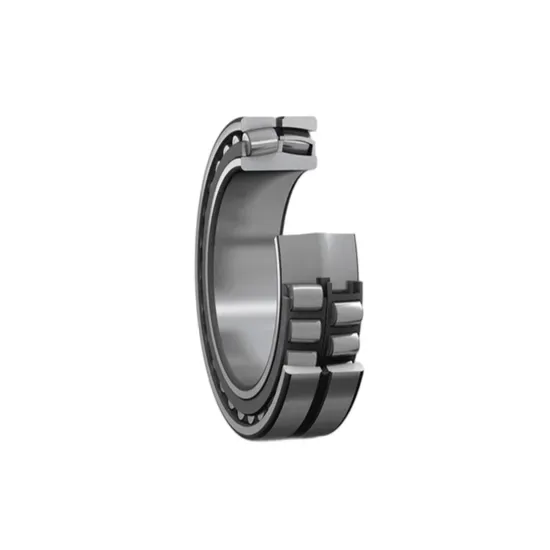
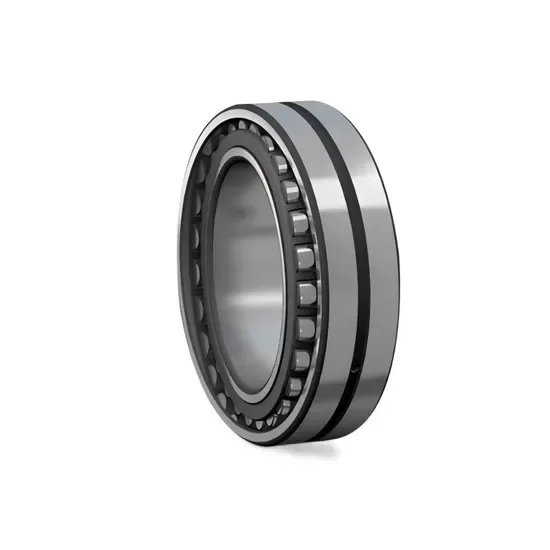
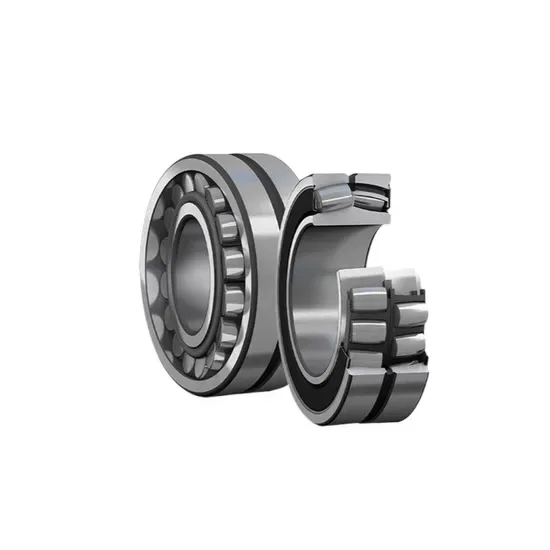
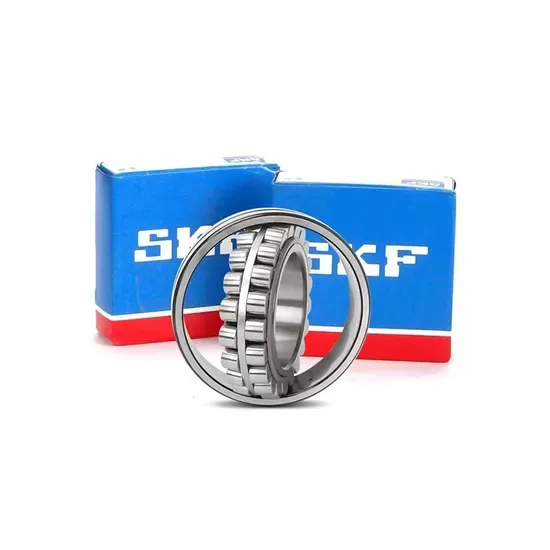
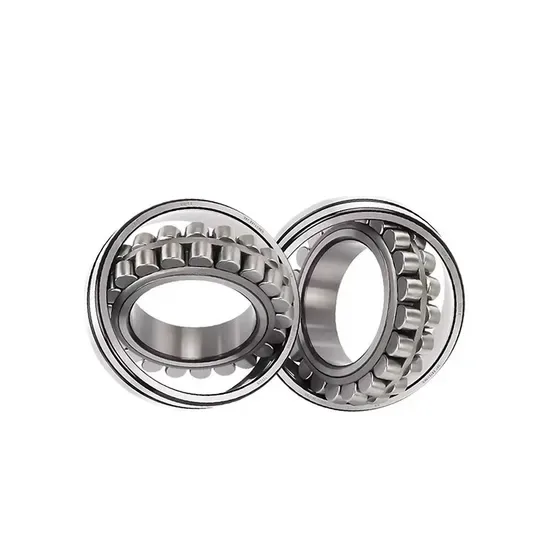
Description
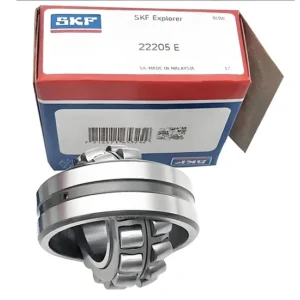
Authorized Channel Sourcing — Every 21316EK ships with batch-level traceability documents linking the bearing to its original manufacturer production run.
Technical Specifications
| Parameter | Value |
|---|---|
| Designation | 21316EK Spherical Roller Bearing |
| Bearing Type | Spherical Roller Bearing |
| Bore Diameter (d) | 80 mm |
| Outside Diameter (D) | 170 mm |
| Width (B) | 39 mm |
| Dynamic Load Rating (C) | 325 kN |
| Static Load Rating (C₀) | 375 kN |
| Limiting Speed | 5300 r/min |
| Reference Speed | 3800 r/min |
| Bore Type | Tapered 1:12 (K suffix) |
| Internal Design | Reinforced (E suffix) |
| Cage Material | To be confirmed per brand variant |
| Seal or Shield Type | Open |
| Clearance Class | To be confirmed at inquiry |
| Precision Class | Standard (P0) unless otherwise specified |
| Number of Rows | Two |
| Origin | Varies by brand selected |
Note: Width value listed in initial supplier data (35 mm) does not align with published catalog dimensions for the 21316 series; 39 mm reflects standard references and should be verified against the selected brand’s current technical sheet.
Application Suitability
| Industry | Typical Applications |
|---|---|
| Mining & Crushing | Vibrating screen exciter shafts, jaw crusher toggle seats |
| Steel & Metallurgy | Continuous caster guide rollers, rolling mill pinch rolls |
| Pulp & Paper | Paper machine dryer cylinders, press section felt rolls |
| Material Handling | Bucket elevator head shafts, conveyor drive pulleys |
Why a Tapered Bore Suffix Changes Everything on a Vibrating Screen
A missing or misread K suffix turns a secure adapter-sleeve mount into a spinning inner ring.
On a nickel processing site in Southeast Asia, a spherical roller bearing failed catastrophically within months because the replacement unit had a cylindrical bore where the OEM design required tapered. The adapter sleeve had nothing to grip, fretting corrosion set in, and the shaft surface was scored beyond reconditioning. When sourcing a 21316EK spherical roller bearing, the EK suffix pair is not optional detail — it dictates the entire mounting method, the drive-up procedure, and the residual clearance once the bearing is seated. Overlooking this during cross-reference substitution is one of the most common root causes of premature field failure in heavy-vibration equipment. [NEED_CITE: bearing mounting failures due to bore type mismatch in vibrating equipment]
Matching the 21316EK to High-Vibration, Heavy-Load Service
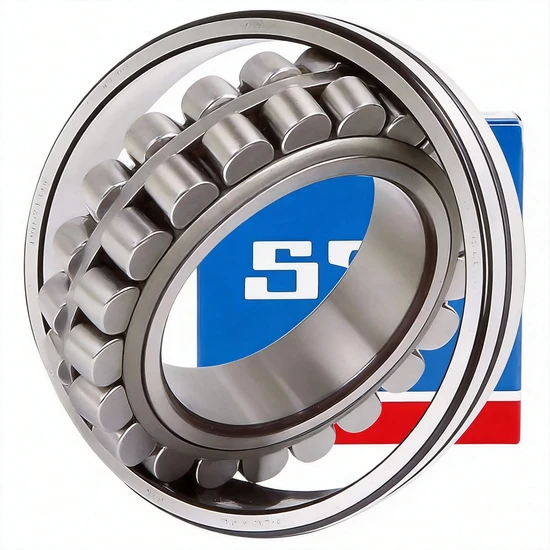
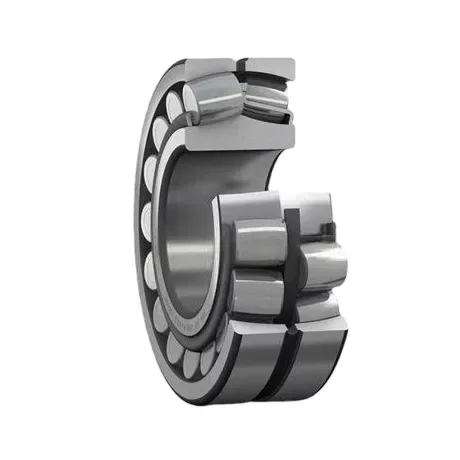
The reinforced internal geometry indicated by the E suffix increases roller count and optimizes load distribution across the two rows — essential for vibrating screens and crusher eccentric shafts where shock loads arrive from multiple vectors each revolution. The 1:12 tapered bore pairs with an adapter sleeve (typically H316 series), allowing axial drive-up that sets precise interference fit and residual clearance without relying on tight shaft machining tolerances. When we supply this 21316EK spherical roller bearing, we verify the cage type against the vibration amplitude and rotational speed of your specific machine, because a pressed-steel cage that works on a conveyor will fracture on a high-G screen deck.
Shock Loads, Thermal Swings, and Contamination at the Crusher Face
Crushing and screening environments subject bearings to severe radial shock combined with moderate axial thrust, often at speeds cycling between loaded and unloaded states. Ambient temperatures near hot-process streams can push bearing internals into thermal expansion that consumes standard CN clearance — making C3 or even C4 necessary for reliable operation. Lubrication intervals shrink dramatically in dusty, wet conditions where contaminant ingress accelerates wear. Open-type bearings like the 21316EK depend entirely on the housing seal design, placing responsibility for effective external sealing on the equipment engineer. Misjudging any of these variables shortens L10 life from years to weeks. [NEED_CITE: ISO 281 bearing life calculation under contaminated lubrication conditions]
Decoding the EK Suffix Pair
The "E" in EK signals a reinforced internal design — larger or more numerous rollers, optimized raceway curvature, and higher load capacity compared to non-E variants of the same bore and diameter. The "K" specifies a tapered bore with 1:12 convergence, engineered for mounting on adapter sleeves or withdrawal sleeves. This two-part suffix combination means the bearing can accommodate minor shaft misalignment while being locked axially with controlled interference. The absence of a cage material suffix in the base designation means cage type must be confirmed at order — brass (M/CA) cages handle vibration and high temperature better, while pressed steel (J) suits moderate-duty, cost-sensitive applications. Selecting the wrong cage for a vibrating screen exciter is a failure waiting to happen, something I have witnessed firsthand on multiple mine sites where a cost-saving swap led to cage cracking within a single shift.
What Happens When the Cross-Reference Ignores the Suffix
A procurement team matching only the base number "21316" across brands may receive a cylindrical-bore unit, a non-reinforced internal design, or a standard-clearance bearing where C3 was needed for thermal growth. Each deviation compounds in the field: loose fits cause creep and fretting, insufficient clearance causes thermal binding and cage overload, and weak cages fracture under vibratory acceleration. The cost is never just the replacement bearing — it is the unplanned downtime, the shaft damage, the emergency freight, and the lost production tonnage that dwarf component price. Per ISO 15243 failure classification, many of these modes are categorized as mounting or selection errors rather than manufacturing defects, leaving the buyer with no warranty recourse. [NEED_CITE: ISO 15243 rolling bearing damage classification categories]
Sourcing Decisions That Protect Your Maintenance Budget
We procure the 21316EK spherical roller bearing exclusively through authorized distributor channels, meaning every unit carries a verifiable chain of custody back to the manufacturer. Our cross-reference database does not stop at the base designation — we align bore type, clearance class, cage material, and internal design suffix before proposing an interchange between SKF, NSK, FAG, TIMKEN, NTN, or KOYO equivalents. Each shipment includes traceable batch documentation and country-of-origin certificates that satisfy import compliance requirements in markets across the Middle East, Africa, and Latin America. For buyers concerned about counterfeit exposure, we provide QR verification pathways through brand official apps and guidance on identifying telltale signs of cloned packaging.
Documentation & Authenticity
- Supplier Certificate of Conformity (COC) tied to the specific production batch of your 21316EK units
- Country-of-origin documentation formatted for customs clearance in restricted-import jurisdictions
- QR code verification pathway enabling authenticity confirmation through the brand’s official mobile application
- Third-party dimensional inspection report verifying bore taper, outer diameter, and width against catalog tolerances before dispatch
- Material certificate confirming bearing steel grade (100Cr6 or equivalent) and heat treatment compliance
- HS code classification support for smooth import documentation processing
Storage, Handling & Mounting
- Retain original sealed packaging until the moment of installation; the anti-corrosion coating on the 21316EK tapered bore surface degrades quickly once exposed to humid ambient air
- For tapered-bore mounting on adapter sleeves, follow the manufacturer’s specified axial drive-up distance to achieve correct residual clearance — over-tightening eliminates internal clearance and causes thermal seizure
- Use induction heating for the adapter sleeve and bearing assembly only when the manufacturer’s procedure calls for it; localized flame heating distorts the tapered bore geometry
- Handle with clean, lint-free gloves to prevent fingerprint corrosion on the exposed raceways of this open-type bearing
- Store horizontally in a vibration-free area; vertical storage of large-diameter spherical roller bearings risks brinelling the raceway under the roller set’s static weight
- Confirm housing seal condition and re-grease interval before commissioning, as the open design of the 21316EK places full contamination-defense responsibility on the surrounding housing
Requesting a Quotation with Full Technical Alignment
Share your equipment model number or the application parameters — load spectrum, operating speed, ambient temperature range, and mounting arrangement — so we can verify clearance class and cage type for your specific duty. If you are replacing an existing bearing, provide the full designation printed on the current unit including all suffixes, and we will confirm cross-reference compatibility before quoting. We can also supply the documentation package (COC, origin certificate, dimensional report) in advance for your import compliance review.
Frequently Asked Questions
Q: What does the EK suffix mean on a 21316EK spherical roller bearing?
A: The E indicates a reinforced internal design with optimized roller and raceway geometry for higher load capacity. The K specifies a tapered bore with 1:12 convergence, intended for mounting on adapter sleeves such as the H316 series.
Q: Can I substitute a different brand’s 21316 variant for the 21316EK?
A: Only if the substitute matches all four parameters: reinforced internal design (E), tapered bore 1:12 (K), the same clearance class, and compatible cage material. Matching the base number alone is insufficient and risks field failure.
Q: Which clearance class — CN, C3, or C4 — is correct for high-temperature crusher applications?
A: Crusher and vibrating screen environments with elevated operating temperatures or tight interference fits typically require C3 or C4 clearance to accommodate thermal expansion of the inner ring. The correct class depends on your specific shaft fit and temperature profile, which we verify during the selection review.
Q: How do I mount a tapered-bore spherical roller bearing on an adapter sleeve correctly?
A: The procedure involves sliding the bearing onto the sleeve, tightening the lock nut to a specified axial drive-up distance measured by feeler gauge reduction, then securing the lock washer. Under-driving leaves a loose fit; over-driving eliminates residual clearance.
Q: What documentation comes with the shipment?
A: Each order ships with a Certificate of Conformity, batch traceability record, country-of-origin certificate, and dimensional inspection report. QR verification support is available for brand-authenticity confirmation.
Secure Your 21316EK with Verified Origin and Matched Specifications
Submit your application parameters or OEM equipment number to receive a technically aligned quotation with full documentation. Contact our engineering team to begin the cross-reference verification and lead-time confirmation.