

Description
Sourced via authorized channels — every 22314E shipment includes batch-level traceability documents linking back to the manufacturer’s production facilities.
Technical Specifications
| Parameter | Value |
|---|---|
| Designation | 22314E Spherical Roller Bearing |
| Bearing Type | Spherical Roller Bearing |
| Bore Diameter (d) | 70 mm |
| Outside Diameter (D) | 150 mm |
| Width (B) | 51 mm |
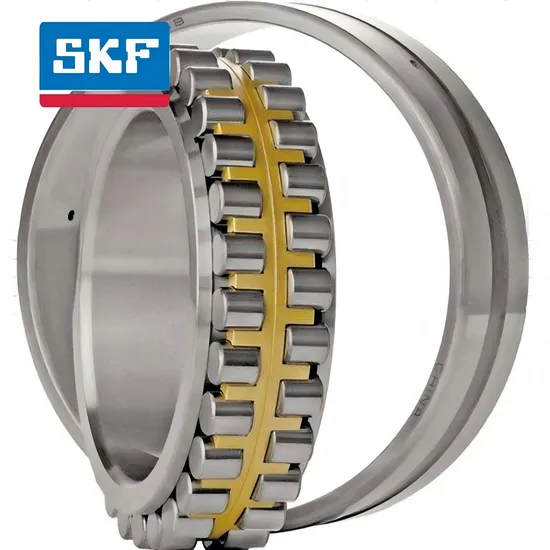
| Number of Rows | Two |
| Bore Type | Cylindrical |
| Cage Material | To be confirmed based on selected brand variant |
| Seal or Shield Type | Open |
| Clearance Class | Standard (CN) unless otherwise specified |
| Precision Class | Standard (P0) unless otherwise specified |
| Customization | Available for non-standard mounting or sealing requirements |
| Standards | ISO 15 / ISO 281 / ISO 76 |
Application Suitability
| Industry | Typical Applications |
|---|---|
| Agricultural Machinery | Combine harvester gearbox main shafts, grain auger drive rollers |
| Mining and Crushing | Vibrating screen exciter shafts, jaw crusher toggle seats |
| Material Handling | Belt conveyor pulley bearings, bucket elevator head shafts |
| General MRO | Heavy-duty fan shafts, industrial mixer drive assemblies |
What the E Suffix Really Means for Agricultural Shock Loads
The reinforced internal design on the 22314E spherical roller bearing is not a marketing label — it directly changes how the rollers distribute stress under impact.
Agricultural equipment does not fail gracefully. When a combine harvester hits a hard patch of compacted soil, the shock load travels straight through the drivetrain into the bearing raceway. Standard spherical roller designs can handle steady radial loads, but repeated impact cycles cause spalling on the inner ring long before the calculated L10 life is reached [NEED_CITE: spalling initiation under shock loading in spherical roller bearings]. I have seen gearbox teardowns where the inner ring looked like a gravel road — and the root cause was a bearing that matched the base number but lacked the reinforced roller geometry the application demanded. The 22314E spherical roller bearing for agriculture addresses this by increasing roller count and optimizing the roller-to-raceway contact profile, spreading peak loads across a wider surface area.
How the 22314E Matches Real Field Conditions in Farming Equipment
Harvest season waits for no one. The 22314E spherical roller bearing for agriculture is specified in applications where misalignment is inevitable — long shafts deflecting under crop load, housings that shift as frames flex over uneven terrain. The spherical outer raceway allows the inner ring and roller assembly to self-align, preventing edge loading that destroys conventional roller bearings within weeks. When a client in West Africa needed replacements for a sorghum thresher drive shaft, the cross-reference matching confirmed not just the 70×150×51 mm envelope but also verified that the E-suffix internal geometry aligned with the OEM’s original load calculations. That kind of detail is what keeps machinery running through an entire season without an unplanned stop.
Operating Challenges That Define Bearing Selection
The environment inside agricultural machinery is hostile by any standard. Radial loads dominate, but shock impulses from rocks, hard clods, and sudden engagement of PTO drives introduce transient peaks that can exceed the static load rating momentarily. Temperature swings between cold morning starts and afternoon heat affect internal clearance — if the bearing was installed with standard CN clearance, thermal expansion of the shaft can push the rollers into preload, generating heat that accelerates lubricant breakdown [NEED_CITE: thermal expansion effects on bearing internal clearance in agricultural drivetrains]. Dust infiltration is constant. Even with external housing seals, fine particulate reaches the bearing eventually, which means lubricant choice and relubrication intervals matter as much as the bearing itself. Mounting practices also play a role: induction heating for the inner ring must be controlled to avoid exceeding tempering temperatures, and the cylindrical bore requires a firm interference fit to prevent creep on the shaft under heavy radial load.
Reading the Specifications That Matter
The 70 mm bore and 150 mm outside diameter place the 22314E in a mid-range size class common across agricultural gearboxes and vibrating screen assemblies. The 51 mm width provides a load zone wide enough to handle the combined moment loads that occur when shafts deflect. The E suffix — reinforced internal design — means the manufacturer has optimized the roller profile and raceway curvature to increase load-carrying capacity compared to the base design without the E suffix. This is not merely a material upgrade; it is a geometric change that affects how contact stress distributes across each roller end and the raceway shoulder. For applications like vibrating screens where the bearing endures continuous oscillating loads at relatively low rotational speeds, that reinforced geometry is often the difference between reaching the calculated L10 life and replacing the bearing halfway through the season. The open design means external sealing is the responsibility of the housing, which gives maintenance teams flexibility to choose labyrinth seals, lip seals, or taconite rings depending on contamination severity.
What an Incorrect Replacement Actually Costs
The price difference between a genuine 22314E spherical roller bearing for agriculture and an unverified substitute is small compared to what happens when that substitute fails mid-harvest. A bearing with a soft inner ring — produced without proper through-hardening — will develop brinelling under shock loads, and the resulting vibration propagates through the entire gearbox [NEED_CITE: bearing failure mode classification per ISO 15243]. I once traced a combine harvester gearbox seizure back to a bearing that carried the correct base number but had CN clearance where the OEM specification called for C3. The shaft expanded under operating temperature, eliminated all internal clearance, and the rollers skidded until the cage fractured. The gearbox rebuild cost far exceeded what a correct bearing would have cost in the first place. Premature failure, unplanned downtime during critical harvest windows, and cascading damage to adjacent components — these are the real expenses that procurement engineers need to weigh against the false economy of unverified sourcing.
What We Verify Before Your 22314E Ships
Our sourcing model goes beyond matching a part number. Every 22314E we supply comes through authorized distributor channels with batch-level documentation traceable to the manufacturer’s production facilities. Cross-reference matching covers not just the base designation but clearance class, cage type, and precision suffixes across SKF, NSK, FAG, TIMKEN, NTN, and KOYO — so if you are replacing an OEM bearing, the substitute performs identically under your actual operating conditions. For import buyers, we provide country-of-origin documentation and HS code details to smooth customs clearance. Authenticity verification guidance includes QR code pathways through official brand applications, so you can confirm the bearing in hand matches the documentation. Application-based selection support means we review your load, speed, and temperature parameters before confirming the part, catching clearance or cage mismatches before they become field failures.
Documentation & Authenticity
- Supplier Certificate of Conformity (COC) with batch and lot numbers traceable to the manufacturer’s production records for each 22314E shipment
- Country-of-origin certificate issued at point of export, supporting customs documentation for agricultural machinery parts imports
- Third-party dimensional inspection report verifying bore, OD, width, and radial internal clearance against ISO 15 tolerances before dispatch
- QR code verification pathway via official brand applications for on-site authenticity confirmation upon receipt
- Material certificate confirming bearing steel grade and heat treatment compliance for the reinforced internal design components
Storage, Handling & Mounting
- Keep the 22314E in its original sealed packaging until the moment of mounting; early exposure to humid workshop air promotes corrosion on the exposed raceways of this open-type bearing
- For the 70 mm cylindrical bore, induction heating of the inner ring should not exceed 120°C to preserve the tempering of the hardened raceway; monitor with a contact thermometer during fitting
- Store horizontally on a flat shelf rather than standing on edge — the 51 mm width and the weight distribution of the two-row spherical roller assembly can cause the inner ring to shift and damage the cage if stored vertically over time
- After mounting, verify shaft fit interference is within the recommended range for the 70 mm bore to prevent inner ring creep under the heavy radial loads typical in vibrating screen and harvester applications
- In dusty agricultural environments, confirm that housing seals are intact and relubrication channels are clear before commissioning, since the open bearing design relies entirely on external sealing for contamination protection
Getting the Right 22314E for Your Application
Share your operating parameters — shaft speed, radial and axial loads, operating temperature range, and housing seal type — so we can confirm the correct clearance class and verify whether standard CN is sufficient or C3 is required for your thermal conditions. If you are replacing an OEM bearing, provide the equipment number or the full designation printed on the existing bearing, and we will run a cross-reference check covering clearance, cage, and precision across all six brand lines. Request the documentation package and country-of-origin confirmation for your import paperwork at the quotation stage, not after shipment.
Frequently Asked Questions
Q: How do I cross-reference the 22314E across different brands without missing critical suffixes?
A: Base number matching alone is insufficient. A proper cross-reference must align clearance class (CN, C3, or C4), cage material (machined brass vs. pressed steel), and precision grade in addition to the bore, OD, and width dimensions. We provide interchange comparisons across SKF, NSK, FAG, TIMKEN, NTN, and KOYO that cover all three parameters, not just the designation number.
Q: Should I specify C3 clearance for the 22314E in agricultural equipment?
A: It depends on operating temperature and shaft fit. Agricultural drivetrains that experience significant thermal expansion — such as gearboxes running in high ambient temperatures with tight shaft interference fits — often require C3 clearance to prevent the internal clearance from closing up during operation. Standard CN is suitable when temperature rise is moderate and shaft fits are within normal ranges.
Q: What does the E suffix on the 22314E indicate for load capacity?
A: The E suffix denotes a reinforced internal design with optimized roller geometry and increased load-carrying capacity compared to earlier non-E variants of the same dimension series. This makes the bearing better suited for applications involving shock loads, heavy radial forces, and continuous vibration such as vibrating screens and agricultural harvesting equipment.
Q: What lead times should I expect for bulk orders of the 22314E?
A: Lead times depend on brand selection, quantity, and whether customization is requested for non-standard sealing or clearance requirements. Standard configurations sourced through our authorized distributor channels typically carry multi-week lead times. For urgent replacement needs, we can check spot availability across our channel network.
Verify Your 22314E Requirements With Our Engineering Team
Send your application parameters or OEM equipment number, and receive a cross-reference comparison with clearance and cage verification within one business day.