

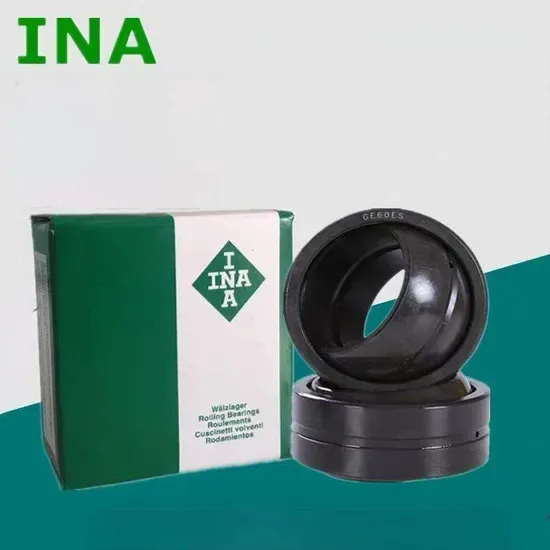
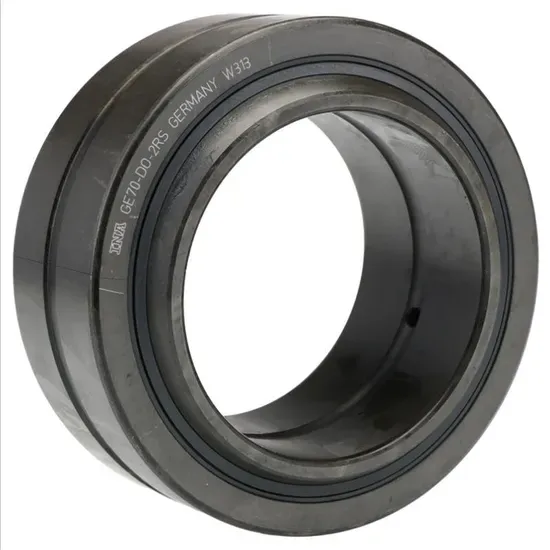
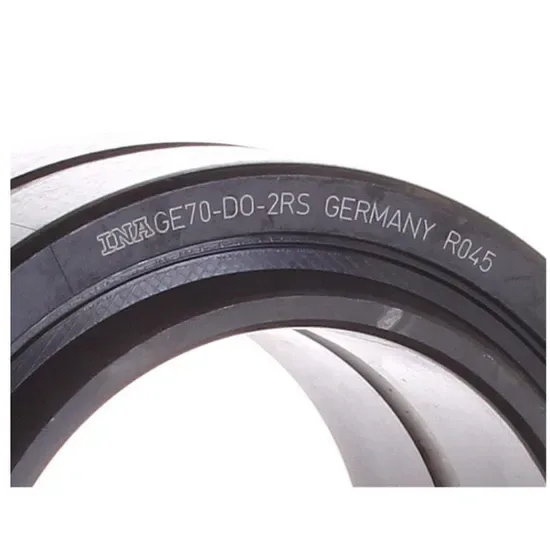
Description
Authorized-Channel Traceability — Every GE630-DO we ship carries batch-level documentation from the manufacturer’s distribution network, so maintenance teams can confirm metallurgical origin before hoisting a 530-kilogram component onto a wind turbine nacelle.
Technical Specifications
| Parameter | Value |
|---|---|
| Designation | FAG GE630-DO |
| Bearing Type | Spherical Plain Bearing |
| Bore Diameter (d) | 630 mm |
| Outside Diameter (D) | 850 mm |
| Ball Diameter | 740 mm |
| Sliding Contact Surface | Steel on Steel |
| Inner Ring Material | Bearing Steel |
| Ball Material | Bearing Steel |
| Precision Class | P0 |
| Structure | Rod End |
| Weight | 530.200 kg |
| Origin | China |
The suffix DO in GE630-DO is unverified and its exact meaning requires confirmation against the current FAG spherical plain bearing catalog.
Application Suitability
| Industry | Typical Applications |
|---|---|
| Wind Energy | Pitch and yaw articulation joints on utility-scale turbine retrofits |
| Heavy Industrial Machinery | Structural pivot points on large press frames and rolling mills |
| Hydraulic Systems | Rod-end linkages on high-tonnage cylinder assemblies |
| Mining and Crushing | Oscillating trunnion mounts on gyratory crusher housings |
Why a Soft Inner Ring Destroys a Wind Turbine Yaw Joint
Raceway hardness and through-hardening depth matter more than bore-and-OD matching on steel-on-steel spherical plain bearings.
I once reviewed a field failure on a desert wind farm where a replacement spherical plain bearing matched the envelope dimensions perfectly but the inner ring had been case-hardened only to a shallow depth. After several months of slow oscillation under heavy radial load, brinelling marks appeared across the raceway, alarms tripped, and the crew had to fly out for an emergency swap in extreme heat. Counterfeit or sub-spec large-diameter bearings with soft inner rings are entering global supply chains through unverified trading channels, and they pass casual visual inspection because the outer markings and QR codes are cloned [NEED_CITE: counterfeit bearing detection methods in heavy industry]. The result is not a gradual wear issue — it is sudden, unplanned downtime that costs far more than the bearing itself.
Matching the GE630-DO to Slow-Oscillation Heavy-Load Service
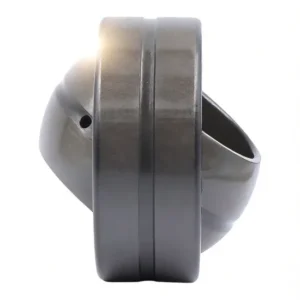
The FAG GE630-DO spherical plain bearing is built around a steel-on-steel sliding contact pair, which handles the combination of heavy static loads and low-speed oscillation typical in yaw mechanisms and hydraulic rod ends. Unlike PTFE-lined variants designed for maintenance-free continuous rotation, this steel-on-steel configuration relies on periodic re-lubrication but delivers higher load-carrying capacity under shock and reversing loads. When we cross-reference this designation for clients, we verify not only the bore and OD but also the sliding surface material code, because swapping a steel-on-steel unit into an application specified for a lined bearing will accelerate wear beyond the L10 prediction [NEED_CITE: spherical plain bearing selection criteria steel versus PTFE lined].
Load Spectrum and Environmental Demands at the Nacelle
Yaw and pitch joints on wind turbines experience predominantly radial loads with moderate axial components, combined with slow oscillating motion that prevents a full hydrodynamic lubricant film from forming. Temperature swings between night and day shift the internal clearance band, and in coastal or desert installations, airborne contaminants threaten the sliding surfaces. Grease selection becomes critical: a lithium-complex or calcium-sulfonate grease with solid additives such as MoS₂ is typically specified to maintain boundary lubrication. For the GE630-DO, the open steel-on-steel design places responsibility for external sealing on the housing engineer — inadequate lip seal design at the housing level will allow grit ingress that scores the raceway within the first season.
Reading the Core Specifications
The 630 mm bore and 850 mm outside diameter place this bearing in the extra-large segment, where handling and mounting logistics are as important as the dimensional tolerances. Steel-on-steel construction means both inner ring and ball are manufactured from through-hardened bearing steel, reaching hardness levels appropriate for heavy oscillating loads without the risk of subsurface fatigue associated with shallow case-hardening. The P0 precision class satisfies standard ISO tolerances for general industrial articulation — these joints do not require the tight running accuracy of a spindle bearing, but they do demand geometric consistency so the load distributes evenly across the sliding interface. At 530 kilograms, this unit requires horizontal lifting with spreader bars and should never be suspended by the inner ring alone, as point loading on the raceway can induce micro-cracks before the bearing ever sees service.
What a Specification Oversight Really Costs
Choosing a replacement spherical plain bearing based solely on bore and OD, without confirming the sliding contact material and heat treatment specification, is one of the most common root causes in premature field failures categorized under ISO 15243. A steel-on-steel unit installed where a PTFE-lined bearing was specified will generate excessive friction heat and wear rapidly under continuous rotation. Conversely, a lined bearing subjected to heavy shock loads will delaminate. Counterfeit units with cloned markings but substandard metallurgy lead to raceway brinelling, housing damage, and warranty voidance on the entire drivetrain assembly [NEED_CITE: bearing failure classification per ISO 15243]. The hidden cost is never just the bearing — it is the crane mobilization, the lost generation revenue, and the reputational damage with the asset owner.
How We De-Risk Large-Diameter Bearing Procurement
Every FAG GE630-DO spherical plain bearing we source moves through authorized distributor channels with full batch traceability, so you receive documentation that ties the physical unit back to the manufacturer’s production records. We run cross-reference checks that align bore, OD, width, and sliding surface material — not just the base designation — preventing the common mismatch where a suffix difference changes the entire load rating. For import buyers, we prepare country-of-origin certificates and HS code documentation before shipment so customs clearance proceeds without surprise holds. When a client’s OEM equipment manual lists a different brand, we map the complete interchange including clearance and precision suffixes, and we flag any parameter that does not align. Our technical team reviews application parameters such as load spectrum, oscillation angle, and ambient temperature before confirming selection, because a 630 mm bore bearing is not an item you want to replace twice.
Documentation & Authenticity
- Supplier Certificate of Conformity referencing the GE630-DO batch number and heat lot for full metallurgical traceability
- Material certificates confirming bearing steel grade and through-hardening specification for both inner ring and ball
- Third-party dimensional inspection report verifying bore, OD, and ball diameter against ISO tolerances before dispatch
- Country-of-origin documentation prepared for import clearance, aligned with the declared origin on the commercial invoice
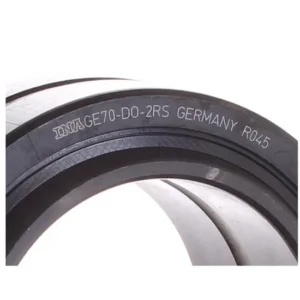
- QR code and marking verification pathway so the receiving warehouse can confirm authenticity through the brand’s official application
Storage, Handling & Mounting
- Keep this 530 kg bearing in its original protective wrapping until the day of installation; premature exposure to humid air risks surface corrosion on the exposed steel-on-steel sliding surfaces
- Store horizontally on a flat, vibration-free surface — vertical storage of an 850 mm OD spherical plain bearing risks ovalization of the outer ring under its own weight
- Use clean cotton or nitrile gloves when handling; fingerprint moisture on the raceway of a steel-on-steel bearing initiates pitting corrosion that propagates under oscillating load
- During mounting, heat the inner ring using an induction heater to the manufacturer’s recommended temperature differential; cold-pressing a 630 mm bore ring risks galling on the sliding contact surface
- Apply the specified MoS₂-containing grease to both sliding surfaces immediately before assembly, as the open design of the GE630-DO offers no factory-sealed lubricant reservoir
- Verify housing seal condition before installation — external sealing is the housing engineer’s responsibility on open steel-on-steel spherical plain bearings, and worn lip seals will allow contaminant ingress from the first operating cycle
Request a Technical Review for Your Application
Share your load spectrum, oscillation angle, and ambient temperature range so our engineering team can confirm whether the FAG GE630-DO spherical plain bearing matches your service conditions or whether an alternative sliding surface material is warranted. If you are replacing an existing unit, provide the OEM equipment number and we will run a full cross-reference check including all suffix parameters. Ask for the documentation package and batch availability before placing the order.
Frequently Asked Questions
Q: How do I verify the authenticity of a large-diameter spherical plain bearing like the GE630-DO?
A: Check the markings and batch number against the manufacturer’s official verification application, confirm that the Certificate of Conformity references the same heat lot, and request material certificates that document the bearing steel grade and hardness specification. Physical inspection should include checking for uniform grinding marks on the sliding surfaces and consistent branding depth on the outer ring.
Q: What should I consider when cross-referencing this bearing to another brand?
A: Beyond matching bore, OD, and width, confirm that the replacement uses the same steel-on-steel sliding contact surface material and the same precision class. A cross-reference that aligns only the base designation but ignores the suffix and material code can result in a bearing that fits the housing but fails prematurely under load [NEED_CITE: cross-brand bearing interchange verification practices].
Q: What does the DO suffix indicate on the FAG GE630-DO?
A: The exact meaning of the DO suffix in this designation requires confirmation against the current manufacturer catalog. We flag unverified suffixes during our technical review so that no assumption is carried into the procurement decision without documented evidence.
Q: When should I choose steel-on-steel over PTFE-lined spherical plain bearings?
A: Steel-on-steel bearings handle heavier loads and shock conditions but require periodic re-lubrication. PTFE-lined variants are specified for maintenance-free operation under lighter loads and continuous rotation. For slow-oscillation, high-load applications such as wind turbine yaw joints, steel-on-steel is typically the correct choice provided a re-greasing schedule is maintained.
Q: What is the typical lead time for extra-large spherical plain bearings?
A: Large-diameter and non-standard designations commonly carry multi-week lead times depending on production scheduling and channel stock. We confirm batch availability and estimated dispatch date at the quotation stage so project timelines can be planned accordingly.
Secure Your GE630-DO with Verified Documentation
Send us your application parameters or OEM equipment number to initiate the technical review and cross-reference check. Our team will respond with specification alignment, batch availability, and the full documentation package.