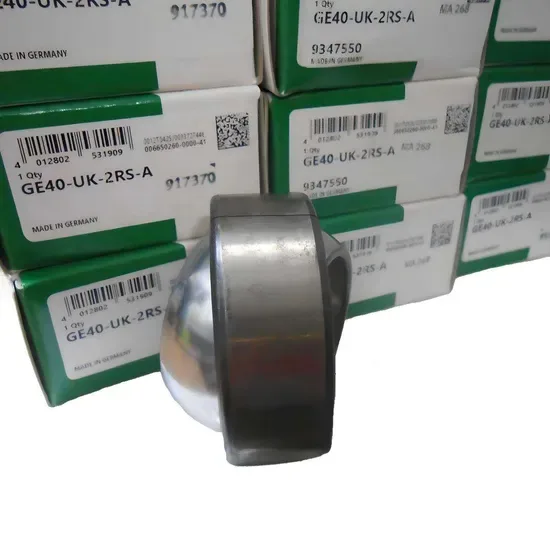
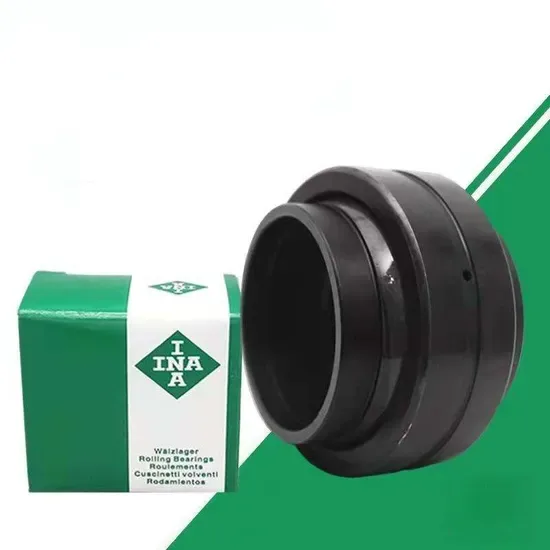
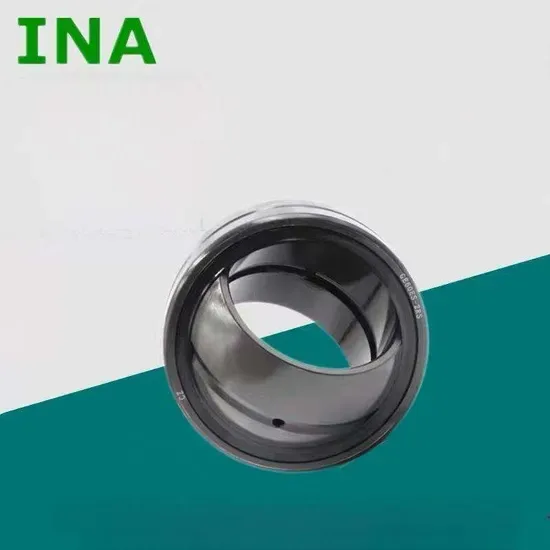
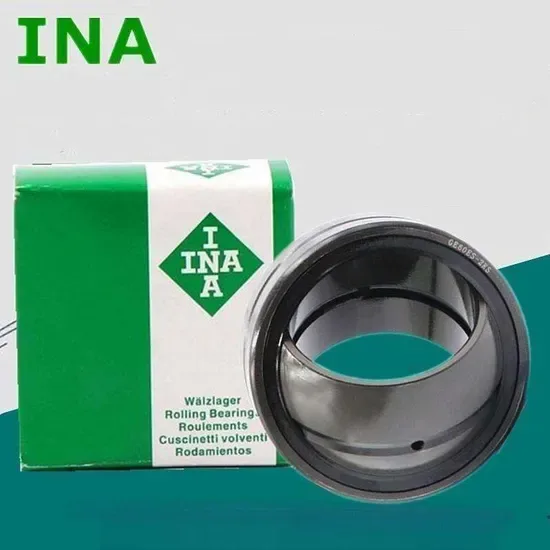

Description
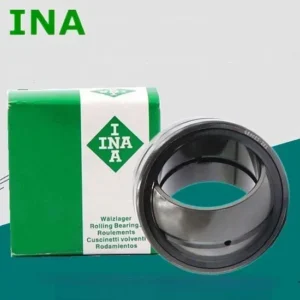
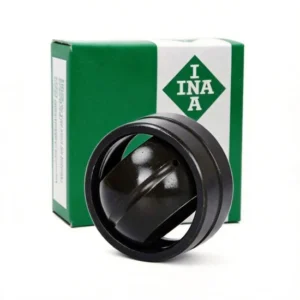
Traceable Batch Sourcing — every INA GE32-LO spherical plain bearing ships with lot-level documentation and supplier certificate of conformity for import verification.
Technical Specifications
| Parameter | Value |
|---|---|
| Designation | INA GE32-LO |
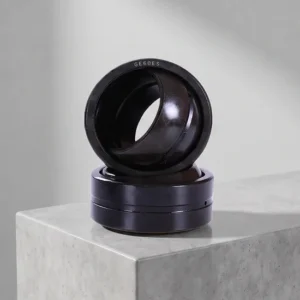
| Bearing Type | Spherical Plain Bearing |
| Bore Diameter (d) | 32 mm |
| Ball Diameter | 44 mm |
| Eye Thickness | 32 mm |
| Ball Material | Bearing Steel |
| Body Material | Bearing Steel |
| Sliding Contact | Steel-on-Steel |
| Maintenance | Maintenance-Required |
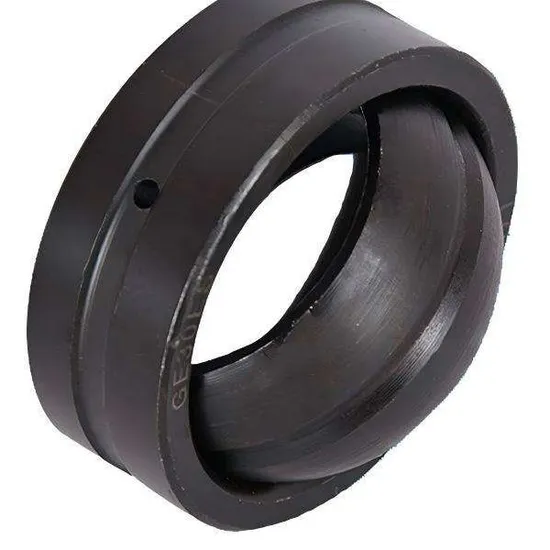
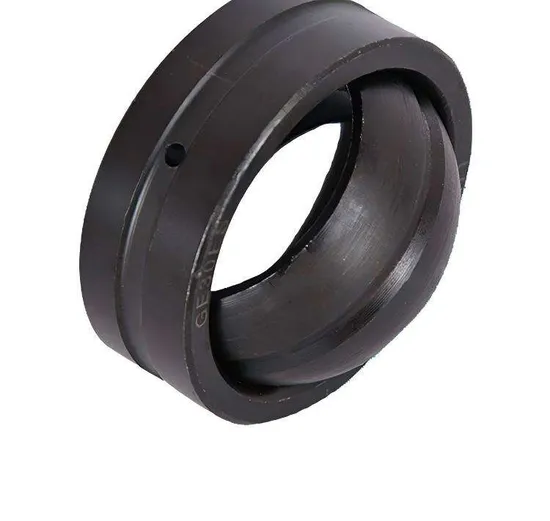
| Lubrication | Enhanced lubrication holes |
| Precision Class | P2 |
| Weight | 0.210 kg |
| Origin | China |
The LO suffix in GE32-LO is unverified in publicly available INA catalog data; its exact meaning should be confirmed with Schaeffler documentation before finalizing critical applications.
Application Suitability
| Industry | Typical Applications |
|---|---|
| Hydraulic & Pneumatic Systems | Cylinder pivot eyes and rod-end clevis joints |
| Construction & Agricultural Equipment | Loader boom hinge points, grader blade linkages |
| Heavy Vehicle Suspension & Steering | Tie-rod ends, suspension A-arm pivots, kingpin joints |
| Material Handling | Forklift mast roller guides, crane boom pivot bearings |
What Happens When Lubrication Holes Are Ignored on a GE32-LO Replacement
Mismatched relube pathways starve the sliding surface within weeks, not months.
I once traced a haul truck suspension failure back to a spherical plain bearing that matched the bore and OD perfectly but had grease holes drilled on one side only. The original specified relube grooves on both faces. Three weeks in the field, the joints were scoring and running dry. A significant share of premature plain bearing seizures in heavy mobile equipment comes down to exactly this kind of overlooked geometry difference — the part number looks right on paper, but the lubrication layout is wrong [NEED_CITE: plain bearing failure modes related to inadequate lubrication distribution]. When procurement teams cross-reference by basic dimension alone and skip the relube path check, the maintenance crew pays the price underground.
Matching the INA GE32-LO to Oscillating Linkage Duty
The INA GE32-LO spherical plain bearing is engineered for applications where motion is oscillating rather than continuous rotation, and where relubrication access is available between duty cycles. In hydraulic cylinder pivot eyes, the bearing endures high static loads at low sliding speeds — exactly the regime where steel-on-steel contact surfaces outperform PTFE-lined alternatives, provided regreasing is done on schedule. We once supplied a batch for a construction equipment OEM rebuilding articulation joints on wheel loaders; the cross-reference check caught a competitor quote that matched bore and ball diameter but specified a PTFE-lined type, which would have been wiped through in the shock-load zone within a single season.
Load Spectra, Contamination, and Relube Discipline
The sliding contact in a steel-on-steel spherical plain bearing lives or dies by the grease film between the inner ball and outer ring raceway. Radial loads in cylinder pivots are often combined with moment loads from side thrust, and frequent direction reversals prevent a stable hydrodynamic wedge from forming. That puts the full burden on boundary lubrication — which is why the enhanced lubrication holes on the GE32-LO matter. In dusty quarry environments or wet agricultural fields, contamination accelerates abrasive wear on the raceway, shortening relube intervals sharply [NEED_CITE: oscillating bearing wear rate under contaminated conditions]. Temperature swings also change grease viscosity; a grease that flows well at ambient may stiffen in cold starts, leaving the contact surface momentarily unprotected. Mounting practice matters too — pressing the bearing in with uneven force can deform the outer ring just enough to pinch the ball and restrict its angular travel.
Decoding the Core Geometry and Precision
The 32 mm bore and 44 mm ball diameter give this bearing a compact envelope suited to linkage and rod-end applications where space around the cylinder eye is tight. The P2 precision class indicates tighter bore and OD tolerances than standard plain bearings, which helps maintain a consistent fit in machined housings — critical when the bearing outer ring is a press fit and any oversize tolerance would induce preload on the sliding surface. The eye thickness of 32 mm matches the inner ring width, providing full contact area across the shaft shoulder and reducing edge-loading risk. Steel-on-steel material pairing means both rings are through-hardened bearing steel, offering high static load capacity but demanding scheduled maintenance; this is not a fit-and-forget component. The enhanced lubrication holes are specifically positioned to deliver fresh grease deeper into the contact zone, pushing contaminated grease out through the opposite side during relubrication cycles.
The Hidden Cost of Skipping the Suffix and Drawing Check
Specifying a replacement spherical plain bearing by bore and OD alone — without verifying the suffix, lubrication layout, and clearance class — invites failures that never show up on the supplier invoice but appear weeks later on the maintenance log. An incorrect relube path means dry sliding surfaces and raceway scoring, which in ISO 15243 failure classification terms falls under adhesive wear progressing to seizure [NEED_CITE: ISO 15243 bearing failure classification categories]. When a suspension joint seizes on a loaded haul truck, the result is unplanned downtime, secondary damage to adjacent linkage components, and in some cases voided equipment warranty if the OEM traces the root cause to an unverified replacement part. Sourcing from suppliers who cannot produce batch-level traceability or a country-of-origin certificate compounds the risk — you cannot escalate a quality claim against a shipment you cannot trace back to a specific production lot.
How We Reduce Your Sourcing Risk on Plain Bearings
Our cross-reference process for spherical plain bearings does not stop at matching bore, OD, and ball diameter. We verify the lubrication hole count, groove position, and maintenance type against the OEM drawing or equipment manual before confirming interchangeability. Every INA GE32-LO unit we ship is sourced through authorized distributor channels with batch traceability documentation, so if a field issue arises, the production lot can be traced back through the supply chain. We provide country-of-origin paperwork with each shipment to support import clearance and buyer-side quality audits. For maintenance teams replacing bearings across mixed-brand fleets, we cross-check not only the base designation but also the sliding surface material pairing and relube requirements, so a steel-on-steel unit is never substituted with a maintenance-free type that would fail under shock loads. Third-party dimensional inspection reports are available to confirm critical geometry before dispatch.
Documentation & Authenticity
- Supplier Certificate of Conformity listing batch and lot numbers specific to the shipped INA GE32-LO units
- Country-of-origin documentation prepared for customs clearance and end-user import verification
- Third-party dimensional inspection report confirming bore diameter, ball diameter, and eye thickness against INA catalog values before shipment
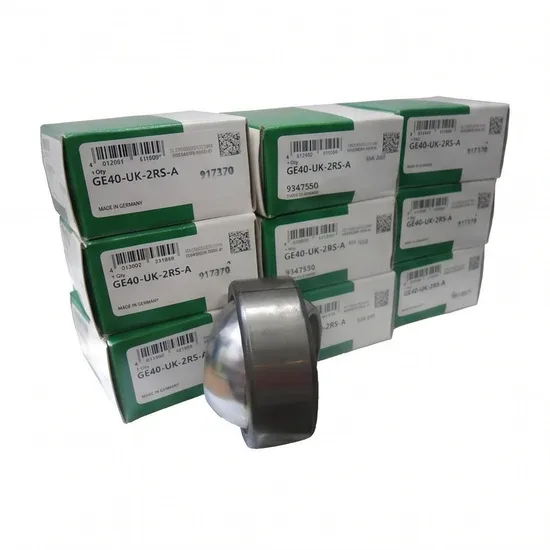
- QR code or marking verification pathway through Schaeffler official tools for authenticity confirmation on each bearing
- Material certificate confirming bearing steel grade for both inner ball and outer ring
Storage, Handling & Mounting
- Keep the INA GE32-LO in its original sealed packaging until installation; the anti-corrosion coating on the exposed steel-on-steel surfaces degrades once opened in humid environments
- Store in a clean, dry location away from direct sunlight; temperature fluctuations cause condensation inside the packaging, which attacks the unsealed bearing steel raceways
- Handle with clean gloves — fingerprints on the P2 precision bore surface introduce contaminants that score the shaft fit during press-in mounting
- During installation, press force must be applied evenly to the outer ring only; loading through the inner ball risks brinelling the steel-on-steel sliding contact surface
- After mounting, grease the bearing through the enhanced lubrication holes immediately before the first cycle; the factory-applied preservative is not a working lubricant for oscillating steel-on-steel contact
- In dusty or wet environments, verify that external seals or boots are fitted over the linkage joint — the bearing itself is open design, and contamination protection is the responsibility of the surrounding housing
Request a Technical Review Before Ordering
Share your application parameters — oscillating angle, load direction, relube interval, and ambient conditions — so we can confirm whether the GE32-LO lubrication layout and maintenance type match your duty cycle. If you are replacing an OEM-specified bearing, provide the equipment model number or original part number and we will run a full cross-reference check including lubrication hole geometry and suffix meaning. For import buyers, request the documentation package and country-of-origin confirmation before placing bulk orders. Contact us with your inquiry to verify batch availability and lead time for your required quantity.
Frequently Asked Questions
Q: What does the LO suffix mean on the INA GE32-LO?
A: The LO suffix is not fully documented in publicly available INA catalog resources. It may relate to a specific lubrication hole arrangement, internal design variant, or series designation. We recommend confirming the exact suffix meaning against the current Schaeffler product catalog or contacting us with your OEM drawing so we can verify the suffix matches your equipment requirement.
Q: How do I verify that the INA spherical plain bearing I received is genuine?
A: Each bearing we supply comes with batch and lot traceability. You can cross-check the markings on the outer ring using Schaeffler’s official verification tools and apps. We also provide a supplier Certificate of Conformity and can arrange third-party dimensional inspection for independent confirmation.
Q: Should I choose steel-on-steel or PTFE-lined spherical plain bearings for my application?
A: Steel-on-steel types like the GE32-LO handle higher static and shock loads but require scheduled relubrication. PTFE-lined or ELGOGLIDE types are maintenance-free but have lower load capacity and can be wiped through under heavy shock or edge loading. If your application allows regular greasing and sees oscillating heavy loads, steel-on-steel is typically the stronger choice.
Q: How do I cross-reference a spherical plain bearing across brands like INA, SKF, and FAG?
A: Matching the base bore and OD is only the starting point. You must also verify the ball diameter, lubrication hole layout, maintenance type, and precision class. A basic dimension match with different relube geometry will cause premature failure in the field. We perform this full cross-reference check as part of our technical review before confirming any interchange.
Q: What grease and relubrication interval should I use for the GE32-LO in dusty conditions?
A: A lithium-complex or calcium-complex grease with good water resistance and EP additives is generally recommended for steel-on-steel spherical plain bearings. In contaminated or dusty environments, relubrication intervals should be shortened to flush abrasive particles out through the lubrication holes. The exact interval depends on oscillation frequency, load, and contamination severity — share your operating parameters and we can provide a selection recommendation.
Confirm Your INA GE32-LO Specification
Send us your OEM part number, application parameters, or target quantity. Our team will return a cross-reference verification, documentation package preview, and availability confirmation for your review.