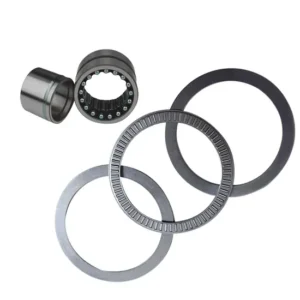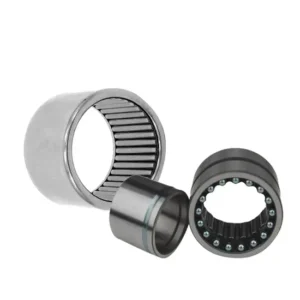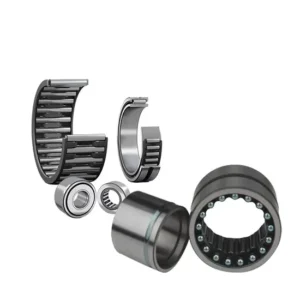
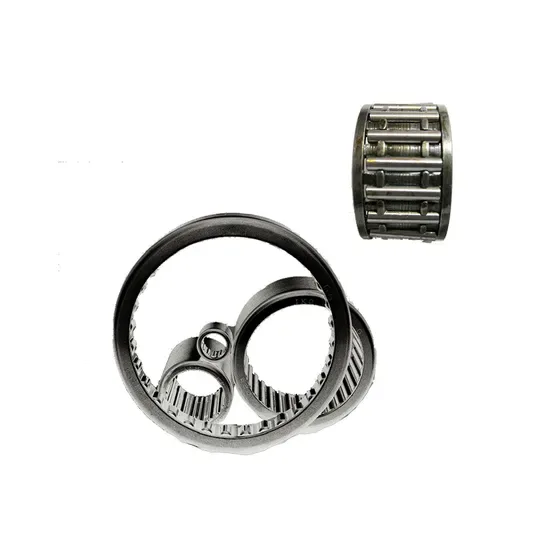
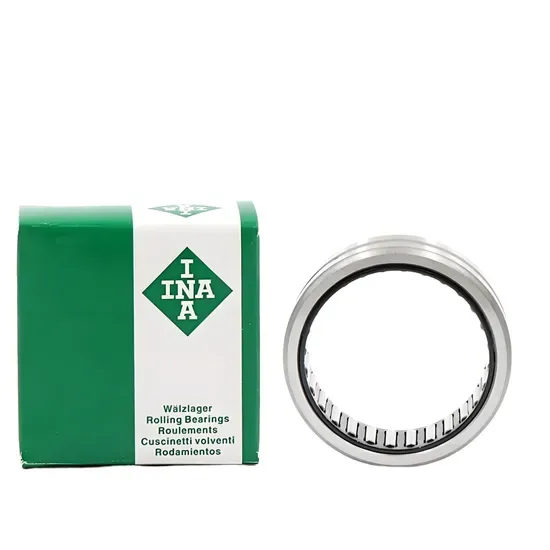
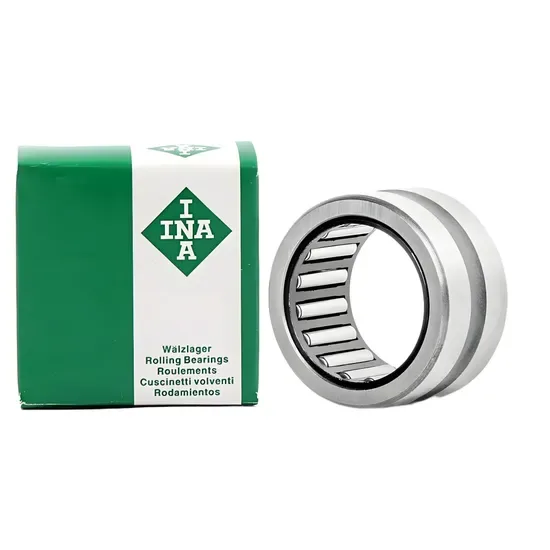
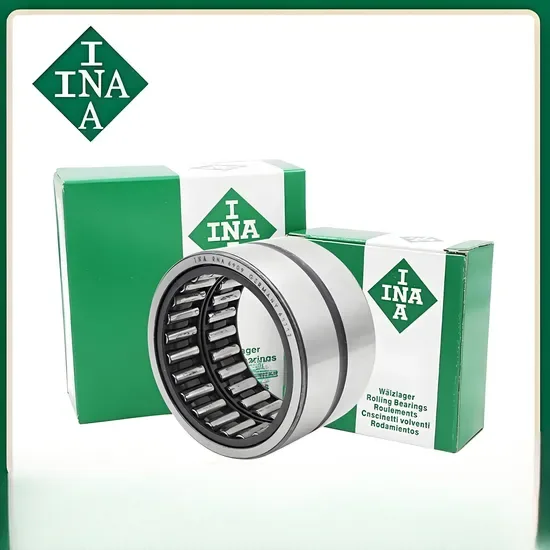
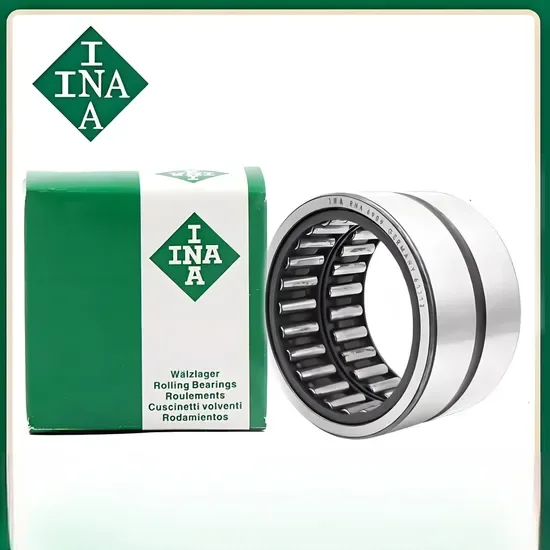
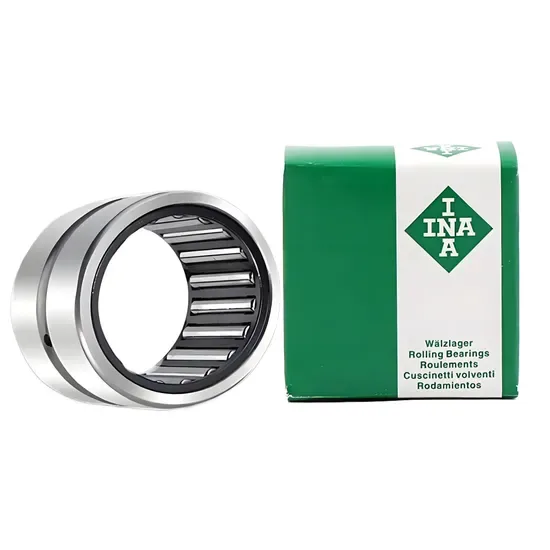
Description
Authorized Channel Sourcing — every INA NK29/30-XL needle roller bearing we dispatch ships with a verifiable batch trail linked to the Schaeffler distributor network, letting your QA team confirm origin before it ever reaches the assembly bench.
Technical Specifications
| Parameter | Value |
|---|---|
| Designation | INA NK29/30-XL |
| Bearing Type | Needle Roller Bearing (without inner ring, without outer ring) |
| Bore Diameter (Fw) | 29 mm |
| Outside Diameter (D) | 38 mm |
| Width (B) | 30 mm |
| Dynamic Load Rating (Cr) | 37000 N |
| Static Load Rating (C₀r) | 57000 N |
| Limiting Speed | 15300 min⁻¹ |
| Reference Speed | 8200 min⁻¹ |
| Weight | 0.08 kg |
| Cage Material | unverified — confirm against Schaeffler catalog for exact cage design |
| Seal or Shield Type | Open |
| Bore Type | Cylindrical (shaft-riding) |
| Number of Rows | Single |
| Origin | Germany (subject to manufacturing plant assignment) |
The XL suffix denotes Schaeffler’s X-Life series; cage material and specific internal geometry details for this identifier should be confirmed against the current INA product catalog before final specification lock.
Application Suitability
| Industry | Typical Applications |
|---|---|
| Industrial Gearboxes | Miniature reduction gear pinion stages, planetary gear carriers |
| Automation & Robotics | Joint actuators, compact rotary positioning tables |
| Material Handling | Conveyor diverter shafts, compact roller drive modules |
| Electric Motors | Small-frame motor shaft support in space-constrained housings |
What Happens When a 29mm Needle Bearing Fails Inside a Sealed Gearbox
A single cage fragment can destroy an entire reduction stage before the vibration sensor even triggers an alarm.
In compact gearboxes, there is nowhere for debris to go. When a needle roller bearing sheds cage material or develops spalling on the shaft raceway, those particles circulate through the mesh zone and score gear flanks within hours. I have seen a batch of mini reduction units pulled from field service because a cross-referenced needle bearing — dimensionally correct at 29×38×30 mm — used a stamped steel cage where the OEM specified a precision-guided design. The cage failed under sustained radial load at moderate speed, and the resulting metal fragments compromised three gear pairs before anyone noticed [NEED_CITE: rolling bearing failure mode classification per ISO 15243]. The INA NK29/30-XL needle roller bearing exists precisely to avoid that scenario, with X-Life geometry that addresses the load concentration problems standard needle profiles create in tight-envelope transmissions.
Matching the INA NK29/30-XL to Compact Power Transmission Envelopes
The 29 mm bore, 38 mm OD, and 30 mm width define an extremely compact cross-section that maximizes radial load capacity where housing diameter is constrained by adjacent gear stages. In planetary carriers and pinion supports, the shaft itself serves as the inner raceway — eliminating the inner ring saves critical radial space while the needle rollers distribute load across a longer contact line than ball or cylindrical roller alternatives. When we cross-reference this INA NK29/30-XL needle roller bearing against competing catalog options, we check not just Fw/D/B dimensions but also cage guidance method and roller end profile, because a mismatch on either parameter shifts load to the roller tips and accelerates edge stress fatigue.
Thermal and Lubrication Realities in Sealed Gear Units
Radial loads on needle rollers in reduction gears are typically steady-direction but high-magnitude, with speed governed by the gear ratio rather than the bearing itself. The open design of this bearing means it relies on the gearbox oil bath or splash lubrication system — a deliberate choice, because sealed needle bearings in oil-immersed environments would trap incompatible grease and generate excess heat. Operating temperature inside a sealed gearbox often reaches levels where thermal expansion of the shaft and housing alter the internal radial clearance [NEED_CITE: thermal expansion effects on bearing internal clearance in enclosed gear drives]. The X-Life designation addresses this by optimizing roller crowning to maintain even load distribution even as clearances shift under thermal gradient.
Reading the X-Life Suffix Beyond the Marketing Label
The XL marking on Schaeffler products signals optimized internal geometry — specifically, modified roller profiles and improved surface finish on the raceways that reduce stress peaks at roller ends. For needle roller bearings without an inner ring, this matters doubly: the shaft surface acts as one raceway, so the bearing’s own geometry must compensate for any micro-irregularities in shaft grinding. The 37000 N dynamic load rating and 57000 N static load rating reflect this engineering work — the static-to-dynamic ratio indicates a bearing designed for sustained load rather than shock absorption, which aligns with the continuous-duty profiles typical in industrial gearboxes. At a 15300 min⁻¹ limiting speed, the bearing covers most miniature and mid-range reduction applications without approaching thermal limits, provided the lubrication system maintains adequate film thickness at operating temperature.
The Downtime Multiplier in Compact Gearbox Failures
Replacing a failed needle bearing inside an assembled gearbox is rarely a simple swap — it demands disassembly of gear stages, realignment of mesh patterns, and often replacement of damaged shafts or housings. A bearing that costs modestly can trigger maintenance events measured in days of lost production, particularly when the equipment is part of an automated line where a single reduction unit gates the entire process. Sourcing verified INA product through traceable channels eliminates the counterfeit risk that introduces soft-roller bearings into the supply chain — bearings that pass visual inspection and dimension checks but fail catastrophically once loaded [NEED_CITE: counterfeit bearing detection methods and supply chain risks in industrial procurement]. The ISO 281 life calculation framework assumes genuine material quality; when that assumption breaks, calculated L10 life becomes meaningless.
How Our Sourcing Process Protects Your Assembly Line
We procure INA bearings through authorized Schaeffler distributor channels, which means every batch carries documentation linking it back to the production facility. For cross-reference requests, our interchange database checks cage type, internal geometry, and precision class alongside basic dimensions — so a substitute recommendation actually performs equivalently in your specific load and speed envelope. We have rejected shipments where the cage material did not match the catalog specification for the ordered suffix, because we know what happens when that detail slips through. Each INA NK29/30-XL needle roller bearing we ship carries the documentation package your receiving inspection requires before it clears quarantine.
Documentation & Authenticity
- Certificate of Conformity issued against the specific batch number, linking each INA NK29/30-XL to its manufacturing lot for full traceability
- QR code verification pathway through the Schaeffler official app, confirming authenticity before the bearing leaves your receiving dock
- Third-party dimensional inspection report covering Fw, D, and B tolerances against INA catalog specifications
- Country-of-origin documentation supporting customs clearance and import compliance for international shipments
- Material certificate confirming bearing steel composition and heat treatment condition
Storage, Handling & Mounting
- Retain original sealed packaging until the moment of installation — the 0.08 kg mass of this needle bearing makes it vulnerable to surface corrosion from handling moisture, and the open design offers no seal protection
- Store horizontally in climate-controlled inventory below 60% relative humidity; the shaft-riding inner raceway means any corrosion on the rollers directly transfers to your machined shaft surface
- Use lint-free gloves during mounting; fingerprint acids on the needle rollers create etch points that initiate spalling under cyclic radial load
- Verify shaft hardness reaches HRC 58-62 and surface roughness meets INA specifications before pressing the bearing into position — the shaft IS the inner ring for this design
- Confirm the housing bore tolerance matches the open-type needle bearing fit specification; interference on the OD combined with clearance on the shaft must be maintained simultaneously
Initiating Your INA NK29/30-XL Inquiry
Share your application parameters — load magnitude, operating speed, lubrication method, and housing material — so we can verify this designation matches your engineering requirements. If you are replacing an OEM-specified bearing, provide the equipment nameplate number and we will cross-check the suffix and cage specification against the original bill of materials. For projects requiring import documentation, confirm your destination country early so we prepare the origin certificate and HS code package alongside your commercial invoice.
Frequently Asked Questions
Q: How do I verify the authenticity of an INA NK29/30-XL needle roller bearing through official channels?
A: Schaeffler provides a verification pathway through their official mobile application. Scan the QR code on the bearing packaging — not the bearing itself, as needle bearings in this size range carry markings on the box label. The app confirms batch number, production facility, and distribution chain. We supply bearings with intact, untampered packaging so this verification step remains available at your receiving inspection.
Q: What cross-reference considerations apply when substituting this needle bearing across brands?
A: Matching a 29×38×30 mm needle roller bearing dimensionally is straightforward; matching performance requires verifying cage guidance type, roller end profile, and whether the substitute carries an equivalent life-enhancement designation to X-Life. We check these parameters in our interchange database before proposing any alternative, because a dimensionally correct substitute with a different cage design can fail prematurely under your specific load spectrum.
Q: When should I use an NK type versus an HK or RNA type needle roller bearing?
A: NK bearings like this one are machined-ring designs offering higher load capacity and speed capability than drawn-cup HK types, and they ride directly on the shaft without a separate inner ring — unlike RNA types which include an inner ring. Choose NK when your shaft is hardened and ground to specification and you need maximum load density in a compact cross-section.
Q: What lubrication approach is required for this open-type needle bearing in gear applications?
A: The open design expects the surrounding gearbox oil system to provide lubrication — typically splash or forced-feed circulation. Grease lubrication is generally unsuitable for oil-immersed environments. Confirm oil viscosity grade matches the operating temperature range and that filtration captures wear particles before they circulate back through the bearing zone.
Q: What is the typical lead time and minimum order quantity for INA X-Life needle roller bearings?
A: Availability depends on current stock position at the authorized distributor level and the quantity required. Contact us with your project volume and timeline; we will confirm batch availability, consolidation options, and the documentation lead time needed for your import requirements.
Secure Your INA NK29/30-XL Supply with Verified Documentation
Send us your application parameters or OEM equipment number, and we will return a sourcing proposal with full traceability documentation and confirmed lead time. Reach our technical sourcing team through your established inquiry channel to begin.