

Description
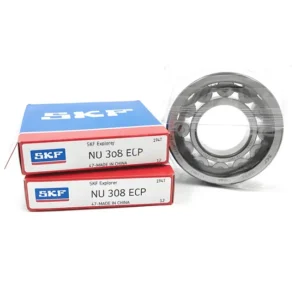
Authorized Channel Sourcing — Every SKF N 1020 KTN9/SP cylindrical roller bearing we ship carries a Certificate of Conformity traceable to the manufacturer’s authorized distribution network, protecting machine tool spindle builders from counterfeit inner rings.
Technical Specifications
| Parameter | Value |
|---|---|
| Designation | SKF N 1020 KTN9/SP |
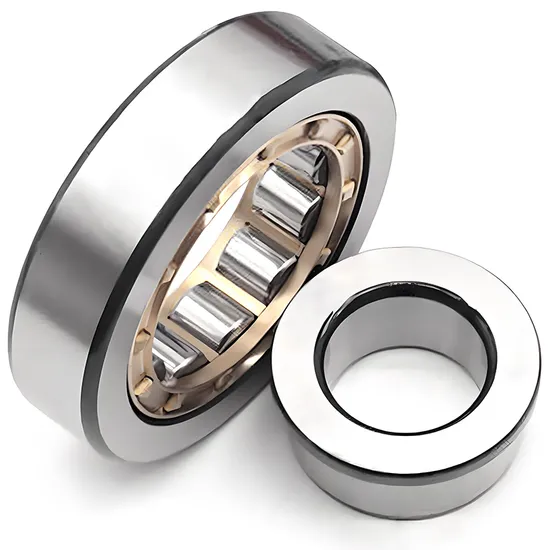
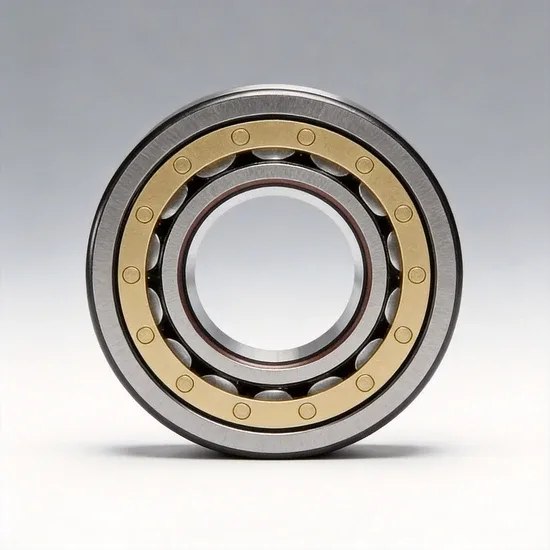
| Bearing Type | Cylindrical Roller Bearing |
| Bore Diameter (d) | 100 mm |
| Outside Diameter (D) | 150 mm |
| Number of Rows | Single Row |
| Bore Type | Tapered (1:12 taper) |
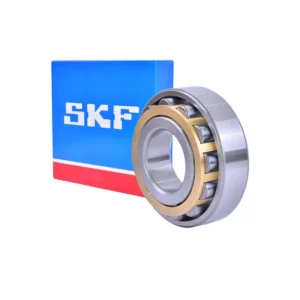
| Cage Material | TN9 — injection molded glass fiber reinforced polyamide 6,6 |
| Seal or Shield Type | Open |
| Material | Bearing Steel |
| Precision Class | SP (Super Precision) |
| Origin | China |
The /SP suffix in this designation requires verification against the manufacturer catalog to confirm the exact precision scope delivered with this batch.
Application Suitability
| Industry | Typical Applications |
|---|---|
| Machine Tool Manufacturing | Spindle rear support on CNC lathes and machining centers |
| Industrial Gearbox OEMs | High-speed shaft support in heavy-duty helical gearboxes |
| Steel & Metallurgy | Roll neck positions on cold rolling mill guide sections |
| Precision Machinery | Rotary table bearings on jig borers and coordinate measuring machines |
What Happens When SP Precision Meets a Standard-Clearance Mindset
Matching the bore diameter without verifying precision class and cage type is how spindles die young.
I watched a Shenzhen CNC shop owner bolt a standard-clearance cylindrical roller bearing onto a spindle seat designed for super precision preload. He checked the 100 mm bore, declared it a fit, and ignored the tapered seat geometry entirely. Within days the spindle ran hot, vibration spiked above acceptable thresholds, and every workpiece coming off that machine went straight to scrap. That kind of field failure rarely traces back to the bearing itself — it traces back to the procurement decision that skipped suffix verification. [NEED_CITE: rolling bearing failure mode classification per ISO 15243]
When buyers source a SKF N 1020 KTN9/SP cylindrical roller bearing, they are committing to a specific combination of tapered bore geometry, polyamide cage dynamics, and super precision tolerances. Swapping any one element without recalculating the fit produces thermal binding or cage fatigue that no amount of relubrication will fix.
How the Tapered Bore and Polyamide Cage Serve Spindle Applications
The 1:12 tapered bore on this SKF N 1020 KTN9/SP cylindrical roller bearing allows direct mounting onto a precision-ground tapered shaft seat. When the inner ring is driven axially to the correct position, the interference fit simultaneously sets the residual internal clearance — eliminating the need for adapter sleeves and the concentricity errors they introduce. The TN9 polyamide cage keeps weight low at the roller guidance zone, which matters when the spindle accelerates through critical speeds. We once traced a spindle vibration complaint back to a brass-cage substitute that shifted the rotor balance just enough to excite a harmonic at operating speed.
Load, Speed, and Thermal Behavior in Machine Tool Environments
Cylindrical roller bearings in spindle positions handle predominantly radial loads with minimal axial component. The open design here means the lubrication strategy falls entirely on the machine builder’s external oil-air or oil-mist system — the correct choice for high-speed spindles where grease would churn and overheat. Thermal expansion of the shaft during continuous cutting operations directly affects the internal clearance state, which is why the tapered bore drive-up procedure must account for the operating temperature differential. At sustained speeds approaching the limiting threshold, the TN9 cage must dissipate heat efficiently while maintaining roller alignment. [NEED_CITE: thermal expansion effects on bearing internal clearance in high-speed spindles]
Reading the Suffixes That Define This Bearing’s Behavior
The K suffix tells the installer this bore is tapered at 1:12, meaning every millimeter of axial drive-up translates to a predictable reduction in radial internal clearance. The TN9 cage is injection-molded glass fiber reinforced polyamide 6,6 — chosen for its weight advantage and damping properties at elevated speeds, though it has an upper temperature boundary well below brass or machined steel cages. The SP precision designation signals tighter dimensional and running accuracy than standard P6 or P5 classes, delivering the low runout that precision grinding and boring operations demand. The open configuration leaves lubrication and contamination exclusion to the housing seal design.
The Downtime Bill Nobody Quoted You For
A counterfeit cylindrical roller bearing with a soft inner ring will pass visual inspection and even basic hardness spot-checks, but under spindle preload it deforms unevenly and generates localized stress concentrations that fracture rollers within weeks. An incorrectly cross-referenced substitute that matches the base number but ignores cage material and precision class will produce running accuracy below what the machine tool designer specified — translating directly into poor surface finish and out-of-tolerance parts. These are not warranty claims; they are unplanned downtime events that idle an entire production cell while the spindle gets torn down and rebuilt. [NEED_CITE: ISO 281 bearing life calculation framework and reliability factors]
What We Verify Before This Bearing Leaves Our Warehouse
We source the SKF N 1020 KTN9/SP cylindrical roller bearing through authorized distributor channels, which means every unit carries batch traceability back to the manufacturer’s production facilities. Our cross-reference database does not just match base numbers — it aligns bore taper ratio, cage material specification, and precision class simultaneously so substitutes are genuinely interchangeable. When a buyer requests origin documentation for customs clearance at destination, we provide country-of-origin certification alongside the Certificate of Conformity. Third-party dimensional inspection for bore taper angle and OD tolerances is available before shipment, and QR code verification through the brand’s official application lets the receiving engineer confirm authenticity on the dock.
Documentation & Authenticity
- Certificate of Conformity with batch and lot traceability linked to the manufacturer’s authorized distribution records
- QR code verification pathway via official brand application for on-site authenticity confirmation at receiving
- Country-of-origin documentation prepared for import compliance and customs clearance at destination port
- Third-party dimensional inspection report verifying bore taper ratio and OD tolerances against SP precision requirements
- HS code classification support with full documentation package for international bearing shipments
Storage, Handling & Mounting
- Keep the SKF N 1020 KTN9/SP in its original sealed packaging until the moment of spindle assembly — the open design leaves rolling surfaces exposed to any workshop particulate
- Mounting on the 1:12 tapered shaft seat requires controlled axial drive-up measured with a dial indicator to achieve the correct interference fit without eliminating residual clearance
- The TN9 polyamide cage has a lower maximum operating temperature than brass alternatives, so storage away from heat sources and direct sunlight preserves cage material integrity before installation
- Wear lint-free gloves when handling the exposed bore and OD surfaces to prevent fingerprint corrosion on the precision-ground raceways
- External oil-air or oil-mist lubrication system must be flushed and verified clean before connecting to the open bearing housing
Request a Technical Review for Your Spindle Application
Share your spindle speed range, radial load profile, and operating temperature so we can confirm the SKF N 1020 KTN9/SP cylindrical roller bearing matches your clearance and precision requirements. If you are replacing an existing bearing, provide the OEM equipment number or nameplate photo and we will cross-reference the complete suffix chain — not just the base designation. Our team will return a quotation with confirmed batch availability, lead time, and the full documentation package for your import records.
Frequently Asked Questions
Q: How can I verify the authenticity of an SKF N 1020 KTN9/SP cylindrical roller bearing using official tools?
A: The brand’s official mobile application allows you to scan the QR code on the product packaging and bearing label, cross-checking the batch number against the manufacturer’s production database. Genuine products will return matching records including production date and facility. Counterfeit bearings often carry cloned QR codes that either return no result or redirect to unofficial verification pages.
Q: What does the K suffix mean for mounting this cylindrical roller bearing?
A: The K suffix indicates a tapered bore with a 1:12 taper ratio. During mounting, the inner ring is driven axially along the tapered shaft seat using a precision nut or hydraulic method. The axial drive distance directly controls the interference fit and residual internal clearance, so the procedure must follow the manufacturer’s drive-up tables or measured clearance reduction targets.
Q: How does the TN9 polyamide cage compare to a brass cage for this bearing size?
A: The TN9 glass fiber reinforced polyamide 6,6 cage is significantly lighter than a machined brass cage, reducing centrifugal forces on the cage pockets at high rotational speeds. However, polyamide has a lower maximum continuous operating temperature and is incompatible with certain synthetic lubricants and extreme-pressure additives. Brass cages tolerate higher temperatures and broader lubricant chemistries but add weight that can excite vibration near critical speeds.
Q: When cross-referencing this bearing to another brand, what must stay aligned?
A: A valid cross-reference must match the tapered bore ratio, the cage material type, and the precision class — not just the base dimension number. Substituting a standard-precision cylindrical bore equivalent into an SP-precision tapered-seat application will produce unacceptable runout and mounting fit errors. Our interchange database checks all three parameters simultaneously before recommending an alternative.
Q: What precision class does SP represent and where is it typically required?
A: SP (Super Precision) sits above standard P5 and approaches P4 in running accuracy, delivering the tight radial and axial runout that machine tool spindles and precision rotary tables demand. Applications that require minimal workpiece runout — such as jig boring and finish grinding — typically specify SP or higher precision classes to maintain dimensional accuracy across the workpiece.
Source With Confidence — Start With Your Application Parameters
Send us your spindle specifications or OEM equipment number, and we will return a verified quotation for the SKF N 1020 KTN9/SP cylindrical roller bearing with full documentation and batch traceability.
Contact our technical sales team through the inquiry form on this page or email your requirements directly for cross-reference verification and availability confirmation.