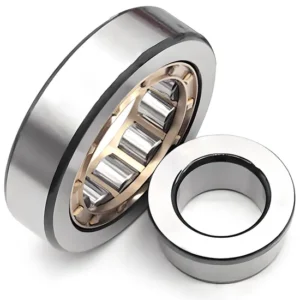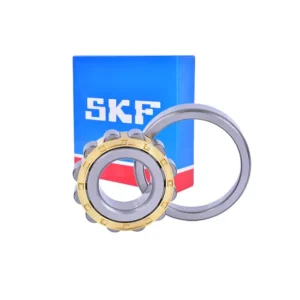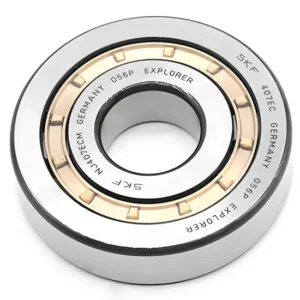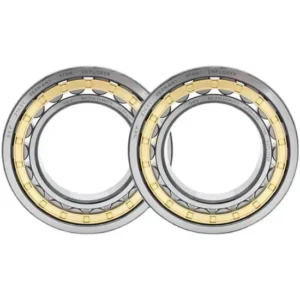


Description
Authorized Channel Sourcing — Batch-traceable SKF N1011KPHA/SPVR521 cylinders ship with certificate of conformity tied to the production lot.
Technical Specifications
| Parameter | Value |
|---|---|
| Designation | SKF N1011KPHA/SPVR521 |
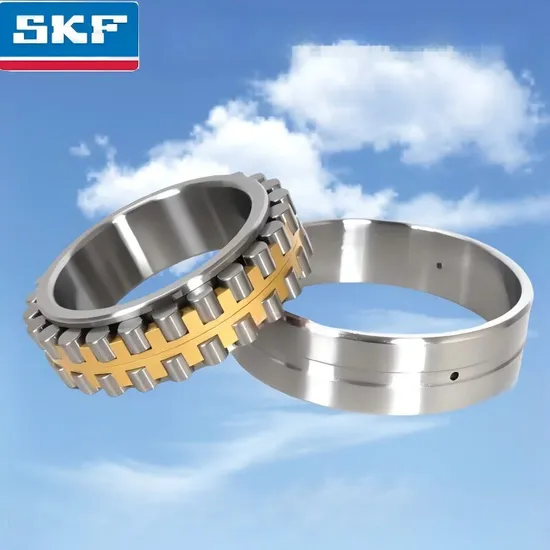
| Bearing Type | Single Row Cylindrical Roller Bearing |
| Bore Diameter (d) | 55 mm |
| Outside Diameter (D) | 90 mm |
| Width (B) | 18 mm |
| Number of Rows | Single Row |
| Bore Type | Tapered Bore (1:12) |
| Seal or Shield Type | Open |
| Weight | 0.250 kg |
| Origin | China |
Note: Suffixes HA, SP, and VR521 could not be fully decoded from standard SKF catalog conventions and require manufacturer confirmation before final order placement.
Application Suitability
| Industry | Typical Applications |
|---|---|
| Industrial machinery | Machine tool spindle rear support |
| Steel and metallurgy | Precision gearbox intermediate shaft |
| Electric motors | High-speed traction motor rotor bearing |
| General MRO | Replacement fitment for OEM cylindrical housings |
What Happens When You Match Only the Base Number on an N1011
A wrong cage or precision class turns a precision spindle into a thermal failure within weeks.
I once matched an N1011 for a Vietnamese grinder shop by base number alone. The buyer ignored the polyamide cage and SP precision suffix, installing a standard brass-caged P0 equivalent. The spindle ran hot within ten shifts, the cage deformed, and the shop ate the cost of a full teardown. Most sourcing errors on the SKF N1011KPHA/SPVR521 single row cylindrical roller bearing happen the same way: someone reads "N1011" and stops there, missing the suffixes that actually define how this bearing behaves at speed [NEED_CITE: rolling bearing failure mode classification per ISO 15243]. Counterfeit inner rings with soft raceways make the problem worse because they pass a visual check but spall under sustained radial load.
Matching the Spindle Envelope and Load Spectrum
The tapered bore on this SKF N1011KPHA/SPVR521 single row cylindrical roller bearing locks directly onto a 1:12 shaft taper, eliminating the need for a separate locking nut or adapter sleeve. In machine tool spindles where axial location must be exact and runout must stay within the SP class, that direct interference fit is what keeps radial play out of the cutting zone. When I cross-reference this model against competing catalogs, I check bore taper, cage material, and precision class as a single package because matching any one of those without the others will still produce field failures.
Speed, Thermal Growth, and Lubrication Boundaries
High-speed cylindrical roller bearings in spindle service generate internal heat that changes the interference fit on the tapered seat as the shaft grows. An open design like this one means the operator controls the lubricant type and replenishment interval — oil-air or oil-mist systems are typical for the speed range this geometry supports. Grease-packed sealed variants are not interchangeable here because the friction heat from contact seals would compound the thermal expansion problem. Temperature boundaries for polyamide cages cap continuous operation below what brass or machined steel cages tolerate, so verifying the application’s steady-state temperature against the cage limit is non-negotiable [NEED_CITE: polyamide cage temperature limits in cylindrical roller bearings].
Decoding What the Suffixes Actually Control
The K suffix confirms a 1:12 tapered bore, which dictates how much axial drive-up during mounting translates into the correct residual radial clearance. Too little drive-up leaves the inner ring loose on the taper; too much preloads the rollers and the bearing runs hot. The P suffix signals an injection-molded polyamide cage — lighter than brass, quieter at speed, but temperature-limited. SP precision class sits between P5 and P4 in the SKF hierarchy, defining tighter running accuracy and bore/outside diameter tolerances than standard production. Single-row cylindrical configuration means this bearing handles radial load only; any axial thrust must be managed by a separate thrust bearing in the spindle stack.
The Downtime Cost of Ignoring Suffix-Level Details
Correct selection backed by traceable documentation keeps a spindle running to its designed L10 life. A mismatched clearance class or a counterfeit cage does not announce itself at install — it shows up as unplanned downtime weeks later, often after the damaged shaft taper requires re-grinding. ISO 281 life calculations assume correct internal geometry and lubrication; once either is compromised, the life estimate is meaningless [NEED_CITE: ISO 281 bearing life calculation assumptions]. Warranty claims on spindle assemblies are routinely voided when failure analysis traces back to an unverified bearing source.
How We Keep the Supply Chain Honest
Every SKF N1011KPHA/SPVR521 single row cylindrical roller bearing we ship moves through authorized distributor channels, so the batch number ties back to the manufacturer’s production facilities. Our cross-reference database aligns clearance, cage material, and precision suffix across SKF, NSK, FAG, NTN, TIMKEN, and KOYO — not just the base designation. We verify country-of-origin documents for import compliance and provide QR code verification pathways through SKF’s official app so buyers can confirm authenticity on the dock before the bearing goes into the machine.
Documentation & Authenticity
- Supplier Certificate of Conformity referencing the specific production lot of this tapered-bore cylindrical bearing
- Country-of-origin documentation for customs clearance and import duty classification
- QR code scan verification via SKF official app confirming the bearing matches factory records
- Third-party dimensional inspection report verifying SP-class running accuracy before dispatch
- Material certificate for inner and outer ring steel confirming heat treatment compliance
Storage, Handling & Mounting
- Keep this open-type bearing in its sealed anti-corrosion wrap until the moment of mounting to prevent raceway contamination in the spindle housing
- Use induction heating for*at, targeting a temperature differential that avoids thermal shock to the polyamide cage
- Measure axial drive-up distance on the 1:12 taper to confirm correct residual clearance rather than relying on feel or torque alone
- Verify shaft taper geometry with a taper gauge before mounting, because a worn taper will prevent full interference even with correct drive-up
- Store horizontally in a vibration-free environment to prevent brinelling of the single-row roller set under static load
Start Your Technical Review
Share your spindle speed, load, and operating temperature so we can confirm whether this exact suffix combination suits your application or whether a variant with a different cage or precision class is the better fit. If you are replacing an OEM bearing, send us the equipment plate number and we will cross-reference the full suffix string — not just the base designation — before quoting availability and lead time.
Frequently Asked Questions
Q: How do I verify that an SKF N1011KPHA/SPVR521 is genuine before installing it?
A: Scan the QR code on the packaging using SKF’s official app, which cross-references the batch number against factory records. Counterfeit bearings sometimes clone QR codes, but cloned codes typically resolve to a generic product page rather than a specific production lot with matching dimensions and origin.
Q: What should I check when cross-referencing this bearing to another brand?
A: Match the tapered bore ratio, cage material, and precision class together — not just the base N1011 designation. A standard clearance brass-caged equivalent from another brand will not perform identically to a polyamide-caged SP-precision variant, even if the outer dimensions are the same.
Q: What is the correct mounting procedure for the 1:12 tapered bore?
A: Heat the inner ring uniformly, slide it onto the shaft taper, and drive it axially by a measured distance that produces the specified residual clearance. Verify the final clearance with a feeler gauge or dial indicator before the spindle goes into service.
Q: Can I substitute a brass cage for the polyamide cage in this application?
A: Brass cages tolerate higher temperatures but add rotating mass, which changes the speed limit and vibration signature. Substituting without recalculating the speed envelope and re-verifying balance requirements risks cage failure at sustained high rpm.
Q: What documentation comes with the shipment?
A: You receive a Certificate of Conformity tied to the production batch, material and dimensional certificates, country-of-origin paperwork for import compliance, and QR verification instructions. Additional third-party inspection reports are available on request.
Confirm Your SKF N1011KPHA/SPVR521 Requirement
Send us your application parameters or OEM equipment number and we will return a matched quotation with full documentation and lead time. Contact our engineering desk through your existing sales channel or submit an inquiry with your spindle specifications.