Description
Authorized Channel Sourcing — Every NN 3014 KTN/SPW33 we supply ships with batch-level traceability back to the original SKF distributor invoice, so your import paperwork never hits a dead end at customs.
Technical Specifications
| Parameter | Value |
|---|---|
| Designation | SKF NN 3014 KTN/SPW33 |
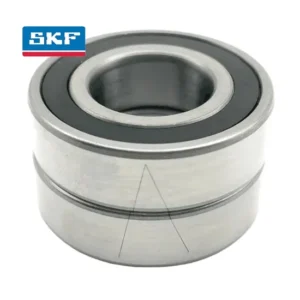
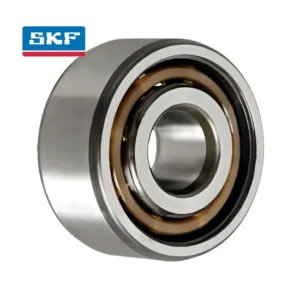
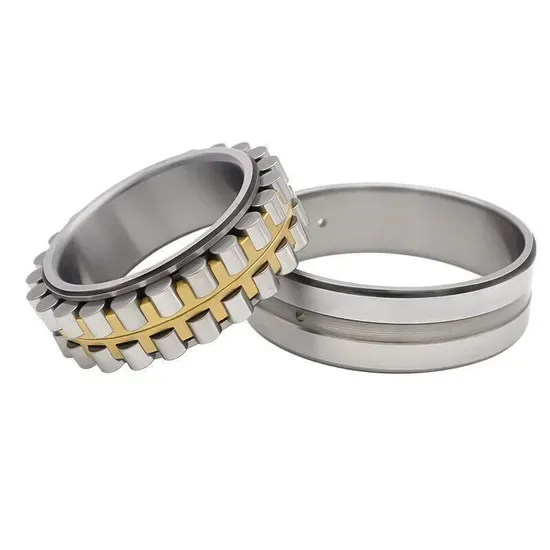
| Bearing Type | Double Row Cylindrical Roller Bearing |
| Bore Diameter (d) | 70 mm |
| Outside Diameter (D) | 110 mm |
| Width (B) | 30 mm |
| Bore Type | Tapered 1:12 (K suffix) |
| Number of Rows | Double Row |
| Seal or Shield Type | Open |
| Precision Class | SP (Super Precision) |
| Cage Material | Polyamide (TN) * |
| Lubrication Feature | W33 lubrication groove and holes in outer ring * |
| Origin | China |
| Weight | 0.100 kg |
*Suffixes TN and /SPW33 require verification against the current SKF super-precision catalog for exact cage design and lubrication groove configuration before final specification lock-in.
Application Suitability
| Industry | Typical Applications |
|---|---|
| Machine Tool Manufacturing | High-speed spindle radial support, precision grinding wheel headstock |
| Robotics & Automation | Joint axis support requiring high radial rigidity and low runout |
| Industrial Machinery | Precision gearbox shafts, measuring instrument rotary tables |
| Steel & Metallurgy | Rolling mill work roll neck positions requiring SP-class accuracy |
When a Tapered Bore Meets a Precision Spindle: Why the K Suffix Is Not Optional
The 1:12 taper on the NN 3014 KTN/SPW33 is the mechanism that lets you dial in residual clearance after mounting — something a straight bore simply cannot do in a spindle application.
In our Yangtze River Delta sourcing work, we watched a CNC spindle builder install a standard-bore cylindrical roller bearing where a tapered bore was specified on the OEM drawing. The straight bore forced them to rely entirely on shaft interference fit to control internal clearance. Within weeks, thermal expansion at operating temperature collapsed the remaining clearance, and the bearing seized during a high-speed roughing cycle. The replacement cost was minor compared to the scrapped workpiece and the missed delivery window. A significant share of premature spindle failures traces back to this kind of clearance-control mismatch rather than material defects [NEED_CITE: rolling bearing failure mode classification per ISO 15243].
How the NN 3014 KTN/SPW33 Fits Precision Spindle Duty
This double row cylindrical roller bearing earns its place in machine tool spindles through a specific combination of traits: the NN design puts three flanges on the inner ring and none on the outer ring, which means the inner ring handles radial loads while the outer ring floats freely to accommodate thermal shaft growth. The SP precision class tightens both dimensional and running accuracy well beyond P5, keeping spindle runout within the envelope that high-speed cutting demands. We once cross-referenced an OEM spindle drawing that called for an NN 3014 with SP precision and a tapered bore — matching the full suffix string, not just the base number, was what prevented the buyer from receiving a P0-grade substitute that would have introduced measurable vibration at 8,000 rpm.
Thermal Expansion, Speed, and the Open-Structure Advantage
Spindle environments generate heat through both cutting forces and bearing friction. An open bearing structure like this one lets the machine builder choose oil-air or oil-jet lubrication matched to the actual speed and thermal profile, rather than being locked into a grease fill that degrades above certain temperature thresholds. The tapered bore plays a second critical role here: as the spindle shaft heats up and expands, the initial clearance setting you established during mounting must account for that growth. Setting the bearing too tight at room temperature means zero clearance at operating temperature — a textbook path to thermal seizure. Setting it too loose sacrifices the rigidity that the double row configuration exists to provide.
Decoding the Core Specifications That Drive Performance
The three-flange inner ring of the NN 3014 design is what gives this bearing its high radial load capacity and its ability to separate cleanly during maintenance — the outer ring and roller assembly come off as one unit while the inner ring stays on the shaft. The SP precision class sits between P5 and P4 in the SKF super-precision hierarchy, meaning bore and outside diameter tolerances are tighter than standard and running accuracy is controlled to limits that matter for spindle applications where every micrometer of radial runout shows up as chatter marks on the workpiece. The tapered bore with its 1:12 ratio lets the installer drive the inner ring axially onto a matching taper seat to reduce internal clearance in controlled increments, checking with a dial indicator until the target residual clearance is reached. This is fundamentally different from hoping a shaft interference fit produces the right clearance by accident.
What Happens When Selection Gets It Wrong
Choosing a replacement bearing based on the base number alone — NN 3014 — while ignoring the K tapered bore, the TN polyamide cage, the SP precision class, and the W33 lubrication feature creates multiple failure paths simultaneously. A standard-precision bearing in an SP-required position introduces vibration that accelerates cage wear. A brass cage substituted where polyamide was specified changes the speed limit and the lubrication film behavior at high rpm. A straight bore installed where a tapered bore was designed in means no clearance adjustment is possible, leaving the final internal clearance entirely to chance. These mismatches fall squarely within the failure categories documented in ISO 15243, and their consequences — unplanned downtime, scrapped batches, warranty disputes — compound far beyond the bearing’s own cost [NEED_CITE: ISO 281 bearing life calculation methodology and application factors].
How We Source This Bearing Differently
We do not hold a single-brand distributorship. Instead, we pull the NN 3014 KTN/SPW33 through authorized SKF distributor channels where every unit carries a traceable batch number linked to the original factory shipment. When a buyer in Central Asia needed origin documentation to clear customs under their country’s specific import rules, we provided the country-of-origin certificate alongside the supplier Certificate of Conformity — not after the fact, but as part of the standard documentation package. Our cross-reference database covers SKF, NSK, FAG, TIMKEN, NTN, and KOYO interchange pairs, and we match on bore type, precision class, cage material, and clearance — not just the numeric designation. If your OEM drawing specifies a competitor’s equivalent, we verify the full suffix equivalence before quoting.
Documentation & Authenticity
- Supplier Certificate of Conformity listing the complete designation NN 3014 KTN/SPW33 with batch and lot numbers traceable to the authorized distributor purchase record
- Country-of-origin documentation prepared for your specific import jurisdiction, supporting customs clearance without delays
- Material certificate and dimensional inspection report available on request, confirming bore taper geometry and SP-class running accuracy
- QR code verification pathway through SKF official authentication tools where applicable to the specific batch
- HS code guidance and import documentation support tailored to the destination country’s bearing classification requirements
Storage, Handling & Mounting
- Keep the NN 3014 KTN/SPW33 in its original sealed packaging until the moment of mounting — the open design means any contamination reaching the roller paths before installation will immediately affect SP-class running accuracy
- Handle the separated inner ring and outer ring assembly with clean lint-free gloves; fingerprint residue on the precision-ground raceways of an SP-class bearing creates corrosion initiation points under high-speed operation
- Mount the tapered bore inner ring by axial drive on the 1:12 taper seat, measuring clearance reduction with a dial indicator at each step to reach the target residual clearance — never rely on a blind torque specification
- Apply the lubrication method specified in the spindle design (oil-air or oil-jet) before first rotation; the W33 lubrication groove in the outer ring distributes oil to both roller rows only when the supply system is correctly connected
- Store matched sets horizontally in their original packaging to prevent outer ring distortion that would compromise the NN design’s floating-ring function in the spindle housing
Request a Technical Review Before You Order
Share your spindle speed range, operating temperature envelope, and the OEM equipment number from the machine nameplate. We will run the cross-reference check against the full suffix string, confirm batch availability through our authorized channel contacts, and return a quotation with the documentation package your import process requires.
Frequently Asked Questions
Q: What does the K tapered bore suffix mean for mounting this bearing?
A: The K suffix indicates a 1:12 tapered bore that mounts onto a matching tapered shaft seat or adapter sleeve. During installation, the inner ring is driven axially along the taper to reduce internal clearance in controlled steps, allowing precise adjustment that a cylindrical bore cannot offer.
Q: How do I verify the authenticity of the NN 3014 KTN/SPW33 I receive?
A: Authenticity verification starts with the batch and lot number on the packaging, which traces back through our authorized distributor channel to the original SKF shipment. Where the specific batch supports it, QR code scanning via SKF’s official authentication app provides an additional layer of confirmation. We also supply a Certificate of Conformity with every order.
Q: Can I substitute another brand’s equivalent for this SKF designation?
A: Cross-brand substitution is possible, but it requires matching more than the base number. Bore type (tapered K), precision class (SP), cage material, and lubrication features must all align. We maintain cross-reference charts covering SKF, NSK, FAG, NTN, and other major brands and verify full suffix equivalence before recommending any interchange.
Q: Why does SP precision matter for a cylindrical roller bearing in a spindle?
A: SP precision provides tighter dimensional and running accuracy than standard grades, which directly controls radial runout in the spindle. In machine tool applications, even small runout differences translate to surface finish degradation and chatter at cutting speeds.
Secure Your NN 3014 KTN/SPW33 With Full Traceability
Send us your OEM equipment number or application parameters — we will confirm specification match, batch availability, and documentation readiness before you commit to an order.
Contact our engineering team through the inquiry form on our product page or reach your assigned account representative directly.