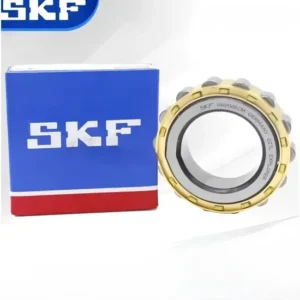


Description
Authorised Channel Sourcing — Every SKF NN 3026KTN3/SPW33 leaving our warehouse carries batch-level traceability back to an authorised distributor invoice, so you can reconcile the packing slip against the manufacturer’s own production records before it ever reaches your spindle housing.
Technical Specifications
| Parameter | Value |
|---|---|
| Designation | SKF NN 3026KTN3/SPW33 |
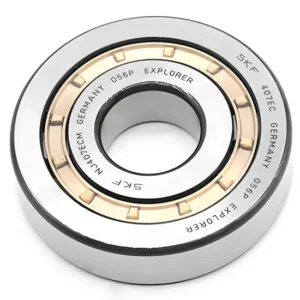
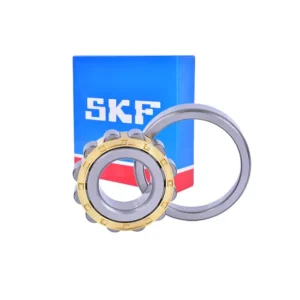
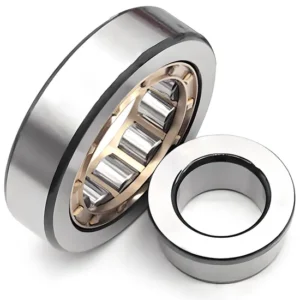
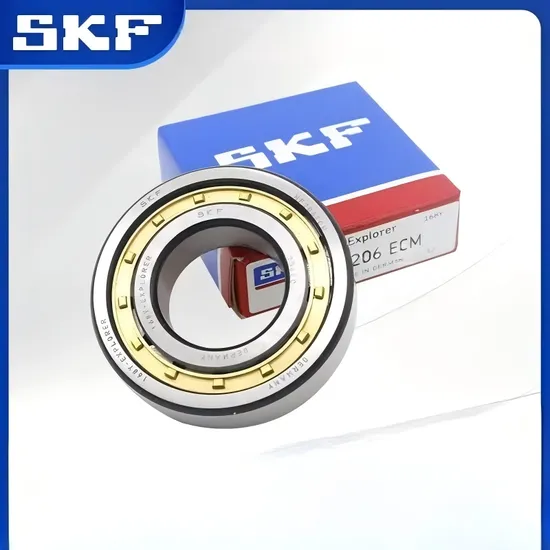
| Bearing Type | Double Row Cylindrical Roller Bearing |
| Bore Diameter (d) | 130 mm |
| Outside Diameter (D) | 200 mm |
| Number of Rows | Double Row |
| Bore Type | Tapered (1:12 taper) |
| Precision Class | SP (Super Precision) |
| Seal or Shield Type | Open |
| Outer Ring Feature | W33 — annular groove and three lubrication holes |
| Origin | China |
| Weight | 3.45 kg |
Note: The TN3 cage designation is uncommon in current SKF super-precision literature and should be verified against the manufacturer’s latest catalogue before finalising mounting dimensions and speed limits.
Application Suitability
| Industry | Typical Applications |
|---|---|
| Machine tool manufacturing | Main spindle rear support on CNC lathes and machining centres |
| Precision gearboxes | High-speed pinion shaft support in servo-driven indexing units |
| Printing and textile machinery | Impression cylinder bearings on web offset presses |
| General industrial MRO | Replacement bearings for OEM spindle cartridges requiring SP-level runout |
What Happens When a Buyer Ignores the /SP and W33 on a Super-Precision Cylindrical Roller Bearing
A standard P5 cylindrical roller bearing pressed into a spindle designed for SP tolerance will generate measurable thermal drift within the first hour of continuous cutting.
I watched this happen on a German-built internal grinding spindle where the maintenance team replaced an NN 30 series with a commercially available P5 equivalent. The base designation matched, the bore and OD were correct, and the machine ran — but after forty minutes of grinding, bore roundness drifted past tolerance and the operator had to stop, cool down, and re-trueth the wheel. The shop lost an entire shift to a problem that never should have existed. That kind of cross-reference shortcut is responsible for a significant share of premature failures in precision rotating equipment [NEED_CITE: rolling bearing failure mode classification per ISO 15243]. When procurement matches only the numbers before the slash and ignores everything after it, the spindle pays the price in thermal binding, cage degradation, or catastrophic raceway spalling.
Matching the SKF NN 3026KTN3/SPW33 to Spindle and Precision Drive Applications
This bearing sits at the intersection of high radial stiffness and tight running accuracy — exactly where machine tool spindles demand both load capacity and minimal displacement under cutting forces. The tapered bore lets you mount it directly on a precision-ground taper seat and adjust internal clearance by controlling the axial drive-up distance, which is how most spindle builders achieve the exact preload or residual clearance their design requires. The W33 lubrication groove means relubrication can happen in situ through the outer ring without splitting the housing, a practical advantage on spindles where downtime for disassembly is measured in lost production hours rather than scheduled maintenance windows.
Thermal Envelope, Lubrication Strategy, and Mounting Discipline
Spindle applications routinely run at speeds where friction heat from the rolling contacts becomes the dominant thermal input to the shaft system. At those speeds, the choice between oil-air, oil mist, and grease lubrication determines not just bearing life but the entire thermal equilibrium of the spindle assembly. The open seal configuration on this bearing is deliberate: it gives the spindle designer freedom to route external lubrication precisely where it is needed while avoiding the friction torque penalty of integral contact seals. The tapered bore demands a disciplined mounting procedure — the axial drive-up on the 1:12 taper directly controls the interference fit and the resulting internal clearance, and even a small overshoot can preload the bearing beyond its thermal capacity [NEED_CITE: effect of residual clearance on bearing operating temperature in machine tool spindles]. Housing bore tolerances and shaft taper geometry must both be verified before mounting begins.
Decoding the Suffix Stack: K, SP, and W33
The K suffix confirms a 1:12 tapered bore, which is the standard interface for direct spindle shaft mounting without an adapter sleeve. This gives better concentricity than a cylindrical bore with an interference fit because the taper self-centres during the axial draw-up. The SP precision class sits above standard P4 in SKF’s super-precision hierarchy — it specifies tighter dimensional accuracy on bore and OD, and crucially, tighter running accuracy on the inner ring’s radial runout, which is the parameter that most directly affects workpiece surface finish on a lathe or grinder. The W33 annular groove with three lubrication holes through the outer ring is not optional on most spindle designs: it is the standard relubrication pathway for oil-air systems, and attempting to route lubricant past a solid outer ring forces the oil through the rolling elements, which wastes flow and can starve the cage pockets.
The Hidden Cost of Skipping Suffix Verification
A correctly specified SKF NN 3026KTN3/SPW33 installed with proper taper drive-up and matched lubrication will deliver the L10 life predicted by ISO 281 under its rated load and speed conditions. A substituted bearing that matches the base number but carries standard clearance where C3 was needed, or a polyamide cage where the application demands machined brass, will fail differently every time — sometimes as early cage wear, sometimes as thermal seizure, sometimes as a shattered cage that sends fragments through the gear mesh [NEED_CITE: ISO 281 rolling bearing life calculation framework]. The unplanned downtime, the scrapped workpiece batch, and the secondary damage to adjacent components regularly exceed the cost difference between the correct and the substituted bearing by orders of magnitude.
Why Maintenance Engineers and Procurement Teams Route These Orders Through Us
We source through authorised distributor channels rather than holding a single-brand franchise, which means every SKF NN 3026KTN3/SPW33 we quote carries documentation that traces back to the manufacturer’s own supply chain rather than an unverified secondary market lot. Our cross-reference database aligns clearance, cage material, and precision suffixes across SKF, NSK, FAG, and TIMKEN — so if you need to substitute due to lead time, you get a functional equivalent rather than a base-number match that ignores the details that matter. We verify authenticity through the manufacturer’s official QR code pathways before shipment, and we provide country-of-origin documentation so your import compliance team has what they need without a second round of emails. When a spindle builder or MRO manager sends us an OEM equipment number, we cross-check it against the original bearing specification including suffixes, because that is where the field failures hide.
Documentation & Authenticity
- Supplier Certificate of Conformity referencing the specific batch and lot number for traceability back to the authorised distributor chain.
- Third-party runout and dimensional inspection report confirming SP-level running accuracy on the inner ring before dispatch.
- QR code verification pathway using the SKF Authenticate app so the receiving team can confirm provenance at the dock.
- Country-of-origin certificate and HS code documentation prepared for import clearance at destination port.
- Material certificate confirming bearing steel specification consistent with the manufacturer’s standard for super-precision cylindrical roller bearings.
Storage, Handling & Mounting
- Keep the SKF NN 3026KTN3/SPW33 in its original sealed packaging until the moment of mounting — the SP precision class demands that the raceways remain free of dust and moisture that standard storage environments introduce within days.
- The tapered bore requires the shaft taper seat to be cleaned and inspected for nicks or corrosion before mounting; any debris between the bore and the shaft will distort the interference fit and compromise the drive-up calculation.
- Use induction heating for the inner ring rather than an open flame, targeting a temperature differential that achieves the required expansion without exceeding the thermal limits of the cage material.
- After mounting, verify the residual internal clearance with a feeler gauge or dial indicator method before the housing is closed — the W33 lubrication holes on the outer ring provide convenient access points for this check.
- If the spindle housing uses an oil-air lubrication system, confirm that the three W33 lubrication holes align with the housing feed ports before final tightening.
Request a Technical Review Before You Order
Send us the OEM equipment number or the full operating parameters — load, speed, lubrication method, and thermal envelope — and we will cross-check the specification including every suffix before quoting. If your application requires a specific cage material or precision class that differs from what is listed here, we will confirm availability through our authorised channel network and provide a lead time you can plan around. Documentation packages including COC, origin certificates, and inspection reports are standard with every shipment.
Frequently Asked Questions
Q: What does the SP precision class mean compared to standard P4 or P5 ratings?
A: SKF’s SP (Super Precision) class imposes tighter limits on dimensional accuracy and, more importantly, on radial running accuracy of the inner ring compared to standard P4 or P5. For machine tool spindles, this tighter runout specification directly translates to better workpiece surface finish and less thermal drift during continuous operation.
Q: How does the tapered bore (K suffix) affect mounting procedure?
A: The 1:12 tapered bore allows direct mounting on a precision-ground tapered shaft seat. The axial drive-up distance during mounting controls the interference fit and the resulting internal clearance or preload. This requires a calibrated procedure and verification of residual clearance after mounting.
Q: What is the function of the W33 annular groove and lubrication holes?
A: The W33 feature provides an annular groove around the outer ring with three radial lubrication holes, enabling relubrication through the housing without disassembling the bearing. This is standard practice for oil-air and oil mist systems in spindle applications where regular relubrication extends service life.
Q: How can I verify the authenticity of the SKF NN 3026KTN3/SPW33 I receive?
A: Each bearing can be verified using the SKF Authenticate app by scanning the QR code on the packaging and the bearing label. We also supply batch-level documentation traceable to our authorised distributor source so you can independently confirm the supply chain path.
Q: What cross-reference equivalents exist across NSK, FAG, and TIMKEN for this bearing?
A: Cross-referencing super-precision cylindrical roller bearings requires matching not just the base designation but also the precision class, bore type, cage material, and lubrication features. Send us the full operating requirements and we will provide a functional equivalent across our six covered brands with all suffixes aligned.
Confirm Your Specification and Lock In Availability
Share your OEM part number or application parameters and we will return a verified specification, matched documentation, and a firm lead time within one business day. Contact our technical sales team through the inquiry form on this page or email us directly with your requirement.