

Description
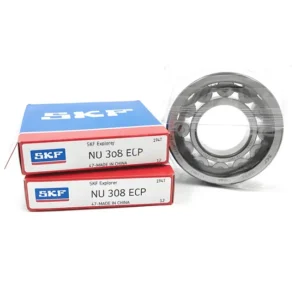
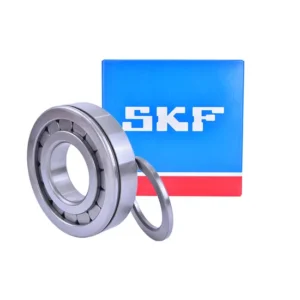
Authorized Channel Procurement — Every SKF NN3006KTN/SPC1LVR521 double row cylindrical roller bearing ships with batch traceability documents linking the unit to its original distribution source.
Technical Specifications
| Parameter | Value |
|---|---|
| Designation | SKF NN3006KTN/SPC1LVR521 |
| Bearing Type | Double Row Cylindrical Roller Bearing |
| Bore Diameter (d) | 30 mm |
| Outside Diameter (D) | 55 mm |
| Width (B) | 19 mm |
| Weight | 0.18 kg |
| Number of Rows | Double Row |
| Bore Type | Tapered (1:12) |
| Seal or Shield Type | Open |
| Arrangement | NN |
| Origin | China |
Note: Suffixes TN, /SP, C1, and LVR521 in this designation require cross-verification against the manufacturer catalog for exact cage material, precision class, clearance group, and special design variant.
Application Suitability
| Industry | Typical Applications |
|---|---|
| Machine Tool Manufacturing | High-speed spindle rear support bearing seat |
| Precision Industrial Equipment | Rotary indexing table radial positioning shaft |
| OEM Micro Machinery | Miniature gearhead output shaft radial support |
| High-Precision Rotating Assemblies | Encoder coupling shaft radial constraint |
What Happens When a Super-Precision Spindle Bearing Gets the Wrong Clearance
A C1 clearance in a thermally loaded spindle can lock rollers against the raceway before the machine reaches operating temperature.
I once visited a CNC grinding shop in Suzhou where an operator replaced a spindle bearing with what looked like the correct part number but carried standard CN clearance instead of the specified C3. The thermal expansion from high-speed rotation consumed the internal clearance within minutes, and the spindle seized mid-cycle—scrapping a titanium aerospace component and requiring a full spindle teardown. The replacement cost was dwarfed by the scrapped workpiece and the multi-day downtime. Precision suffixes on a SKF NN3006KTN/SPC1LVR521 double row cylindrical roller bearing are not decorative; they define the internal geometry envelope that keeps rollers loaded correctly under thermal growth. When cross-referencing or substituting, matching the base designation while ignoring clearance, cage type, or precision class is one of the most expensive shortcuts in maintenance procurement [NEED_CITE: thermal seizure failure mode in cylindrical roller bearings per ISO 15243].
Matching Spindle Dynamics to the SKF NN3006KTN/SPC1LVR521 Double Row Cylindrical Roller Bearing
The tapered bore on this bearing allows axial drive-up on a matching conical shaft seat, which is the standard mounting method for super-precision spindle installations. By controlling the axial displacement during mounting, the technician sets the residual internal clearance to the exact value the spindle thermal profile demands. The double-row cylindrical roller arrangement handles the radial loads from belt tension or direct-drive motor weight while maintaining the compact cross-section that OEM spindle designers require. In our sourcing workflow, we verify the tapered bore geometry against ISO 492 tolerances before dispatch so the interference fit behaves predictably during hydraulic nut tightening.
Thermal Expansion, Radial Loads, and Why Open Construction Matters
Machine tool spindles operate across a temperature gradient that can stretch the shaft relative to the housing. The open construction of this bearing lets the spindle designer specify a custom labyrinth or air-purge seal in the housing, avoiding the friction penalty of integral contact seals at speeds approaching the grease limit. Radial loads in a typical grinding spindle are steady and moderate, making cylindrical roller geometry ideal because the line contact distributes force across a broader raceway zone than point-contact ball bearings. Oil-air or oil-mist lubrication is common in this application, and the open sides allow direct oil delivery to the roller-raceway interface without seal interference [NEED_CITE: oil-air lubrication interval for super-precision cylindrical roller bearings in spindle applications].
Reading the Suffixes: Tapered Bore, Cage, and Precision Class
The K suffix confirms a 1:12 tapered bore, meaning the shaft seat must be machined to the same taper for proper interference fit. During mounting, axial drive-up on the taper expands the inner ring radially—this expansion is what sets the working clearance. The TN suffix in SKF nomenclature typically points toward a polyamide cage, which offers low friction and good high-speed behavior but requires temperature monitoring to stay within the polymer’s continuous rating. The /SP designation signals a super-precision tolerance class with tighter running accuracy than standard P5, directly affecting spindle runout and surface finish on machined parts. For the remaining suffix elements (C1, LVR521), the exact clearance group and special variant code should be confirmed against the current SKF precision catalog before finalizing procurement.
The Hidden Costs of a Mismatched or Unverified Spindle Bearing
Installing a bearing with incorrect precision class can push spindle runout beyond the tolerance band of the machining process, producing scrap parts that accumulate cost long before anyone traces the root cause back to the bearing. A counterfeit unit may pass visual inspection but contain rollers with inconsistent diameter variation, generating vibration harmonics that degrade surface finish and accelerate raceway spalling. Under ISO 281 life calculations, even a small deviation in internal clearance from the design intent can shorten calculated L10 life noticeably, because the load distribution across rollers shifts unfavorably [NEED_CITE: effect of clearance deviation on L10 bearing life per ISO 281]. Warranty claims on damaged spindles are routinely denied when the failure analysis reveals a bearing that does not match the OEM specification on clearance, precision, or cage material.
How We Reduce Procurement Risk for Precision Bearings
Every SKF NN3006KTN/SPC1LVR521 double row cylindrical roller bearing we supply is traced back through an authorized distributor channel with batch-level documentation, so the procurement record shows exactly where the unit entered the supply chain. Our cross-reference database compares not just the base designation but the clearance class, cage material, and precision suffix against equivalent offerings from NSK, FAG, and NTN, preventing substitution errors that a simple number lookup would miss. When a customer provides the OEM equipment number, we pull the original specification and verify that every suffix aligns before quoting. Country-of-origin documentation accompanies each shipment to satisfy import compliance in markets that require it. We also provide installation guidance on tapered-bore drive-up procedures, because a super-precision bearing installed with the wrong residual clearance will underperform regardless of its manufacturing quality.
Documentation & Authenticity
- Supplier Certificate of Conformity listing the exact batch number of the SKF NN3006KTN/SPC1LVR521 unit shipped
- Dimensional inspection report confirming tapered bore geometry and outer diameter tolerances for this 30 mm × 55 mm × 19 mm bearing
- Country-of-origin certificate matching the declared manufacturing location for customs documentation
- QR code verification pathway enabling the receiving engineer to scan and validate authenticity via SKF official digital tools
- Material certificate confirming bearing steel specification for the rings and rolling elements
Storage, Handling & Mounting
- Retain the original sealed packaging for this open-type bearing until the moment of spindle assembly to prevent contaminant ingress on the exposed raceways
- Mount the tapered bore (K suffix, 1:12) using a hydraulic nut and dial indicator to control axial drive-up, targeting the residual clearance specified by the spindle OEM
- Handle with clean, lint-free gloves—fingerprints on the precision-ground raceways of a super-precision class bearing can initiate corrosion pits under oil-mist lubrication
- Verify shaft taper contact pattern with bearing blue before final drive-up; incomplete contact on the 30 mm bore compromises the interference fit and allows inner-ring creep
- If the bearing will be stored beyond typical inventory turnover periods, apply a compatible rust-preventive oil to the exposed surfaces since no integral seals protect this open design
Requesting a Technical Quotation
Share your spindle operating parameters—maximum speed, radial load, and target operating temperature—so we can confirm that the clearance class and precision suffix in this designation match your application envelope. If you are replacing an existing bearing, provide the full designation stamped on the current unit along with the OEM equipment number so we can cross-verify every suffix element. For import-sensitive destinations, let us know the required documentation package and we will confirm country-of-origin availability and HS code classification before you commit.
Frequently Asked Questions
Q: What must align when cross-referencing the SKF NN3006KTN/SPC1LVR521 to an equivalent NSK or FAG part?
A: The base dimension alone is insufficient. The precision class suffix, clearance group, cage material designation, and tapered bore specification must all match. A different precision class may have acceptable dimensions but produce unacceptable runout in a spindle application.
Q: How do ISO tolerance classes affect this bearing’s suitability for precision spindles?
A: Super-precision designations like SP sit between standard P5 and P4 in running accuracy. For spindle rear-support positions where runout directly affects machined surface finish, the tighter tolerance band ensures the inner ring and outer ring concentricity stays within the assembly’s error budget.
Q: What does the K suffix mean for installation procedures?
A: The K suffix indicates a 1:12 tapered bore. Installation requires axial drive-up on a matching conical shaft seat using a hydraulic nut or locknut, with residual clearance measured by dial indicator or feeler gauge to confirm the correct expansion has been achieved.
Q: How can I verify that the bearing I receive is genuine?
A: Genuine SKF bearings carry unique identification codes that can be verified through SKF’s official authentication tools and authorized distributor documentation. We supply batch traceability records and country-of-origin certificates with every shipment to support your incoming inspection process.
Q: Are the TN, /SP, C1, and LVR521 suffixes all standard SKF designations?
A: The K suffix for tapered bore is standard SKF nomenclature. For TN, /SP, C1, and LVR521, we recommend confirming the exact meaning against the current manufacturer catalog or providing us the OEM equipment number so we can verify the complete specification before ordering.
Confirm Your Spindle Bearing Specification
Send us the full part number from the existing bearing or the OEM equipment drawing reference, and we will return a verified cross-reference with documentation samples within one business day.