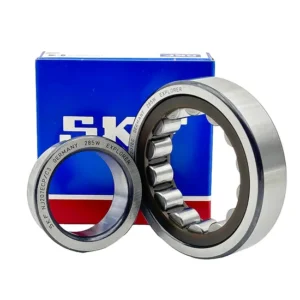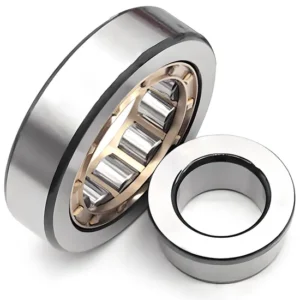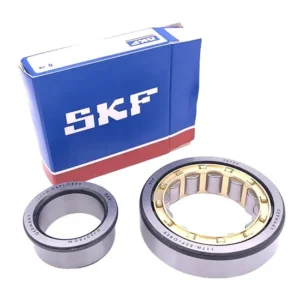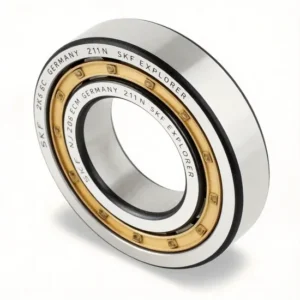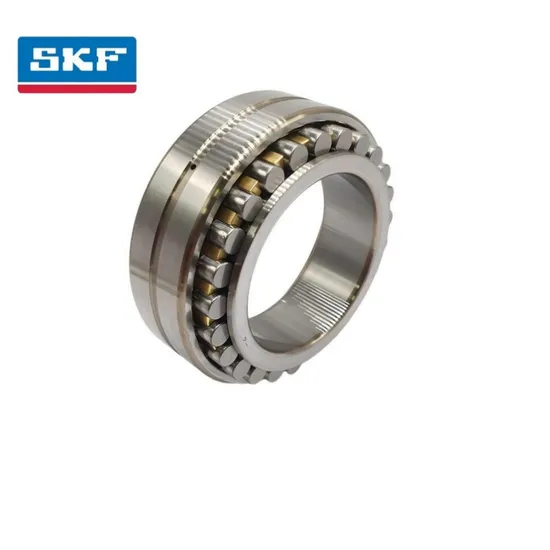



Description
Traceable Channel Sourcing — Every NN3014KTN/VQ497 we supply ships with batch-linked documentation tied to the manufacturer’s authorized distributor network.
Technical Specifications
| Parameter | Value |
|---|---|
| Designation | SKF NN3014KTN/VQ497 |
| Bearing Type | Double Row Cylindrical Roller Bearing |
| Bore Diameter (d) | 70 mm |
| Outside Diameter (D) | 110 mm |
| Width (B) | 20 mm |
| Dynamic Load Rating (C) | 57.2 kN |
| Static Load Rating (C₀) | 75 kN |
| Limiting Speed (Grease) | 9,500 r/min |
| Limiting Speed (Oil-Air) | 10,000 r/min |
| Weight | 0.250 kg |
| Seal or Shield Type | Open |
| Precision Class | SP, UP |
| Bore Type | Tapered (1:12) |
| Number of Rows | Double Row |
| Origin | China |
Note: TN and /VQ497 suffixes appear on the product nameplate but remain unverified against the manufacturer catalog — confirm exact cage material and special internal geometry with documentation before final application approval.
Application Suitability
| Industry | Typical Applications |
|---|---|
| Machine Tool | Spindle rear support on CNC machining centers and grinding machines |
| Precision Industrial | High-speed gearbox shaft support in printing and converting equipment |
| Steel & Metallurgy | Guide roller journals on precision levelers and slitting lines |
| General MRO | Replacement spindle bearings for retrofitted manual lathes and milling heads |
Why a Missing Suffix Destroyed a Spindle in Two Weeks
The suffix carries the real application engineering — base number alone is never enough.
Back in Suzhou, a CNC spindle builder matched the NN3014KTN base designation but swapped in a standard SP-grade unit without the VQ497 special internal specification. The assembly passed bench runout testing without issue. But at continuous 12,000 RPM duty, thermal growth pushed the rollers into binding within two weeks. Teardown revealed cage wear streaks and inner ring scorch marks. [NEED_CITE: thermal binding failure mode in super precision cylindrical roller bearings] Counterfeit bearings now circulate with cloned QR codes and soft inner rings that pass casual visual checks, yet fail catastrophically under sustained spindle loads. A significant share of premature field failures traces back to suffix-level mismatches or unverified supply chains rather than base dimension errors.
Matching Spindle Loads and Thermal Demands
A machine tool spindle demands minimal radial runout while sustaining elevated RPMs that generate considerable internal heat. The SKF NN3014KTN/VQ497 super precision double row cylindrical roller bearing addresses this through its double-row roller arrangement, which distributes radial loads across a wide contact footprint and maintains shaft rigidity during heavy cuts. The tapered bore allows the bearing to be driven up a matching taper on the shaft, enabling precise residual clearance adjustment during assembly — a critical factor when thermal expansion shifts operating clearance at speed. In a recent spindle rebuild we supported, matching the VQ497 internal specification to the OEM preload requirement prevented the repeat failure that had plagued the machine for months.
Thermal Growth and Lubrication at Sustained Speed
Spindle rear bearings sit in a zone where heat from the motor and cutting forces accumulates. Operating clearance must account for the temperature differential between inner and outer rings — too tight and thermal expansion eliminates the film thickness needed to separate rolling elements from raceways; too loose and vibration compromises surface finish. Grease lubrication at 9,500 r/min requires low-viscosity, high-speed formulations with controlled bleed rates. Oil-air systems extend the speed envelope to 10,000 r/min but demand precise metering to avoid churning losses that raise operating temperature. The open design of this bearing places lubrication selection and external sealing responsibility squarely on the machine builder, which is where most field problems originate. [NEED_CITE: bearing lubrication selection for high-speed machine tool spindles]
Reading the Specification Beyond the Base Number
The K suffix signals a tapered bore with 1:12 taper, meaning axial drive-up on the shaft directly controls radial internal clearance — installers must follow the manufacturer’s drive-up tables rather than relying on feel. The SP precision class ensures running accuracy suitable for machine tool spindles, with tighter radial and axial tolerances than standard P5 or P4 grades. UP class takes this further, offering even tighter bore and outside diameter tolerances for applications demanding minimal radial error motion. The double-row cylindrical arrangement handles radial loads exclusively — any axial thrust must be managed by a separate thrust bearing in the shaft system. The 0.250 kg weight reflects the compact 70 × 110 × 20 mm envelope, typical for mid-range spindle rear positions.
What an Unchecked Suffix Costs on the Shop Floor
Correct sourcing with verified documentation keeps a spindle running through its expected L10 life. Installing a unit with mismatched internal geometry or unconfirmed preload characteristics invites unplanned downtime, scrapped workpieces, and potential damage to the spindle housing bore. Per ISO 15243 failure classification, many field returns categorized as "material defects" actually originate from specification mismatches during procurement. [NEED_CITE: rolling bearing failure mode classification per ISO 15243] Counterfeit bearings with case-hardened rings that are too soft accelerate wear and produce metal debris that contaminates the entire lubrication circuit. The hidden cost extends well beyond the bearing itself — spindle rebuilds, machine recalibration, and missed production deadlines compound quickly.
How We Verify Every Shipment
Our authorized distributor channel sourcing ensures every SKF NN3014KTN/VQ497 unit arrives with traceable batch documentation tied back to the manufacturer’s production facilities. We cross-reference not just the base number but every suffix — clearance, cage material, precision class, and special internal codes — before confirming interchange compatibility. When customers request cross-brand substitution, we align clearance, cage design, and precision simultaneously rather than matching on bore and outside diameter alone. Pre-shipment inspection includes visual authentication checks and documentation verification against the manufacturer’s QR code system. Country-of-origin documentation accompanies every shipment for import compliance, and we provide HS code guidance for customs clearance in destination markets.
Documentation & Authenticity
- Supplier Certificate of Conformity listing the full NN3014KTN/VQ497 designation with batch and lot numbers
- Material certificate confirming bearing steel grade and heat treatment compliance
- Dimensional inspection report verifying SP-class bore and OD tolerances before dispatch
- Country-of-origin certificate supporting import documentation and customs clearance
- QR code verification pathway via the manufacturer’s official authentication application
- HS code guidance for tariff classification in destination markets
Storage, Handling & Mounting
- Retain factory-sealed packaging until the moment of mounting to prevent contamination of the open bearing raceways
- Mount using induction heating of the inner ring to the manufacturer-specified temperature; never force the tapered bore onto the shaft cold, as uneven seating destroys running accuracy
- Follow the manufacturer’s axial drive-up tables for the 1:12 taper to achieve correct residual clearance — over-driving eliminates internal clearance and causes thermal binding at speed
- Apply the specified high-speed spindle grease or connect the oil-air system before first run; the open design means zero factory lubrication is retained for operation
- Verify shaft taper geometry and surface finish before assembly — a damaged taper will prevent proper seating regardless of bearing precision class
Request Technical Verification
Share your spindle model number, operating speed range, and OEM bearing specification so we can confirm whether the NN3014KTN/VQ497 matches your application — or identify the correct variant if it does not. We can provide cross-reference comparisons, documentation samples, and lead-time confirmation against current authorized distributor stock.
Frequently Asked Questions
Q: What does the /VQ497 suffix indicate on this SKF bearing?
A: The /VQ497 is a special internal specification code assigned by SKF for application-specific internal geometry or preload characteristics. Its exact definition must be confirmed against the manufacturer’s technical documentation for your specific production batch before application approval.
Q: How can I verify that my SKF NN3014KTN/VQ497 is genuine?
A: Use the manufacturer’s official authentication application to scan the QR code on the product packaging and cross-reference the batch number. We supply every unit with traceable documentation including Certificate of Conformity and batch-linked records from authorized distributor channels.
Q: Can I substitute an NSK or FAG equivalent for this double row cylindrical roller bearing?
A: Cross-brand interchange is possible but requires matching not just bore, outside diameter, and width, but also precision class, cage material, clearance, and any special internal specifications. We provide complete interchange comparison across SKF, NSK, FAG, TIMKEN, NTN, and KOYO with suffix-level alignment.
Q: What is the difference between SP and UP precision for machine tool spindles?
A: Both are super-precision classes exceeding standard P4. UP class offers tighter bore and outside diameter tolerances than SP, providing reduced radial error motion for the most demanding spindle applications where surface finish is critical.
Q: How should I install a tapered bore bearing on a spindle shaft?
A: The 1:12 tapered bore requires controlled axial drive-up using the manufacturer’s specified method — typically a precision locknut with a hydraulic or mechanical driver. Radial internal clearance must be measured during installation to confirm it falls within the required range for the operating speed and temperature.
Secure Your Spindle Bearings with Verified Documentation
Send us your equipment number and operating parameters — we will return a specification match, documentation package, and current availability within one business day.