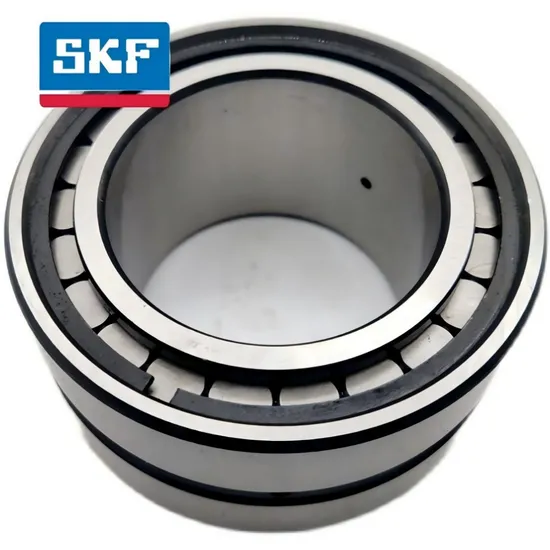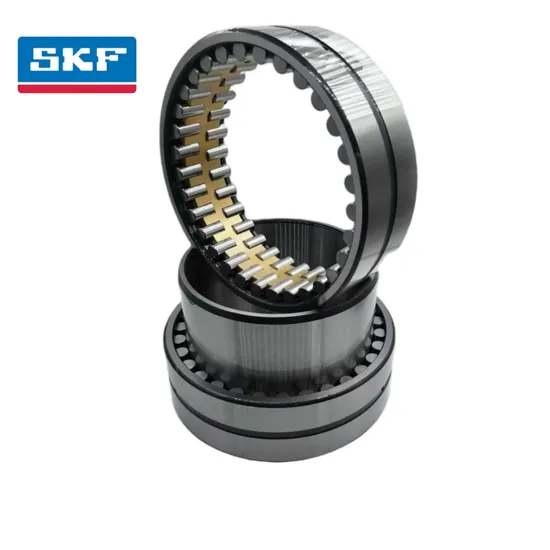


Description
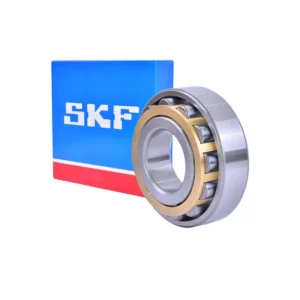
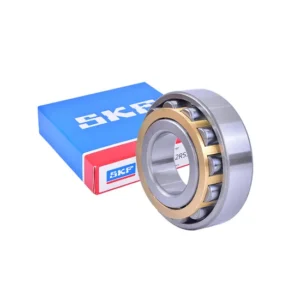
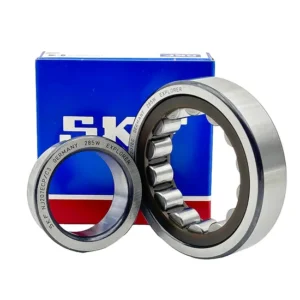
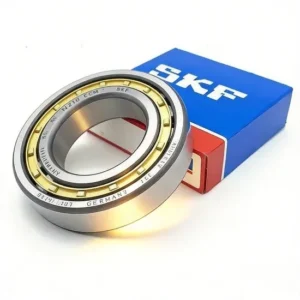
Authorized Channel Sourcing — Traceable batch documentation accompanies every SKF NN3019 KTN9/SPW33 shipment, with origin files prepared for import clearance.
Technical Specifications
| Parameter | Value |
|---|---|
| Designation | SKF NN3019 KTN9/SPW33 |
| Bearing Type | Double Row Cylindrical Roller Bearing |
| Bore Diameter (d) | 95 mm |
| Outside Diameter (D) | 145 mm |
| Number of Rows | Double Row |
| Bore Type | Tapered (1:12) |
| Cage Material | Polyamide 6,6 (Glass Fiber Reinforced) |
| Seal or Shield Type | Open |
| Precision Class | SP |
| Lubrication Feature | W33 — Annular groove and three lubrication holes in outer ring |
| Origin | China |
| Weight | 0.100 kg |
Note: The /SP suffix in this identifier requires confirmation against the manufacturer catalog for exact precision class definition.
Application Suitability
| Industry | Typical Applications |
|---|---|
| Industrial Machinery | Machine tool main spindles, precision gearbox shafts |
| Steel & Metallurgy | Rolling mill guide rollers, coiler mandrel supports |
| General MRO | Heavy-duty rotating equipment shaft positions requiring high radial rigidity |
What Happens When Suffixes Get Ignored on a Double Row Cylindrical Roller Bearing
A matched cross-reference means nothing if cage material and clearance don’t carry over.
I’ve watched procurement teams substitute NN3019 variants based on bore and OD alone, then wonder why cages fracture within months on a heavy-haul route. A stamped steel cage swapped in place of the specified TN9 polyamide cage behaves completely differently under high-speed thermal cycling. The polyamide cage in the SKF NN3019 KTN9/SPW33 double row cylindrical roller bearing is engineered for lower inertia and better heat dissipation at elevated rotational speeds, while steel cages add mass and alter vibration signatures. When a cross-reference ignores these suffix-level details, the result is premature roller scoring and unplanned downtime that no L10 calculation predicted [NEED_CITE: rolling bearing failure mode classification per ISO 15243].
How the Tapered Bore and W33 Groove Fit Spindle Duty Cycles
Machine tool spindles demand axial positioning accuracy that a cylindrical bore simply cannot deliver. The K suffix indicates a 1:12 tapered bore, allowing the inner ring to be driven onto a matching tapered shaft journal to set exact radial internal clearance. This is the mechanism that lets maintenance engineers dial in the operating clearance after thermal equilibrium is reached. The W33 annular groove and lubrication holes in the outer ring enable direct grease injection at the most stressed contact zone, cutting re-lubrication intervals compared to end-cap grease packing. When sourcing the SKF NN3019 KTN9/SPW33 double row cylindrical roller bearing for spindle rebuilds, we cross-check the bore taper against the shaft drawing and confirm that substitute brands carry the same W33 lubrication path — not just the same bore diameter.
Thermal Expansion, Cage Inertia, and Speed Limits
Spindle applications generate heat continuously. The double row cylindrical geometry handles high radial loads but has no inherent axial load capacity, so thermal growth along the shaft must be managed by the mounting arrangement rather than the bearing itself. At sustained high speeds, cage inertia becomes a dominant failure factor. The TN9 glass-fiber reinforced polyamide cage reduces weight compared to machined brass alternatives, lowering centrifugal forces on the cage pockets and reducing friction heat generation [NEED_CITE: polyamide cage speed limits versus brass cage in cylindrical roller bearings]. Operating temperature must stay within the polyamide material’s continuous rating, typically around 120°C, beyond which a brass cage designation would be the correct substitution. The open design places responsibility for contamination exclusion on the housing seal arrangement.
Decoding the Core Specifications
The NN prefix confirms this is a double row cylindrical roller bearing with inner ring ribs on both sides and a separable outer ring — a configuration that simplifies mounting and inspection because the outer ring can be fitted independently. The 95 mm bore and 145 mm OD place this bearing in a mid-range size where shaft deflection is a concern; the two roller rows share radial load across a wider span than a single row, increasing moment stiffness. The SP precision class sits between P5 and P4 in the ISO tolerance framework, targeting the running accuracy required for spindle noses where workpiece surface finish is directly tied to bearing runout. Reaching SP precision means tighter bore and OD tolerances than standard production, which is why dimensional inspection reports matter at receipt. The tapered bore requires a specific axial drive-up distance during mounting to achieve the correct residual clearance — under-driving leaves excessive clearance and vibration, while over-driving preloads the rollers and causes rapid temperature rise.
The Hidden Cost of Wrong Clearance on a Tapered Bore Mount
Setting clearance on a tapered bore bearing is irreversible once the inner ring is driven to position. If the specified clearance was C3 and the installer worked with CN, the thermal expansion during spindle warm-up will close the remaining internal gap, forcing rollers against the raceway under preload. The consequence is accelerated cage wear, raceway smearing, and eventual seizure — failures that ISO 281 life calculations do not capture because they assume correct operating clearance [NEED_CITE: ISO 281 bearing life calculation assumptions on internal clearance]. Counterfeit bearings compound this risk: soft inner rings deform during the drive-up process, giving false clearance readings. Authentic SKF NN3019 KTN9/SPW33 double row cylindrical roller bearings sourced through authorized distributor channels eliminate this variable entirely, as the metallurgical hardness and dimensional accuracy are verified before they reach the warehouse.
What We Verify Before a Shipment Leaves
We source the SKF NN3019 KTN9/SPW33 double row cylindrical roller bearing through authorized distributor channels and maintain batch-level traceability back to the production lot. When buyers request a cross-reference to NSK, FAG, NTN, or TIMKEN equivalents, we match not only the base number but also the cage material, clearance class, precision grade, and lubrication groove — four suffix categories that most quick-reference tools skip. Every shipment includes authenticity documentation that can be verified through the manufacturer’s official app QR code pathway, and country-of-origin files are prepared to support import compliance for Middle East, African, Latin American, and Central Asian customs requirements. We also provide engineering selection guidance when the application involves non-standard speed, load, or temperature conditions, because a correct part number in a wrong application still fails.
Documentation & Authenticity
- Supplier Certificate of Conformity referencing the exact batch and lot number of the SKF NN3019 KTN9/SPW33 units shipped
- Third-party dimensional inspection report confirming SP precision running accuracy and tapered bore geometry
- QR code verification pathway through the SKF official app for authenticity confirmation at receipt
- Country-of-origin certificate and HS code documentation prepared for destination-country import clearance
- Material test certificates verifying ring and roller metallurgical composition
Storage, Handling & Mounting
- Keep the SKF NN3019 KTN9/SPW33 in original sealed packaging until the moment of mounting to preserve the factory-applied corrosion inhibitor on the open bearing surfaces
- The tapered bore requires a controlled axial drive-up procedure; measure residual clearance with a feeler gauge through the W33 outer ring groove after each incremental drive step
- TN9 polyamide cage is sensitive to impact damage during handling — use clean gloves and avoid dropping or striking the cage pockets during installation
- Do not apply induction heating above 120°C on this bearing, as excessive temperature can compromise the glass-fiber reinforced polyamide cage structure
- Store horizontally in a dry environment; the 145 mm OD and double row construction make this bearing susceptible to raceway brinelling if stored vertically on its edge under its own weight
Request a Technical Quotation
Share your spindle or gearbox application parameters — load spectrum, operating speed, and temperature range — so we can verify that the SKF NN3019 KTN9/SPW33 double row cylindrical roller bearing is the correct selection and confirm clearance requirements. If you are replacing an existing bearing, provide the OEM equipment number or the full designation from the old part including all suffixes, and we will prepare a cross-reference comparison. Contact us to confirm batch availability, lead time, and the documentation package required for your import process.
Frequently Asked Questions
Q: How do I verify the authenticity of the SKF NN3019 KTN9/SPW33 through official channels?
A: Each genuine bearing carries a QR code that can be scanned using the SKF official app to confirm production origin and batch traceability. We supply units sourced through authorized distributor channels, so the QR verification response will match the accompanying Certificate of Conformity and shipping documentation.
Q: What should I check when cross-referencing this bearing to NSK, FAG, or other brands?
A: Beyond matching the 95 mm bore and 145 mm OD, you must confirm that the substitute carries an equivalent polyamide cage designation, the same SP precision class, the K tapered bore with 1:12 taper, and the W33 lubrication groove. Most generic interchange tools only match the base NN3019 number and ignore these critical suffix details.
Q: How does the K tapered bore affect mounting procedure?
A: The tapered bore requires the inner ring to be driven axially onto a matching tapered shaft journal. The drive-up distance determines the residual radial internal clearance. Over-driving eliminates clearance and causes thermal overload during operation, while under-driving leaves excessive clearance and vibration.
Q: Is the TN9 polyamide cage suitable for high-temperature operation?
A: The TN9 glass-fiber reinforced polyamide 6,6 cage is rated for continuous operation up to approximately 120°C. For applications where sustained temperatures exceed this threshold, a machined brass cage variant should be selected instead, and we can source the appropriate alternative designation.
Q: What maintenance does the W33 lubrication groove require?
A: The W33 annular groove and three lubrication holes in the outer ring allow direct grease injection to the roller-raceway contact zone. Re-greasing intervals depend on operating speed, load, and temperature; we can provide application-specific re-lubrication guidance based on your equipment duty cycle.
Secure Your Spindle Rebuild with Verified Inventory
Send us your application parameters or OEM equipment number to receive a technical quotation with cross-reference documentation and confirmed lead time.