Description
Authorized Channel Sourcing — Traceable batch documentation accompanies every 22334CC/W33 spherical roller bearing we ship, linking the unit back to the manufacturer’s production run.
Technical Specifications
| Parameter | Value |
|---|---|
| Designation | 22334CC/W33 (generic) |
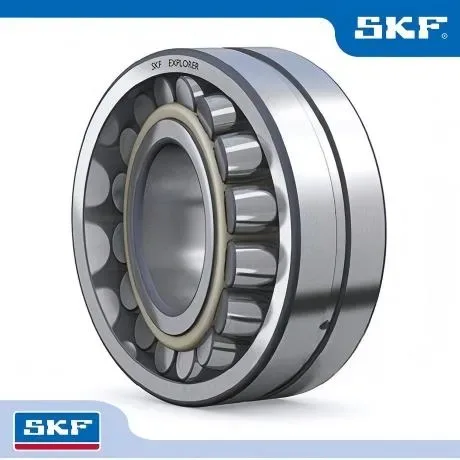
| Bearing Type | Spherical Roller Bearing |
| Bore Diameter (d) | 170 mm |
| Outside Diameter (D) | 360 mm |
| Width (B) | 120 mm |
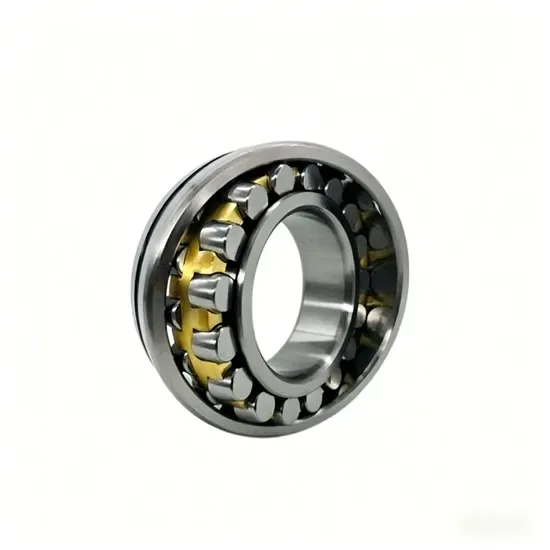
| Cage Material | Machined brass cage (CC) |
| Clearance Class | Normal radial internal clearance (CN) |
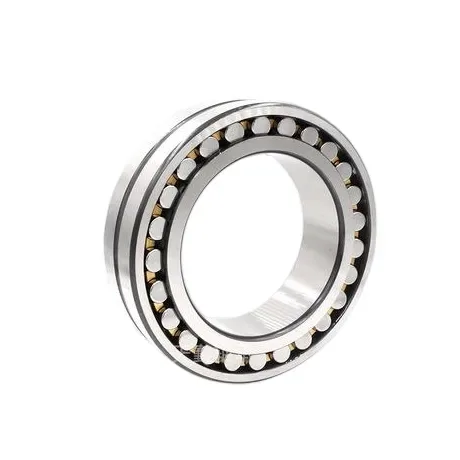
| Lubrication Feature | Annular groove and three lubrication holes in outer ring (W33) |
| Seal or Shield Type | Open |
| Number of Rows | Two |
| Standards | ISO 15 / ISO 281 / ISO 492 |
Application Suitability
| Industry | Typical Applications |
|---|---|
| Mining and crushing | Crusher eccentric shaft, jaw crusher toggle plate pivot |
| Steel and metallurgy | Continuous caster guide roller, rolling mill work roll neck |
| Material handling | Vibrating screen main shaft, heavy-duty conveyor pulley |
| Pulp and paper | Paper machine press section roll, dryer cylinder bearing |
What Happens When a Screen Shaft Bearing Fails at Full Tonnage
The 22334CC/W33 spherical roller bearing keeps vibrating screens running because its brass cage survives the shock loading that destroys pressed-steel alternatives.
I stood on the catwalk of a Riyadh aggregate plant when a screen deck went silent mid-shift. The root cause was a spherical roller bearing that looked correct on paper — right bore, right OD — but carried a stamped steel cage that fatigued under the constant high-frequency vibration. The screen ran 16-hour shifts loading crushed basalt, and the cage pockets cracked long before the rollers showed wear [NEED_CITE: cage fatigue failure modes in vibrating screen service per ISO 15243]. A machined brass cage, like the CC design in this 22334CC/W33 spherical roller bearing, distributes those cyclic shock loads across a one-piece body instead of relying on spot-welded joints. The difference isn’t marginal — it’s the line between scheduled relubrication and an unscheduled teardown that idles the whole crushing circuit.
Matching the 22334CC/W33 to High-Vibration, High-Load Service
Vibrating screens and crushers demand bearings that tolerate misalignment while absorbing repeated radial shock. The two-row spherical roller geometry handles shaft deflection without edge-loading the rollers. The W33 annular groove and three lubrication holes let maintenance crews re-grease the bearing in place, which matters when the equipment sits inside a sealed housing on a multi-deck screen where teardown access is measured in hours, not minutes. When we cross-reference this 22334CC/W33 spherical roller bearing for a customer’s OEM equipment number, we check not only the envelope dimensions but also whether the original spec called for normal clearance or C3, because thermal expansion in a crusher housing can shift the internal fit.
Load Patterns, Temperatures, and Contamination in the Field
These bearings typically see heavy radial loads with moderate axial components from shaft misalignment and vibration. Operating temperatures in a vibrating screen bearing housing often climb well above ambient, driven by internal friction and external heat from the process. The open design means external seals on the housing carry the contamination defense responsibility — a point worth confirming during installation planning. Grease selection and re-lubrication intervals depend on the actual housing temperature and dust ingress rate, both of which vary by site [NEED_CITE: re-lubrication interval calculation methods for spherical roller bearings in vibrating equipment]. The W33 lubrication feature simplifies this routine: grease enters through the outer ring groove and distributes directly to both roller rows.
Reading the Suffixes: What CC and W33 Actually Deliver
The CC suffix tells you the cage is machined from a solid brass bar, not stamped from sheet metal. In high-vibration applications, a one-piece machined cage resists fatigue cracking at the pocket bridges — the exact failure point on pressed cages subjected to thousands of shock cycles per hour. Brass also provides better thermal conductivity than polymer cages, which matters when housing temperatures rise and grease breakdown accelerates. The W33 suffix adds an annular groove around the outer ring OD with three equally spaced lubrication holes connecting to the interior. This allows fresh grease to reach both roller rows without relying on side-entry paths that can become blocked by old, hardened grease. The normal internal clearance (no C3 or C4 suffix) suits applications where shaft and housing temperatures stay relatively balanced; if the shaft runs significantly hotter than the housing, a larger clearance class would compensate for differential expansion.
The Downtime Math Nobody Wants to Do
A bearing that fails prematurely inside a vibrating screen or crusher doesn’t just cost its own replacement price. The teardown, inspection of mating surfaces, seal replacement, alignment verification, and lost production hours add up to a sum that dwarfs the component cost. Using a bearing with the wrong clearance class can cause thermal binding as the inner ring expands faster than the outer ring, leading to rapid temperature spikes and cage failure. Counterfeit units with soft inner rings — detectable only through hardness testing or material verification — may pass visual inspection but collapse under sustained load [NEED_CITE: rolling bearing failure classification and root cause analysis per ISO 15243]. The ISO 281 life calculation framework assumes correct selection, installation, and lubrication; any deviation in these areas voids the calculated L10 life entirely.
How We Support Your Procurement Decision
We source 22334CC/W33 spherical roller bearings through authorized distributor channels and provide traceable batch documentation with every shipment. Our cross-reference work goes beyond matching base designations — we verify cage type, clearance class, and lubrication suffixes so the interchange fits the actual duty cycle, not just the envelope dimensions. For import buyers in the Middle East and Africa, we prepare country-of-origin documentation and HS code references before the goods ship. When a maintenance manager sends us an OEM equipment number instead of a bearing number, we trace the original specification including all suffixes before proposing a replacement. Third-party dimensional and material inspections are available for any order, and we include Certificate of Conformity and batch traceability as standard documentation.
Documentation & Authenticity
- Supplier Certificate of Conformity (COC) tying each 22334CC/W33 unit to a specific production batch
- Third-party dimensional inspection report confirming bore diameter, OD, and width tolerances before shipment
- Material certificate verifying bearing steel grade (GCr15 or 100Cr6) and hardness compliance
- Country-of-origin documentation prepared for Middle East and Africa import clearance procedures
- HS code reference and commercial invoice packaging to streamline customs processing
- Batch and lot traceability linking each bearing back to the manufacturer’s production facility records
Storage, Handling & Mounting
- Keep the 22334CC/W33 in its original sealed packaging until installation; early exposure to quarry or mill dust compromises the unprotected roller and cage surfaces
- Store horizontally on a flat surface — the 120 mm width and substantial weight of this 170 mm bore bearing demand level support to prevent cage deformation
- Use clean, dry gloves when handling the machined brass cage; skin moisture and acids accelerate tarnish and obscure pre-installation visual inspection
- For the open bearing design, confirm housing seal condition before mounting; the W33 outer ring lubrication groove assumes external contamination control is in place
- Induction heating is the recommended mounting method for the cylindrical bore inner ring; control temperature to avoid annealing the raceway surface
- After mounting, purge the housing with fresh grease through the W33 lubrication holes to displace any contamination introduced during assembly
Start the Specification Review
Share your operating parameters — shaft speed, housing temperature, load estimates, and vibration frequency — so we can confirm whether normal clearance and the CC cage match your application, or if a C3 clearance variant would extend service intervals. If you have an OEM equipment number, send it over and we will cross-reference the complete suffix string before quoting. We can also confirm batch availability, lead time, and the documentation package your customs broker requires.
Frequently Asked Questions
Q: How do I verify that a 22334CC/W33 bearing is genuine and not a counterfeit?
A: Request the Certificate of Conformity with batch traceability and verify material hardness on the inner and outer rings. Counterfeit spherical roller bearings often use lower-grade steel with soft inner rings that indent under load. We provide third-party material and dimensional inspection documentation with each shipment, and branded units can be checked via the manufacturer’s official verification app when applicable.
Q: What does the CC suffix mean compared to CA or E cage designs?
A: CC indicates a machined brass cage with a one-piece body, offering high fatigue resistance in vibrating and shock-load applications. CA designs also use machined brass but differ in roller guidance geometry. E-type cages are typically pressed steel, which costs less but may not withstand the cyclic shock loads in crushers and vibrating screens over extended service periods.
Q: How does the W33 lubrication feature work in practice?
A: The W33 suffix means the outer ring has a machined annular groove with three lubrication holes connecting to the bearing interior. During re-lubrication, fresh grease enters through these holes and distributes to both roller rows without requiring disassembly. In dusty environments like quarries or steel mills, this feature reduces contamination risk during greasing compared to open-side entry methods.
Q: Should I select normal clearance or C3 for a vibrating screen application?
A: It depends on the thermal gradient between the inner ring (shaft temperature) and outer ring (housing temperature). Normal clearance suits applications where both rings run at similar temperatures. If the shaft carries significant heat from the process or friction, C3 clearance compensates for the differential expansion. Share your operating temperature data and we will verify the correct clearance class for your specific installation.
Q: What documentation do you provide for customs clearance in Middle East markets?
A: Each shipment includes a supplier Certificate of Conformity, commercial invoice with HS code references, and country-of-origin documentation formatted for import procedures common in Gulf Cooperation Council and North African jurisdictions. Additional third-party inspection certificates can be included upon request to meet specific project or end-user requirements.
Ready to Confirm Your Specification?
Send us your OEM equipment number or application parameters and we will return a complete cross-reference with clearance, cage, and lubrication verification — plus a documentation checklist matched to your import market.