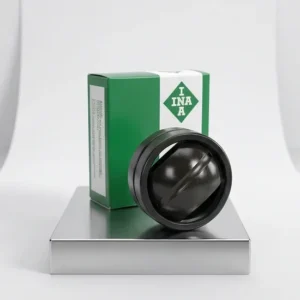
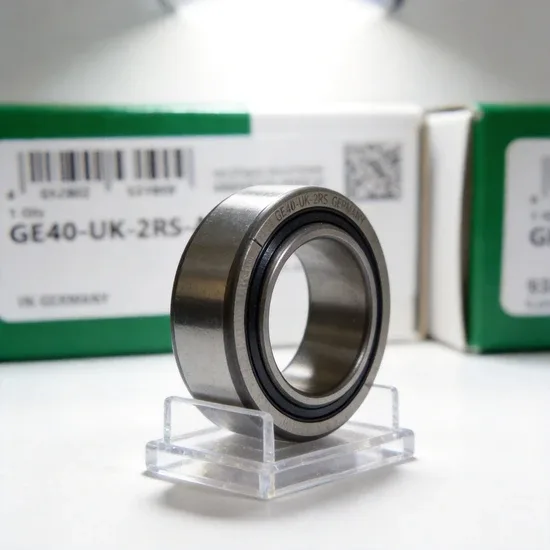


Description
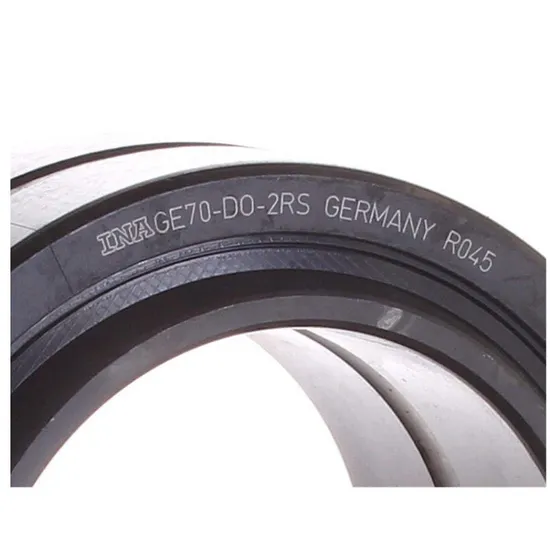
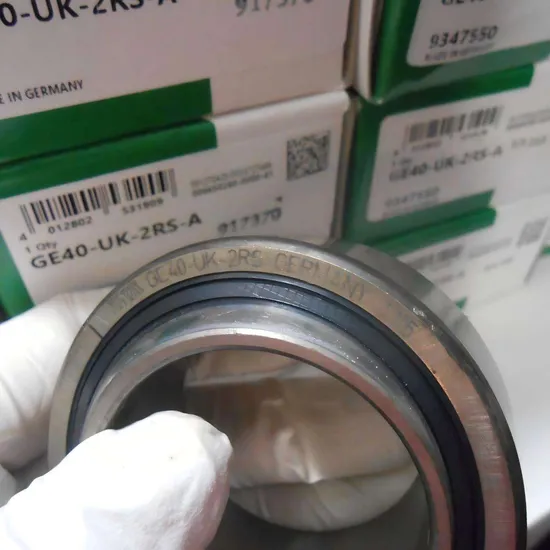
Batch-Traceable Sourcing — Every INA GE63-ZO spherical plain bearing we supply ships with verifiable origin documentation and material certification matched to its production lot.
Technical Specifications
| Parameter | Value |
|---|---|
| Designation | INA GE63-ZO |
| Bearing Type | Radial Spherical Plain Bearing |
| Bore Diameter (d) | 63.5 mm |
| Outside Diameter (D) | 100 mm |
| Width Inner Ring (B) | 55.5 mm |
| Width Outer Ring (C) | 47.5 mm |
| Spherical Diameter (Dk) | 92 mm |
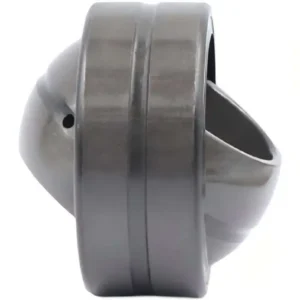
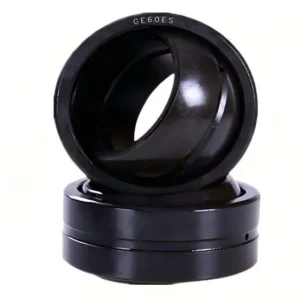
| Sliding Surface | Steel on Steel, Phosphated |
| Seal or Shield Type | Open / Without Seal |
| Lubrication | With Lubrication Groove |
| Origin | China |
The ZO suffix designation remains unverified against the current manufacturer catalog; confirm lubrication groove specifications with supplier documentation before ordering.
Application Suitability
| Industry | Typical Applications |
|---|---|
| Mining and Crushing | Excavator hydraulic cylinder rod eyes, crusher toggle plate pivots |
| Steel and Metallurgy | Continuous caster guide rollers, ladle transfer arm joints |
| Construction Machinery | Loader articulation joints, boom cylinder pin connections |
| Material Handling | Overhead crane sheave pivots, stacker-reclaimer slew joints |
What Phosphated Steel-on-Steel Really Means Underground
A properly phosphated sliding contact surface prevents metal-to-metal seizure during the critical run-in period before grease distribution stabilizes.
Mining maintenance crews across West Africa have watched hydraulic cylinders lock solid within weeks of installing replacement spherical plain bearings that skipped proper surface treatment. The phosphating process creates a micro-porous manganese phosphate layer that retains lubricant during initial oscillation cycles, reducing the friction coefficient before full hydrodynamic film development. When counterfeit or substandard bearings bypass this treatment, the bare steel sliding surfaces gall under the high contact pressure of slow oscillating movement — exactly the motion profile hydraulic cylinder eyes experience during boom retraction [NEED_CITE: spherical plain bearing failure modes in slow oscillating applications]. The result is not gradual wear but sudden seizure that bends cylinder rods and forces complete hydraulic system teardowns.
Matching the Oscillation Profile of Hydraulic Rod Eyes
Hydraulic cylinder pivots demand bearings that handle repeated angular displacement under heavy radial loads without the benefit of continuous rotation. The INA GE63-ZO spherical plain bearing addresses this through its 63.5 mm bore diameter suited to standard metric cylinder rod pins, paired with an open design that permits field re-lubrication matching the actual duty cycle. Unlike sealed variants that trap contaminated grease inside the sliding zone, the open configuration with lubrication groove allows maintenance crews to flush out particulate ingress common in quarry and underground mining environments. Our cross-reference database verifies that this bore-to-OD ratio maintains compatibility with standard clevis pin tolerances across multiple cylinder manufacturers.
Load Reversals and Contamination Exposure in the Pit
The operating environment presents compounding challenges: radial loads from cylinder thrust alternate with shock loads when bucket teeth strike unbroken rock, while airborne silica dust penetrates any unsealed interface. Temperature swings between surface heat and underground ambient affect grease viscosity and the phosphated layer’s lubricant retention capacity. Without adequate re-lubrication intervals matched to contamination levels, abrasive particles embed in the sliding surface and accelerate wear beyond the bearing’s design envelope [NEED_CITE: ISO 281 bearing life calculation for contaminated lubrication conditions]. The open design transfers sealing responsibility to the application housing — engineers must specify adequate external seals at the cylinder eye to prevent direct particulate ingress while permitting grease purge paths.
Decoding the Sliding Surface Engineering
The steel-on-steel phosphated contact pair operates under boundary lubrication conditions where surface chemistry matters more than hydrodynamic theory. The phosphating process deposits a crystalline zinc or manganese phosphate coating approximately several micrometers thick that serves three functions: corrosion protection during storage and transport, initial friction reduction before grease films establish, and micro-reservoir structure that wicks lubricant into the contact zone during oscillation. The lubrication groove machined into the outer ring provides a direct path for fresh grease to reach the loaded zone without requiring bearing disassembly. For the 100 mm outside diameter and 92 mm spherical diameter dimensions specified, the load-carrying contact area distributes hydraulic cylinder reaction forces across sufficient surface area to maintain acceptable contact pressure during peak thrust events.
The Price of Skipping Documentation Verification
Procurement decisions based solely on base designation matching — ignoring surface treatment verification and lubrication groove confirmation — generate downstream costs that dwarf initial price savings. A seized spherical plain bearing in an excavator cylinder eye forces rod replacement, hydraulic fluid disposal, and machine downtime measured in days rather than hours [NEED_CITE: ISO 15243 rolling bearing damage classification and visual analysis]. Counterfeit bearings with inadequate phosphating thickness or missing lubrication grooves pass visual inspection but fail catastrophically under field loads. The correct sourcing path requires Certificate of Conformity documentation that specifies the sliding surface treatment protocol, dimensional inspection confirming bore tolerance and spherical diameter concentricity, and material certification verifying the chromium steel grade for both inner and outer rings.
Procurement Verification Without Guesswork
We source INA spherical plain bearings through authorized distributor channels with complete batch traceability from manufacturer production lot through to delivery documentation. Each shipment includes supplier Certificate of Conformity referencing the specific batch number, enabling QR code verification through official brand applications where supported. Our cross-reference database covers complete specification alignment — not just base number matching but sliding surface treatment, lubrication groove presence, and dimensional envelope verification across six major brands. For buyers navigating import requirements, we provide country-of-origin documentation and HS code classification to smooth customs clearance and satisfy end-user verification audits.
Documentation & Authenticity
- Supplier Certificate of Conformity listing batch lot number specific to this GE63-ZO production run
- Material certificate confirming chromium steel grade for both the 63.5 mm bore inner ring and 100 mm OD outer ring
- Third-party dimensional inspection report verifying bore tolerance, spherical diameter concentricity, and inner/outer ring width conformance
- Country-of-origin certificate supporting import documentation and customs clearance requirements
- Phosphating treatment confirmation documenting sliding surface preparation protocol
Storage, Handling & Mounting
- Maintain original sealed packaging until installation to preserve the phosphated sliding surface’s corrosion protection layer
- Store in climate-controlled environment below 60% relative humidity to prevent condensation damage to the unsealed steel-on-steel contact surfaces
- Handle with clean cotton gloves to prevent fingerprint acids from compromising the phosphating treatment before grease application
- Apply initial grease charge through the lubrication groove immediately after mounting to establish boundary lubrication before first oscillation cycle
- Coordinate external seal installation at the cylinder eye housing to prevent particulate contamination of the open-type bearing during operation
Request Technical Verification
Share your hydraulic cylinder specifications or OEM equipment number so we can confirm dimensional envelope compatibility and cross-reference the correct lubrication groove configuration. Request the documentation package including Certificate of Conformity and country-of-origin certification for your import planning. Our engineering team reviews application parameters — load spectrum, oscillation frequency, contamination level — to verify this open-type phosphated design suits your maintenance interval capabilities.
Frequently Asked Questions
Q: How do I verify the authenticity of an INA spherical plain bearing through documentation?
A: Authentic bearings ship with Certificate of Conformity referencing a traceable batch lot number. Verify material certification specifies the correct steel grade for inner and outer rings, and confirm dimensional inspection reports show bore diameter and spherical diameter within tolerance. Where supported, QR codes on packaging link to official manufacturer verification applications.
Q: What does the ZO suffix indicate on the GE63-ZO designation?
A: The ZO suffix requires confirmation against the manufacturer’s current catalog documentation, as suffix conventions for spherical plain bearings can vary by production era and regional specification. Request supplier documentation that explicitly states the lubrication groove configuration and any other features indicated by this suffix before placing volume orders.
Q: When should I choose steel-on-steel phosphated over PTFE-lined sliding surfaces?
A: Steel-on-steel phosphated designs suit applications where re-lubrication is feasible and shock loads exceed PTFE liner durability limits. PTFE-lined variants eliminate maintenance requirements but cannot be re-lubricated and have lower shock load capacity. Mining and construction hydraulic applications typically favor re-lubricatable designs for extended service life under contamination exposure.
Q: How do I determine re-lubrication intervals for open-type spherical plain bearings in mining equipment?
A: Interval calculation depends on oscillation frequency, load magnitude, contamination level, and grease type. Higher contamination environments require more frequent re-lubrication to flush embedded particles from the sliding contact zone. Monitor grease purge condition during maintenance to assess contamination ingress rates and adjust intervals accordingly.
Q: What cross-reference checks matter when substituting spherical plain bearings between brands?
A: Beyond base dimensional matching, verify sliding surface treatment type, lubrication groove presence and location, bore tolerance class, and outer ring width specifications. Mismatches in any of these parameters can affect fit, lubrication effectiveness, and load-carrying capacity in the field application.
Confirm Your INA GE63-ZO Specifications
Provide your application parameters or OEM equipment reference to receive dimensional verification and documentation availability confirmation for your procurement planning.