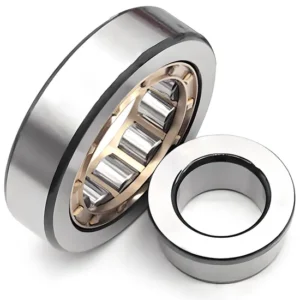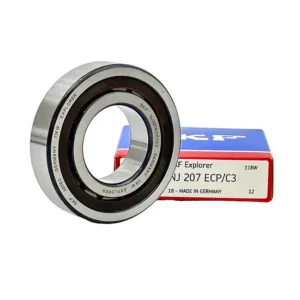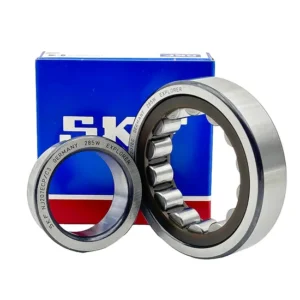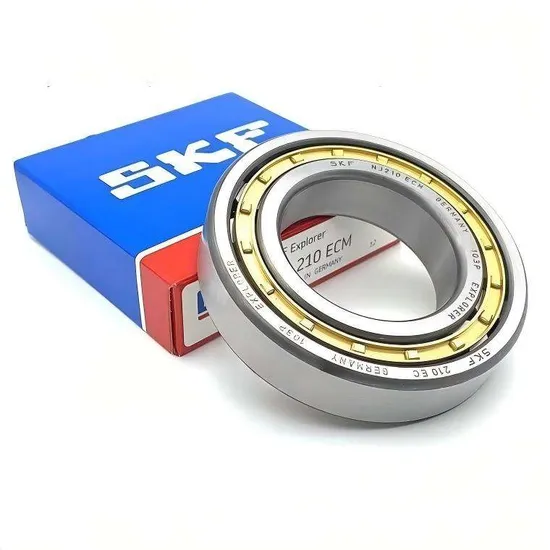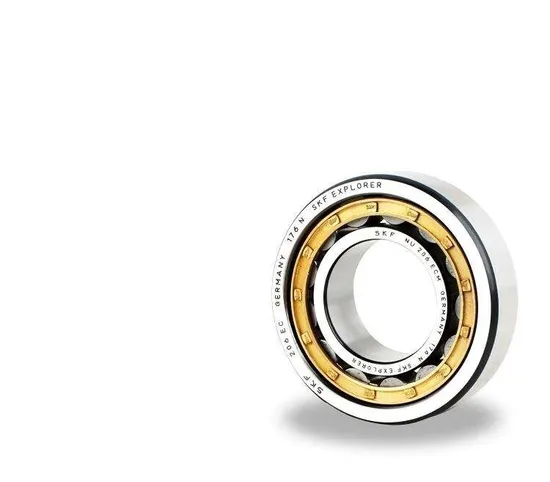
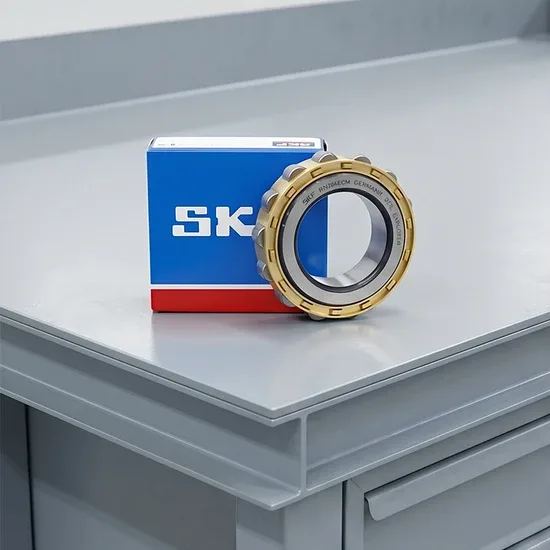
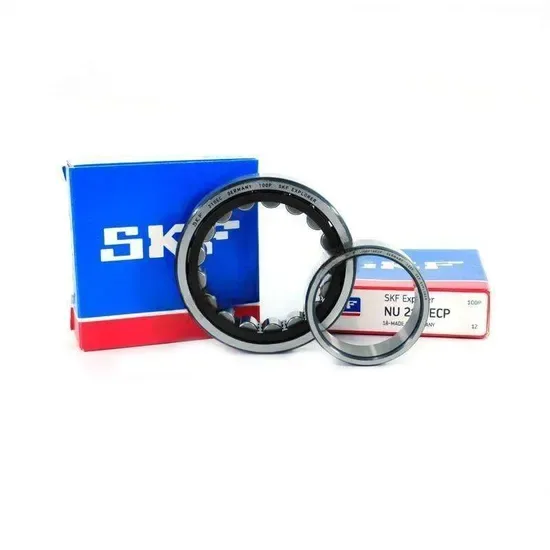


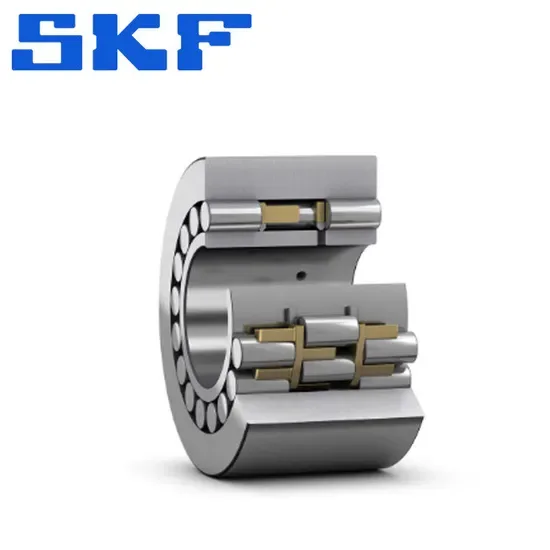
Description
Traceable Batch Documentation — Every SKF N1009KTNHA/SP super-precision cylindrical roller bearing we supply ships with batch-level conformity certificates and origin paperwork ready for import clearance.
Technical Specifications
| Parameter | Value |
|---|---|
| Designation | SKF N1009KTNHA/SP |
| Bearing Type | Cylindrical Roller Bearing |
| Bore Diameter (d) | 45 mm |
| Outside Diameter (D) | 75 mm |
| Width (B) | 16 mm |
| Number of Rows | Single Row |
| Bore Type | Tapered (1:12) |
| Cage Material | Polyamide 6,6 (Glass Fiber Reinforced) |
| Seal or Shield Type | Open |
| Precision Class | SP |
| Weight | 0.250 kg |
| Origin | China |
Note: The HA suffix on this designation is not fully resolved by standard SKF catalog documentation and should be confirmed against the manufacturer’s current product data before finalizing application-critical orders.
Application Suitability
| Industry | Typical Applications |
|---|---|
| Machine Tool Manufacturing | High-speed grinding spindle front support, milling spindle radial locating bearing |
| Precision Equipment | Optical measuring instrument rotary table, coordinate measuring machine axis bearing |
| Heavy-Duty Gearboxes | Precision reduction gearbox intermediate shaft support |
What a Tapered Bore Mismatch Does to a High-Speed Spindle
A wrong bore taper or overlooked precision suffix can destroy spindle accuracy within weeks of commissioning.
I spent years sourcing spindle components for a machine tool plant in Shandong. One procurement cycle, a workshop received cylindrical roller bearings where only the base designation was matched — the P4 precision suffix was ignored entirely. P0 grade bearings went straight into a high-speed grinding spindle. Vibration levels spiked within weeks, workpiece surface finish degraded beyond tolerance, and the entire spindle had to be pulled for rework. A single suffix oversight cost a full week of unplanned downtime. When sourcing the SKF N1009KTNHA/SP cylindrical roller bearing, matching the K tapered bore, the TN9 polyamide cage, and the SP precision class simultaneously is non-negotiable. Partial matching — base number only — is how premature cage failure and thermal binding enter the supply chain [NEED_CITE: cylindrical roller bearing failure modes in machine tool spindles].
Matching Radial Rigidity to Spindle Duty Cycles
The N10 design series separates the inner ring with roller-and-cage assembly from the outer ring, simplifying mounting on tapered shaft seats common in precision spindles. For machine tool applications where radial stiffness directly governs workpiece geometry, the SKF N1009KTNHA/SP cylindrical roller bearing delivers the radial load capacity required at elevated operating speeds while allowing axial displacement to accommodate thermal shaft growth. When we cross-reference this designation for buyers substituting from FAG or NSK equivalents, we verify not just the bore and OD but the cage material, precision class, and taper angle — because a brass-cage substitute running at spindle speeds can generate enough friction heat to alter preload conditions.
Operating Environment and Performance Demands
High-speed spindles subject bearings to sustained radial loads at rotational speeds where even minor precision deviations generate measurable vibration signatures. Temperature gradients across the spindle housing create differential thermal expansion, making clearance selection critical — a standard CN clearance may close entirely under operating temperature, while the wrong clearance band introduces excessive play at startup. The open-type configuration on this bearing assumes an externally managed lubrication circuit, typically oil-air or oil-mist systems delivering metered lubricant directly to the rolling contacts. Installation on a 1:12 tapered seat demands controlled axial drive-up to achieve the specified interference fit and residual internal clearance, a process that requires experienced fitting and calibrated measurement. Mounting errors at this stage account for a significant share of early-life spindle bearing failures [NEED_CITE: bearing mounting errors contributing to premature failure per ISO 15243].
Decoding the Suffix Stack
The K suffix confirms a 1:12 tapered bore, designed for direct mounting on tapered shaft journals or adapter sleeves — this taper geometry allows precise radial internal clearance adjustment through controlled axial displacement during fitting. The TN9 cage is injection-molded glass fiber reinforced polyamide 6,6, chosen for its low mass and favorable friction characteristics at the speed ranges typical of precision spindles. Compared to a machined brass cage, TN9 runs cooler under high-speed, light-load conditions but has lower tolerance for sustained elevated temperatures or contaminated lubricant. The SP precision class places this bearing in the super-precision range, delivering the running accuracy required for applications where spindle runout translates directly into workpiece form error. The single-row N-type arrangement permits axial shaft displacement in both directions, a deliberate design choice for spindle positions where thermal growth must be absorbed without inducing axial preload.
The Hidden Cost of Partial Suffix Verification
Correct sourcing with full suffix alignment and verified origin documentation protects against unplanned downtime that no procurement saving justifies. A cylindrical roller bearing installed with the right base number but wrong cage material may survive initial commissioning only to fail catastrophically once operating temperature rises and lubricant viscosity drops. Counterfeit bearings with cloned markings and soft inner rings pass casual visual inspection but exhibit premature raceway spalling under sustained load. The ISO 281 life calculation framework assumes correct bearing selection, proper mounting, and adequate lubrication — violate any of these assumptions and calculated L10 life becomes meaningless [NEED_CITE: ISO 281 bearing life calculation assumptions].
How We Support Your Sourcing Process
We source SKF super-precision bearings through authorized distributor channels, meaning every shipment carries traceable documentation from the point of origin to your receiving dock. Our cross-reference database covers SKF, NSK, FAG, TIMKEN, NTN, and KOYO designations matched on bore geometry, cage material, precision class, and clearance — not just base numbers. For the SKF N1009KTNHA/SP cylindrical roller bearing, we verify suffix compatibility before quoting and flag any unconfirmed designations for manufacturer catalog cross-check. Every order ships with batch-level traceability, and buyers can verify authenticity through the SKF official app QR code pathway. We also provide country-of-origin documentation and HS code guidance to smooth import clearance for international shipments.
Documentation & Authenticity
- Supplier Certificate of Conformity tied to the specific batch and lot number of your SKF N1009KTNHA/SP shipment
- Dimensional inspection report confirming bore taper geometry and SP-class running accuracy tolerances before dispatch
- Country-of-origin certificate supporting customs documentation and import duty classification
- QR code verification pathway via the SKF official app for on-site authenticity confirmation at receiving
- Material and heat treatment traceability documentation available with the shipment package
Storage, Handling & Mounting
- Retain the original sealed packaging until the moment of installation; early exposure of this open-type bearing to workshop humidity risks surface corrosion on the precision-ground raceways
- Handle with clean lint-free gloves to prevent fingerprint contamination on the SP-class bearing surfaces, where surface integrity directly affects running accuracy
- For tapered bore installation, measure axial drive-up distance against the manufacturer’s specified values to achieve correct interference fit and residual clearance — under-tightening causes creep, over-tightening closes clearance entirely
- Integrate with the spindle’s oil-air or oil-mist lubrication system before initial run-in; running this open bearing dry for even brief test cycles causes immediate cage and roller surface damage
- Verify shaft seat taper geometry and surface finish before mounting, as out-of-round tapered seats distort the inner ring and degrade the precision class advantage
Request a Technical Review Before Ordering
Share your spindle operating parameters — speed range, radial load spectrum, operating temperature, and lubrication method — so we can confirm whether the SKF N1009KTNHA/SP cylindrical roller bearing matches your application or whether an alternative clearance or cage configuration is needed. Provide your OEM equipment number and we will run a full cross-reference check covering bore taper, cage material, and precision class alignment. Request the documentation package including origin certification before shipment if import compliance is a concern. Confirm batch availability and lead time by contacting us directly.
Frequently Asked Questions
Q: How do I verify the authenticity of the SKF N1009KTNHA/SP using the QR code and batch traceability?
A: Each genuine SKF bearing carries a QR code that can be scanned through the SKF official app to confirm product origin and batch data. We supply the batch and lot number with your shipment, and the Certificate of Conformity ties directly to that identifier. Scanning at receiving before installation provides an immediate authenticity checkpoint.
Q: What does the K suffix mean, and how does it affect mounting procedure?
A: The K suffix designates a tapered bore with a 1:12 taper ratio. During mounting on a tapered shaft seat, the inner ring is driven axially to achieve a specific interference fit, which simultaneously sets the residual internal clearance. This process requires measurement of axial drive-up distance and verification of resulting clearance — it is fundamentally different from cylindrical bore press-fitting.
Q: Is the TN9 polyamide cage suitable for high-speed spindle applications compared to a brass cage?
A: The TN9 glass fiber reinforced polyamide cage is lightweight and generates less friction heat at high rotational speeds, making it well-suited to precision spindle positions where thermal stability matters. Brass cages tolerate higher sustained temperatures and contaminated lubricant better. The choice depends on your specific speed and temperature envelope.
Q: How should I cross-reference this bearing to another brand without missing critical suffix details?
A: Base designation matching alone misses the tapered bore, cage material, and precision class — all of which must align for functional interchange. We cross-reference across SKF, NSK, FAG, TIMKEN, NTN, and KOYO catalogs verifying all three parameters simultaneously before recommending a substitute.
Q: What lubrication regime is recommended for this open-type bearing in a machine tool spindle?
A: Open-type super-precision cylindrical roller bearings in spindle applications typically run on oil-air or oil-mist lubrication systems delivering precisely metered lubricant at controlled intervals. Grease lubrication is generally unsuitable at spindle speeds due to churning losses and thermal buildup. Your specific speed and load conditions determine the optimal oil feed rate.
Verify Your Spindle Bearing Specification With Us
Submit your application parameters or OEM equipment number and we will return a full technical match review with documentation availability and lead time confirmation. Reach us through our inquiry channels to start the verification process.