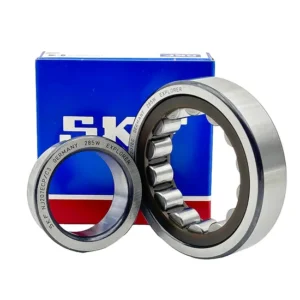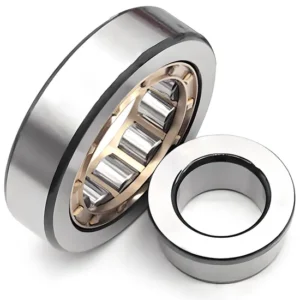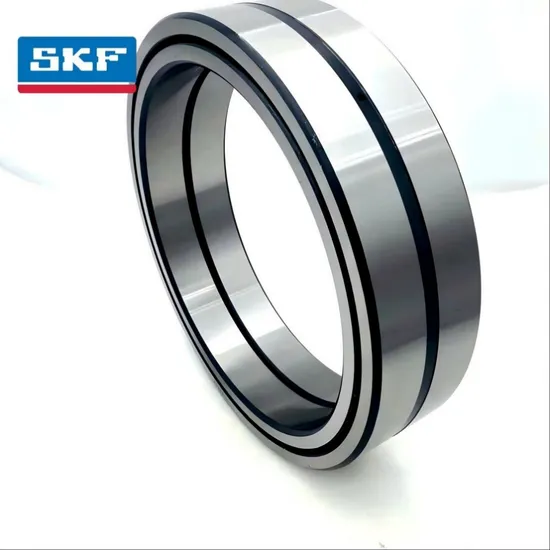
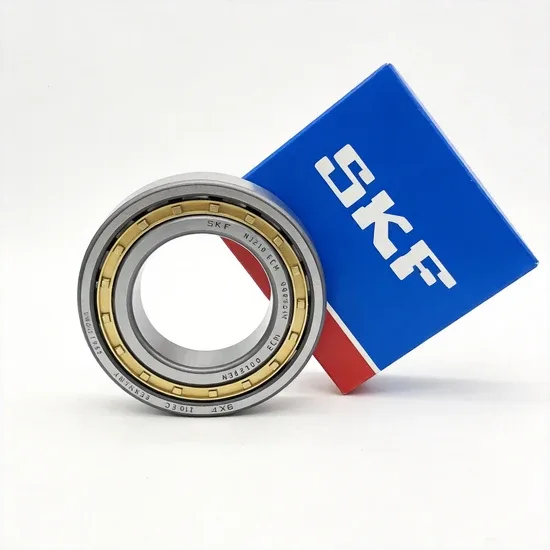
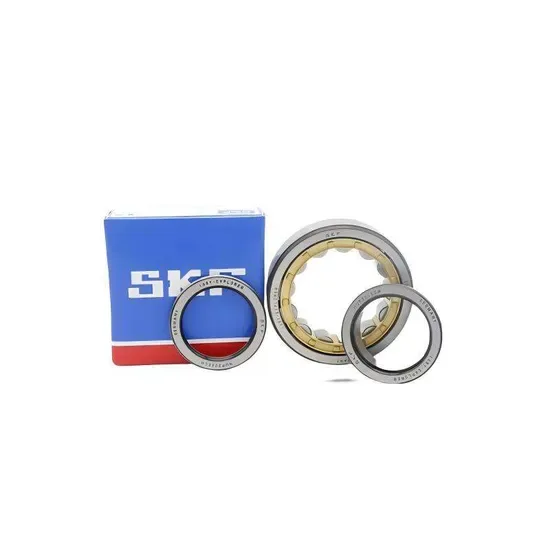
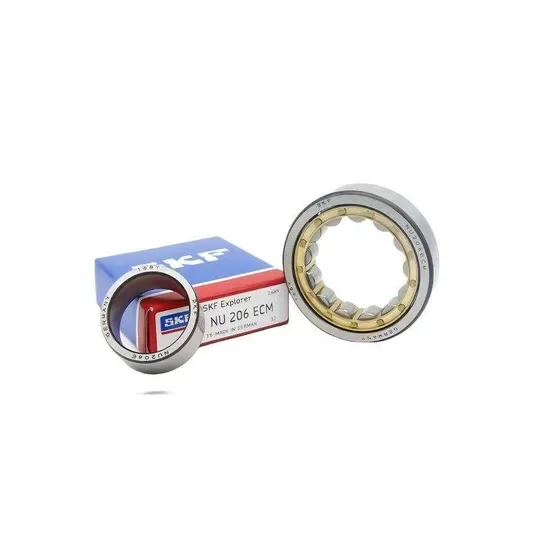
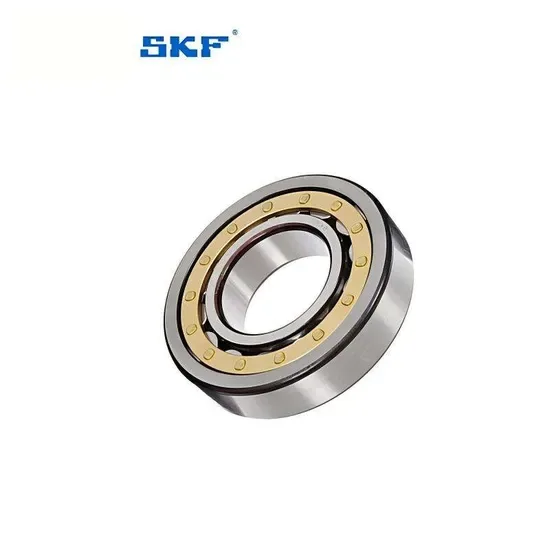
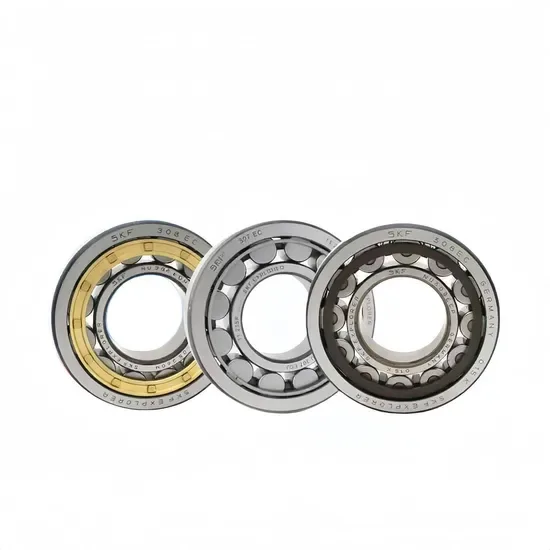
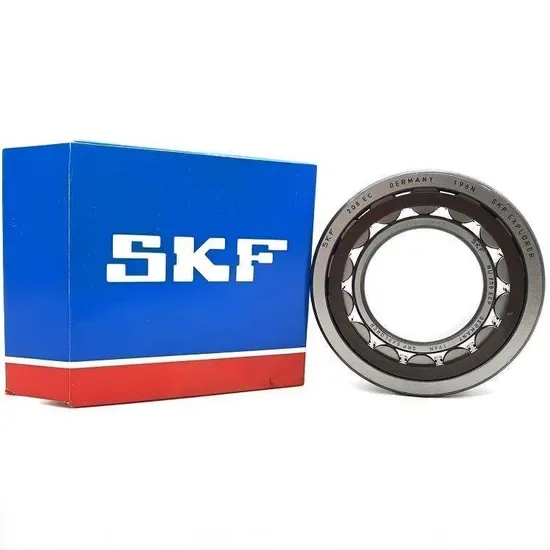
Description
Origin-Traceable Supply — Every SKF N1012KPHA/HC5SPVR592 we ship carries batch-level documentation back to the authorized distributor channel, giving maintenance engineers verifiable lineage before the crate leaves the warehouse.
Technical Specifications
| Parameter | Value |
|---|---|
| Designation | SKF N1012KPHA/HC5SPVR592 |
| Bearing Type | Super-Precision Cylindrical Roller Bearing |
| Bore Diameter (d) | 60 mm |
| Outside Diameter (D) | 95 mm |
| Number of Rows | Single Row |
| Structure | Cylindrical |
| Seal or Shield Type | Open |
| Material | Bearing Steel |
| Bore Type | Tapered (1:12) |
| Precision Class | SP |
| Origin | China |
PHA, HC5, and VR592 suffixes remain unverified against the current manufacturer catalog and should be confirmed with the application engineering team prior to final specification lock-in.
Application Suitability
| Industry | Typical Applications |
|---|---|
| Industrial Machinery | CNC machining center spindle rear support |
| Precision Equipment | High-speed grinding wheel headstock |
| General MRO | Replacement bearings for OEM spindle rebuilds |
What a Suffix Mismatch Costs on a Precision Spindle
A single overlooked suffix on a super-precision cylindrical roller bearing can destroy a six-figure machine tool before the warranty period ends.
I watched a spindle shop install an N10 series with the wrong precision suffix on a vertical machining center. The inner ring walked on the tapered seat under thermal growth, scoring the shaft journal and turning a routine rebuild into a three-week shutdown. That failure did not come from load or lubrication — it came from a suffix error on the purchase order [NEED_CITE: spindle bearing failure modes from bore fit and thermal displacement]. When procurement engineers order the SKF N1012KPHA/HC5SPVR592 or any super-precision cylindrical roller bearing, the risk is never the base number. The risk lives in the trailing letters that dictate bore geometry, cage construction, and running accuracy.
How This Bearing Meets the Demands of Spindle Preload Adjustment
The tapered bore with a 1:12 taper ratio lets the assembler drive the inner ring axially along the shaft seat to set exact radial preload. On a machine tool spindle, this adjustability is what separates a bearing that runs true at 12,000 rpm from one that chatters under cut. The SKF N1012KPHA/HC5SPVR592 pairs this bore geometry with SP-class running accuracy, holding dimensional and geometric tolerances tight enough for the rear support position where angular contact pairs handle the thrust. We once cross-referenced a competitor’s order that matched the bore and OD but missed the cage suffix — the substitute unit ran hotter by the second shift and had to be pulled before it welded to the shaft.
Thermal Growth, Speed, and the Open-Type Lubrication Equation
Spindle bearings see radial loads that fluctuate with every tool change and axial thrust that reverses with each feed direction. At sustained high speeds, friction heat at the roller-raceway contact pushes the inner ring temperature above the shaft temperature, and that gradient either closes or opens the operating clearance depending on the starting fit. An open-type bearing like this one shifts the lubrication responsibility to the spindle designer: oil-air or oil-jet systems feed filtered lubricant directly to the cage pocket, while external labyrinth seals keep contamination out [NEED_CITE: oil-air lubrication effectiveness in super-precision spindle bearings]. The absence of integral seals means zero seal drag at speed, but it also means the housing seal design is on the machine builder.
Decoding the Specifications That Matter
The SP precision class governs both bore and OD dimensional accuracy as well as running accuracy — specifically inner ring radial runout and outer ring radial runout — keeping them within the band required for precision rotating assemblies. The single-row cylindrical configuration carries high radial loads with minimal friction because the rollers align parallel to the shaft axis and do not generate internal axial force. The tapered bore introduces a mounting variable that flat-bore bearings do not have: the axial drive-up distance on the tapered seat directly sets the residual internal clearance, and overshooting that distance squeezes the rollers against the outer raceway, spiking temperature within minutes of startup [NEED_CITE: tapered bore drive-up and residual clearance relationship in cylindrical roller bearings]. The 60 mm bore and 95 mm outside diameter place this unit in a mid-range envelope common to BT40 and equivalent spindle tapers, where envelope space limits the designer to a single-row solution rather than a double-row NN configuration.
The Hidden Cost of an Unverified Source
A bearing that looks correct on the outside but carries an undetected counterfeit inner ring — one with a softer core that deforms under thermal cycling — will lose its interference fit and begin to creep. ISO 15243 classifies this failure mode under smearing and fretting corrosion on the bore surface, and by the time the vibration signature triggers an alarm, the shaft journal is already scored [NEED_CITE: ISO 15243 fretting corrosion classification on bearing bore surfaces]. Correct specification, traceable sourcing, and pre-shipment dimensional verification compress this risk to near zero. The alternative is unplanned downtime, scrapped workpieces from chatter marks, and a spindle rebuild that costs multiples of the bearing price.
Why Procurement Engineers Source Through Our Channel
We do not hold a single-brand distributorship, which means our incentive is to match the right unit to the right application rather than push whichever brand sits on our shelf. Every SKF N1012KPHA/HC5SPVR592 we quote is sourced through authorized distributor channels with full batch traceability. Our cross-reference database aligns bore type, cage material, and precision class — not just the base designation — so substitutions across SKF, FAG, NSK, and NTN are dimensionally and functionally equivalent. When an order involves uncommon suffixes, we pull manufacturer documentation before shipment rather than relying on catalog memory. Country-of-origin paperwork accompanies every export shipment, and dimensional inspection data is available before the crate leaves our facility.
Documentation & Authenticity
- Supplier Certificate of Conformity referencing the SKF N1012KPHA/HC5SPVR592 batch and lot number
- Country-of-origin documentation formatted for Middle East, Latin America, and Central Asian customs requirements
- SKF official app QR code scan pathway so receiving inspection can confirm authenticity at the dock
- Third-party runout inspection confirming SP running accuracy tolerance before dispatch
- Material certificate tracing the bearing steel heat to the manufacturer’s production facilities
Storage, Handling & Mounting
- Keep the SKF N1012KPHA/HC5SPVR592 in its original sealed packaging until the moment of spindle assembly to prevent humidity ingress on the precision-ground raceways
- Handle with lint-free gloves — fingerprint acids etch the SP-class raceway surface and nucleate corrosion pits within weeks
- Mount the tapered bore inner ring using the manufacturer’s recommended axial drive-up distance and verify residual clearance with a feeler gauge through the open roller complement
- Confirm housing seal effectiveness before first run — the open-type design places contamination defense entirely on the spindle builder’s labyrinth or lip seal
- Store horizontally on a vibration-isolated shelf; vertical stacking of precision cylindrical rollers risks brinelling from transport shock
Confirm Your Spindle Fit Before You Commit
Share your spindle OEM equipment number or the application parameters — speed, load spectrum, operating temperature range, and housing seal type — so our engineering desk can verify that the SKF N1012KPHA/HC5SPVR592 suffix package matches your preload and clearance requirements. If you are cross-referencing from another brand, send the competing part number and we will return a line-by-line comparison covering bore type, cage construction, and precision class. Request the documentation package and batch availability check with a single inquiry.
Frequently Asked Questions
Q: How can I verify SKF bearing authenticity through official channels?
A: SKF provides an official mobile application that scans the QR code printed on the bearing packaging and, on newer production, on the bearing itself. A successful scan returns batch and production data that should match the Certificate of Conformity accompanying your shipment. We supply the QR scan pathway documentation with every order so your receiving team can authenticate at the dock.
Q: What does the tapered bore suffix K mean for cylindrical roller bearings?
A: The K suffix designates a tapered bore with a 1:12 taper ratio. During mounting, the inner ring is driven axially along the matching tapered shaft seat, which elastically expands the ring to set the desired interference fit and residual internal clearance. This is the mechanism that allows precise preload adjustment in spindle applications.
Q: How do I match clearance and precision when cross-referencing super-precision bearings?
A: A valid cross-reference must align three attributes beyond the base size: the bore type (cylindrical vs tapered), the precision class (SP, UP, P4A, P4, etc.), and the cage material and design. Matching only the bore and OD while ignoring these attributes leads to thermal binding or vibration failures in the field. Our cross-reference database checks all three before proposing a substitute.
Q: What are the differences between SP and UP precision classes for machine tool bearings?
A: Both classes define dimensional and running accuracy tolerances, with UP being the tighter band. SP class is the standard for most machine tool spindle positions, while UP is typically reserved for the front bearing position where workpiece surface finish demands the lowest possible runout. Selecting UP where SP suffices increases cost without measurable field benefit.
Q: How do I select the correct cage material for high-speed spindle applications?
A: Cage material choice balances speed capability, lubrication method, and vibration sensitivity. Machined brass cages handle higher speeds and tolerate marginal lubrication better than polyamide cages, while roller-guided brass cages offer different vibration signatures than outer-ring-guided designs. The cage suffix on the bearing designation encodes this choice, and changing it without consulting the application parameters risks cage failure at operating speed.
Confirm Your SKF N1012KPHA/HC5SPVR592 Fit and Lead Time
Send your spindle OEM number or operating parameters to our engineering desk for suffix verification, cross-reference alignment, and a quotation with batch availability and documentation scope.