


Description
Batch Traceable Supply — Every SKF N1013 KPHA/HC5SP cylindrical roller bearing ships with lot-level documentation linking the unit back to the authorized channel it entered, giving buyers verifiable provenance before the crate ever leaves the warehouse.
Technical Specifications
| Parameter | Value |
|---|---|
| Designation | SKF N1013 KPHA/HC5SP |
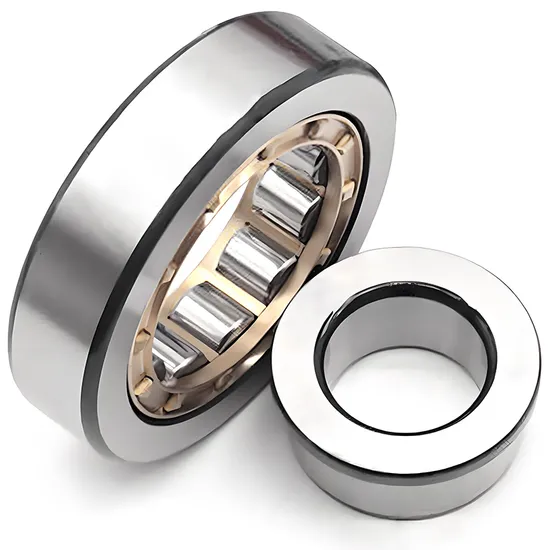
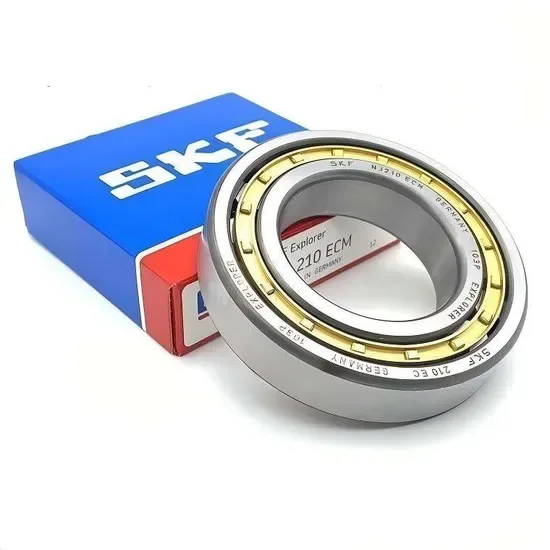
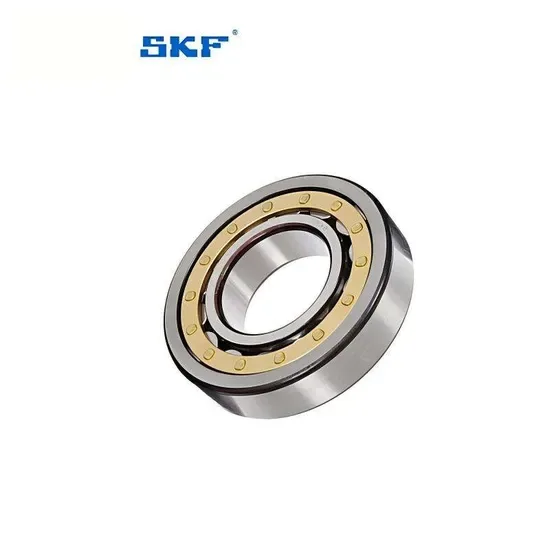
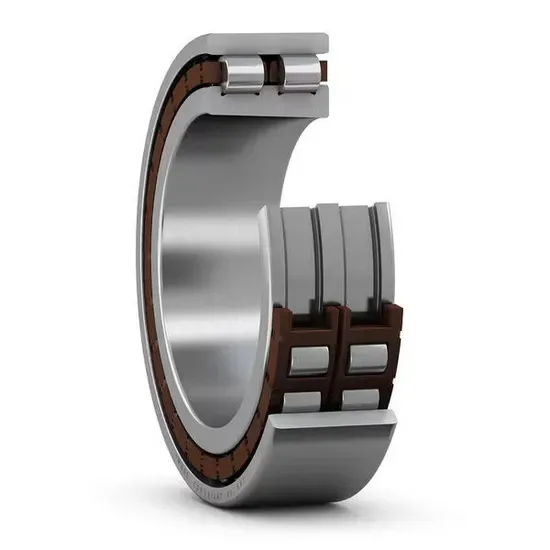
| Bearing Type | Single Row Cylindrical Roller Bearing |
| Bore Diameter (d) | 65 mm |
| Outside Diameter (D) | 100 mm |
| Width (B) | 18 mm |
| Bore Type | Tapered 1:12 |
| Number of Rows | Single Row |
| Seal or Shield Type | Open |
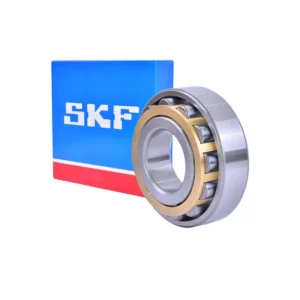
| Cage Material | Machined Brass, Roller-Centered |
| Precision Class | SP (Super-Precision) |
| Hybrid Design | Silicon Nitride Ceramic Rollers (HC5) |
| Weight | 0.250 kg |
| Origin | China |
| Standards | ISO 15, ISO 76, ISO 281, ISO 492 |
The PHA cage designation is verified as a machined brass cage, roller-centered; buyers should confirm detailed cage geometry against the manufacturer catalog for specific spindle housing fitment.
Application Suitability
| Industry | Typical Applications |
|---|---|
| Machine Tool Manufacturing | CNC grinding machine spindles, precision lathe headstocks |
| Robotics & Automation | High-speed rotary axes, articulated joint drives |
| Industrial Gearboxes | Precision speed increasers, servo-driven transmission stages |
| Electric Motors | High-frequency motor spindles requiring minimal runout |
What a Precision Mismatch Costs on a Spindle Rebuild
A single ignored suffix can turn a scheduled bearing swap into an unplanned spindle teardown.
In the inspection lab, I cataloged more failed bearings than I care to count, and a significant share of premature failures traced back to suffix blindness — someone matched the base number but overlooked the precision class, cage type, or hybrid element designation. A machine tool rebuilder in Jinan once replaced this exact bearing with a standard P0 steel-cage version because the purchase order only listed N1013. At sustained high-speed rotation, the thermal growth profile was completely wrong, vibration exceeded the spindle’s tolerance envelope within weeks, and the resulting crash damaged the tooling interface. That repair cost far more than the correct bearing would have [NEED_CITE: bearing replacement cost versus spindle crash downtime ratio in precision machining].
Matching the Spindle’s Speed and Thermal Profile
This SKF N1013 KPHA/HC5SP cylindrical roller bearing addresses a specific engineering problem: maintaining rotational accuracy when the spindle generates enough heat to shift dimensional tolerances. The silicon nitride ceramic rollers carry significantly lower mass than steel equivalents, reducing centrifugal loading on the raceway at elevated RPM. The tapered bore allows the installer to dial in residual internal clearance by controlling axial drive-up on the shaft adapter — critical when the spindle operates across a wide thermal range from cold start to steady-state temperature. I have seen cross-reference requests where buyers found dimensionally identical bearings from other brands but failed to verify that the precision class and hybrid construction matched, leading to thermal drift complaints that had nothing to do with the machine itself.
Load Spectrum, Lubrication, and Thermal Constraints
Spindle applications impose a particular combination of demands: predominantly radial loading with minimal axial component, sustained high rotational speed, and tight temperature control to preserve dimensional stability. The SP precision class ensures that bore and outside diameter tolerances, along with running accuracy, meet the tighter requirements that precision spindles demand — noticeably stricter than standard P5 grade. Oil-air or oil-jet lubrication is typical in these environments because the open design relies on the spindle housing to deliver and manage the lubricant film. The machined brass cage handles the continuous high-speed operation without the fatigue concerns that stamped steel cages face under the same conditions [NEED_CITE: high-speed cylindrical roller bearing cage selection criteria for spindle applications]. Mounting on the tapered shaft requires controlled axial displacement to achieve the target internal clearance, and induction heating of the inner ring is the standard practice to avoid mechanical damage during fitting.
Decoding the Engineering Behind Each Suffix
Every element of the designation carries functional weight. The K tapered bore at 1:12 ratio is not a convenience feature — it is the mechanism by which the installer sets operational clearance. Driving the inner ring further up the taper reduces internal clearance; too far and the bearing binds thermally, too little and the rollers skid. The HC5 hybrid construction replaces steel rollers with silicon nitride ceramic elements, which are lighter, harder, and electrically insulating. That insulation prevents stray electrical currents from arcing through the lubricant film and pitting the raceway — a growing concern with variable-frequency drive spindles. The SP precision class sits above P5 in the dimensional and running accuracy hierarchy, delivering the bore tolerances and radial runout limits that keep grinding wheel chatter and surface finish defects out of the workpiece. The PHA brass cage, roller-centered, provides stable roller guidance at speed without the weight penalty of a full-width steel cage.
The Hidden Cost of Cutting Corners on Suffix Verification
Substituting a bearing that matches only the base number while ignoring K, HC5, or SP creates a cascade of failures that ISO 15243 classifies under material fatigue, wear, and electrical erosion — all of which appear in the field long before the calculated L10 life [NEED_CITE: ISO 15243 rolling bearing damage and failure classification]. A standard clearance bearing installed where the spindle design assumed C3-equivalent residual clearance after taper mounting will bind as the shaft reaches operating temperature. A non-hybrid bearing in a VFD-driven spindle will show electrical pitting within months, a failure mode the original equipment designer specifically mitigated by specifying HC5. The unplanned downtime, scrapped workpieces, and emergency freight costs to source the correct replacement on short notice compound quickly, and the warranty on the spindle assembly may be voided if the failure investigation reveals an off-specification bearing.
How We Source and Verify This Bearing
Every unit of the SKF N1013 KPHA/HC5SP cylindrical roller bearing enters our supply chain through authorized distributor channels with full lot traceability — we can trace the specific production batch back to the original certificate. Before shipment, we confirm authenticity through QR code verification using the manufacturer’s official application, checking that the code resolves to the correct designation and production records rather than a cloned label. Our cross-reference database matches not just the base number but the complete suffix string — if a buyer needs an NSK or FAG functional equivalent, we verify clearance class, cage construction, and precision grade align, not just envelope dimensions. For buyers managing import compliance, we provide country-of-origin documentation and the correct HS code to smooth customs clearance. When a maintenance engineer sends an OEM equipment number instead of a bearing designation, we work backward to confirm whether the original specification called for hybrid construction and SP precision or whether a field modification introduced those requirements.
Documentation & Authenticity
- Supplier Certificate of Conformity tied to the specific batch and lot number of each SKF N1013 KPHA/HC5SP shipment
- QR code verification confirmation demonstrating the unit resolves correctly in the official brand authentication application
- Third-party runout and bore tolerance inspection report verifying SP precision class compliance before dispatch
- Material certificate confirming silicon nitride ceramic roller specification and bearing steel grade for the rings
- Country-of-origin certificate and HS code documentation prepared for import customs requirements
- Dimensional inspection covering tapered bore geometry to confirm 1:12 taper accuracy on the K bore
Storage, Handling & Mounting
- Retain the original sealed packaging until the moment of mounting; early exposure to workshop humidity risks surface corrosion on the open bearing races that will generate vibration once the spindle reaches speed
- Handle with clean, lint-free gloves to prevent fingerprint acid etching on the precision-ground SP-class raceway surfaces
- Heat the inner ring using controlled induction heating to the manufacturer-specified temperature range before sliding onto the tapered shaft adapter — cold mechanical force risks damaging the bore geometry
- Drive the inner ring to the calculated axial position on the 1:12 taper to achieve the target residual clearance, then lock with the shaft nut and verify with a dial indicator for radial runout
- Confirm the spindle housing lubrication system is primed and delivering oil-air or oil-jet flow before first startup, as the open bearing design provides no self-contained lubricant reserve
- Store matched replacement sets in their original packaging orientation; mixing units from different packages may introduce runout variation across the spindle bearing set
Request a Technical Review for Your Spindle Application
Share the spindle speed range, operating temperature profile, and any OEM equipment reference numbers so we can verify whether the SKF N1013 KPHA/HC5SP cylindrical roller bearing is the correct specification for your application — or whether a different clearance or precision class is required. We will return a technical assessment with cross-reference options, documentation availability, and confirmed lead time based on current authorized channel stock.
Frequently Asked Questions
Q: How do I verify that a SKF N1013 KPHA/HC5SP is genuine and not a counterfeit with a cloned label?
A: Scan the QR code on the packaging using the manufacturer’s official mobile application. A genuine unit resolves to a record matching the full designation, production date, and batch number. Counterfeit labels often fail this check or resolve to generic product pages that do not reflect the specific suffix configuration. We also provide the supplier Certificate of Conformity and support third-party dimensional verification upon request.
Q: What does the HC5 suffix mean, and why does it matter for a spindle bearing?
A: HC5 indicates hybrid ceramic construction with silicon nitride rollers replacing the standard steel rollers. Silicon nitride is lighter, harder, and electrically insulating. The weight reduction lowers centrifugal force on the raceway at high speed, and the electrical insulation prevents current-induced pitting — particularly important in spindles driven by variable-frequency drives.
Q: How does SP precision compare to P4 and P5 in practical terms?
A: SP (Super-Precision) falls between P5 and P4 in the ISO 492 tolerance framework, with tighter dimensional and running accuracy than P5. For spindle applications, this means lower bore diameter variation and reduced radial runout, which directly translates to better surface finish on ground or machined workpieces.
Q: What installation method is required for the K tapered bore?
A: The 1:12 tapered bore requires the inner ring to be heated via induction and driven axially along the tapered shaft adapter to a calculated position that establishes the correct residual internal clearance. This position is typically confirmed by measuring radial internal clearance with a feeler gauge or by monitoring radial runout with a dial indicator.
Q: Can I cross-reference this bearing to NSK, FAG, or NTN for interchange purposes?
A: A functional interchange requires matching not only the envelope dimensions but also the tapered bore ratio, hybrid ceramic construction, brass cage type, and SP precision class. We provide cross-reference comparisons across SKF, NSK, FAG, TIMKEN, NTN, and KOYO that verify all of these parameters align, so substitution does not introduce an undetected specification mismatch.
Confirm Your Spindle Bearing Specification Today
Send us your OEM equipment number or application parameters — speed, temperature, and mounting arrangement — and we will verify the correct designation and return a quotation with full documentation package details.