
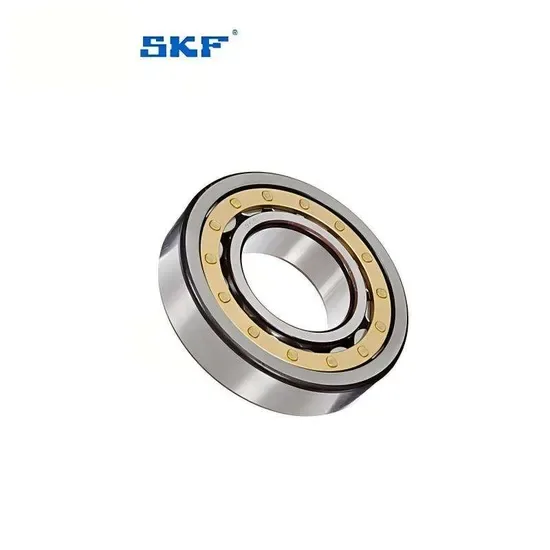


Description
Authorized Channel Sourcing — SKF NN 3020 KTN9/SPW33VR522 sourced through verified distributor networks with complete batch traceability and origin documentation for import compliance.
Technical Specifications
| Parameter | Value |
|---|---|
| Designation | SKF NN 3020 KTN9/SPW33VR522 |
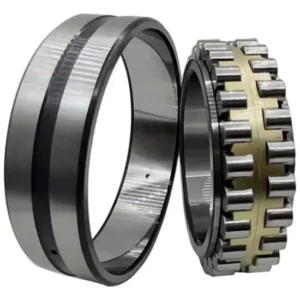
| Bearing Type | Double Row Cylindrical Roller Bearing |
| Bore Diameter (d) | 100 mm |
| Outside Diameter (D) | 150 mm |
| Width (B) | 40 mm |
| Number of Rows | Double Row |
| Structure | Cylindrical |
| Seal or Shield Type | Open |
| Weight | 0.250 kg |
| Bore Type | Tapered (1:12) |
| Cage Material | Injection molded glass fiber reinforced polyamide 6,6 (TN9) |
| Origin | China |
Note: The /SP and VR522 designations require verification against the manufacturer catalog for complete precision class and special feature confirmation.
Application Suitability
| Industry | Typical Applications |
|---|---|
| Industrial machinery | Machine tool spindles |
| Precision equipment | High-speed grinding heads |
| Industrial gearboxes | Main shaft support positions |
| Heavy-duty machinery | Precision rolling mill guides |
What the Tapered Bore Actually Solves on Precision Spindles
Radial clearance adjustment through axial displacement on a matched taper.
Most spindle failures I’ve documented trace back to one decision: the purchasing team matched the base designation but missed the bore type and precision suffix entirely. A standard cylindrical bore NN 3020 went into a grinding spindle that demanded the K taper for interference fit tuning. The inner ring walked on the shaft journal under radial load, scored the mating surface, and brought down a production line for three days. [NEED_CITE: bearing inner ring creep failure modes per ISO 15243] When the SKF NN 3020 KTN9/SPW33VR522 double row cylindrical roller bearing arrives with the correct K taper, the installer drives it axially up the 1:12 cone until the target residual clearance is reached — no shimming guesswork, no thermal expansion miscalculation. The alternative is watching an expensive spindle overheat within the first production shift.
Matching the Spindle Load Profile to the Double Row Architecture
Precision spindles generate high radial forces with minimal axial component. The SKF NN 3020 KTN9/SPW33VR522 double row cylindrical roller bearing handles exactly that load case — the dual roller rows distribute radial load across a wide contact envelope while maintaining the rigidity that single-row designs cannot deliver. Where a paired angular contact setup would introduce unnecessary axial preload complexity, this double row cylindrical configuration keeps the shaft guidance tight without generating parasitic thrust loads. The TN9 polyamide cage keeps rotational inertia low at elevated speeds, which matters when the spindle ramps through critical frequencies during acceleration.
Speed, Heat, and the Lubrication Groove That Extends Service Intervals
Spindles running continuous shifts generate heat at the roller-cage interface that degrades grease rapidly. The W33 feature — an annular groove with three lubrication holes in the outer ring — allows re-lubrication without disassembly. Oil or fresh grease enters directly into the roller path through these holes rather than migrating past external seals. [NEED_CITE: re-lubrication intervals for high-speed cylindrical roller bearings] Temperature stability depends on this flow path remaining clear. When maintenance teams skip the W33 circuit and rely solely on external grease nipples, the inner roller row starves firs*er row’s cage barriers.
Why TN9 Polyamide Outperforms Brass at Spindle Speeds
The TN9 cage in the SKF NN 3020 KTN9/SPW33VR522 is injection molded glass fiber reinforced polyamide 6,6. Compared to machined brass cages, it runs lighter — lower rotating mass means reduced centrifugal force on the cage pockets at high RPM. Less cage stress translates to less pocket wear and less debris circulating in the lubricant. Polyamide also damps vibration better than brass, which reduces the noise signature that precision grinding operations cannot tolerate. The trade-off is temperature ceiling: polyamide cages have an upper continuous operating limit lower than brass, which is exactly why the W33 re-lubrication circuit becomes non-negotiable.
The Cost of Ignoring the Suffix Stack
A buyer matched NN 3020 on a replacement order but specified a standard P0 precision and CN clearance instead of the SP class and K bore the original spindle required. The bearing physically fit. It ran. It heated beyond acceptable limits within the second week because the running clearance was wrong for the thermal expansion profile of that spindle housing. [NEED_CITE: thermal expansion effects on bearing internal clearance] Unplanned downtime on a CNC grinding machine costs more per hour than the price difference between a correctly specified bearing and the cheaper substitute. Warranty voidance follows when the OEM discovers a non-conforming precision class was installed.
Why Procurement Engineers Source This Designation Through Our Channel
Every SKF NN 3020 KTN9/SPW33VR522 we ship traces back through authorized distributor documentation — not gray market middlemen who clone QR codes on counterfeit packaging. The cross-reference database we maintain matches clearance, cage material, and precision suffix across SKF, NSK, FAG, and NTN designations simultaneously, so substitution decisions happen with full technical equivalence rather than base number alone. When a buyer needs the /SP precision confirmed, we pull the manufacturer catalog page and the batch certificate before the quotation goes out. Country-of-origin documentation travels with every shipment because customs authorities at destination ports have become stricter about bearing import declarations. Material certificates and dimensional inspection reports accompany each batch rather than being available upon request — they are standard.
Documentation & Authenticity
- Supplier Certificate of Conformity with batch and lot number traceability for each SKF NN 3020 KTN9/SPW33VR522 shipment
- Dimensional inspection report confirming bore taper geometry and outer ring W33 groove conformance before dispatch
- QR code verification pathway enabled through the official SKF app for on-site authenticity confirmation at receiving
- Country-of-origin certificate matching the declared origin on commercial invoices for customs clearance at destination
- Material certificate documenting cage material specification (TN9 polyamide 6,6) and roller ring metallurgy
Storage, Handling & Mounting
- Store the SKF NN 3020 KTN9/SPW33VR522 in original sealed packaging until the day of mounting — the open bearing type has no integral seal protecting the TN9 cage from ambient moisture or dust contamination
- Axial drive-up on the 1:12 tapered bore requires controlled displacement measurement; over-driving eliminates residual clearance and causes thermal binding within the first operational hour
- W33 lubrication holes in the outer ring must remain unblocked during handling — protective tape or debris in the groove will prevent re-lubrication flow after installation
- The 0.250 kg weight allows manual handling, but clean gloves are required to prevent skin oils from initiating corrosion on the open bearing surfaces before the housing seal is assembled
- Confirm shaft taper interface geometry before mounting; a worn or out-of-round taper will prevent the interference fit the K bore is designed to achieve
Request Technical Verification Before Committing to Quantity
Share your spindle speed, operating temperature range, and load spectrum so we can confirm the /SP precision class and TN9 cage combination matches your duty cycle. Provide the OEM equipment number if cross-referencing from another brand, and we will return a full suffix-aligned interchange comparison rather than just a base number match. Request the documentation package and batch availability confirmation before placing the trial order.
Frequently Asked Questions
Q: How do I verify the authenticity of the SKF NN 3020 KTN9/SPW33VR522 after delivery?
A: Each bearing carries a QR code readable through the official SKF authentication app. The batch number on the packaging cross-references to the supplier Certificate of Conformity and material documentation included with your shipment.
Q: What does the K suffix mean for installation procedure?
A: The K indicates a tapered bore with 1:12 taper ratio. Mounting requires axial displacement up the tapered shaft or adapter sleeve until the specified residual internal clearance is achieved. This is fundamentally different from cylindrical bore press-fit installation.
Q: How do cross-brand substitutions handle the precision suffix?
A: A base number match alone is insufficient. The clearance class, cage material (TN9 polyamide), and precision designation must align across the substitution. We verify all three parameters before confirming interchange equivalence.
Q: What re-lubrication interval does the W33 groove support?
A: The W33 annular groove with three lubrication holes enables re-lubrication without bearing removal. Interval depends on speed, temperature, and lubricant type in your specific application — share these parameters for a calculated recommendation.
Q: Are the /SP and VR522 designations standard catalog items?
A: These suffixes fall outside the standard designation structure and require confirmation against the manufacturer’s current catalog. We verify availability and specification conformance before quoting.
Confirm Availability and Request Documentation
Share your application parameters or OEM equipment number, and we will return a technical cross-reference with full documentation package before you commit to order.