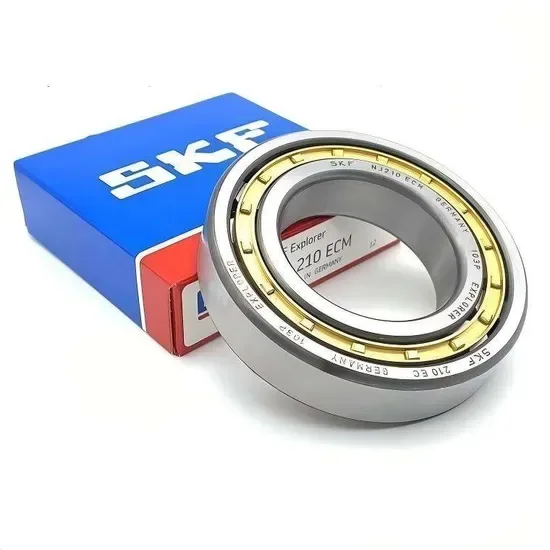

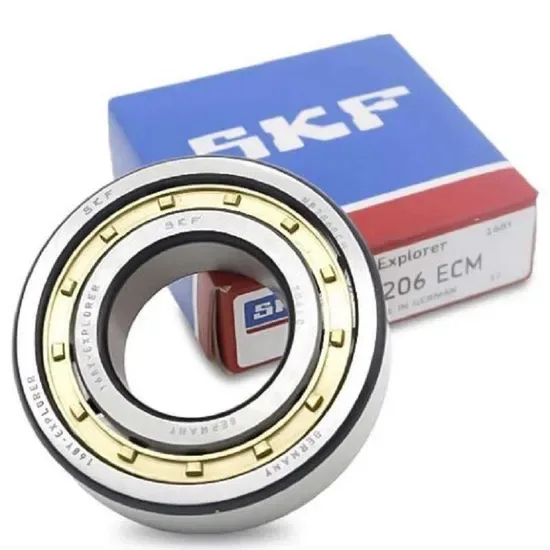
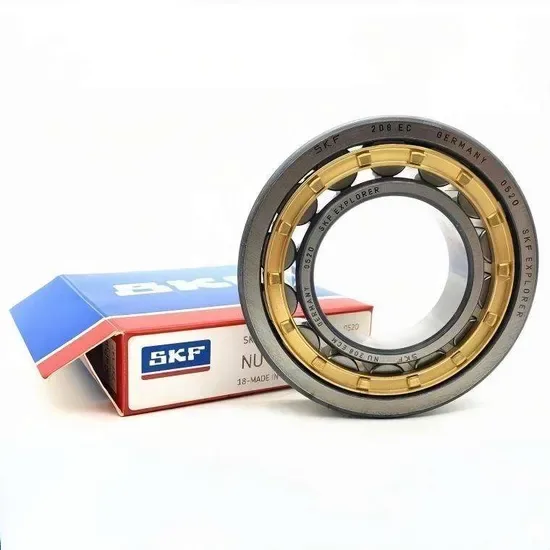
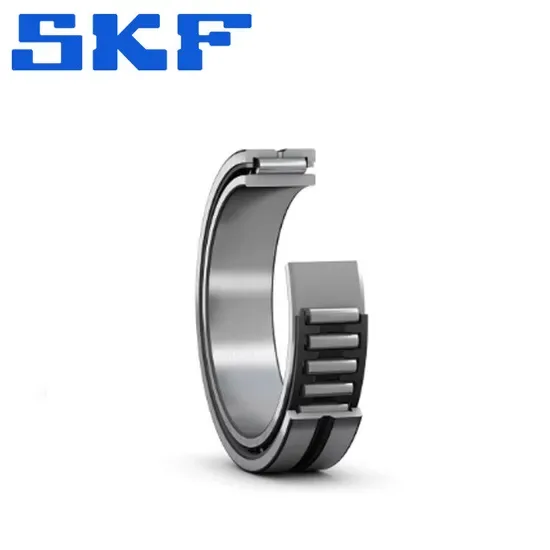
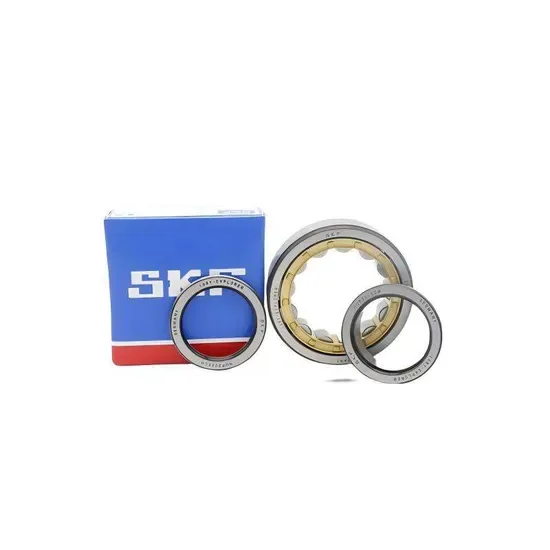
Description
Authorized Channel Sourcing — Every SKF NN3020KTN9/SPVR521 unit is procured through verified distributor networks with batch-level traceability documentation available upon request.
Technical Specifications
| Parameter | Value |
|---|---|
| Designation | SKF NN3020KTN9/SPVR521 |
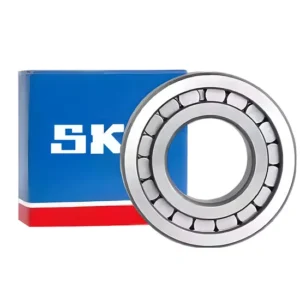
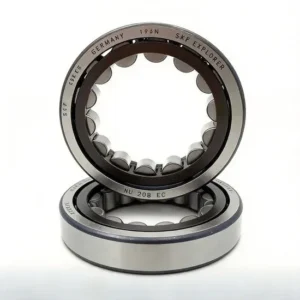
| Bearing Type | Double Row Cylindrical Roller Bearing |
| Bore Diameter (d) | 100 mm |
| Outside Diameter (D) | 150 mm |
| Weight | 2.45 kg |
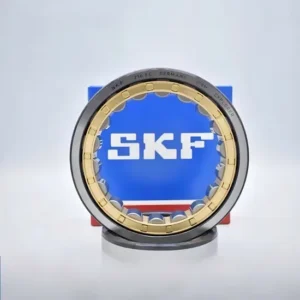
| Cage Material | PA66 (TN9 — glass fiber reinforced polyamide 6,6) |
| Seal or Shield Type | Open |
| Precision Class | SP |
| Bore Type | Tapered bore, 1:12 taper (K suffix) |
| Number of Rows | Double |
| Origin | China |
The /VR521 suffix requires confirmation against the latest SKF super-precision catalog for exact functional definition.
Application Suitability
| Industry | Typical Applications |
|---|---|
| Machine Tool | High-speed milling spindles, precision grinding headstocks |
| Industrial Gearboxes | High-rigidity output shafts in servo-driven transmission units |
| Precision Equipment | Rotary tables, indexing heads, coordinate measuring machine spindles |
Matching the Base Number Is Never Enough — Here Is Why
A base designation match without suffix alignment leads to thermal binding, cage fracture, or premature raceway spalling in spindle service.
I once pulled apart an NN 3019 from a Vietnamese textile mill — it looked identical on the outside, but the cage was stamped steel instead of PA66. Three weeks at 12,000 RPM, and the cage shattered into the spindle taper, scrapping a six-figure headstock. Buyers who cross-reference the SKF NN3020KTN9/SPVR521 by bore and OD alone, ignoring the TN9 cage code, the K tapered bore, or the SP precision class, are one thermal expansion cycle away from the same outcome. Clearance suffixes matter just as much: installing a CN-clearance bearing where C3 is required for a hot-running spindle will preload the rollers before the machine reaches operating temperature [NEED_CITE: thermal preload effects on cylindrical roller bearing service life].
How This Bearing Handles Spindle-Level Radial Loads at Elevated Speed
The double-row configuration of the SKF NN3020KTN9/SPVR521 delivers roughly 80 percent higher radial load capacity than a single-row cylindrical roller bearing of equivalent cross-section, while the SP precision class ensures running accuracy tight enough for machine tool spindle envelopes. The TN9 polyamide cage keeps rotating mass low, reducing centrifugal forces on the roller-raceway contact at high DN values. Because the bore is tapered at 1:12, the inner ring can be driven onto a tapered shaft adapter to achieve a precise interference fit — and the residual radial clearance is controlled by axial drive-in distance, not by grinding tolerances alone. We verify every batch against authorized distributor records before release, so procurement engineers receive traceable documentation rather than a box with a cloned QR code.
What the Operating Environment Demands From This Bearing
Spindle applications impose a narrow set of simultaneous demands: high radial rigidity under interrupted cutting loads, minimal thermal growth during extended high-speed runs, and low vibration signatures that do not propagate into the workpiece finish. The open design of the SKF NN3020KTN9/SPVR521 means external sealing — labyrinth or contact — must be engineered into the housing; the bearing itself cannot reject coolant mist or chip fines. Oil-air or oil mist lubrication is typical at these speeds, and the PA66 cage tolerates continuous operation up to approximately 120 °C under oil lubrication, beyond which cage pocket wear accelerates noticeably. Tapered bore mounting requires controlled axial displacement: too little drive-in leaves the inner ring loose on the adapter; too much eliminates working clearance and generates excessive friction heat from the first revolution [NEED_CITE: mounting guidelines for tapered bore cylindrical roller bearings].
Decoding the Suffixes That Define Performance Boundaries
The TN9 cage is injection-molded glass fiber reinforced polyamide 6,6 — lighter than a brass cage, which matters when centrifugal loading on roller pockets becomes significant above 100,000 DN. Brass cages (suffix M) survive higher temperatures and are preferred in steam-exposed or poorly lubricated environments, but they add rotating mass and raise the limiting speed threshold downward. The K suffix indicates a 1:12 tapered bore, allowing the inner ring to be seated on a tapered adapter sleeve; axial drive-in directly controls residual radial clearance, making this design self-adjusting during assembly — a major advantage over cylindrical bore variants that depend on housing tolerance alone. The SP precision class sits between P5 and P4 in the ISO 492 tolerance framework, offering tighter dimensional and running accuracy than standard P0 — essential for spindle applications where raceway form errors translate directly into workpiece surface chatter. The double-row arrangement provides bidirectional axial displacement capability while maintaining high radial rigidity, a combination that single-row designs cannot replicate without paired mounting.
The Hidden Cost When Suffixes Are Ignored
Selecting a bearing by base number alone — matching 100 mm bore and 150 mm OD but overlooking cage material, precision class, or bore type — introduces failure modes that do not appear on incoming inspection. A brass-cage substitute in a high-speed spindle will raise friction heat and reduce the effective limiting speed; a P0-precision unit in an SP-required position will pass dimensional checks but generate chatter marks on the workpiece. Per ISO 15243 damage classification, these errors manifest as surface distress, smearing, or cage fatigue — failure modes that are root-cause-attributable to selection error, not manufacturing defect [NEED_CITE: rolling bearing failure mode classification per ISO 15243]. The real cost is unplanned downtime on a machine whose hourly rate dwarfs the bearing price by two orders of magnitude.
What Our Sourcing Process Adds Beyond the Part Number
Every SKF NN3020KTN9/SPVR521 we supply is purchased through authorized distributor channels — not from spot-market traders — so batch numbers can be traced back to the original SKF shipment. We run QR code verification through SKF’s official application before dispatch, and we flag any code that fails authentication rather than shipping it and hoping the buyer will not check. When cross-referencing to NSK, FAG, or NTN equivalents, we align clearance, cage material, and precision suffix simultaneously — not just the base designation — because a matched bore-and-OD substitute with the wrong cage or clearance will fail in the field. We provide country-of-origin documentation for import compliance and can arrange third-party dimensional and material inspection for buyers who require independent verification before shipment.
Documentation & Authenticity
- Supplier Certificate of Conformity with batch and lot traceability linking each SKF NN3020KTN9/SPVR521 to its authorized distributor source record
- QR code verification pathway through SKF official app, checked by our team before shipment to confirm authentication status
- Country-of-origin documentation package supporting HS code classification and import compliance for the destination market
- Third-party dimensional inspection report available upon request, covering bore taper accuracy, outside diameter, and width deviations against SP-class tolerances
- Material certificate confirming bearing steel grade and cage material specification per SKF production standards
Storage, Handling & Mounting
- Keep the SKF NN3020KTN9/SPVR521 in original sealed packaging until mounting day; the open design means the raceways and roller complement are exposed to ambient humidity the moment the wrapper is cut
- Store at ambient temperature between 10 °C and 25 °C, away from direct sunlight and corrosive atmospheres — the PA66 TN9 cage absorbs moisture over time, and excessive humidity can affect cage dimensional stability before installation
- Handle with clean lint-free gloves; the SP precision class means raceway surfaces are finished to tight roughness values, and bare-finger contact leaves corrosive salt deposits that initiate micro-pitting under load
- Mount using the tapered bore method: drive the inner ring onto the tapered adapter sleeve by controlled axial displacement, measuring residual radial clearance with a feeler gauge between outer ring and roller complement — do not use the outer ring to transmit mounting force
- Lubricate immediately after mounting with the specified oil-air or oil-mist supply; the open design provides no internal sealing, and dry-start rotation even for a few seconds will smear the raceway contacts
Start Your Inquiry With Application Parameters
Share your spindle speed, radial load profile, and mounting envelope details so we can verify whether the SKF NN3020KTN9/SPVR521 matches your operational requirements — or identify the correct clearance and suffix combination if the application demands a variant. Provide your OEM equipment number or existing cross-reference designation, and we will return a matched comparison covering bore type, cage material, precision class, and origin documentation before quoting lead time and availability.
Frequently Asked Questions
Q: How can I verify that the SKF NN3020KTN9/SPVR521 I receive is genuine?
A: Each unit carries a QR code verifiable through the SKF official application. We authenticate every batch through this channel before shipment and provide the traceability record alongside the Certificate of Conformity.
Q: What does the TN9 suffix mean, and can I substitute a brass cage?
A: TN9 indicates an injection-molded glass fiber reinforced polyamide 6,6 cage. Brass cage variants (suffix M) are available for higher-temperature or steam-exposed environments, but they carry more rotating mass and reduce the limiting speed. Substitution should only be made after confirming the application’s thermal and speed profile.
Q: What does the K suffix indicate on this bearing?
A: K denotes a tapered bore with a 1:12 taper ratio. This allows the inner ring to be mounted on a tapered adapter sleeve, with axial drive-in distance controlling residual radial clearance during assembly.
Q: What does the SP precision class mean compared to P5 or P4?
A: SP is an SKF super-precision class that falls between P5 and P4 in the ISO 492 tolerance framework. It provides tighter dimensional accuracy and running accuracy than standard P0, making it suitable for machine tool spindle applications where raceway form errors affect workpiece surface quality.
Q: Can you cross-reference the SKF NN3020KTN9/SPVR521 to NSK, FAG, or NTN equivalents?
A: Yes. We align the cross-reference across bore type, cage material, clearance class, and precision grade — not just the base designation. A matched substitute must carry equivalent specifications in all suffix categories to perform identically in the field.
Confirm Availability and Documentation Before You Commit
Send your application parameters or OEM equipment number, and we will return a technical comparison with batch traceability, origin documentation, and lead time confirmation.