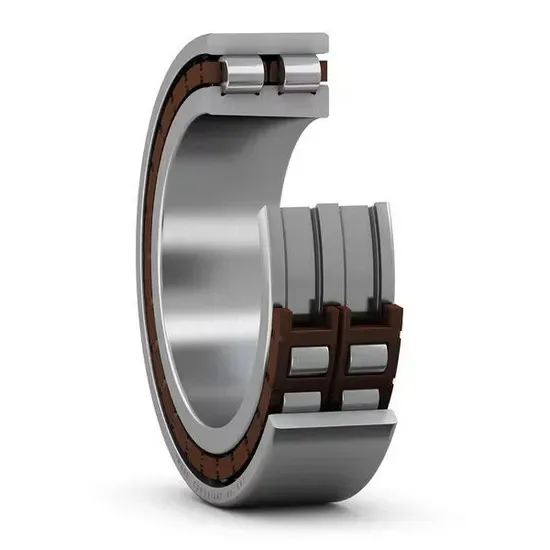
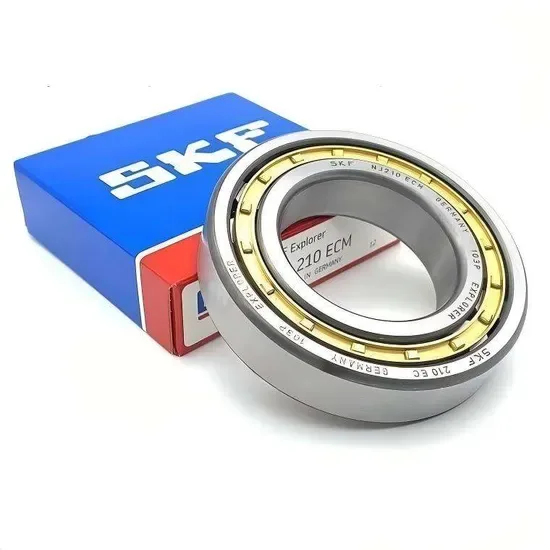
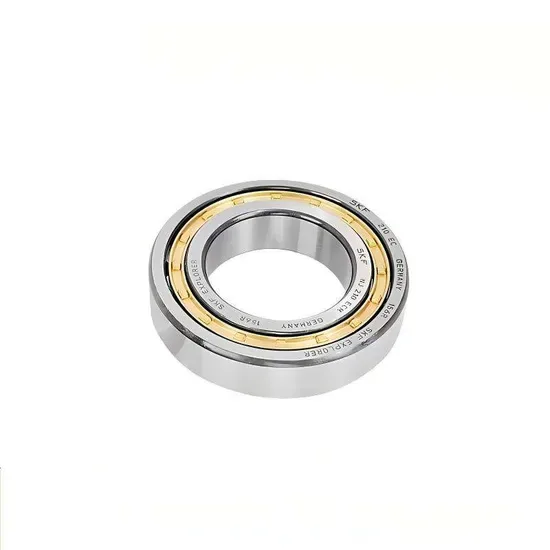
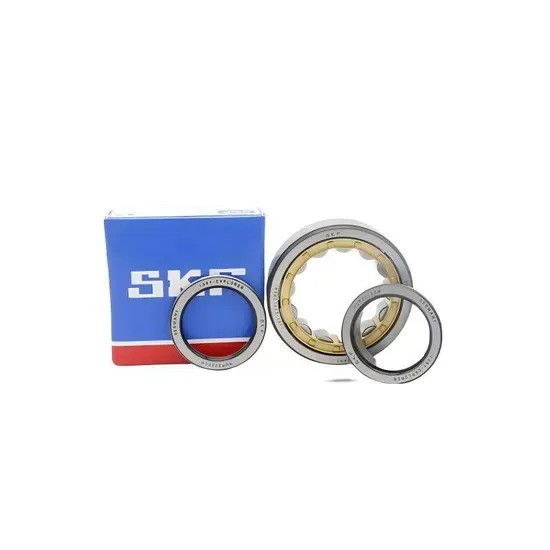
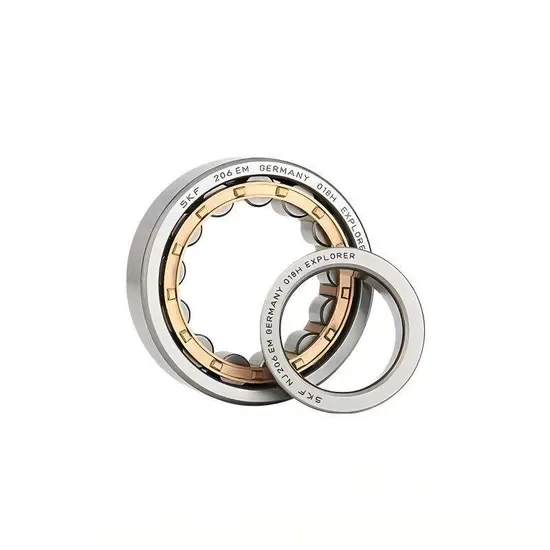
Description
Traceable Sourcing Channels — Every SKF NN3026KTN9/SP we ship carries batch-level documentation linking back to the manufacturer’s authorized distributor network, not an open-market broker.
Technical Specifications
| Parameter | Value |
|---|---|
| Designation | SKF NN3026KTN9/SP |
| Bearing Type | Double Row Cylindrical Roller Bearing |
| Bore Diameter (d) | 130 mm |
| Bore Type | Tapered bore, taper 1:12 (K suffix) |
| Outside Diameter (D) | 200 mm |
| Width (B) | 50 mm |
| Number of Rows | Double Row |
| Cage Material | Injection molded glass fiber reinforced polyamide 6,6 (TN9 suffix) |
| Seal or Shield Type | Open |
| Precision Class | SP — special precision per manufacturer designation |
| Origin | China |
| Weight | 0.250 kg |
| Standards | ISO 15 / ISO 492 |
The SP precision suffix on this designation is listed as unverified and requires confirmation against the latest SKF catalog before final order placement.
Application Suitability
| Industry | Typical Applications |
|---|---|
| Machine tool manufacturing | Main spindle rear support on CNC lathes and milling centers |
| Steel and metallurgy | Rolling mill work roll and backup roll neck positions |
| Industrial gearboxes | High-speed pinion shaft support in precision reduction stages |
| General industrial machinery | High-rigidity shaft support where radial load dominates |
What a Polyamide Cage Failure Looks Like on a Spindle Running at Full Speed
A cage that doesn’t match the thermal envelope fails without warning — and takes the spindle journals with it.
When a steel mill near Dammam swapped an NN 3026 with the correct SP precision suffix but replaced the polyamide cage with stamped steel, the cage shattered within six weeks. The spindle seized, the line went down, and the downstream cost dwarfed whatever was saved on the bearing itself. [NEED_CITE: rolling bearing failure mode classification per ISO 15243]. Counterfeit bearings with soft inner rings and cloned QR codes are showing up in procurement channels that skip the cage material callout. The SKF NN3026KTN9/SP specifies a glass fiber reinforced polyamide 6,6 cage for a reason — it handles the speed-temperature balance that metal cages cannot replicate in this bore size.
How This Bearing Fits the Spindle Load Profile
Machine tool spindles demand tight running accuracy combined with the ability to handle sustained radial loads at elevated speeds. The double row cylindrical roller arrangement in the SKF NN3026KTN9/SP delivers the radial rigidity required for heavy cutting passes while the tapered bore allows direct interference fit on a tapered journal, eliminating the need for adapter sleeves and reducing the radial runout stack-up. In gearboxes, this same configuration stabilizes pinion shafts under alternating radial loads from mesh forces.
Operating Conditions That Push the Design Limits
Spindle applications generate heat through cutting forces and motor losses, and that heat travels directly into the bearing seat. The open design of this bearing assumes an externally managed lubrication system — typically oil-air or oil-jet delivery — which also carries heat away from the raceway contact zones. The polyamide cage’s temperature limit constrains the upper operating envelope, so lubricant selection and flow rate must be validated against the actual thermal profile at the bearing location. [NEED_CITE: polyamide cage operating temperature limits in cylindrical roller bearings]. Mounting on a tapered shaft requires controlled axial drive-up to achieve the correct interference fit without reducing internal clearance below the minimum needed for thermal expansion.
What the K, TN9, and SP Suffixes Actually Control
The K suffix indicates a 1:12 tapered bore, which means the inner ring mounts directly onto a matching tapered journal. This arrangement provides a tighter interference fit than cylindrical bore press-fitting and allows fine adjustment of internal clearance through axial drive-up distance. The TN9 cage — injection molded glass fiber reinforced polyamide 6,6 — weighs significantly less than a machined brass or pressed steel alternative, reducing centrifugal loading on the roller-cage pockets at high rotational speeds. This matters in spindle service where cage wear is often the life-limiting factor. The SP precision designation signals tighter dimensional and running accuracy than standard production, targeting the tolerance bands that spindle designers specify to maintain workpiece surface finish. [NEED_CITE: ISO 492 tolerance classes for precision cylindrical roller bearings].
The Downtime Math Behind a Wrong Suffix
Substituting a standard P0 precision bearing where SP was specified introduces runout errors that translate directly into chatter marks on machined surfaces and accelerated wear on the spindle nose tooling interface. A cage material mismatch — say, installing a pressed steel cage where polyamide was specified — changes the lubrication film dynamics at speed and can lead to cage pocket wear that generates debris contamination within the bearing itself. [NEED_CITE: bearing life calculation methodology per ISO 281]. The ISO 15243 failure classification framework documents cage fracture as one of the most catastrophic failure modes, often causing secondary damage to shaft journals and housing bores that extends repair scope well beyond a simple bearing swap.
What We Check Before Anything Ships
The procurement engineers we work with need more than a part number match. When a request comes in for the SKF NN3026KTN9/SP, we verify the cage material suffix, the precision class, and the bore type against the application parameters before generating a quote. Our sourcing runs through authorized distributor channels, meaning every shipment carries traceable documentation back to the manufacturer’s distribution network. If a cross-reference is needed — matching this bearing to an equivalent NSK or FAG designation — we align the clearance class, cage material, and precision suffix together, not just the base bore and OD. That discipline prevents the exact failure mode that took down the line near Dammam.
Documentation & Authenticity
- Supplier Certificate of Conformity listing the full SKF NN3026KTN9/SP designation including K, TN9, and SP suffixes with batch traceability codes
- Dimensional inspection report confirming bore taper geometry and SP-class running accuracy before dispatch
- QR code verification pathway through SKF official mobile applications for end-user authenticity confirmation at the receiving dock
- Country-of-origin certificate and HS code documentation prepared for import clearance in Middle East, African, and Latin American customs jurisdictions
- Material certificate documenting cage polymer grade and roller/ring steel specification for buyers requiring full metallurgical traceability
Storage, Handling & Mounting
- Retain the factory-sealed packaging until the moment of mounting; the open design means any dust ingress before installation contaminates the roller-cage interface on this precision spindle bearing
- Store below the polyamide cage’s thermal limit — ambient warehouse conditions are fine, but avoid proximity to heat sources that could degrade the TN9 glass fiber reinforced polymer before the bearing is even installed
- For the K tapered bore mounting procedure, use controlled axial drive-up with a calibrated hydraulic nut or locknut to achieve the specified interference fit while monitoring residual internal clearance
- Clean hands or lint-free gloves required during handling; fingerprint acids on the precision-ground SP raceway surfaces can initiate corrosion under sustained high-speed operation
- Coordinate the external oil-air or oil-jet lubrication system startup with initial bearing run-in to prevent dry running during the first critical minutes of spindle operation
Start the Conversation With Your Application Data
Ready to Verify Fit and Availability?
Share your spindle speed range, radial load profile, and operating temperature so we can confirm the SKF NN3026KTN9/SP matches your application envelope. Include the OEM equipment number if available, and we will cross-check the cage, precision, and bore type against the original specification.
Frequently Asked Questions
Q: How do I verify that the SKF NN3026KTN9/SP I received is genuine and not a counterfeit?
A: Every bearing sourced through our authorized distributor channels carries batch-level traceability documentation. Upon receipt, use the QR code on the packaging to run verification through SKF’s official mobile application. Check that the cage material physically matches the TN9 polyamide designation — counterfeit units frequently substitute unmarked polymer or pressed steel cages. We supply the Certificate of Conformity with lot numbers that trace back to the manufacturer’s distribution records.
Q: When cross-referencing this bearing to NSK or FAG, what beyond the base number must match?
A: The base NN 3026 number alone is not sufficient. The K tapered bore must align — a cylindrical bore substitute will not mount on a tapered journal. The TN9 polyamide cage must match, since a brass or steel cage changes high-speed thermal behavior. The SP precision class must carry over, as a standard P0 bearing introduces unacceptable runout in spindle applications. All three suffixes must be confirmed in the cross-reference, not assumed.
Q: What is the difference between SP and standard P0 precision for cylindrical roller bearings?
A: Standard P0 (or Class 0 per ISO 492) is the default tolerance band for general-purpose bearings. SP indicates a special precision level with tighter dimensional tolerances and running accuracy, typically specified for machine tool spindles where workpiece surface finish depends on minimal radial and axial displacement under load. Installing P0 where SP is called for introduces runout errors that show up as chatter marks or dimensional drift in precision machining operations.
Q: What mounting method is correct for the K tapered bore on this bearing?
A: The K tapered bore requires mounting on a matching 1:12 taper shaft journal. Use a hydraulic nut or precision locknut to drive the inner ring axially up the taper, which expands it radially to achieve the interference fit. The drive-up distance must be controlled to leave adequate residual internal clearance for thermal expansion during operation — over-driving the inner ring eliminates clearance and leads to thermal binding. [NEED_CITE: tapered bore bearing mounting procedures and residual clearance calculation].
Q: What lubrication is required for the open-design TN9 caged bearing at high spindle speeds?
A: The open design assumes an external lubrication system — typically oil-air or oil-jet delivery in spindle applications. The oil serves both as lubricant and coolant, carrying heat away from the roller-raceway contact zones. The TN9 polyamide cage’s temperature limit means that oil flow rate and viscosity must be selected to keep the bearing operating temperature within the cage’s rated envelope. Grease lubrication is generally not suitable for the sustained high-speed operation these spindles demand.
Confirm Your Specification and Get a Traceable Quote
Send us your application parameters or OEM equipment number, and we will return a verified specification match with lead time and documentation package details.