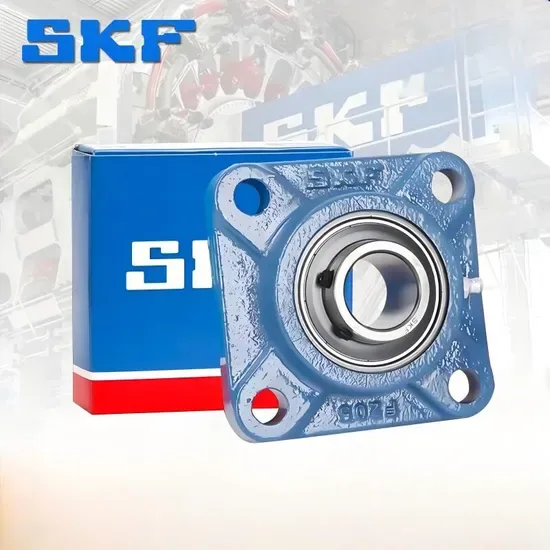
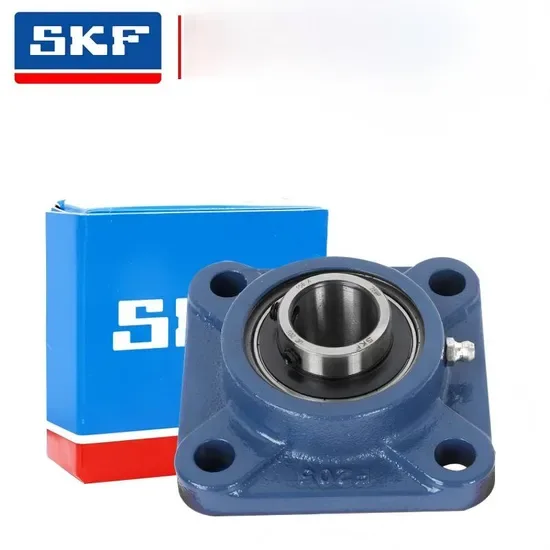

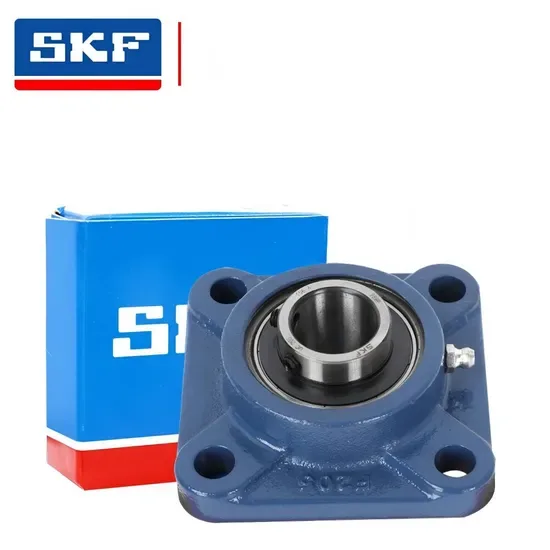
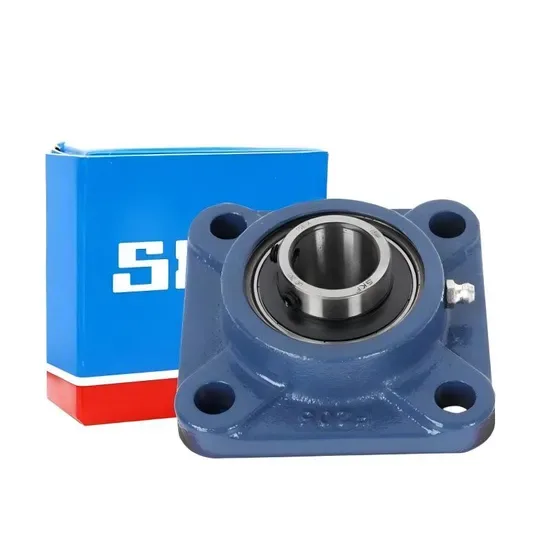
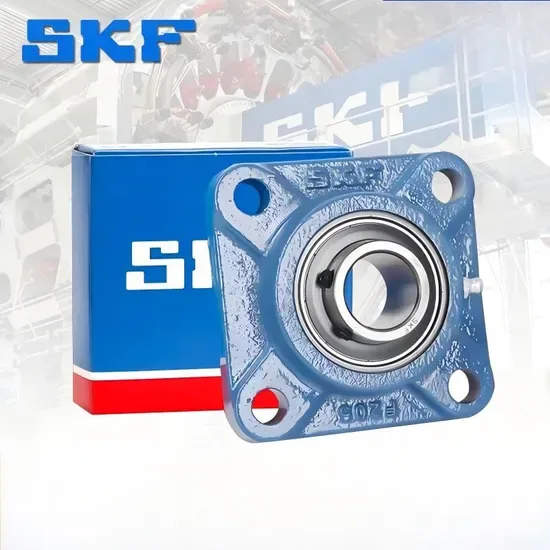
Description
Authorized Channel Procurement — every UCF204 unit we source carries batch traceability documents back to the original manufacturer, letting you verify origin before the shipment leaves our warehouse.
Technical Specifications
| Parameter | Value |
|---|---|
| Designation | UCF204 |
| Bearing Type | Insert Bearing / Pillow Block Unit |
| Housing Type | Flanged Square (F-type), 4-Bolt Mounting |
| Bore Series | 204 |
| Number of Rows | Single |
| Raceway Type | Spherical Raceway |
| Features | Corrosion Resistant, High Temperature, High Speed |
| Arrangement | Self-Aligning |
Application Suitability
| Industry | Typical Applications |
|---|---|
| Agricultural Machinery | Grain conveyor drive shafts, seed drill metering rollers |
| Material Handling | Belt conveyor idler frames, bucket elevator tail pulleys |
| Textile Machines | Spindle support brackets, yarn guide roller housings |
What Happens When the Seal Suffix Is Wrong on a UCF204
A steel-shielded unit in a dusty grain mill will fail before the first harvest season ends.
I once cleared a shipment of flanged pillow block units for a Nigerian processor. The base number matched perfectly on the purchase order. Nobody caught that the suffix specified 2Z steel shields instead of 2RS contact seals. Fine grain dust penetrated those shields within weeks, scored the shafts, and forced unplanned downtime that cost the operator multiples of the bearing price. The UCF204 flanged pillow block bearing unit sits in environments where contamination is constant, and a single letter difference in the seal designation decides whether you get months of service or weeks of headache [NEED_CITE: bearing contamination failure modes in agricultural environments].
Matching the UCF204 to Real Field Conditions
The spherical raceway inside this UCF204 flanged pillow block bearing unit lets the inner ring self-align within the housing, absorbing shaft deflection and frame misalignment that are unavoidable on welded conveyor structures. In agricultural drive systems where mounting surfaces are rarely machined flat, this self-aligning capacity prevents edge loading on the rolling elements. We routinely cross-check housing bolt patterns and insert bearing specifications against the OEM equipment number you provide, so the replacement unit drops in without shimming or re-drilling.
Field Stresses That Define Performance Requirements
Radial loads on conveyor idlers and elevator pulleys remain relatively steady, but shock loads occur every time a jammed belt breaks free or a bucket catches on debris. The flanged square housing with its four-bolt pattern distributes these intermittent forces across a wider frame area than a two-bolt alternative. Temperature swings between outdoor ambient and friction heat at the seal lip demand a clearance class that accommodates thermal expansion without binding. Where the unit operates near fertilizer spreaders or washdown zones, the corrosion-resistant specification becomes a baseline requirement rather than an option [NEED_CITE: corrosion effects on bearing service life in outdoor machinery].
Decoding the Specifications That Matter
The spherical raceway is the defining geometry here — it allows the inner ring to pivot slightly within the outer ring, compensating for angular misalignment up to a few degrees without inducing edge stress on the balls. Single-row construction keeps the load zone focused on radial forces, which suits the dominant loading pattern on conveyor shafts and textile rollers. The F-type flanged square block with four mounting bolts provides a rigid attachment that resists rocking under alternating load directions, a frequent issue on reversing conveyor drives. Corrosion-resistant treatment on exposed surfaces extends housing life where moisture or chemical splash is routine, while the high-speed capability means the unit can handle direct-driven motor applications without cage instability.
The Downtime Multiplier Behind Cheap Substitutes
Correct sourcing with traceable documentation protects you from three failure categories catalogued in ISO 15243: surface fatigue from contaminated lubricant, abrasive wear from dust ingress past inadequate seals, and fracture from soft inner rings in counterfeit units. A counterfeit UCF204 flanged pillow block bearing unit with a cloned marking might pass a visual check, but its case-hardened depth often falls short, leading to spalling within the first load cycle. The unplanned stop, the shaft replacement, the labor to re-align the entire conveyor section — these costs dwarf the saving on the initial purchase [NEED_CITE: ISO 15243 rolling bearing damage classification].
How We Keep Your Procurement Verifiable
We source through authorized distributor channels and retain batch-level traceability documents for every shipment. Our cross-reference database matches housing dimensions, bore size, seal type, and clearance class together — not just the base number. When you send us the OEM equipment tag or the failed unit’s full marking string, we verify the exact suffix configuration before quoting. Material certificates confirm the steel grade used in the insert bearing, and dimensional inspection reports check the housing bolt pattern against published tolerances. Country-of-origin documentation ships with every export order so your customs broker has what they need before the container reaches port.
Documentation & Authenticity
- Supplier Certificate of Conformity tied to the specific UCF204 production batch, listing the manufacturer’s production facilities and shipment date.
- Material certificate confirming GCr15 or equivalent bearing steel composition for the insert bearing rings and rolling elements.
- Dimensional inspection report covering bore diameter, housing bolt-hole spacing, and flange thickness against tolerance limits.
- Country-of-origin certificate formatted for import compliance in your destination market, with HS code guidance for pillow block bearing units.
- QR code verification pathway through the brand’s official application, where applicable, to confirm the unit left an authorized facility.
Storage, Handling & Mounting
- Keep the UCF204 in its sealed packaging until the moment of installation; early exposure in a humid storeroom defeats the factory-applied corrosion-resistant coating.
- When pressing the insert bearing onto the shaft, use a drift tube that contacts only the inner ring — force through the outer ring or the flanged housing will damage the spherical raceway surface.
- Tighten the four flange bolts in a diagonal sequence to avoid cocking the housing on the frame, which negates the self-aligning benefit of the spherical seat.
- For units specified with contact seals (2RS), do not attempt to re-grease through the housing fitting unless a re-lubrication channel is confirmed; sealed variants are grease-filled for service life.
- Store matched sets of replacement units together and mark them as a group, so a partial pull does not leave you mixing old and new inventory on the same shaft line.
Request a Technical Review Before You Commit
Send us the full marking string from the unit you are replacing — including every suffix letter — along with the OEM equipment number if available. We will return a cross-reference confirmation covering housing bolt pattern, seal type, and clearance class, plus a quotation with lead time and the documentation package your import process requires.
Frequently Asked Questions
Q: How do I confirm the UCF204 unit I received is genuine and not a counterfeit?
A: Check the QR code or batch marking against the brand’s official verification app where supported. Request the supplier Certificate of Conformity and material certificate before shipment, and compare the weight and marking font against a known authentic sample. Soft inner rings and cloned packaging are common counterfeit indicators that dimensional inspection can expose.
Q: Can I substitute a different brand’s flanged pillow block for the UCF204?
A: Cross-referencing is possible across major brands, but you must verify the housing bolt-hole spacing, the insert bearing bore size, the seal or shield suffix, and the clearance class — not just the base number. A mismatch in any of these parameters can cause installation interference or premature field failure.
Q: When should I choose a spherical raceway pillow block over a rigid housing?
A: Select the spherical raceway design when the mounting frame is welded rather than machined, or when shaft deflection under load is expected. The self-aligning capability prevents edge loading on the rolling elements. Rigid housings suit applications where the frame is precision-bored and alignment is guaranteed by the structure itself.
Q: What corrosion protection options exist for agricultural machinery use?
A: The corrosion-resistant specification covers treated housing surfaces. For environments with heavy washdown or chemical exposure, discuss stainless-steel insert options or additional polymer-coated housings during the selection review to match the contamination severity.
Q: What are the installation practices that prevent early failure on flanged units?
A: Use a drift tube on the inner ring only during shaft mounting, tighten the four flange bolts in a cross pattern, and verify shaft alignment before final locknut tightening. Misalignment at installation defeats the spherical raceway’s self-aligning design and concentrates load on a portion of the rolling elements.
Confirm Your UCF204 Specifications Now
Share your application parameters or the existing unit marking, and receive a verified cross-reference with full documentation within one business day.
Contact our technical sales team through the inquiry form or direct message on the platform.