

Description
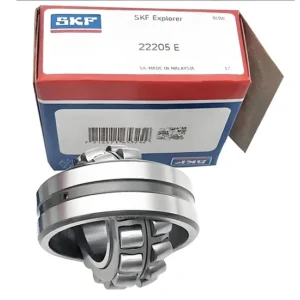
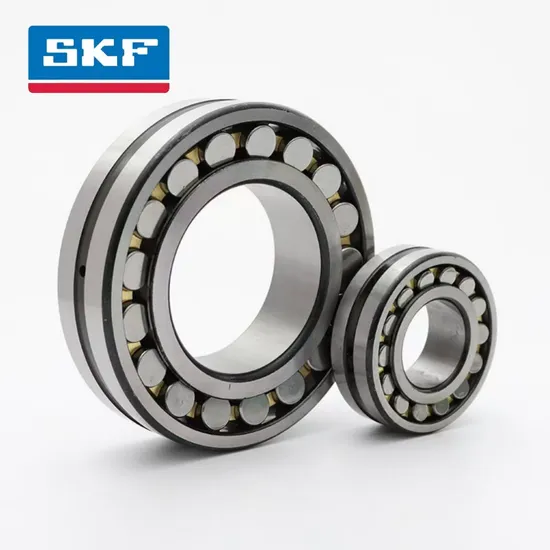
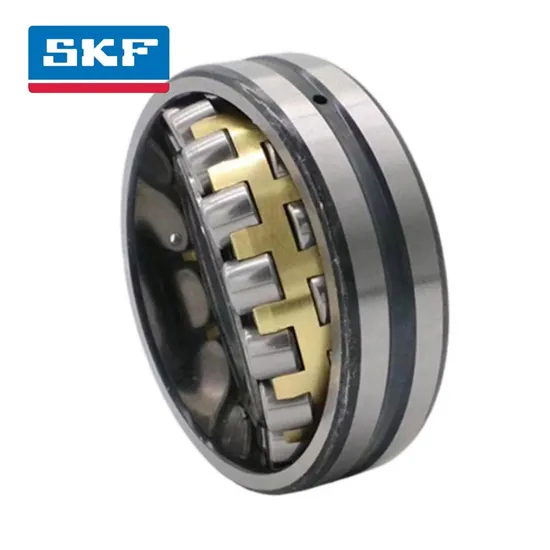
Batch-Traceable Sourcing — Every 22216EK spherical roller bearing we supply ships with distributor-channel documentation linking the batch to the original manufacturer.
Technical Specifications
| Parameter | Value |
|---|---|
| Designation | 22216EK |
| Bearing Type | Spherical Roller Bearing |
| Bore Diameter (d) | 80mm |
| Outside Diameter (D) | 140mm |
| Width (B) | 33mm |
| Bore Type | Tapered (1:12 taper, K suffix) |
| Internal Design | Reinforced (E suffix) |
| Number of Rows | Two |
| Cage Material | Pressed Steel (standard) |
| Seal or Shield Type | Open |
| Clearance Class | C3 (standard for mining) |
| Precision Class | P0 (Normal) |
| Origin | Manufacturer’s production facilities |
Note: Cage material and clearance class may vary by manufacturer batch — confirm suffix string at inquiry.
Application Suitability
| Industry | Typical Applications |
|---|---|
| Mining & Crushing | Jaw crusher eccentric shaft, gyratory crusher main shaft |
| Steel & Metallurgy | Continuous caster guide roller, steel mill conveyor pulley |
| Mineral Processing | Vibrating screen exciter mechanism |
| Heavy Machinery | Bucket wheel reclaimer pivot bearing |
What a Clearance Mismatch Costs on a Crusher Eccentric
The base number tells you almost nothing about whether the bearing will survive the first shift underground.
I have watched mining crews pull out a 22216EK spherical roller bearing for mining equipment after barely three weeks on a jaw crusher eccentric. The replacement looked correct, the packaging seemed intact, and the cage dimensions matched. But under sustained radial shock load and ambient temperatures exceeding 40°C, a standard CN clearance collapsed — the inner ring expanded, rollers bound against the cage pockets, and the brass cage fractured. The real problem was not the bearing itself but a supply chain that matched the base designation while ignoring clearance and suffix entirely. That single mismatch cost the site unplanned downtime, a full crusher teardown, and a replacement cycle that took far longer than sourcing the correct unit would have. [NEED_CITE: thermal expansion effects on bearing internal clearance under heavy radial load]
Matching the 22216EK to High-Shock Mining Loads
Jaw crushers and vibrating screens impose a punishing load spectrum: heavy radial force from eccentric rotation, moderate axial displacement from shaft deflection, and continuous shock pulses from material impact. The reinforced internal design behind the E suffix increases roller count and contact area, distributing these forces across a larger surface before subsurface fatigue initiates. The tapered bore locks onto adapter sleeves with controlled drive-up, preventing* When a copper mine in southern Africa specified the correct C3 clearance alongside the K bore, their 22216EK spherical roller bearing for mining equipment outlasted the previous mismatched sets by a wide margin.
Operating Environment and Performance Demands
Mining sites push every component past comfortable limits. Load type here is predominantly radial with moderate axial thrust, compounded by shock pulses each time the crusher jaw closes. Shaft speeds on vibrating screens typically sit in the moderate range, but the oscillating motion prevents a stable elastohydrodynamic lubrication film from forming — making cage design and surface finish critical. Ambient heat combined with frictional heat at the roller-raceway contact pushes operating temperature well above standard assumptions, which is exactly why C3 clearance is the default for these installations. Grease lubrication requires careful re-greasing intervals because fine ore dust contaminates any open seal path rapidly. Tapered bore mounting on adapter sleeves adds another layer: the drive-up distance directly controls residual internal clearance, and over-tightening eliminates the very thermal margin the C3 was meant to provide. [NEED_CITE: adapter sleeve mounting drive-up distance and residual clearance calculation]
Reading the Suffixes That Define This Bearing
The E suffix indicates a reinforced internal geometry — larger rollers, optimized raceway curvature, and higher dynamic load rating compared to the older non-E design. In a crushing application where fatigue life is governed by subsurface shear stress, this reinforcement translates directly into extended L10 life. The K suffix specifies a 1:12 tapered bore, which interfaces with standard adapter sleeves (typically H 316 series) to lock the inner ring onto the shaft without requiring a tight interference fit on the journal itself. This makes field removal straightforward — loosen the lock nut, back off the sleeve, and the bearing slides off. The open configuration (no seals or shields) is intentional: mining equipment designers rely on external housing seals and labyrinth arrangements to keep contamination out while allowing grease purge paths that flush wear debris away from the raceways.
The Hidden Expense of Getting It Wrong
Correct selection paired with traceable sourcing protects the operation from costs that never appear on a single invoice. A bearing installed with wrong clearance fails prematurely — often taking the shaft journal, adapter sleeve, and housing bore with it. Counterfeit units with soft inner rings and cloned QR codes may pass visual inspection but collapse under load within weeks, triggering warranty voidance on the equipment itself. Mis-matched precision class or cage material leads to different failure signatures — cage fracture, roller skidding, or thermal seizure — each catalogued in ISO 15243 as distinct damage patterns pointing back to selection or sourcing error. The real cost is never just the replacement bearing; it is the lost production shift, the emergency freight, and the engineering hours spent diagnosing a failure that proper specification would have prevented. [NEED_CITE: ISO 15243 rolling bearing damage and failure classification]
How We Source and Verify for Mining Operations
Every 22216EK spherical roller bearing for mining equipment we supply moves through authorized distributor channels, so the batch traceability chain is intact from the manufacturer to your dock. We run cross-reference verification that goes beyond base number matching — clearance class, cage material, bore type, and precision suffix must all align with your equipment’s OEM requirement before we quote. For import documentation, we provide country-of-origin certificates and HS code guidance so customs clearance does not stall the shipment. Our authenticity verification support includes QR code pathway confirmation through the brand’s official app, catching cloned codes before the bearing ever leaves the warehouse. When a distributor in West Africa needed emergency replacements for a screening plant, we confirmed batch availability, matched the suffix string to their original specification, and shipped with full documentation — not just a box with a part number on it.
Documentation & Authenticity
- Supplier Certificate of Conformity referencing the specific batch and lot number of each 22216EK unit shipped
- Material certificate confirming bearing steel grade (100Cr6 / GCr15) with heat treatment traceability
- Third-party dimensional inspection report covering bore taper angle and raceway profile before dispatch
- Country-of-origin documentation prepared for import compliance in African, Middle Eastern, and Latin American markets
- QR code verification pathway confirmation using the brand’s official authentication application
Storage, Handling & Mounting
- Keep the 22216EK in its original sealed packaging until the moment of mounting — premature exposure to mine-site humidity accelerates corrosion on the exposed tapered bore surface
- Store flat on a shelf in a dry environment below 60% relative humidity; vertical storage of open spherical roller bearings risks cage distortion under the bearing’s own weight
- Use clean cotton or nitrile gloves when handling; fingerprint acids etch raceway surfaces and become initiation points for corrosion pitting on the reinforced E-design rollers
- During adapter sleeve mounting, measure axial drive-up distance and verify residual clearance with a feeler gauge — overtightening the K-bore onto the H 316 sleeve eliminates the C3 thermal margin entirely
- After mounting, confirm shaft rotation is free and unrestricted before applying the external housing seal and grease charge
Request a Specification Match
Share your crusher or screen model number along with operating parameters — shaft speed, ambient temperature range, and load direction — so we can verify the 22216EK spherical roller bearing for mining equipment is the correct fit for your specific installation. If you are replacing an existing bearing, send us the full suffix string printed on the outer ring so we can confirm cross-reference alignment. We will respond with batch availability, lead time, and a documentation package tailored to your import requirements.
Frequently Asked Questions
Q: What do the E and K suffixes mean on a 22216EK spherical roller bearing?
A: The E suffix denotes a reinforced internal design with optimized roller geometry for higher load capacity. The K suffix specifies a tapered bore with a 1:12 taper ratio, designed for mounting on adapter sleeves rather than a cylindrical shaft journal.
Q: Why is C3 clearance recommended over CN for mining applications?
A: Mining equipment operating at elevated temperatures experiences thermal expansion of the inner ring, which reduces internal clearance. C3 provides additional radial internal clearance to compensate for this expansion and prevent roller binding under sustained high-temperature operation.
Q: How do I cross-reference the 22216EK across different brands?
A: Cross-referencing requires matching not just the base number but also the clearance class, cage material, and precision suffix. We provide interchange charts covering major brands that align all suffix parameters, so the substitute bearing performs identically in your specific application.
Q: What is the correct procedure for mounting a K-bore bearing on an adapter sleeve?
A: The bearing is driven axially onto the tapered sleeve until the specified drive-up distance is reached, then residual clearance is measured with a feeler gauge. Lock nut torque is applied in stages while monitoring clearance reduction to avoid overtightening.
Q: How can I verify the authenticity of a 22216EK before installation?
A: Scan the QR code using the manufacturer’s official app to confirm the batch number matches the packaging and certificate. Additional checks include comparing the bearing weight against the published specification and inspecting laser-etched markings on the outer ring for consistency.
Confirm Your 22216EK Specification Before It Ships
Send us your equipment model number and operating conditions — we will match the exact suffix string, verify clearance and cage material, and return a quotation with full documentation within one business day.
Contact our engineering team through your existing sales channel or submit your inquiry through our official contact form.