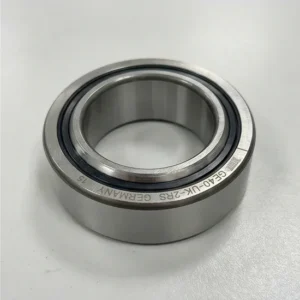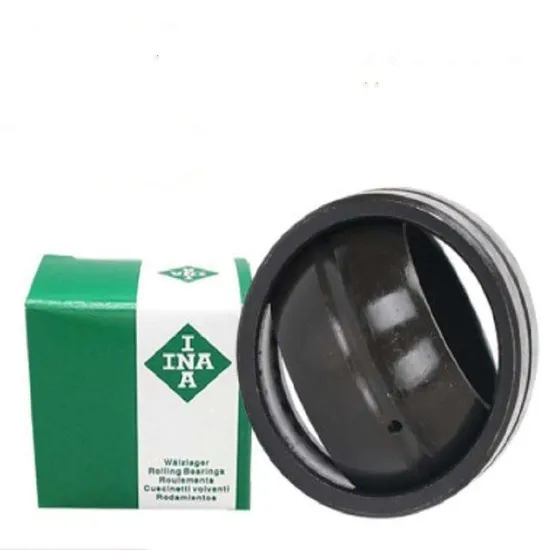
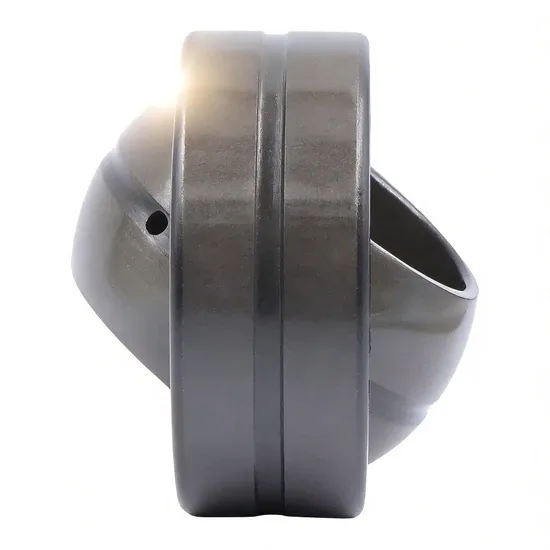
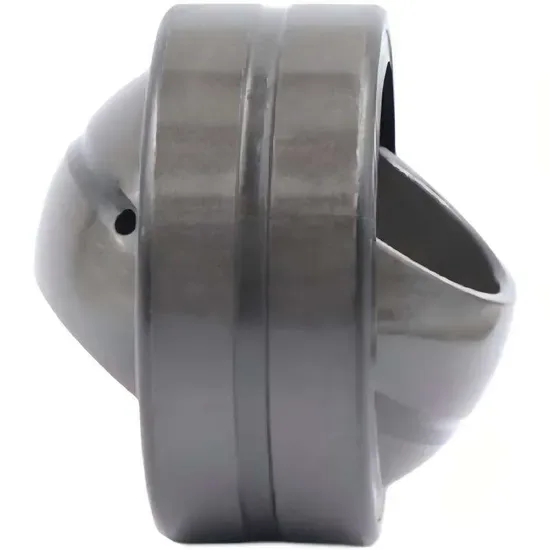
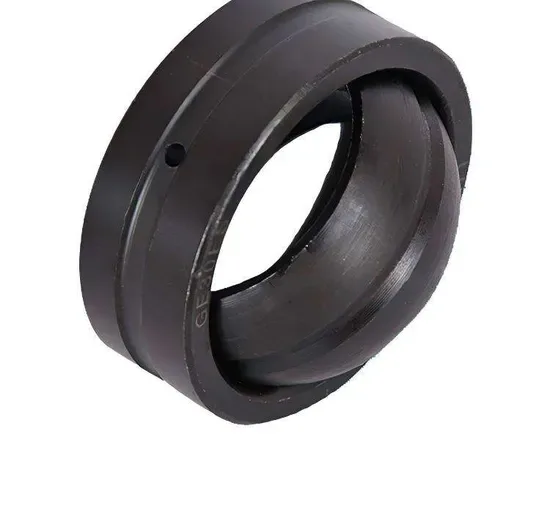
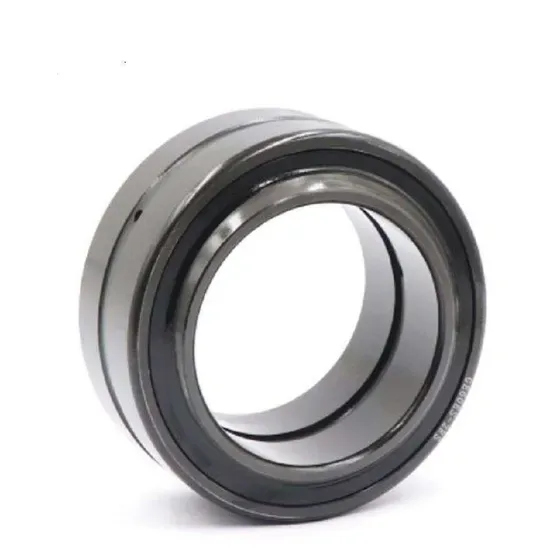
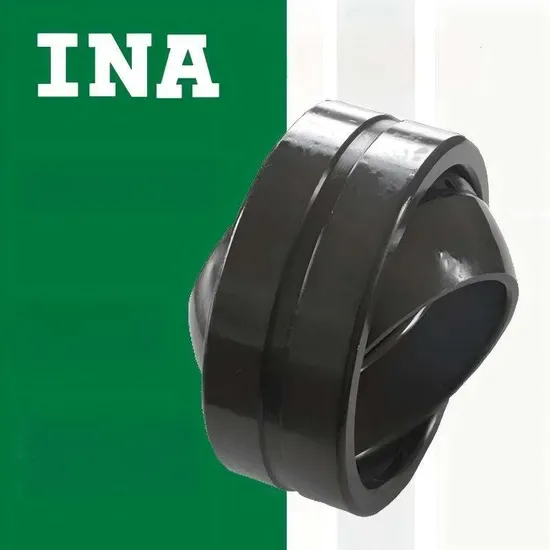

Description
Authorized Channel Sourcing — every GE100-LO-C2 we ship leaves the warehouse with a supplier Certificate of Conformity tied to its production batch, so your import paperwork and site audits stay clean.
Technical Specifications
| Parameter | Value |
|---|---|
| Designation | FAG GE100-LO-C2 |
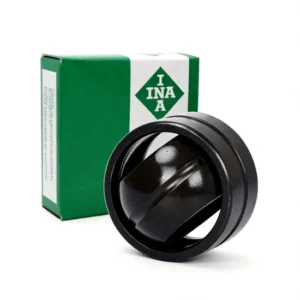
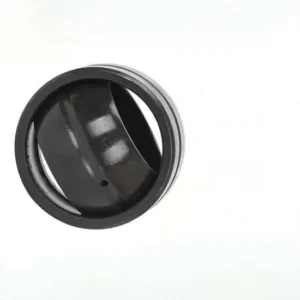
| Bearing Type | Radial Spherical Plain Bearing |
| Bore Diameter (d) | 100 mm |
| Outside Diameter (D) | 150 mm |
| Width Inner Ring (B) | 70 mm |
| Width Outer Ring (C) | 55 mm |
| Spherical Diameter (Dk) | 130 mm |
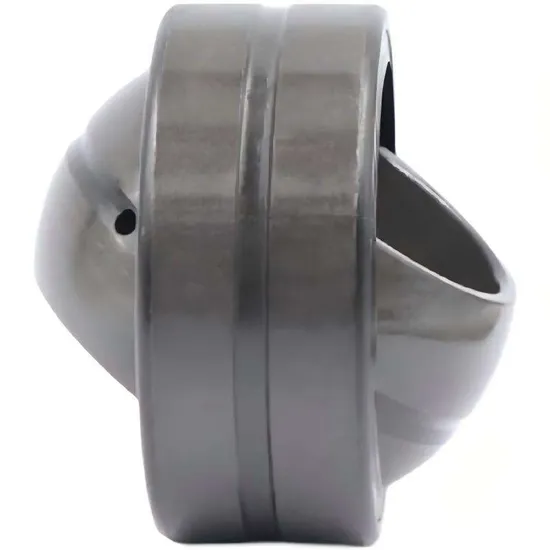
| Sliding Surface | Steel on Steel, Phosphated |
| Lubrication Features | Lubrication Groove and Hole on Outer Ring |
| Seal or Shield Type | Open (Without Seal) |
| Weight | 4.1 kg (approx.) |
| Origin | China |
Note: The suffixes LO and C2 appear on the supplier designation but remain unverified against a specific manufacturer catalog; confirm their exact meaning with your engineering team before finalizing interchange substitutions.
Application Suitability
| Industry | Typical Applications |
|---|---|
| Mining & Crushing | Excavator hydraulic cylinder pivot joints, crusher toggle plate linkages |
| Steel & Metallurgy | Continuous caster guide rollers, ladle transfer arm joints |
| Construction Machinery | Loader boom-to-stick pivot, bulldozer blade tilt cylinders |
| Industrial Hydraulics | Heavy-duty cylinder rod-end eyes, press frame hinge points |
What Happens When a Spherical Plain Bearing Runs Dry Underground
A phosphated steel-on-steel sliding surface without proper re-lubrication will gall and seize within a single shift under heavy oscillating loads.
I have seen mining crews pull a cylinder off an excavator because the rod-end joint was knocking. The bearing inside looked fine at a glance — same base number, same dimensions — but the outer ring had no lubrication groove. In a pit where dust infiltrates every gap, boundary lubrication is all that separates the sliding surfaces. Without a grease path, the phosphated coating wears through and metal-to-metal contact follows. That is how a missed suffix turns into an unplanned weekend shutdown. [NEED_CITE: spherical plain bearing failure modes under boundary lubrication conditions]
Matching the Bearing to Oscillating Heavy-Load Service
Hydraulic cylinder rod-ends do not rotate continuously; they oscillate through a limited arc under high radial force. The GE100-LO-C2 radial spherical plain bearing with lubrication groove is dimensioned for exactly this duty — a 100 mm bore fits standard cylinder pin diameters, while the 150 mm outer diameter and 55 mm outer ring width distribute the load across a broad housing seat. When the application involves slow, repetitive swinging rather than high-speed rotation, a rolling-element bearing would skid and spall. A steel-on-steel plain bearing handles the oscillation naturally, and the integrated grease groove keeps the sliding film intact between maintenance intervals.
Load Spectrum, Contamination, and Re-lubrication Intervals
The load on a mining cylinder pivot is rarely pure radial. Side-digging and uneven terrain introduce combined loading with occasional shock when the bucket hits rock. Temperature swings between cold mornings and hot hydraulic oil can expand the housing and shift the fit, so the bearing must tolerate slight misalignment without edge-loading. Dust and slurry demand that the external sealing responsibility falls on the cylinder designer — the open bearing itself has no contact seal, which actually simplifies re-lubrication because fresh grease can flush contaminants straight out through the sliding zone. [NEED_CITE: oscillating bearing contamination and re-lubrication best practice]
Phosphating, Groove Geometry, and Dimensional Envelope
The phosphated sliding surface acts as a solid lubricant layer during the initial run-in period and provides emergency running properties if the grease film momentarily brea* fed by the radial hole, distributes grease evenly across the spherical contact zone rather than letting it pool at one edge. Dimensionally, the 130 mm spherical diameter and 70 mm inner ring width define the load-carrying area — a larger Dk relative to bore means more contact surface and lower unit pressure under the same load. These are the parameters that determine whether the joint survives the first thousand hours or starts fretting.
The Downtime Cost of an Unverified Substitution
A base-number match alone is not enough. If a replacement bearing lacks the lubrication groove, maintenance crews cannot re-grease the joint without disassembly — and in a mining pit, pulling a 20-ton cylinder for a bearing swap means a crane, a fitter, and half a shift of lost production. Premature wear on the sliding surface accelerates pin and housing bore damage as well, expanding a bearing replacement into a full cylinder rebuild. ISO 15243 classifies these failures under adhesive wear and surface distress, both of which trace back to inadequate lubrication rather than material defect. [NEED_CITE: ISO 15243 bearing failure classification adhesive wear]
How Our Sourcing Process Reduces Specification Risk
We source spherical plain bearings through authorized distributor channels and hold the paperwork to prove it — each batch carries a Certificate of Conformity with lot traceability. Before we quote a cross-brand interchange, we line up bore, outer diameter, width, spherical diameter, sliding surface treatment, and lubrication features side by side, not just the base number. If your OEM drawing specifies a suffix we cannot independently confirm, we flag it up front instead of guessing. For import buyers, we supply country-of-origin documentation and HS code details so customs clearance does not stall at the port.
Documentation & Authenticity
- Supplier Certificate of Conformity with batch and lot number traceable to the production run of your GE100-LO-C2 bearings
- Material certificate confirming bearing steel grade for both inner and outer rings
- Third-party dimensional inspection report covering bore, OD, Dk, and ring widths before shipment
- Country-of-origin certificate for import compliance and customs documentation
- HS code and tariff classification support to streamline your clearance process
Storage, Handling & Mounting
- Keep each GE100-LO-C2 in its original wrapping until the moment of installation; the phosphated sliding surface attracts moisture if exposed to humid workshop air for extended periods
- Store horizontally on a flat shelf — the 4.1 kg weight is enough to deform packaging and nick the sliding surface if bearings are stacked loosely
- Before mounting, wipe the bore and housing seat clean and verify fits; the open design means any contaminant trapped during pressing goes straight into the sliding zone
- Use the lubrication hole to pump fresh grease through the groove before the first cycle, ensuring the phosphated surface is fully covered before load is applied
- In dusty mining environments, confirm that the cylinder designer has provided adequate external wiper seals, since the open bearing itself cannot block particulate ingress
Start Your Specification Review
Send us your cylinder drawing or OEM equipment number and we will cross-check the GE100-LO-C2 against your required bore fits, load conditions, and re-lubrication access. If the suffix interpretation needs clarification with the original equipment maker, we will walk through that with you before a single unit ships. Request your documentation package and batch availability today.
Frequently Asked Questions
Q: How do we verify the authenticity and origin of spherical plain bearings from authorized channels?
A: Each shipment includes a supplier Certificate of Conformity tied to the production batch, along with country-of-origin documentation. We also provide the QR code verification pathway through the brand’s official app where applicable, and our own dimensional inspection report confirms the bearing matches catalog specifications before it leaves our warehouse.
Q: What should we check when cross-referencing a GE100 spherical plain bearing across brands?
A: Beyond bore and outer diameter, verify the spherical diameter (Dk), inner and outer ring widths, sliding surface treatment (steel-on-steel vs. PTFE-lined), and lubrication features such as grooves and holes. A mismatch in any of these can change the load distribution or prevent re-lubrication in the field.
Q: How does the lubrication groove and hole design affect maintenance intervals?
A: The groove on the outer ring ensures grease reaches the full sliding contact zone rather than escaping at the edges. This means each re-lubrication cycle is more effective, extending the interval between greasing stops — a significant advantage in mining pits where access to the cylinder pivot is limited.
Q: Steel-on-steel or PTFE-lined — which sliding surface is correct for hydraulic cylinder pivots?
A: Steel-on-steel with phosphating handles heavy loads and shock well but requires periodic re-lubrication. PTFE-lined bearings run maintenance-free but carry lower load capacity and are sensitive to continuous rotation at higher speeds. For heavy oscillating cylinder service with accessible grease points, steel-on-steel is typically the more durable choice.
Q: What clearance and fit considerations apply to spherical plain bearings in hydraulic cylinders?
A: The housing bore must hold the outer ring firmly to p*it on the inner ring should allow mounting without excessive force that could deform the ring. Confirm your tolerance class with the cylinder designer, and share those values with us so we can verify the bearing dimensions fall within your required band.
Confirm Your GE100-LO-C2 Requirements
Share your application parameters — load, oscillation angle, temperature, and cylinder drawing — and our team will return a matched quotation with full documentation and lead time. Contact us through your regional sales channel or submit an inquiry with your OEM part number for cross-reference verification.