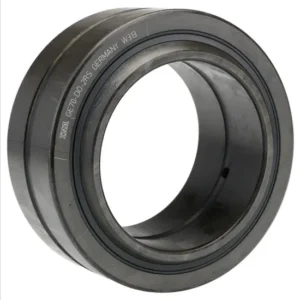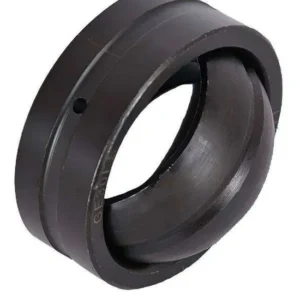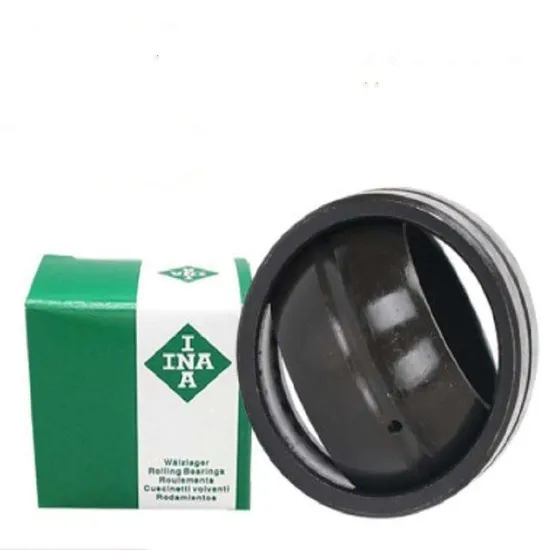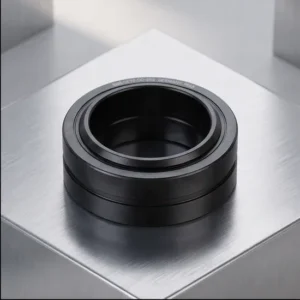
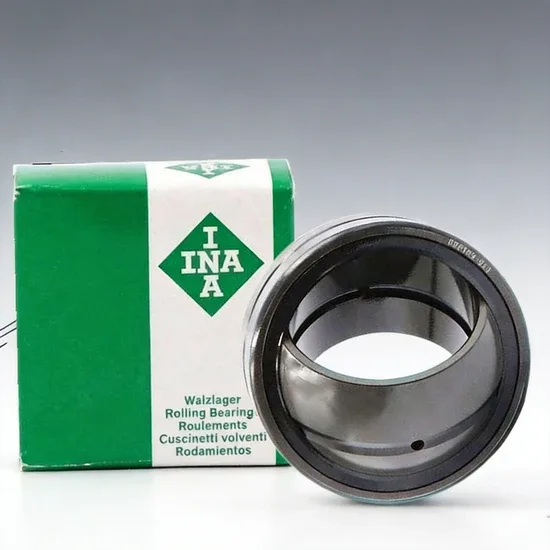


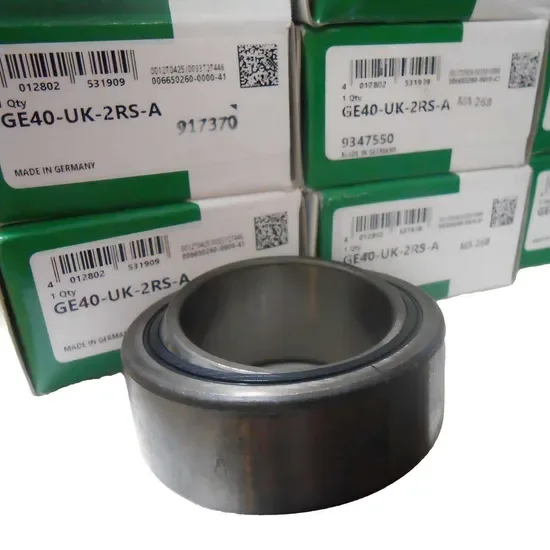
Description
Authorized Channel Procurement — traceable documentation accompanies every FAG GE120-DO-2TS shipment, including Certificate of Conformity and batch-level origin records.
Technical Specifications
| Parameter | Value |
|---|---|
| Designation | FAG GE120-DO-2TS |
| Bearing Type | Spherical Plain Bearing |
| Bore Diameter (d) | 120 mm |
| Outside Diameter (D) | 180 mm |
| Ball Diameter | 160 mm |
| Weight | 8.030 kg |
| Cage Material | PTFE |
| Seal or Shield Type | Triple-Lip Seals |
| Precision Class | P0 |
| Origin | China |
Suffixes DO and 2TS remain unverified against the official FAG catalog; confirmation with manufacturer documentation is recommended before final specification lock-in.
Application Suitability
| Industry | Typical Applications |
|---|---|
| Mining and Crushing | Crusher eccentric shaft pivot points, vibrating screen linkage joints |
| Steel and Metallurgy | Continuous caster guide rollers, rolling mill hydraulic cylinder clevis joints |
| Agricultural Machinery | Harrow articulation points, combine harvester header linkage |
| Material Handling | Stacker-reclaimer luffing cylinder pivots, conveyor transfer arm joints |
What a Contaminated Joint Costs on a Crusher Pivot
A failed PTFE liner under dust ingress turns a scheduled swap into an emergency teardown.
Spherical plain bearings in mining and crushing equipment sit in some of the worst contamination environments in heavy industry. When dust, slurry, or metallic particulate breaches the seal lip, it scores the sliding surface and accelerates wear beyond what any lubrication schedule can recover. Maintenance crews end up replacing joints that should have lasted through multiple production cycles, and the unplanned downtime cascades through the entire crushing circuit. Counterfeit bearings with cloned markings and substandard PTFE liners make the problem worse — they look correct on the shelf but fail within weeks under oscillating heavy loads. [NEED_CITE: rolling bearing failure mode classification per ISO 15243]
Matching the Joint to the Dust Zone
The FAG GE120-DO-2TS spherical plain bearing addresses contamination exposure directly through its triple-lip seal configuration and PTFE maintenance-free sliding surface. In applications where relubrication access is restricted — such as elevated conveyor pivot points or enclosed crusher frames — the PTFE liner eliminates dependency on greasing intervals. We routinely cross-check application parameters against OEM equipment numbers to ensure the seal configuration and liner type match the actual operating environment, not just the base bore size.
Load Reversal and Contamination Pressures
Crusher eccentric shafts and vibrating screen linkages subject spherical plain bearings to slow oscillation under heavy radial loads with frequent directional reversal. The PTFE sliding surface must withstand this without lubricant film support, which places the entire wear burden on liner thickness and bond integrity. Temperature swings from ambient to elevated process heat cause the inner ring to expand, tightening the fit and increasing contact pressure on the liner. Dust-laden air driven by vibration forces particulate past any seal that lacks sufficient lip contact force — making the triple-lip seal arrangement critical for sustained field performance in these zones. [NEED_CITE: spherical plain bearing load and oscillation angle effects on liner wear]
Liner Material, Seal Architecture, and Precision Tolerance
The PTFE sliding surface on this unit is a maintenance-free design, meaning the inner and outer ring interface relies on the PTFE composite rather than an externally supplied grease film. This distinction matters because specifying a standard steel-on-steel joint (GE…ES series) in an inaccessible mounting position creates a relubrication obligation that maintenance teams often cannot meet — leading to dry running and seizure. The triple-lip seal provides two additional contamination barriers beyond a single-lip design, with each lip deflecting progressively finer particulate before it reaches the sliding interface. P0 precision class meets standard dimensional tolerances appropriate for heavy machinery pivots where running accuracy is secondary to load capacity and articulation range.
What the Wrong Liner Costs in the Field
Installing a steel-on-steel spherical plain bearing where PTFE maintenance-free was specified removes the safety margin against missed greasing intervals — and in contaminated environments, the bearing can score and lock before the next scheduled maintenance window. Conversely, fitting a PTFE-lined unit in a high-speed rotating application (outside its intended oscillating duty) can cause liner overheating and delamination. These misapplication failures fall outside warranty coverage regardless of the product’s authenticity, which is why verifying the liner type, seal configuration, and suffix interpretation before purchase eliminates the most expensive category of field failure. [NEED_CITE: bearing warranty exclusion for misapplication per manufacturer guidelines]
How We Support Correct Selection
Our sourcing operates through authorized distributor channels, so every FAG GE120-DO-2TS spherical plain bearing ships with traceable documentation back to the original batch. We maintain a cross-brand interchange database that compares not only the base designation but also the PTFE liner type, seal lip count, and precision class — so substitution between brands does not introduce hidden mismatches. When a buyer provides OEM equipment numbers or application parameters, our technical review flags potential discrepancies in suffix interpretation before the order is placed. Country-of-origin documentation is prepared in advance for import clearance, and our team can coordinate third-party dimensional inspections when buyer protocols require them.
Documentation & Authenticity
- Supplier Certificate of Conformity issued against the specific FAG batch, confirming product origin and manufacturing lot
- Dimensional inspection covering bore diameter, outside diameter, and ball diameter against P0 tolerance band before dispatch
- Country-of-origin documentation prepared for import customs clearance on the GE120-DO-2TS shipment
- QR code verification pathway directed to official brand authentication tools for field validation upon receipt
- Material certificate confirming bearing steel composition consistent with FAG specification requirements
Storage, Handling & Mounting
- Keep the GE120-DO-2TS in sealed original packaging until installation day; premature exposure in a humid workshop risks surface corrosion on the bearing steel before the PTFE liner ever sees load
- Mount using controlled pressing force on the outer ring only — hammering or misaligned drift insertion can crack the triple-lip seal seats and compromise contamination protection before the machine starts
- Store horizontally in a dry, temperature-stable environment; the 8.030 kg weight concentrated on the outer ring raceway can cause static brinelling if left standing on edge on an uneven surface over extended periods
- Verify shaft and housing fit tolerances before pressing — an interference fit on the inner ring of a maintenance-free PTFE joint increases contact pressure on the liner from day one, reducing articulation life
Request a Specification Review
Share your application parameters — load spectrum, oscillation angle, ambient temperature range, and contamination level — so we can confirm whether the GE120-DO-2TS suffix configuration matches your duty cycle. If you are replacing an existing joint, provide the OEM equipment number and we will cross-reference the liner type and seal specification to catch any discrepancy before quotation. Documentation packages and batch availability can be confirmed on request.
Frequently Asked Questions
Q: How can I verify the authenticity of a FAG spherical plain bearing before installation?
A: Each unit ships with a Certificate of Conformity linked to its batch number. Additionally, many FAG products include QR codes that link to official brand verification tools — we provide the verification pathway so your receiving inspection team can confirm authenticity on the dock before the bearing enters inventory.
Q: What is the difference between maintenance-free PTFE and steel-on-steel spherical plain bearings?
A: PTFE-lined bearings rely on the composite sliding surface and do not require relubrication, making them suitable for contaminated or inaccessible mounting positions. Steel-on-steel types require regular greasing and perform better in applications where relubrication is practical and contamination can be managed through external seals.
Q: Does the triple-lip seal make a measurable difference compared to a single-lip design?
A: In heavily contaminated environments such as mining and crushing, each additional seal lip provides a further barrier against particulate ingress. The triple-lip configuration is specifically intended for applications where single-lip seals would allow dust or slurry to reach the sliding surface within a short operating period.
Q: Can this bearing be cross-referenced to equivalent SKF or NTN models?
A: Cross-referencing is possible, but matching must extend beyond the base bore and OD to include PTFE liner specification, seal lip configuration, and precision class. We provide complete interchange comparison so the substitution does not introduce a hidden mismatch in any of these parameters.
Q: What documents are included for import clearance?
A: Standard documentation includes a Certificate of Conformity, country-of-origin certificate, and HS code classification for customs processing. Additional dimensional inspection reports and material certificates can be provided upon request for buyer verification protocols.
Request a Technical Match for Your Application
Provide your equipment OEM number or operating parameters — we will verify the correct suffix configuration and return a documentation-supported quotation.