

Description
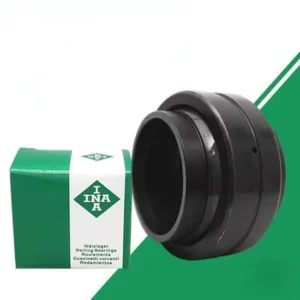
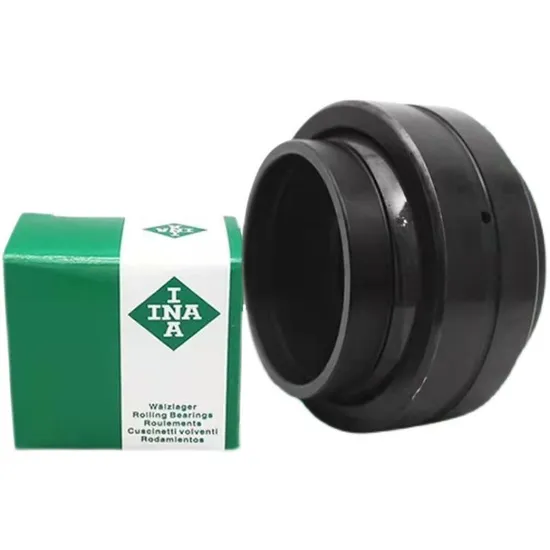
Authorized Channel Traceability — Each GE10-DO-C2 batch ships with distributor-issued lot records linking the bearing steel back to its melt source.
Technical Specifications
| Parameter | Value |
|---|---|
| Designation | GE10-DO-C2 (Generic) |
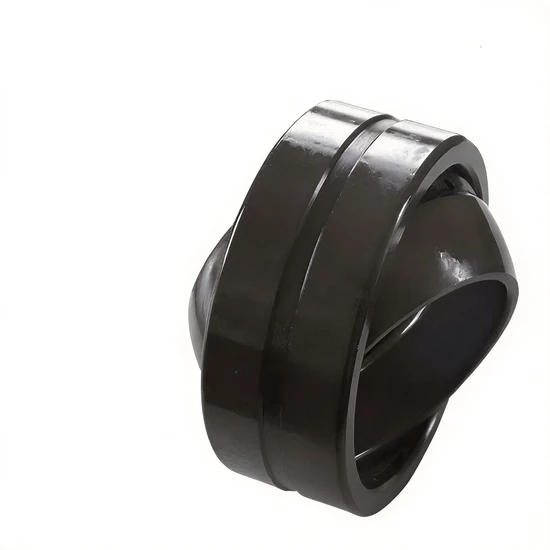
| Bearing Type | Spherical Plain Bearing, Steel/Steel |
| Bore Diameter (d) | 10 mm |
| Outside Diameter (D) | 19 mm |
| Ball Diameter | 16 mm |
| Weight | 0.012 kg |
| Material | Bearing Steel (Inner and Outer Ring) |
| Seal or Shield Type | Open (relubrication required) |
| Clearance Class | C2 |
| Precision Class | P0 |
| Outer Ring Design | Split (DO type) |
| Origin | China |
Standards reference: ISO 12240 for spherical plain bearing dimensions and tolerances.
Application Suitability
| Industry | Typical Applications |
|---|---|
| Industrial Machinery | Mini gearbox pivot joints, small actuator link arms |
| Agricultural Machinery | Spray boom articulation joints, seed metering linkage pivots |
| Material Handling | Conveyor diverter arm bearings, light-duty gripper joints |
| Automotive & Heavy Vehicle Repair | Throttle linkage bushings, small steering column universal joints |
What a C2 Clearance Mismatch Costs on a Mini Gearbox Pivot
Specifying C2 clearance in a steel-on-steel spherical plain bearing means you are deliberately eliminating internal play — and if the housing cannot control thermal growth, the joint will bind before the first maintenance window.
Procurement engineers often treat clearance as a secondary parameter, focusing on bore size and load rating while assuming standard CN will cover most situations. In compact gearboxes where the pivot envelope is tight and oscillating motion dominates, a CN clearance part introduces axial float that degrades positional accuracy. Conversely, dropping in a C2 unit without verifying housing bore tolerance and operating temperature range turns that tight fit into a preload trap [NEED_CITE: thermal expansion effects on internal clearance in oscillating joints per ISO 12240]. I have watched a batch of gearboxes lock up in a Chilean packaging line because someone matched the base GE10 designation but ignored the C2 suffix entirely — the replacement CN parts rattled under load, while the original C2 units the OEM specified were correct for the press-fit housing. The GE10-DO-C2 steel on steel spherical plain bearing exists for a reason, and substituting without checking the suffix chain is how you invite field failures.
Matching the GE10-DO-C2 to Oscillating Mini Gearbox Duty
Mini gearboxes demand compact joints that handle slow oscillation under moderate radial load with zero tolerance for axial slop. The GE10-DO-C2 steel on steel spherical plain bearing fits this profile because the C2 clearance class removes internal play that would otherwise amplify backlash through the linkage. Steel-on-steel sliding surfaces, when paired with a scheduled grease relubrication routine, outperform PTFE-lined alternatives under the intermittent shock loads typical of gear-driven mechanisms. A customer running agricultural seed metering equipment in Brazil switched from a polymer-lined joint bearing to this steel-on-steel type after the liners wore through in one harvest season — the steel pairing, properly greased, held up through two full cycles before the first inspection was due.
Operating Environment and Performance Demands
The load profile in mini gearbox pivots is predominantly radial with slow oscillating motion, meaning boundary lubrication conditions prevail rather than full-film hydrodynamic regimes [NEED_CITE: oscillating bearing lubrication regime challenges]. Temperature is usually moderate but housing press-fits generate assembly stress that C2 clearance cannot absorb — if the outer ring distorts even slightly, the already-tight internal gap closes further. Lubrication demands are strict: steel-on-steel requires external grease at intervals determined by oscillation frequency and contamination level. The open design of the DO type means no integrated seals protect the sliding surfaces, so the housing designer must provide external contamination exclusion. Mounting is typically a press-fit into the housing bore, and the split outer ring helps the bearing conform to slight bore irregularities without inducing uneven contact stress on the ball surface.
Decoding the Suffix Stack: DO and C2 Explained
The DO suffix tells you this bearing has a split outer ring with spherical sliding surfaces on both inner and outer rings — a design choice that simplifies installation in housings where the bore is difficult to machine to tight roundness. The split allows the outer ring to flex slightly during press-fitting, distributing contact pressure more evenly across the ball. The C2 clearance class means internal radial clearance is smaller than the standard CN value specified in ISO 12240. In a 10 mm bore bearing, this difference is measured in microns, but those microns dictate whether the joint operates with controlled stiffness or uncontrolled backlash. The bearing steel used for both rings means hardness and wear resistance are matched — neither surface is sacrificial — which is why relubrication discipline matters more here than in lined alternatives where one surface is designed to wear preferentially. P0 precision is standard for this category and adequate for general industrial oscillating applications where sub-micron positional accuracy is not required.
The Hidden Cost of Ignoring the Suffix Chain
Ordering a GE10 bearing without specifying DO and C2 is like ordering a bolt without specifying thread pitch — the base number alone does not guarantee the part will function in your assembly. A standard-clearance replacement in a housing designed for C2 will develop play that accelerates wear on adjacent gears and linkages, often diagnosed incorrectly as a gearbox design flaw rather than a component specification error. A steel-on-steel bearing installed without relubrication provisions will gall within weeks under oscillating load, classified under ISO 15243 as adhesive wear on sliding surfaces [NEED_CITE: ISO 15243 wear classification for plain bearings]. Counterfeit joint bearings with soft inner rings — often detectable only by hardness testing — will deform under the same press-fit forces that a genuine bearing steel ring withstands, leading to uneven contact and premature seizure. These failure modes do not appear on the purchase order, but they show up as unplanned downtime, warranty disputes, and replacement labor costs that dwarf the original unit price.
Why Procurement Engineers Route GE Series Orders Through Us
We source the GE10-DO-C2 steel on steel spherical plain bearing through authorized distributor channels, meaning every shipment carries lot-level documentation rather than a generic packing slip. Our cross-reference database does not stop at the base designation — we match the DO outer ring configuration and the C2 clearance class against equivalent SKF, INA, and FAG part numbers so substitution decisions are made on full technical parity, not just bore diameter. For customers importing into Latin American or African markets, we provide country-of-origin certificates and HS code documentation that clear customs without delay. Material certificates confirm bearing steel grade for both rings, and dimensional inspection reports verify that the C2 clearance window was met at the factory before the parts ever reached our shipping dock. When a Chilean distributor needed to confirm whether a competitor’s GE10 quotation actually included C2 clearance — or was quoting CN with the suffix buried in fine print — our documentation package made the comparison straightforward.
Documentation & Authenticity
- Supplier Certificate of Conformity referencing the specific GE10-DO-C2 batch number and production date for full lot traceability
- Material certificate confirming bearing steel composition and hardness range for both the inner ring and split outer ring
- Dimensional inspection report verifying 10 mm bore, 19 mm OD, and C2 radial internal clearance band against ISO 12240 tolerances
- Country-of-origin documentation formatted for import compliance in Latin American and African jurisdictions
- HS code classification sheet supporting customs declaration for spherical plain bearings entering restricted trade corridors
Storage, Handling & Mounting
- Retain the GE10-DO-C2 in its original sealed packaging until the moment of assembly; the C2 clearance leaves no margin for corrosion pitting on the sliding surfaces to create friction spikes
- Store below 30 °C and away from direct UV exposure — the bearing steel rings have no corrosion-resistant coating, and surface rust on the 16 mm ball will destroy the DO split ring’s conforming contact
- Wear lint-free gloves during handling; skin oils on the open steel-on-steel surfaces act as contamination seeds once grease is applied
- Press-fit the split outer ring using a mandrel that contacts the full face width — point loading on one side of the DO split can permanently distort the ring and close the C2 gap to zero
- Apply the specified grease to both sliding surfaces before first oscillation; steel-on-steel without initial lubrication will cold-weld under even moderate radial load within the first dozen cycles
How to Start Your GE10-DO-C2 Inquiry
Share your application parameters — oscillation angle, cycle frequency, radial load magnitude, and housing bore tolerance — so we can confirm that C2 clearance and the DO split ring are correct for your assembly. If you are replacing an existing bearing, send us the OEM equipment number or the full designation printed on the old unit so we can run a cross-reference check covering clearance and outer ring configuration. Request the documentation package up front to verify origin and traceability before committing to bulk quantities. Confirm current batch availability and lead time, as C2 clearance variants in this size range are not always held in standard distributor stock.
Frequently Asked Questions
Q: What does the "DO" suffix mean on a spherical plain bearing, and how does it affect mounting?
A: DO indicates a split outer ring with spherical sliding surfaces on both rings. The split allows the outer ring to flex slightly during press-fitting, accommodating minor housing bore irregularities. This design simplifies installation in compact gearboxes where machining a perfect bore is cost-prohibitive, but it also means the ring must be pressed evenly across its full width to avoid distortion.
Q: How does C2 clearance differ from CN and C3, and when should C2 be specified?
A: C2 clearance is tighter than the standard CN value defined in ISO 12240, while C3 is looser. C2 is specified when the application demands minimal internal play — typical in precision linkage joints and mini gearbox pivots where backlash must be controlled. C2 should never be used where significant thermal expansion is expected, as the tight clearance can close completely and cause binding.
Q: How to cross-reference GE10-DO-C2 across major brands while matching clearance and outer ring design?
A: Cross-referencing requires matching three elements simultaneously: the base bore and OD dimensions, the DO split outer ring configuration, and the C2 clearance class. Some brands use different suffix conventions for split rings and clearance, so a direct designation swap can result in receiving a solid outer ring or CN clearance part. We verify all three parameters when generating interchange comparisons.
Q: What inspection steps confirm a steel/steel spherical plain bearing is genuine and not a soft-ring counterfeit?
A: Hardness testing on the inner ring raceway is the most direct method — genuine bearing steel should register within the expected HRC range. Dimensional verification of the bore and OD against ISO 12240 tolerances catches parts machined from undersized blanks. Material certificates with traceable batch numbers provide documentary evidence, while visual inspection of the DO split ring quality — clean cut, no burrs — separates factory production from crude copies.
Q: What are typical re-lubrication intervals for GE-DO series bearings in oscillating gearbox applications?
A: Re-lubrication intervals depend on oscillation frequency, load magnitude, contamination level, and grease type. Steel-on-steel spherical plain bearings in slow oscillation service require more frequent attention than continuously rotating bearings because boundary lubrication conditions dominate. We recommend establishing a maintenance schedule based on your specific duty cycle rather than relying on generic interval charts.
Verify Your Application Fit Before Ordering
Send us your oscillation parameters, housing tolerances, and OEM reference numbers so we can confirm the GE10-DO-C2 is the correct match for your assembly — complete with cross-reference documentation and batch-level traceability.