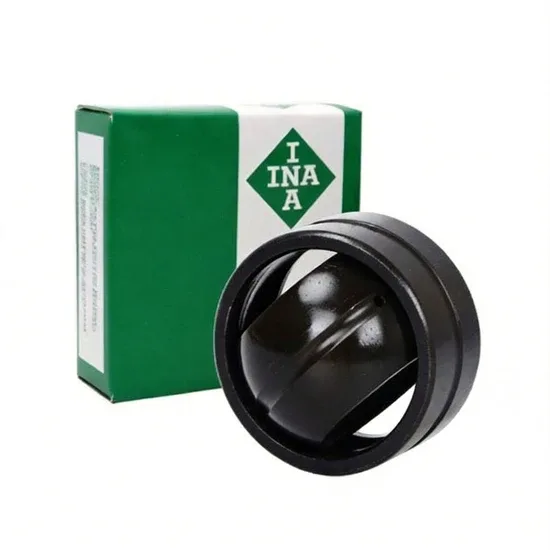


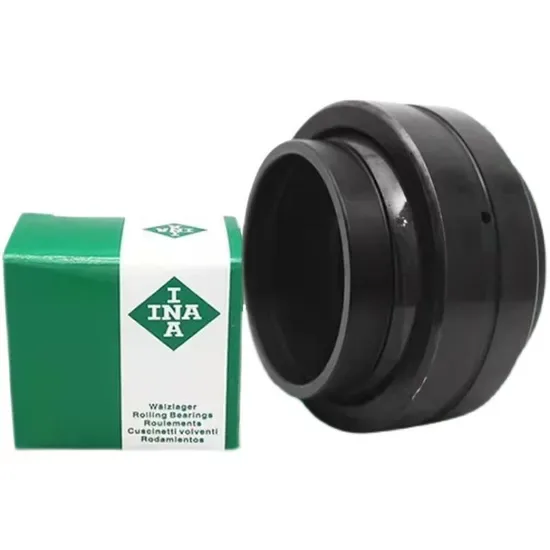

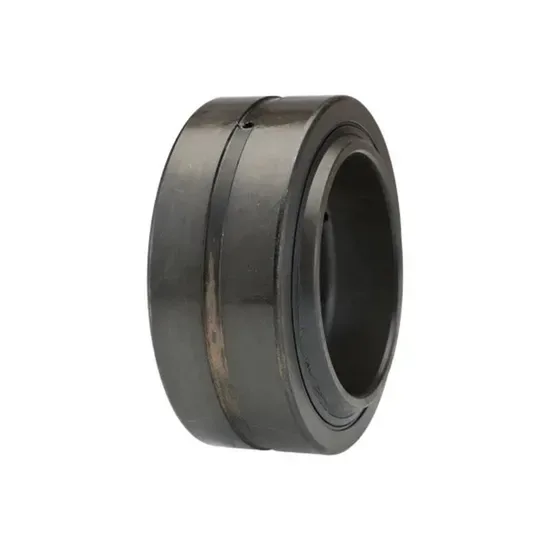
Description
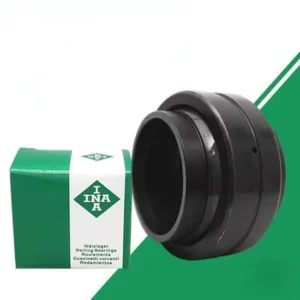
Authorized Channel Sourcing — Every INA GE16-DO spherical plain bearing we ship includes batch-level traceability linking back to Schaeffler production records, giving your receiving dock the documentation needed to pass import audits and reject cloned lots before they reach the field.
Technical Specifications
| Parameter | Value |
|---|---|
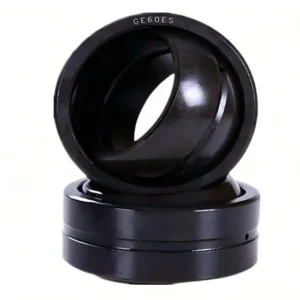
| Designation | INA GE16-DO |
| Bearing Type | Spherical Plain Bearing (Radial) |
| Bore Diameter (d) | 16 mm |
| Outside Diameter (D) | 30 mm |
| Width (B) | 14 mm |
| Ball Diameter | 25 mm |
| Eye Thickness | 14 mm |
| Body Material | Bearing Steel |
| Ball Material | Bearing Steel |
| Precision Class | P2 |
| Weight | 0.080 kg |
| Origin | China |
The "DO" suffix on this GE-type spherical plain bearing is currently unverified and should be confirmed against the manufacturer catalog before specifying for critical pivot applications.
Application Suitability
| Industry | Typical Applications |
|---|---|
| Construction Machinery | Excavator cylinder rod pins, loader articulation joints |
| Forging Machines | Press ram guide linkages, hammer pivot bushings |
| Engineering Hydraulic Cylinders | Piston rod clevis connections, gland trunnion mounts |
| Heavy-Duty Pivot Joints | Crane boom hinge pins, stabilizer leg pivots |
What Happens When a Soft Inner Ring Reaches Your Job Site
Case depth below specification turns a hardened raceway into a spall factory within months.
We cracked open a batch of GE-series rod ends that came back from a West African excavator repair shop after seizing in under three months. The inner ring cross-section told the story immediately: case-hardening depth was barely half of what oscillating cylinder pins demand. That shallow case let the contact stress punch straight through to the soft core, initiating subsurface cracks that migrated to the raceway surface. Once spalling started, the debris contaminated the sliding interface and took out the mating cylinder rod as well. The downtime and rod replacement cost far exceeded what proper sourcing discipline would have added to the unit price [NEED_CITE: rolling bearing failure mode classification per ISO 15243].
Matching the GE16-DO to Oscillating Pivot Loads
The INA GE16-DO spherical plain bearing operates in a regime where continuous rotation ratings become irrelevant. Oscillating motion means the same arc of the raceway absorbs peak load repeatedly, demanding a uniform case depth and consistent surface hardness across the entire inner ring contact zone. For hydraulic cylinder clevis connections and loader articulation points, this bearing’s bearing steel inner and outer rings provide the core load-carrying structure needed to withstand shock loads transmitted through the linkage when the cylinder hits end-of-stroke or encounters unexpected ground resistance. We cross-check every procurement batch against application parameters you provide, so a forging hammer pivot and a crane boom hinge never end up specified with the same assumptions.
Demands of the Oscillation Zone
Oscillating spherical plain bearings face a different set of physics than their rotating counterparts. The limited angular sweep prevents a full hydrodynamic film from forming in the sliding contact, so boundary lubrication conditions dominate and surface finish becomes critical. Shock loads from construction equipment introduce high-frequency impact components that can initiate micro-spalls if the inner ring case is too shallow or the core hardness is mismatched. Temperature swings on outdoor job sites cause differential expansion between the steel inner ring and the housing, altering the effective clearance and potentially binding the joint if the original specification did not account for thermal growth [NEED_CITE: spherical plain bearing oscillation wear mechanisms]. Lubrication replenishment intervals shorten dramatically when contamination enters through worn seals, making the initial quality of the sliding surfaces the primary determinant of service life. Mounting practices matter as well — pressing the inner ring onto a pin with misaligned tooling can score the raceway before the equipment ever sees its first hour of operation.
Decoding the P2 Precision and Bearing Steel Construction
The P2 precision class on this GE16-DO indicates dimensional tolerances held to the tightest band in the ISO framework for spherical plain bearings. That level of control directly affects how evenly the load distributes across the sliding interface when the joint is under radial pressure from a cylinder pin. Bearing steel construction for both the body and the ball element ensures a matched hardness relationship; if the inner ring were softer than the outer, the harder member would progressively wear a groove into the softer surface, accelerating clearance growth and introducing play into the linkage. The 16×30×14 mm envelope dimensions follow established DIN standards, meaning this unit fits standard rod end housings without requiring machining modifications to the bore or shoulder relief [NEED_CITE: DIN ISO 12240 spherical plain bearing dimensional standards].
The Hidden Invoice of an Incorrect Spherical Plain Bearing
Sourcing a spherical plain bearing on price alone creates a cost structure that does not appear on the purchase order. An inner ring with insufficient case depth fails through spalling, sending hardened steel debris into the cylinder bore and turning a bearing replacement into a full hydraulic cylinder rebuild. A dimensionally out-of-tolerance bearing forces the maintenance team to ream the housing or shim the pin, consuming labor hours that delay the equipment return. Counterfeit markings make root-cause analysis nearly impossible because the failure investigation chases phantom specifications that never existed on the physical part. The ISO 281 life calculation framework assumes genuine material properties and correct geometry; when either assumption is violated, predicted service intervals become meaningless and unplanned downtime dominates the maintenance schedule [NEED_CITE: bearing life calculation framework ISO 281 assumptions].
How We Reduce Your Verification Burden
Our sourcing workflow starts with authorized distributor channels that provide batch-level traceability, not just a certificate that could belong to any production run. When you need to substitute a competing brand, our cross-reference process goes beyond matching the base designation — we align the clearance, material specifications, and precision class so the replacement performs identically in your specific pivot or linkage. Every shipment includes origin documentation prepared for your import jurisdiction, eliminating the back-and-forth with customs brokers over missing HS codes or country-of-origin statements. We also supply dimensional inspection data so your receiving team can verify critical dimensions before the bearing enters your inventory. For regional distributors building stock, we assist with network qualification documentation that supports your own authenticity claims to downstream customers.
Documentation & Authenticity
- Supplier Certificate of Conformity (COC) referencing the specific production batch of each INA GE16-DO shipped, not a generic product family certificate.
- Material certificates confirming bearing steel composition and heat treatment records for both inner and outer rings.
- Third-party dimensional inspection reports verifying bore, outside diameter, and width against P2 tolerance bands prior to dispatch.
- Country-of-origin documentation formatted for customs clearance in Middle East, African, Latin American, and Central Asian import jurisdictions.
- HS code and tariff classification support to prevent shipment holds at your port of entry.
Storage, Handling & Mounting
- Keep the INA GE16-DO in its original sealed packaging until the moment of installation; the bearing steel surfaces carry a corrosion-inhibiting coating that degrades once exposed to humid warehouse air.
- Store at stable temperatures away from direct sunlight to prevent condensation cycles inside the packaging that can initiate micro-corrosion on the precision P2 ground raceways.
- Use clean, lint-free gloves during handling — fingerprints on the 16 mm bore introduce acidic residues that etch the bearing steel surface before the first oscillation cycle.
- Mount the inner ring using a properly aligned press sleeve that contacts only the inner ring face; driving force applied through the outer ring transfers across the sliding interface and damages the bearing steel contact surfaces.
- Establish a re-lubrication schedule matched to the oscillation angle and contamination level of your specific application, as the open sliding contact design requires external grease replenishment to maintain boundary film integrity.
Request Your Technical Selection Package
Share your application parameters — oscillation angle, peak radial load, ambient temperature range, and contamination level — so we can confirm the GE16-DO is the correct specification and verify lead time against current authorized channel availability. If you are replacing an existing OEM bearing, provide the equipment model number and we will run a full cross-reference check including material and precision alignment. Ask for the complete documentation package to review before committing to a bulk order.
Frequently Asked Questions
Q: How can I verify the authenticity of an INA/FAG spherical plain bearing after delivery?
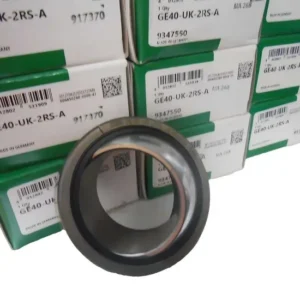
A: Authentic INA/FAG products from Schaeffler can be checked using the manufacturer’s official mobile application, which reads the QR or DataMatrix code on the packaging and cross-references the batch number against production records. We provide the verification pathway documentation with each shipment so your inspection team knows exactly what to scan and where to look for discrepancies in the response data.
Q: What does the "DO" suffix indicate on this GE-type spherical plain bearing?
A: The "DO" suffix on GE-series spherical plain bearings requires confirmation against the current manufacturer catalog, as suffix conventions can vary between production periods and product line revisions. We clarify the exact suffix meaning and resulting design features during the technical selection review before quoting.
Q: How should I evaluate cross-reference options when the original brand is unavailable?
A: A valid cross-reference must align bore diameter, outside diameter, width, material, clearance, and precision class — not just the base number. We maintain interchange data across SKF, NSK, FAG, TIMKEN, NTN, and KOYO spherical plain bearings so substitutions are matched on performance-critical attributes, not just dimensional compatibility.
Q: What is the difference between selecting a spherical plain bearing for oscillating versus continuous rotation?
A: Oscillating applications never generate a full hydrodynamic lubricant film, so surface hardness, case depth, and lubrication replenishment intervals dominate service life. Continuous rotation allows hydrodynamic separation of the sliding surfaces, shifting the failure mode toward thermal and fatigue limits. Our selection process starts by classifying your motion profile before matching bearing specifications.
Q: What are the typical lead times and minimum order quantities for rod end bearings?
A: Lead times and MOQ depend on current authorized channel stock levels and your required documentation package. We provide confirmed availability and delivery timelines during the quotation stage, along with options for sample or trial batches when you are qualifying a new application.
Verify Your GE16-DO Specification and Secure Traceable Inventory
Send your application parameters or OEM equipment number so we can confirm suitability, cross-reference alternatives, and return a quotation with full documentation details and confirmed lead time.