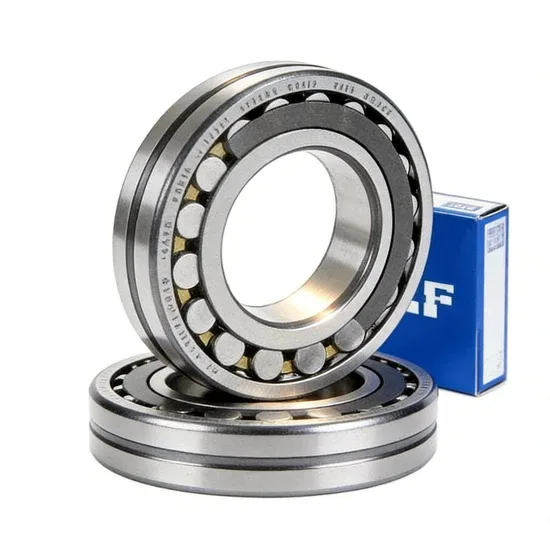
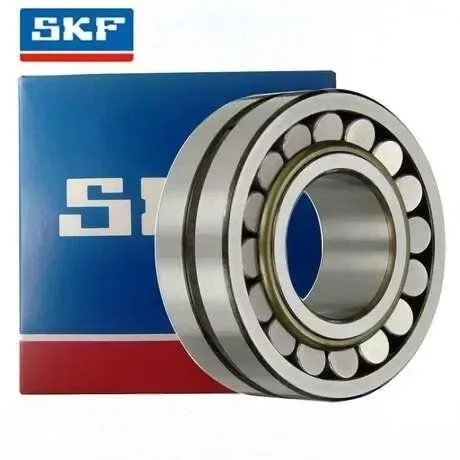

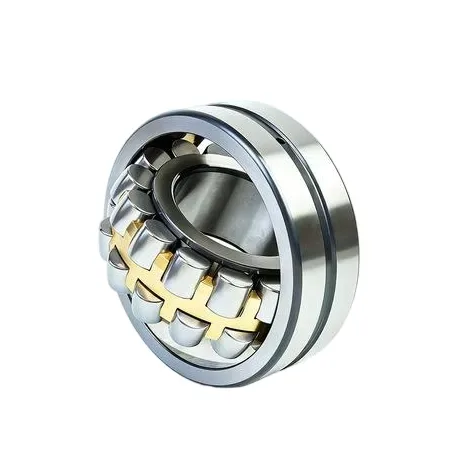
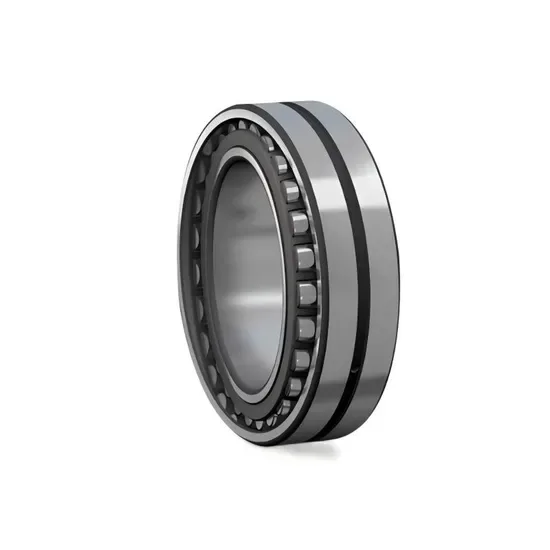
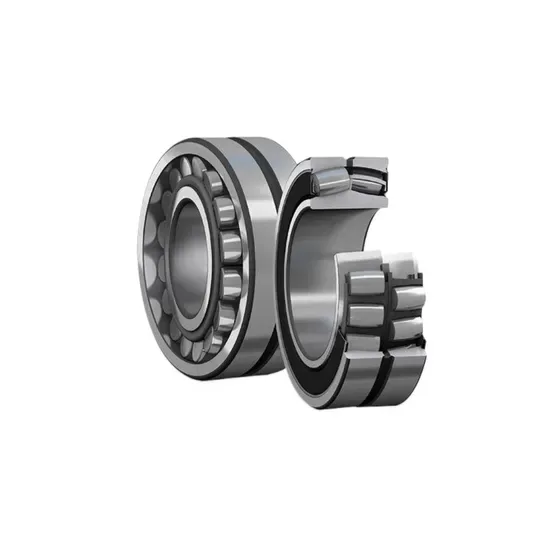
Description
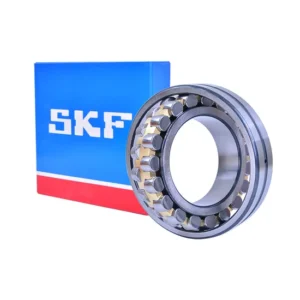
Authorized Channel Sourcing — Each 22318EK unit ships with batch traceability and origin documentation tied to its specific production lot.
Technical Specifications
| Parameter | Value |
|---|---|
| Designation | SKF 22318EK |
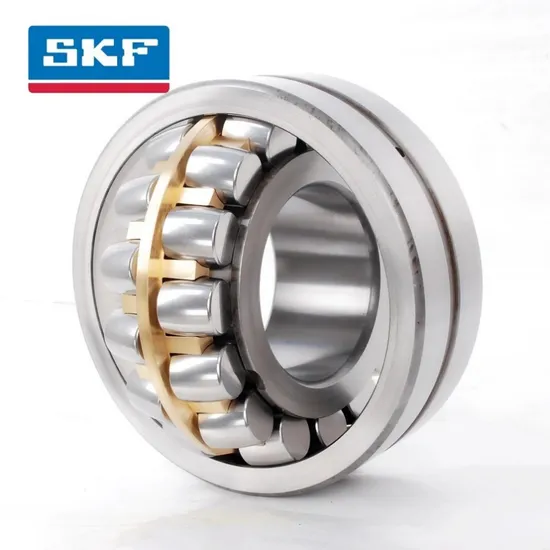
| Bearing Type | Spherical Roller Bearing |
| Bore Type | Tapered (1:12 taper) |
| Width (B) | 64mm |
| Cage Material | To be confirmed per batch |
| Seal or Shield Type | Open |
| Clearance Class | To be confirmed per batch |
| Precision Class | Standard |
| Number of Rows | Two |
| Internal Design | Reinforced (E suffix) |
Clearance class and cage material vary by production batch; confirm suffix stack at the time of order.
Application Suitability
| Industry | Typical Applications |
|---|---|
| Mining and Crushing | Crusher eccentric shaft, jaw crusher pitman bearing |
| Steel and Metallurgy | Caster roller table, continuous casting guide rolls |
| Material Handling | Vibrating screen side plate exciter |
| Pulp and Paper | Paper machine press section dryer roll |
What a Tapered Bore Gets Wrong on a Vibrating Screen
The K suffix changes the entire mounting strategy — ignore it and the bearing walks off the shaft.
When a maintenance team installs a spherical roller bearing on a vibrating screen exciter, the cyclic radial load is punishing enough on its own. Add an incorrect interference fit from treating a tapered bore like a cylindrical one, and the inner ring creeps. Within weeks the shaft seat scores, the bearing overheats, and the screen goes down mid-shift. I’ve seen this exact sequence in a quarry outside Jinan where the previous supplier shipped the right designation but failed to flag the adapter sleeve requirement. A vibrating screen does not forgive cross-reference shortcuts. [NEED_CITE: bearing creep failure modes in vibrating equipment]
How the 22318EK Meets the Demands of Crushers and Screens
The 22318EK spherical roller bearing combines a reinforced internal geometry with a tapered bore that locks onto adapter sleeves — exactly the mounting method preferred in heavy vibrating and crushing equipment. The E suffix indicates larger and more rollers, distributing the radial load across a wider contact zone that matters when a jaw crusher pitman reverses load direction every stroke. For the 22318EK spherical roller bearing supplier, matching the correct adapter sleeve dimension and verifying the driven distance during installation is where most field failures originate. We cross-check sleeve fit against the specific shaft diameter you provide, not just the bearing base number.
Load Spectrum, Vibration, and the Thermal Reality of Screening Decks
Vibrating screens subject bearings to high-frequency cyclic radial loads with moderate axial components from deck tilt. Speeds are moderate but the oscillating motion means the lubricant film is constantly being reformed, placing heavy demands on grease retention and cage stability. Temperature rise from vibration-induced friction can push the inner ring above the shaft temperature, altering the interference fit — a tapered bore with proper sleeve clamping resists this far better than a light press fit on a cylindrical seat. Sealing is typically the responsibility of the housing, not the bearing itself, which is why the 22318EK ships open. [NEED_CITE: lubrication film breakdown in oscillating bearing applications]
Decoding E and K: What the Suffixes Actually Do
The E suffix on the 22318EK signals a reinforced internal design with an optimized roller set — more rollers of larger diameter and length, yielding a meaningfully higher dynamic load rating compared to the non-E variant. In a crusher eccentric or screen exciter, that extra capacity directly translates to extended L10 life under heavy radial cycling. The K suffix defines a tapered bore with a 1:12 ratio, designed for interference fit via adapter sleeve (such as an H-series sleeve) or a tapered shaft seat. The driven distance on the sleeve determines residual internal clearance: too little interference and the inner ring creeps; too much and the rollers preload against the raceway, generating heat and cutting bearing life short. Getting this balance right is not a catalog exercise — it requires the actual shaft diameter and operating temperature delta.
When a Wrong Clearance Class Costs More Than the Bearing
Correct specification and verified sourcing deliver a bearing that runs to its calculated L10 life. A mismatch — say, installing a standard CN clearance where the application demands C3 for thermal expansion — creates internal preload that the cage was never designed to carry. ISO 15243 classifies the resulting failure as surface distress progressing to smearing and cage fracture, often within the first operational shift. Counterfeit units compound this: soft inner rings that pass dimensional inspection but collapse under load, cloned QR codes that direct to fabricated verification pages. The real cost is unplanned downtime on a crushing circuit that cannot afford to wait for a replacement. [NEED_CITE: ISO 15243 bearing failure classification surface distress]
How We Verify What Others Overlook
Every 22318EK we supply traces to an authorized distributor channel with full batch documentation. Our cross-reference database checks clearance class, cage material, and precision grade as a matched set — not just the base designation. When a buyer requests a brand substitution, we verify all suffix-equivalent parameters line up before quoting. Origin documentation travels with each shipment for customs clearance, and QR code verification can be completed through the brand’s official application before the bearing leaves our warehouse. For buyers in regions where counterfeit exposure is a genuine procurement risk, this layered verification is the difference between confidence and a costly gamble.
Documentation & Authenticity
- Supplier Certificate of Conformity listing the 22318EK batch number, production date, and authorized channel origin
- Country-of-origin certificate supporting customs documentation and import compliance for Middle East, Africa, and Latin American buyers
- QR code verification pathway through the brand’s official app to confirm authenticity before installation
- Third-party dimensional inspection report confirming bore taper ratio and width tolerance per ISO 492
- Material certificate tracing ring and roller steel grade to the production heat number
Storage, Handling & Mounting
- Keep the 22318EK in original sealed packaging until the mounting shift begins; the anti-corrosion coating on the tapered bore surface degrades once exposed to ambient humidity
- Store flat and supported across the full width to prevent brinelling of the reinforced roller set under point-load
- Mount using the correct H-series adapter sleeve with a calibrated locknut torque; the K taper requires a measured driven distance to preserve residual clearance
- Apply clean, dry gloves when handling — fingerprint acidity on the exposed raceway of this open bearing initiates corrosion before the housing seal ever engages
- Verify shaft seat diameter and out-of-round before pressing the sleeve; a tapered bore amplifies any shaft geometry error into uneven contact
Start Your 22318EK Technical Review
Share your operating parameters — shaft diameter, radial load, speed, and ambient temperature — so we can verify clearance class and adapter sleeve sizing against the actual application. Alternatively, provide your OEM equipment number and we will cross-reference the factory bearing specification against the 22318EK suffix stack.
Frequently Asked Questions
Q: What do the E and K suffixes mean on the 22318EK and how do they affect my installation?
A: E indicates a reinforced internal design with an optimized roller set for higher dynamic load capacity. K specifies a tapered bore with a 1:12 ratio, requiring an adapter sleeve or tapered shaft seat for interference fit rather than a direct press fit.
Q: How do I ensure cross-reference accuracy when substituting brands for the 22318EK?
A: Match the base designation, clearance class, cage material, and precision grade as a complete set. A base-number-only match risks field failure if the substitute unit carries a different internal clearance or cage design than the OEM specification.
Q: What adapter sleeve should I use with the 22318EK tapered bore?
A: The correct H-series adapter sleeve depends on your shaft diameter. Provide the shaft measurement and we will confirm the sleeve designation and required locknut driven distance to achieve proper residual clearance.
Q: How can I verify the authenticity of a 22318EK before installation?
A: Scan the QR code using the brand’s official mobile application, cross-check the batch number on the Certificate of Conformity, and inspect the packaging for tamper-evident seals. We supply all verification documentation with each shipment.
Q: What are the typical lead times and minimum order quantities for bulk 22318EK orders?
A: Lead times depend on current batch availability at authorized distributor warehouses and destination logistics. Contact us with your required quantity and destination port for a confirmed schedule and quotation.
Request a Technical Quote for Your Application
Send us your equipment parameters or OEM part number and receive a cross-referenced 22318EK specification with full documentation within one business day.