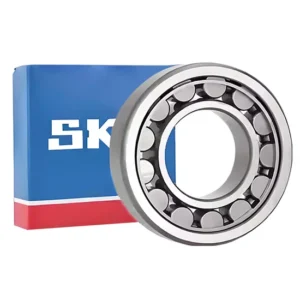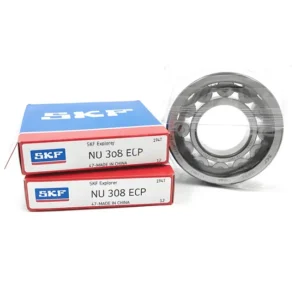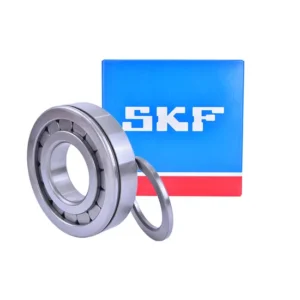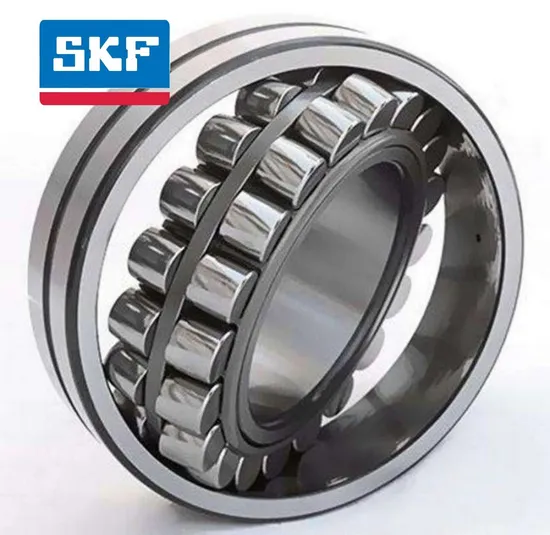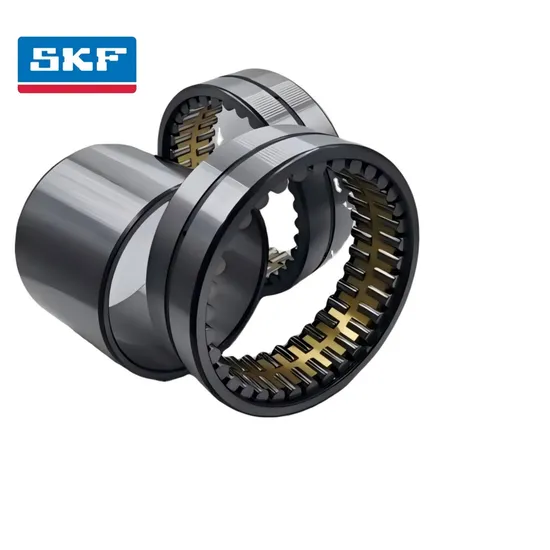


Description
Channel-Verified Provenance — Every SKF N1013PHA/SPC2 we ship carries a Certificate of Conformity linked to its batch, so you can trace the bearing back to the production lot without relying on a middleman’s word.
Technical Specifications
| Parameter | Value |
|---|---|
| Designation | SKF N1013PHA/SPC2 |
| Bearing Type | Cylindrical Roller Bearing |
| Bore Diameter (d) | 65 mm |
| Outside Diameter (D) | 100 mm |
| Width (B) | 18 mm |
| Number of Rows | Single Row |
| Seal or Shield Type | Open |
| Bore Type | Tapered (1:12) |
| Weight | 0.100 kg |
| Origin | China |
The suffixes PHA and SPC2 appear on the product label but remain unverified against the current SKF super-precision cylindrical roller bearing catalog; their exact engineering meaning should be confirmed with the manufacturer’s latest documentation before final specification lock-in.
Application Suitability
| Industry | Typical Applications |
|---|---|
| Precision Equipment | High-speed spindle nose support, indexing table rotary axis |
| Robotics | Robot joint rotary actuator, articulated arm base pivot |
| Heavy-duty Gearboxes | Gearbox high-speed pinion shaft, planetary carrier support |
| Rolling Mills | Work roll neck position, backup roll radial guide |
What a Cage Suffix Mismatch Costs on a Spindle
The SKF N1013PHA/SPC2 thin wall cylindrical roller bearing supplier you choose must understand that a spindle bearing is never just a bore and OD — it is a complete package where cage design, internal clearance, and running accuracy are locked in as a set.
I once watched a robot arm project go sideways because the buyer matched the crossed roller bearing by base number alone, ignoring preload class and cage material. The arm lost rigidity at speed, vibrated, and scrapped an entire batch of welded subassemblies. That failure didn’t come from a bad bearing — it came from a bad specification match. The same trap applies here: a thin-wall single row cylindrical roller bearing running in a high-speed spindle demands that cage, clearance, and precision suffixes all align with the actual thermal and load environment. When they don’t, you get thermal binding, cage fracture, or premature raceway spalling — failures that ISO 15243 classifies under material fatigue and surface-initiated damage, not random bad luck [NEED_CITE: rolling bearing failure mode classification per ISO 15243].
How This Bearing Fits High-Speed Spindle Work
The N10 series single row cylindrical roller bearing with tapered bore is purpose-built for spindle applications where radial rigidity and high-speed capability must coexist. The 65 mm bore and 100 mm OD place it squarely in the mid-range spindle envelope common across CNC turning centers and precision grinding heads. Tapered bore design (1:12) lets the installer adjust radial internal clearance by driving the inner ring onto a matched taper journal — a mechanical method that gives fine control over operating clearance without relying on selective-fit shims. For maintenance engineers replacing OEM spindle bearings, this means you can dial in the exact residual clearance the spindle designer intended, rather than hoping a standard CN clearance happens to be right. We regularly cross-check the requested suffix package against the equipment builder’s original specification so that what ships matches what the spindle needs — not just what the base number suggests.
Thermal Growth and Lubrication Demands at Speed
Spindle bearings live in a narrow thermal window. At sustained high RPM, the inner ring runs hotter than the outer ring because it sits closer to the heat source — the cutting zone or motor rotor. That temperature differential shrinks the operating clearance. If you start with a standard clearance class in an application that needs C3 or even C4, the bearing can bind thermally before the spindle reaches its target speed. Open-type construction on this N1013 means lubrication is fully external: oil-air, oil mist, or grease packed at assembly. Each method carries different re-lubrication intervals and contamination risks. Oil-air systems keep temperatures low but demand clean, dry air supply; grease packing is simpler but limits achievable speed. Sealing responsibility falls entirely on the spindle housing, so labyrinth or contact seal design at the housing level becomes the real contamination barrier [NEED_CITE: spindle bearing lubrication method comparison for high-speed applications].
Decoding the Specs That Actually Matter
The tapered bore is the first spec worth examining. Unlike a straight bore cylindrical roller bearing that relies on press-fit interference to hold the inner ring, a 1:12 taper bore lets the installer use a locknut to drive the inner ring axially along the taper. Each increment of axial drive-in reduces radial clearance by a predictable amount, giving precise control over the final operating clearance — critical when the spindle runs at speeds where even a few microns of clearance difference change vibration behavior.
Open construction means no integrated seals or shields. This is deliberate for spindle work: seals generate friction heat, and at spindle speeds that extra heat can push the bearing past its thermal limit. The trade-off is that the housing must provide adequate sealing externally.
Single row cylindrical roller geometry provides high radial load capacity in a compact cross-section. The thin-wall design reduces rotational mass, which matters when the spindle accelerates and decelerates rapidly during tool changes. Lower mass means lower gyroscopic moments on the rolling elements, reducing skidding risk during speed transitions.
The Hidden Cost of Cutting Corners on Verification
A counterfeit cylindrical roller bearing with a soft inner ring might pass a visual check and even carry a convincing QR code. But under spindle loads, a raceway that hasn’t been through proper through-hardening will spall within weeks. That unplanned downtime costs far more than the bearing itself — lost production, emergency freight for replacements, and potential damage to the spindle housing if fragments circulate through the lubrication system. ISO 281 life calculations assume material quality that meets standard specifications; when the material doesn’t, calculated L10 life becomes meaningless [NEED_CITE: impact of material quality on bearing fatigue life per ISO 281]. Buying through verified channels with batch traceability eliminates this variable.
How We Reduce Your Sourcing Risk
Every SKF N1013PHA/SPC2 we source passes through authorized distributor channels with full documentation traceability. We don’t hold a single-brand distributorship — instead, we maintain access across SKF, NSK, FAG, TIMKEN, NTN, and KOYO authorized networks, which means we can verify availability and authenticity through the same channels the manufacturers themselves use.
Our cross-reference database doesn’t just match base numbers. We align clearance class, cage material, and precision suffix across brands, so if lead times push you toward an alternative, you get a true functional equivalent — not a designation that looks similar but fails in the field. Before shipment, we confirm batch and lot numbers against the Certificate of Conformity and can arrange third-party dimensional inspection to verify running accuracy.
Documentation & Authenticity
- Supplier Certificate of Conformity referencing the exact production batch and lot number of the shipped N1013PHA/SPC2 units
- QR code verification pathway through the SKF official app for on-site authenticity confirmation at receiving
- Third-party dimensional and runout inspection report available to confirm the bearing meets its designated precision class before installation
- Country-of-origin documentation and HS code classification to support import clearance and customs compliance
- Material certificate confirming bearing steel specification for traceability back to the steel mill heat
Storage, Handling & Mounting
- Keep the N1013PHA/SPC2 in its original sealed packaging until the moment of mounting; the thin-wall inner ring is susceptible to corrosion and early unsealing exposes the precision-ground raceway to ambient humidity
- Store flat in a temperature-stable environment away from direct sunlight; thermal cycling in storage can cause condensation inside the packaging of open-type bearings
- Use clean, lint-free gloves when handling; fingerprint acids on the thin-wall outer ring surface can initiate corrosion pits that act as stress concentrators under radial load
- Mount the tapered bore inner ring using a precision locknut and hydraulic nut method, controlling axial drive-in distance to achieve the specified residual radial clearance — never force-fit with a hammer
- Apply the specified spindle lubricant immediately after mounting; the open seal type offers zero corrosion protection once the factory preservative oil is displaced
- For multi-bearing spindle sets, maintain the matched arrangement markings and install in the factory-specified sequence to preserve the intended load distribution
Request a Quotation or Technical Review
Share your spindle speed, radial load, operating temperature range, and required precision class so we can verify that the N1013PHA/SPC2 suffix package matches your application. If you’re replacing an OEM bearing, provide the equipment serial number or original bearing designation and we’ll run a full cross-reference check covering clearance, cage, and precision alignment.
Frequently Asked Questions
Q: How do I verify that an SKF bearing received is genuine and not a counterfeit clone?
A: Use the SKF official app to scan the QR code on the bearing packaging and the bearing itself. Cross-check the scanned batch number against the Certificate of Conformity provided with the shipment. We supply both documents with every order and can guide you through the verification process at receiving.
Q: What import documentation do you provide with shipments of the SKF N1013PHA/SPC2?
A: We include a Certificate of Conformity, country-of-origin certificate, and HS code classification for customs clearance. If your country requires additional material certification or third-party inspection reports, confirm the specific requirements at inquiry stage so we can prepare the full documentation package before shipment.
Q: How do you ensure batch traceability when sourcing through distributor channels?
A: Each bearing we supply carries a batch and lot number that traces back to the manufacturer’s production record. The Certificate of Conformity references this batch number, and the same number is verifiable through the brand’s official app. We maintain records of all batch numbers shipped to each customer for future warranty or failure-analysis reference.
Q: What is the difference between thin wall and standard cylindrical roller bearings in spindle applications?
A: Thin wall construction reduces the bearing cross-section and rotational mass, which lowers gyroscopic effects during rapid speed changes common in CNC spindle operations. The trade-off is that thin-wall rings have less thermal mass, so temperature management and correct clearance selection become more critical during high-speed operation.
Q: How should I select lubrication for an open-type cylindrical roller bearing in a spindle?
A: Lubrication choice depends on speed factor, operating temperature, and contamination risk. Oil-air systems suit the highest speeds with active cooling; grease packing suits moderate speeds with simpler maintenance. Since the N1013 is open type, the spindle housing seals bear full responsibility for keeping contaminants out and lubricant in.
Secure Your Spindle Bearing Supply
Send us your application parameters or OEM equipment number and we’ll return a verified specification match with full documentation and lead time within one business day.