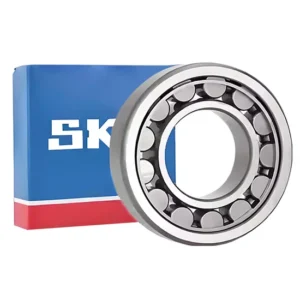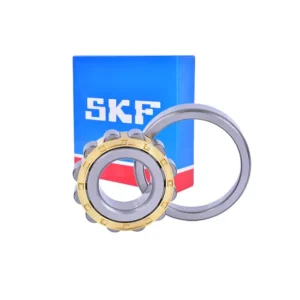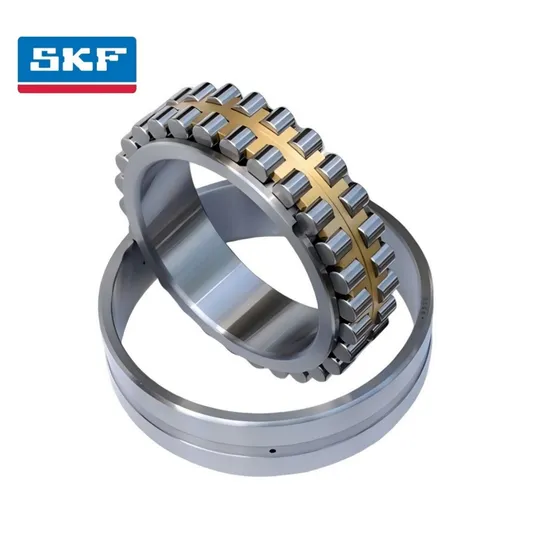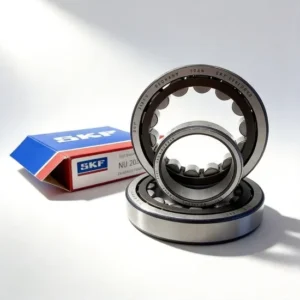


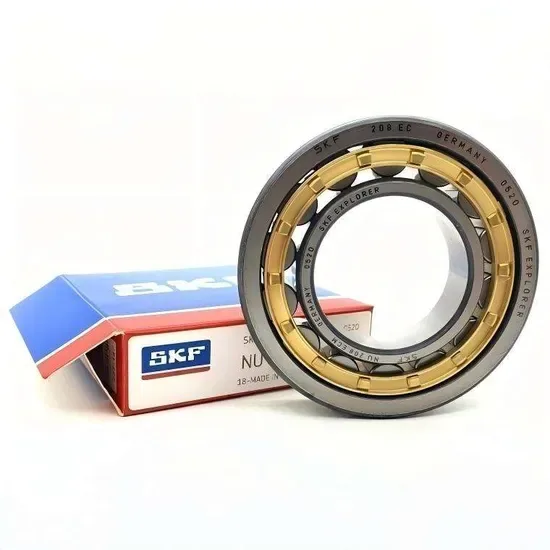


Description
Authorized Channel Traceability — Every SKF NN 3016KTN3/SP double row cylindrical roller bearing we dispatch carries a verifiable paper trail from the manufacturer’s authorized distributor network back to the original production batch.
Technical Specifications
| Parameter | Value |
|---|---|
| Designation | SKF NN 3016KTN3/SP |
| Bearing Type | Double Row Cylindrical Roller Bearing |
| Bore Diameter (d) | 80 mm |
| Outside Diameter (D) | 125 mm |
| Weight | 1.45 kg |
| Number of Rows | Double |
| Bore Type | Tapered (1:12 taper) |
| Seal or Shield Type | Open |
| Precision Class | SP (Super Precision) |
| Origin | China |
Note: The TN3 cage designation could not be independently cross-referenced against the current manufacturer catalog; confirm cage material and design with the supplier prior to final specification lock-in.
Application Suitability
| Industry | Typical Applications |
|---|---|
| Machine Tool Manufacturing | CNC lathe and grinding machine spindle rear support |
| Precision Equipment | High-speed rotary table centering bearing |
| Metalworking | Internal and external cylindrical grinder spindle |
| General Industrial MRO | Replacement spindle bearings for refurbishment shops |
Why a Precision Suffix Swap Can Destroy a Spindle Run
An SP-class spindle bearing installed with standard P5 running accuracy tolerances will generate chatter marks within the first production shift.
I once traced a CNC grinder’s persistent surface finish problem back to a replacement cylindrical roller bearing where the cross-reference matched the base number but dropped the /SP suffix. The substitute ran hot within hours because its radial runout exceeded what the spindle preload could compensate for. Three days of production scrapped, one journal scored beyond regrind. Situations like this account for a significant share of premature spindle failures that get misdiagnosed as lubrication or alignment issues [NEED_CITE: spindle bearing failure mode classification per ISO 15243]. When sourcing the SKF NN 3016KTN3/SP double row cylindrical roller bearing, every suffix in that string exists for a reason — skipping even one can cascade into thermal binding, cage fracture, or journal damage.
Matching the Spindle Load Spectrum
Precision grinding and turning spindles subject the rear support bearing to predominantly radial cutting forces with minimal axial load. The double-row cylindrical roller configuration of the SKF NN 3016KTN3/SP double row cylindrical roller bearing handles exactly that load profile — high radial stiffness without introducing unwanted axial constraints that would fight the thrust bearing at the front of the spindle. When we match cross-brand interchange requests, we confirm that the substitute also carries the double-row cylindrical arrangement and the same tapered bore geometry, not just the bore and OD dimensions.
Thermal Growth and Preload Control in High-Speed Operation
Spindle journals expand as rotational speed climbs. The tapered bore (K suffix, 1:12 taper) allows the installer to drive the inner ring axially up the journal, controlling the residual internal clearance with a locknut rather than relying on a fixed-clearance cylindrical bore fit. This is critical because thermal expansion at sustained high RPM can close the clearance entirely on a standard CN bearing, leading to overheating. The open design also permits oil-air or oil-mist lubrication systems that carry heat away from the raceway — something sealed bearings cannot accommodate at these speeds [NEED_CITE: high-speed spindle lubrication methods for cylindrical roller bearings].
What the /SP Class and Cage Design Mean at the Raceway
The /SP precision class sits between ISO P5 and P4, delivering tighter dimensional accuracy and running accuracy than standard machine-grade bearings without the cost premium of full /UP classification. For spindle applications where radial runout directly translates to workpiece surface finish, this tier is the default specification. The TN3 cage variant, once confirmed against the current catalog, typically indicates a polymer or engineered composite cage suited to high-speed operation with lower friction than brass alternatives. Open construction means the spindle designer selects the external seal and lubrication delivery method matched to the machine’s speed envelope and contamination environment.
The Hidden Costs When Suffixes Get Dropped
Correctly specified and sourced through traceable channels, this bearing delivers the L10 life predicted by ISO 281 calculations for its load and speed conditions. Substitute a bearing that matches only the base number but lacks the tapered bore or SP precision class, and the failure modes shift from predictable fatigue to unplanned events: cage disintegration from centrifugal overload, inner ring creep on the journal, or thermal seizure from clearance collapse. These failures void spindle warranties, damage mating components, and generate downtime costs that dwarf the bearing price difference [NEED_CITE: cost impact of unplanned machine tool downtime versus bearing replacement cost].
What Our Supply Chain Verifies Before Shipment
We source the SKF NN 3016KTN3/SP double row cylindrical roller bearing through authorized distributor channels, which means the Certificate of Conformity traces back to the manufacturer’s production records — not a middleman’s letterhead. Our cross-reference database aligns clearance class, cage type, and precision suffix simultaneously, so when an OEM drawing calls for an interchange, we flag mismatches before they reach the spindle. Country-of-origin documentation ships with every order for import clearance. Customers rebuilding spindles in batches can request dimensional and runout inspection reports confirming SP-class tolerances before the bearing leaves our facility.
Documentation & Authenticity
- Supplier Certificate of Conformity linking this specific batch to the authorized distributor purchase record
- SKF Authenticate app QR code scan pathway provided for independent verification upon receipt
- Third-party runout inspection report confirming SP-class running accuracy before dispatch
- Country-of-origin certificate supporting customs clearance and buyer-side compliance requirements
- Material certificate and dimensional inspection data available with pre-shipment documentation package
Storage, Handling & Mounting
- Retain the factory-sealed packaging until the moment of spindle assembly; early exposure of this open-type bearing invites particulate contamination that defeats the SP running accuracy
- When mounting the tapered bore onto the spindle journal, use the locknut draw-up method and measure residual clearance with a dial indicator — the 1:12 taper requires controlled axial displacement, not force fitting
- Confirm the lubrication delivery system (oil-air or oil-mist) is operational before first run; the open design depends entirely on external lubrication from the spindle’s own circuit
- Store horizontally in the original carton to prevent cage distortion; double-row cylindrical rollers are sensitive to prolonged static loads on a single contact line
- Handle with lint-free gloves to prevent fingerprint corrosion on the precision-ground raceway surfaces before mounting
Request a Spindle-Specific Quotation
Share your spindle speed range, radial load estimates, and OEM equipment number so we can confirm the SKF NN 3016KTN3/SP double row cylindrical roller bearing is the correct fit and run a cross-reference check against competing catalogs. We will return a quotation with lead time, available batch documentation, and any interchange cautions relevant to your application.
Frequently Asked Questions
Q: How do I verify the authenticity of this SKF bearing after delivery?
A: SKF provides an official authentication app that reads the QR code or label on the bearing packaging. We supply the verification pathway details with every shipment, and the batch number on the Certificate of Conformity can be traced back through our authorized distributor purchase record.
Q: What does the /SP precision suffix mean compared to standard ISO P4 or P5?
A: /SP (Super Precision) is an SKF-specific classification that delivers tighter dimensional and running accuracy than ISO P5, with selected parameters approaching P4 levels. It is the standard precision tier for machine tool spindle bearings where radial runout directly affects workpiece quality.
Q: How does the tapered bore affect mounting and preload adjustment?
A: The K suffix indicates a 1:12 tapered bore. During installation, the inner ring is driven axially along the tapered journal using a precision locknut, which reduces internal clearance in a controlled manner. This allows the installer to set the optimal preload for the spindle’s operating speed rather than accepting a fixed clearance value.
Q: Why must cross-reference matching include cage type and precision class, not just the base number?
A: A substitute bearing that matches bore, OD, and width but uses a brass cage instead of the specified polymer cage may have different speed limits and friction characteristics. Similarly, dropping the /SP class for standard precision will increase radial runout beyond what the spindle was designed to tolerate, causing chatter and premature wear.
Q: What lubrication method is recommended for the NN 30 series in high-speed spindle use?
A: Open-type NN 30 bearings in spindle applications are typically lubricated by oil-air or oil-mist systems integrated into the spindle housing. These methods provide continuous lubricant replenishment and carry heat away from the raceway, which is essential at sustained high rotational speeds [NEED_CITE: oil-air lubrication advantages for high-speed cylindrical roller spindle bearings].
Confirm Your Spindle Bearing Specification
Send your application parameters or OEM part number and we will verify fit, cross-reference compatibility, and documentation availability for your next production run.