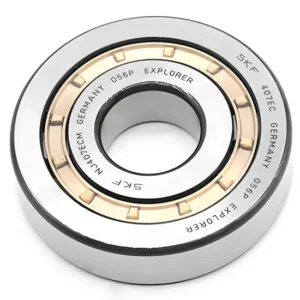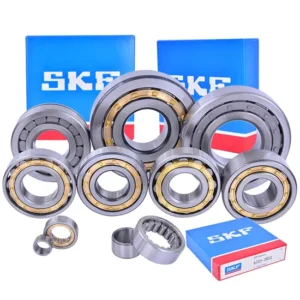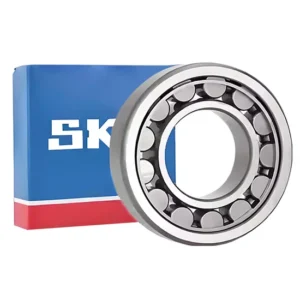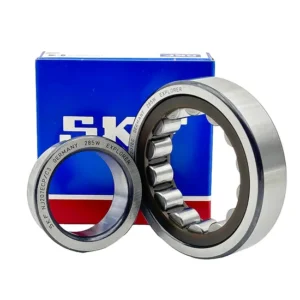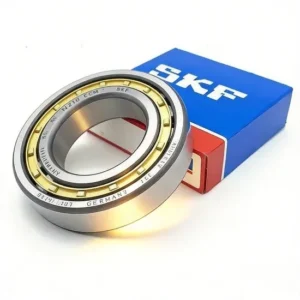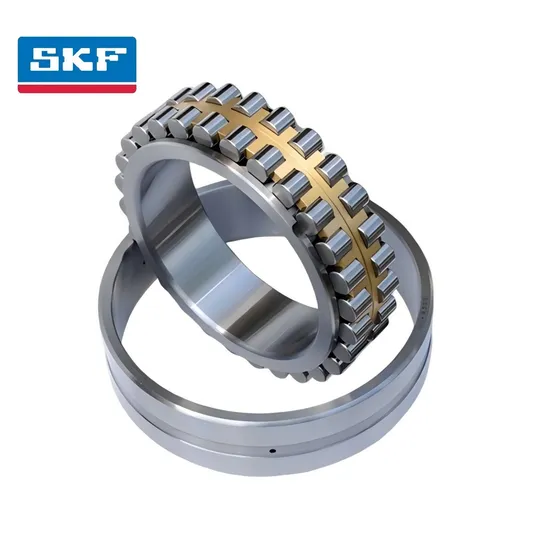


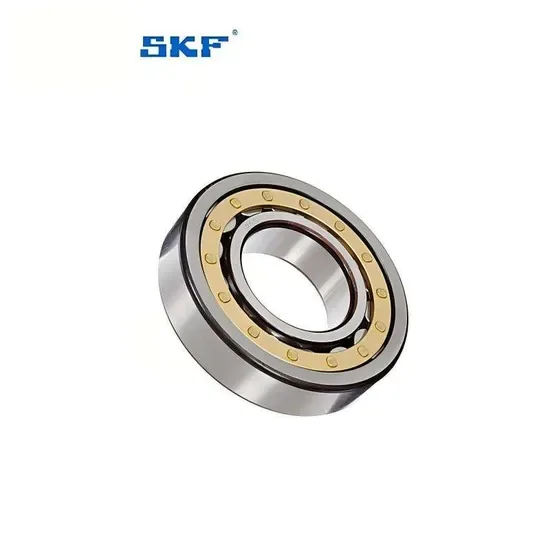
Description
Batch-Traceable Sourcing — Every SKF NN 3021KTN9/SPW33 shipped includes lot-matched Certificate of Conformity and QR verification pathway through the SKF Authenticate app.
Technical Specifications
| Parameter | Value |
|---|---|
| Designation | SKF NN 3021KTN9/SPW33 |
| Bearing Type | Double Row Cylindrical Roller Bearing |
| Bore Diameter (d) | 105 mm |
| Outside Diameter (D) | 160 mm |
| Number of Rows | Double Row |
| Bore Type | Tapered, 1:12 taper |
| Cage Material | PA66 (Glass Fiber Reinforced Polyamide 6,6) |
| Seal or Shield Type | Open |
| Precision Class | SP (Super-Precision) |
| Lubrication Feature | W33 — Annular groove and three lubrication holes in outer ring |
| Origin | China |
| Standards | ISO 15 / ISO 492 |
Application Suitability
| Industry | Typical Applications |
|---|---|
| Machine Tool Manufacturing | Spindle rear support / High-speed milling spindle shaft |
| Precision Gearboxes | Main shaft radial support in planetary gear units |
| Industrial Machinery | High-rigidity rotary tables / Indexing head spindles |
What Happens When Spindle Bearings Overlook Suffix Detail on the SKF NN 3021KTN9/SPW33
A tapered bore fitted without adjusting axial drive-up distance will destroy preload control within days.
I watched a European machine tool rebuild shop torque the locknut on an NN 30 series super-precision bearing to the same spec they used for standard clearance. The inner ring expanded unevenly on the tapered journal, residual clearance collapsed, and the spindle was running hot before the first shift ended. With the SKF NN 3021KTN9/SPW33 double row cylindrical roller bearing, the K suffix (1:12 tapered bore) demands a calculated axial drive-up to achieve the correct interference fit and remaining operational clearance [NEED_CITE: tapered bore bearing mounting drive-up procedures per ISO standards]. Skipping that step — or substituting a bore type without adjusting the procedure — turns a precision component into a thermal failure point.
How the NN 3021KTN9/SPW33 Matches Spindle Load and Speed Profiles
Machine tool spindles generate predominantly radial loads at sustained high speeds, with thermal growth altering shaft-to-housing geometry over prolonged cuts. This SKF NN 3021KTN9/SPW33 double row cylindrical roller bearing addresses that environment with its double-row roller complement providing high radial rigidity, while the PA66 cage reduces rotating mass compared to brass alternatives — lowering centrifugal forces on the rollers at elevated rpm. In practice, I have seen shops retrofit these into rear spindle positions where radial support and thermal stability matter more than thrust capacity, pairing them with angular contact bearings handling the axial component.
Thermal, Speed, and Lubrication Demands in Precision Spindles
Sustained spindle operation generates friction heat at the roller-cage interface and raceway contact zones. The open design of this bearing places lubrication responsibility on the machine tool builder’s external system — typically oil-air or oil-mist delivery routed through the W33 annular groove and three lubrication holes in the outer ring [NEED_CITE: oil-air lubrication effectiveness in high-speed spindle bearing arrangements]. That groove distributes lubricant across both roller rows evenly, which matters when one row runs hotter due to asymmetric housing cooling. The tapered bore must be seated on a matching tapered journal with precise axial drive-up; too little interference and the inner ring creeps under load, too much and residual clearance vanishes, causing thermal runaway within hours.
Decoding the Suffix Stack: K, TN9, SP, and W33
The K suffix specifies a 1:12 tapered bore, meaning the bore diameter decreases by 1 mm for every 12 mm of axial travel along the taper. This allows direct mounting on a tapered shaft journal, eliminating the concentricity errors that adapter sleeves introduce. TN9 indicates a glass fiber reinforced polyamide 6,6 cage — injection molded for weight reduction and dimensional stability under thermal load, suited to the sustained high-speed operation of spindle applications. SP designates Super-Precision class under ISO 492, tighter than P5 in both dimensional and running accuracy, targeting minimal radial runout in spindle shafts. W33 provides the annular groove and lubrication holes in the outer ring, a practical feature that simplifies relubrication routing without requiring custom housing modifications.
The Downtime Cost of Precision Substitution Errors
A standard P5 cylindrical roller bearing installed where SP precision was specified will show elevated radial runout on the spindle nose — often detectable only after the first batch of parts comes back out of tolerance. Swapping a brass cage for PA66 without confirming the speed envelope can lead to cage deformation under centrifugal load [NEED_CITE: cage material failure modes classified per ISO 15243]. And substituting a straight bore where the K tapered bore was designed in creates either a loose inner ring fit or forces an improvised adapter solution that compromises concentricity. These mismatches rarely fail immediately; they manifest as scrapped workpieces, unplanned spindle teardowns, and voided equipment warranties weeks or months after installation.
Sourcing Confidence Through Documentation and Cross-Reference Rigor
Our procurement channels deliver this bearing with full batch and lot traceability back to the manufacturer’s production facilities. We cross-reference every substitute inquiry against clearance class, cage material, and precision suffix simultaneously — not just the base designation — because a match on NN 3021 alone misses the critical K, TN9, and SP elements that define how the bearing performs on a tapered spindle journal. QR code verification through official brand applications is supported, and we provide country-of-origin documentation alongside the Certificate of Conformity so import compliance is resolved before the shipment leaves. For buyers evaluating alternatives, our cross-brand interchange comparison ensures that any NSK, FAG, or NTN equivalent is verified across all three parameters: clearance, cage, and precision.
Documentation & Authenticity
- Supplier Certificate of Conformity referencing the specific NN 3021KTN9/SPW33 batch and lot number
- Third-party dimensional inspection report confirming SP-class running accuracy before shipment
- QR verification pathway enabling authentication through the SKF Authenticate application
- Country-of-origin documentation and HS code support for import clearance in destination markets
- Material certificate covering bearing steel composition and hardness specifications
Storage, Handling & Mounting
- Retain the original sealed packaging until the moment of mounting — the SP precision class demands that no contaminants reach the open raceways of this bearing before installation
- Mount the K tapered bore using calculated axial drive-up distance on the 1:12 journal; verify residual clearance with a feeler gauge or dial indicator method per the manufacturer’s mounting instructions
- Route W33 lubrication supply through the outer ring annular groove during initial fill before housing closure, ensuring both roller rows receive lubricant before first rotation
- Handle the PA66 cage bearing with clean lint-free gloves; polyamide is susceptible to surface abrasion from particulate contamination that steel cages tolerate
- Store horizontally in a climate-controlled environment to prevent outer ring deformation that would compromise the SP running accuracy specification
Request a Technical Review for Your Spindle Application
Share your spindle speed range, radial load profile, and housing cooling configuration so we can confirm the suitability of this bearing for your specific operating envelope. If you are cross-referencing from an existing OEM equipment number, provide that along with the current suffix stack so we verify alignment on bore type, cage material, and precision class. We will return a quotation with confirmed lead time, available documentation package, and batch origin details.
Frequently Asked Questions
Q: How does SP precision differ from P4 or P5 for spindle use?
A: SP (Super-Precision) targets tighter dimensional and running accuracy than P5, specifically developed for machine tool spindle applications where radial runout directly affects workpiece finish. The classification follows ISO 492, and the practical distinction is that SP bearings maintain tighter bore-to-OD concentricity and reduced raceway runout, which matters when the spindle nose must hold micron-level tolerances across prolonged cuts.
Q: What do the K, TN9, and W33 suffixes mean on this bearing?
A: K designates a 1:12 tapered bore for direct mounting on tapered shaft journals. TN9 identifies the cage as glass fiber reinforced polyamide 6,6, chosen for its low weight and thermal stability at high speeds. W33 specifies an an*ring, simplifying lubricant routing in spindle housings.
Q: Should I choose PA66 or brass cage for high-speed spindle operation?
A: PA66 cages reduce rotating mass, which lowers centrifugal loading on the rollers and cage pockets at elevated speeds. This makes them suitable where the spindle operates continuously at high rpm with stable thermal conditions. Brass cages offer greater mechanical strength and tolerate marginal lubrication better, making them preferable in applications with shock loads or interrupted lubrication supply.
Q: When cross-referencing the NN 30 series, why must all suffixes be matched?
A: Matching only the base number (NN 3021) while ignoring the K bore type, TN9 cage, and SP precision class risks installing a bearing that either cannot mount on the tapered journal, cannot sustain the required speed, or introduces unacceptable runout. Cross-brand interchange must confirm all three parameters to ensure functional equivalence.
Q: How does the W33 feature affect relubrication scheduling?
A: The W33 annular groove and lubrication holes distribute fresh lubricant to both roller rows through the outer ring, supporting effective relubrication without requiring housing disassembly. The actual relubrication interval depends on spindle speed, operating temperature, and lubricant type — parameters your machine tool builder’s maintenance schedule should define based on field operating conditions.
Confirm Your NN 3021KTN9/SPW33 Requirements
Submit your application parameters or OEM equipment number, and we will respond with cross-reference verification, available documentation, and lead time.