

Description
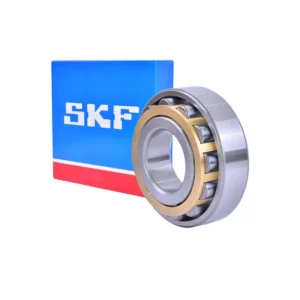
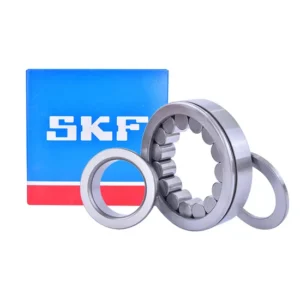
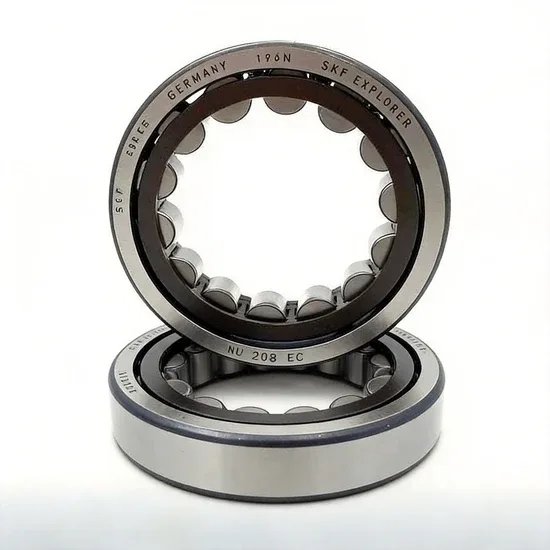
Authorized Channel Sourcing — SKF NN3020KTN9/UPVR522 shipped with batch traceability documents and QR verification pathway accessible through official SKF apps.
Technical Specifications
| Parameter | Value |
|---|---|
| Designation | SKF NN3020KTN9/UPVR522 |
| Bearing Type | Double Row Cylindrical Roller Bearing |
| Bore Diameter (d) | 100 mm |
| Outside Diameter (D) | 150 mm |
| Width (B) | 37 mm |
| Bore Type | Tapered (1:12 taper) |
| Cage Material | Glass Fiber Reinforced Polyamide 6,6 (TN9) |
| Precision Class | UP (Ultra Precision) |
| Origin | China |
Note: The /UPVR522 suffix segment requires confirmation against the manufacturer catalog for complete application-specific meaning.
Application Suitability
| Industry | Typical Applications |
|---|---|
| Industrial Machinery | CNC Machine Tool Spindle Front/Rear Support |
| Precision Equipment | High-Speed Grinding Machine Wheelhead Spindle |
| Automotive Manufacturing | Transfer Line Machining Center Spindle |
When a Tapered Bore Bearing Runs Hot at Midnight
Precision spindle thermal growth demands correct clearance class, cage material, and preload grouping — not just the base number.
I’ve seen it happen on a shop floor: a grinding spindle reaches operating temperature within two hours, thermal expansion closes the internal clearance, and the rollers begin skidding against the raceways. The operator hears the whine first, then the chatter marks appear on every workpiece [NEED_CITE: bearing thermal growth and clearance collapse in precision spindles]. This is not a random failure — it traces back to a procurement decision where someone matched the NN3020 designation but overlooked the K tapered bore requirement, or substituted a brass cage where the TN9 polyamide cage was specified for high-speed thermal stability. Counterfeit bearings compound the problem: soft inner rings deform under spindle preload, and cloned markings pass visual inspection but fail within weeks of operation.
Matching the Spindle’s Demanding Load Spectrum
The SKF NN3020KTN9/UPVR522 double row cylindrical roller bearing addresses the specific combination of high radial loads and rotational speeds found in CNC spindles. Double row cylindrical rollers provide the rigidity needed for heavy cutting passes while maintaining the concentricity required for fine finishing cuts. The tapered bore design allows precise axial positioning on a matching tapered journal — the installer drives the bearing axially to achieve the exact residual internal clearance the spindle demands.
High-Speed Thermal Reality in Spindle Assemblies
Spindles operate across a demanding envelope: speeds reaching several thousand RPM generate significant friction heat at the roller-raceway interface, while ambient shop temperatures fluctuate with HVAC cycles and seasonal changes. The polyamide cage carries rollers with less mass than brass, reducing centrifugal forces and friction heat generation at high speeds [NEED_CITE: polyamide cage friction advantages in high-speed cylindrical roller bearings]. Oil-air or oil-jet lubrication must reach each roller pocket consistently; any starvation creates localized overheating. The UP precision class controls running accuracy to levels that prevent uneven load distribution across rollers — a single roller carrying excessive load becomes a failure initiation point.
Decoding What the Suffix Stack Actually Does
The K suffix indicates a 1:12 tapered bore, which is critical for spindle mounting: the installer controls the fit by driving the bearing onto the tapered shaft journal, measuring the axial displacement to achieve precise interference and residual clearance. The TN9 cage is injection-molded glass fiber reinforced polyamide 6,6, selected specifically because its lower mass reduces centrifugal loading at spindle speeds while maintaining dimensional stability in oil-lubricated environments. The UP designation places this bearing in the ultra-precision category, meaning tighter bore and OD tolerances and stricter running accuracy than P4 — essential for eliminating chatter in finishing operations. The double row configuration (NN series) delivers roughly twice the radial load capacity of a single row in the same envelope, directly translating to spindle rigidity under cutting loads.
What Incorrect Suffix Selection Costs the Shop
A buyer who sources an NN3020 with standard P0 precision instead of UP-class will watch chatter marks ruin titanium or hardened steel parts — the spindle simply cannot hold the required surface finish. Substituting a machined brass cage for the specified TN9 polyamide increases rotational mass, generating more friction heat at high RPM and potentially requiring derating the spindle speed limit. Counterfeit bearings with improperly hardened rings fail catastrophically under spindle preload, often damaging the shaft journal itself and turning a bearing replacement into a spindle rebuild [NEED_CITE: ISO 15243 rolling bearing failure classification]. Unplanned downtime on a five-axis CNC easily costs thousands per hour in lost production, scrapped parts, and emergency freight.
Why Procurement Engineers Verify Source Documentation
I started on a grinding floor learning to read raceway finish, and years later a spindle builder called furious because their supplier shipped standard precision where UP was specified — the spindle ran hot and scrapped every titanium part. That’s why every SKF NN3020KTN9/UPVR522 double row cylindrical roller bearing we supply comes through authorized distributor channels with batch traceability. Our cross-reference database matches bore taper, cage material, and precision class together — not just the base designation. We provide QR verification pathways through official SKF apps, country-of-origin documentation for import compliance, and dimensional inspection reports confirming running accuracy before shipment.
Documentation & Authenticity
- Supplier Certificate of Conformity with batch and lot traceability linked to the specific NN3020KTN9/UPVR522 shipment
- QR code verification pathway via official SKF apps for confirming authenticity and production origin
- Dimensional inspection report confirming bore taper angle and OD tolerances meet UP precision requirements
- Country-of-origin documentation prepared for customs clearance and import compliance in destination markets
- Material certificate confirming bearing steel specification and heat treatment condition
Storage, Handling & Mounting
- Store this UP-precision spindle bearing in its original sealed packaging until the moment of mounting — premature exposure to shop humidity risks corrosion on the precision-ground raceways
- The tapered bore (K suffix) requires careful axial drive measurement during installation; use a dial indicator to track displacement and achieve specified residual internal clearance
- Keep the TN9 polyamide cage away from cleaning solvents that attack polyamide 6,6 — use only manufacturer-approved degreasing agents during pre-mounting preparation
- After mounting on the tapered journal, verify spindle runout before installing seals and covers — catching a seating error at this stage avoids a full teardown later
- Maintain storage temperature stable and avoid condensation cycles that can deposit moisture on the open bearing surfaces
Request Technical Review Before Ordering
Share your spindle speed range, load profile, and operating temperature envelope so we can verify this designation matches your application requirements. Provide the OEM equipment number for cross-reference confirmation against the machine tool builder’s original specification. Request the documentation package including origin certificates and inspection reports before shipment to ensure import compliance.
Frequently Asked Questions
Q: How do I verify SKF bearing authenticity through official channels?
A: Every genuine SKF bearing carries a QR code that links to official SKF verification apps, confirming production origin and batch authenticity. We supply bearings through authorized distributor channels with documentation that supports this verification pathway, so you can scan and confirm before installation.
Q: What does the /UPVR522 suffix indicate on this bearing?
A: The UP portion confirms ultra-precision classification with tighter tolerances than standard P4. The remaining suffix segment requires confirmation against the manufacturer catalog to determine the complete application-specific meaning — we recommend verifying this with your spindle OEM’s specification before ordering.
Q: What cross-reference factors matter beyond the base NN3020 number?
A: Correct substitution requires matching the K tapered bore (1:12 taper ratio), the TN9 polyamide cage material, and the UP precision class simultaneously. A cross-reference that matches only the base designation while substituting standard clearance or a brass cage will alter thermal behavior and running accuracy in spindle service.
Q: Why choose polyamide TN9 cage over brass for this spindle application?
A: The glass fiber reinforced polyamide 6,6 cage weighs significantly less than brass, reducing centrifugal forces on roller pockets at high spindle speeds. Lower cage mass also reduces friction heat generation, which is critical in precision spindles where thermal growth directly affects machining accuracy.
Secure Your Spindle Reliability
Send us your spindle parameters and OEM equipment number for technical selection review and cross-reference confirmation.
Contact: sales@bearing-china.com