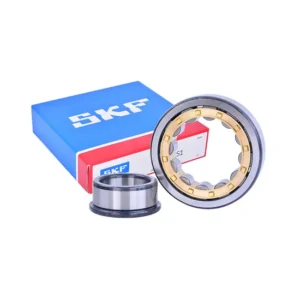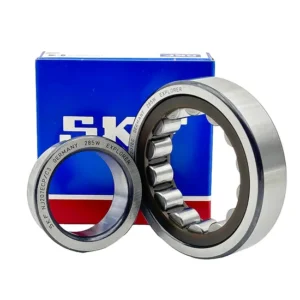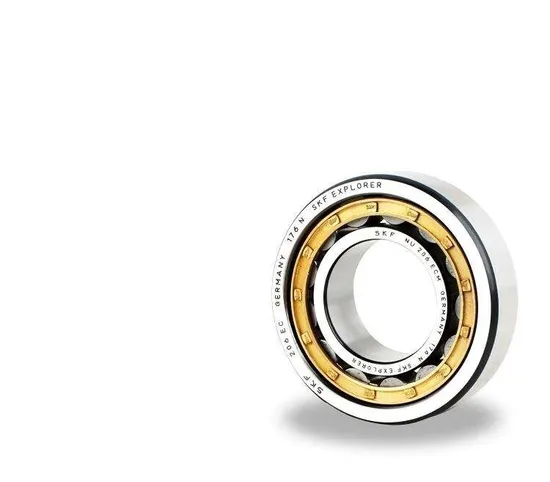


Description
Authorized Channel Sourcing — Traceable batch documentation accompanies every SKF NN3022 TN3/SPW33 shipment to verify origin and specification compliance.
Technical Specifications
| Parameter | Value |
|---|---|
| Designation | SKF NN3022 TN3/SPW33 |
| Bearing Type | Double Row Cylindrical Roller Bearing |
| Bore Diameter (d) | 110 mm |
| Number of Rows | Double Row |
| Weight | 0.100 kg |
| Origin | China |
| Lubrication Feature | W33 — annular groove and three lubrication holes in outer ring |
Note: Suffixes TN3 and /SP require confirmation against manufacturer catalog for exact cage material designation and precision class interpretation.
Application Suitability
| Industry | Typical Applications |
|---|---|
| Industrial Machinery | Robot joint rotary axes requiring high radial rigidity |
| Machine Tool | Spindle rear support positions with moderate speed demands |
| Precision Equipment | Rotary indexing tables under continuous radial loading |
| Heavy Positioning Systems | Load-bearing pivot points in automated welding cells |
What Happens When Lubrication Paths Get Ignored on Robot Joint Bearings
Missing outer ring lubrication grooves force maintenance teams into reactive relubrication schedules that never match actual grease degradation rates.
I watched a six-axis robot drift 0.3mm at full extension because someone substituted a standard cylindrical roller bearing where the OEM specified W33 lubrication features. The grease channels weren’t there, the relubrication interval got stretched, and the cage started wearing asymmetrically. Two weeks of cell downtime followed. The SKF NN3022 TN3/SPW33 double row cylindrical roller bearing addresses this exact failure mode — but only when buyers verify the complete suffix string instead of stopping at the base model number. [NEED_CITE: bearing lubrication failure modes per ISO 15243]
Matching Radial Load Demands in Automated Assembly Stations
Robot joint axes experience cyclic radial loads that spike during acceleration and deceleration phases. The SKF NN3022 TN3/SPW33 double row cylindrical roller bearing distributes these forces across two roller rows, reducing contact stress on individual rolling elements compared to single-row alternatives. When we cross-reference this designation for maintenance teams replacing OEM bearings, we verify that the double-row configuration matches the original equipment’s load envelope — not just the bore and outside diameter. Substituting a single-row bearing in a joint designed for double-row support creates edge loading that shows up as vibration spikes within the first few hundred operating hours.
Operating Conditions That Separate Adequate Bearings from Field Failures
Radial loads in robot joints combine with moment loads from extended arm positions, demanding bearings that maintain roller alignment under deflection. Speed ranges in these applications typically stay moderate, but start-stop cycling generates thermal transients that affect grease consistency. The W33 outer ring groove allows maintenance cre*e without disassembly — critical when joints operate in sealed housings where access requires partial cell teardown. Temperature swings from ambient to operating conditions shift internal clearance, making precision class verification essential before installation. [NEED_CITE: thermal expansion effects on bearing internal clearance]
Decoding the Specification String Beyond Base Numbers
The double-row NN design places three integral flanges on the inner ring with no flanges on the outer ring, allowing axial displacement in both directions while maintaining high radial rigidity. The W33 suffix confirms an annular groove with three lubrication holes drilled through the outer ring — this isn’t optional cosmetic marking but functional geometry that enables effective relubrication in mounted condition. The 110 mm bore diameter positions this bearing in the medium-large size segment typical for robot base joints and heavy-duty positioning tables where radial loads dominate the load spectrum.
The Hidden Expense of Suffix Substitution in Precision Applications
Correct specification matching with verified sourcing prevents unplanned downtime that cascades through production schedules. Wrong clearance class or missing lubrication features cause premature cage failure that ISO 15243 classifies under lubrication-related damage modes. Counterfeit bearings with cloned part numbers but soft inner rings fail catastrophically rather than showing gradual wear indicators. The cost difference between genuine SKF NN3022 TN3/SPW33 double row cylindrical roller bearing procurement and emergency replacement after field failure includes lost production, expedited shipping, and potential warranty disputes with equipment manufacturers. [NEED_CITE: rolling bearing failure mode classification per ISO 15243]
Sourcing Infrastructure for Industrial Bearing Procurement
Authorized distributor channel sourcing ensures batch traceability from manufacturer production facilities through to final delivery documentation. Our cross-reference database matches bearings on clearance, cage material, and precision class simultaneously — not just base designation numbers that hide critical specification differences. Every shipment includes Certificate of Conformity with lot numbers that trace back through the supply chain. QR code verification pathways via SKF official tools allow receiving inspection teams to confirm authenticity before bearings enter inventory. Country-of-origin documentation supports import compliance for buyers managing customs requirements across multiple jurisdictions.
Documentation & Authenticity
- Supplier Certificate of Conformity listing batch and lot numbers for SKF NN3022 TN3/SPW33 traceability
- Third-party dimensional inspection confirming bore diameter and width tolerances before shipment
- Country-of-origin documentation supporting import clearance and customs declaration requirements
- QR code verification instructions for authenticity confirmation via SKF official mobile applications
- Material certificates available upon request for incoming quality inspection protocols
Storage, Handling & Mounting
- Keep the W33 lubrication groove protected from contamination by maintaining original packaging until installation
- Handle the 110 mm bore cylindrical roller bearing with clean gloves to prevent fingerprint corrosion on precision-ground surfaces
- Store double row cylindrical roller bearings horizontally to prevent cage deformation under roller weight
- Verify outer ring lubrication holes remain unobstructed before mounting in sealed robot joint housings
- Use induction heating for inner ring installation rather than mechanical pressing to avoid damage to the NN design flanges
Technical Inquiry Next Steps
Share your robot joint application parameters including load spectrum, operating speed range, and housing access constraints for specification review. Provide OEM equipment numbers or original bearing designation strings for cross-reference verification against our interchange database. Request documentation packages including batch traceability and origin certificates for import planning. Confirm current batch availability and typical lead time expectations for your project timeline.
Frequently Asked Questions
Q: How do I verify SKF bearing authenticity through official channels?
A: SKF provides mobile applications that scan QR codes on bearing packaging and product markings to confirm genuine manufacturing origin. Our shipments include batch numbers that cross-reference with authorized distributor records, adding a second verification layer beyond the manufacturer’s own tools.
Q: What does the W33 suffix mean for cylindrical roller bearings?
A: The W33 suffix indicates an annular groove machined *d through to the bearing interior. This feature enables effective relubrication without bearing disassembly, particularly valuable in sealed housings where access is limited.
Q: How should I cross-reference double row cylindrical roller bearings across brands?
A: Proper cross-referencing requires matching clearance class, cage material type, and precision grade simultaneously with the base designation. Our interchange database compares these parameters across SKF, NSK, FAG, NTN, TIMKEN, and KOYO catalogs to prevent specification mismatches that cause field failures.
Q: What documentation do I need for importing branded bearings?
A: Import requirements typically include Certificate of Conformity, country-of-origin certificates, and commercial invoices with HS codes. We provide these documents with each shipment, formatted for customs clearance in destination countries across Middle East, Africa, Latin America, and Central Asia regions.
Q: What are common suffix decoding errors when substituting cylindrical roller bearings?
A: Buyers often match base numbers while overlooking cage material suffixes, precision class designations, or lubrication features like W33. These omissions cause premature failures when substituted bearings lack the original specification’s functional geometry or material properties. [NEED_CITE: bearing designation suffix systems across major manufacturers]
Request Technical Review for Your Application
Send your operating parameters and original equipment designation for specification verification and availability confirmation.
Contact our engineering team through authorized distributor channels for batch documentation and sourcing consultation.