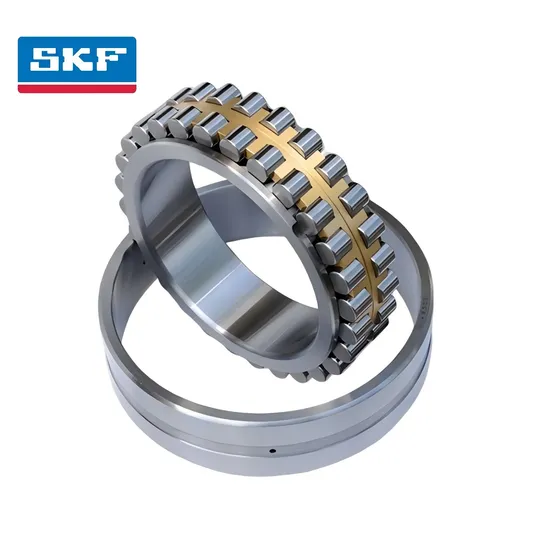
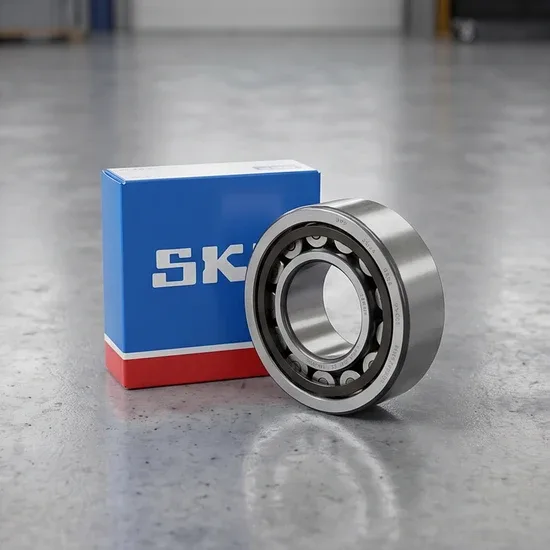


Description
Traceable Channel Sourcing — Every SKF NN3024KTN9/SPVR521 unit ships with a Certificate of Conformity tied to its production batch, backed by authorized distributor paperwork for import compliance.
Technical Specifications
| Parameter | Value |
|---|---|
| Designation | SKF NN3024KTN9/SPVR521 |
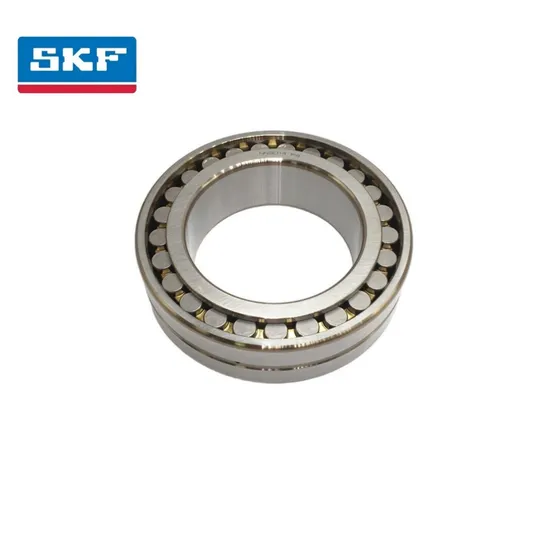
| Bearing Type | Double Row Cylindrical Roller Bearing |
| Bore Diameter (d) | 120 mm |
| Outside Diameter (D) | 180 mm |
| Width (B) | 46 mm |
| Dynamic Load Rating (C) | 229 kN |
| Static Load Rating (C₀) | 390 kN |
| Limiting Speed (Grease) | 4800 r/min |
| Limiting Speed (Oil Mist) | 5300 r/min |
| Weight | 4.05 kg |
| Cage Material | PA66 (Glass Fiber Reinforced Polyamide 6,6) |
| Seal or Shield Type | Open |
| Precision Class | SP (Super Precision) |
| Bore Type | Tapered (1:12) |
| Arrangement | Double Row |
| Number of Rows | 2 |
| Origin | China |
The VR521 suffix appears in SKF’s designation system for super-precision cylindrical roller bearings but requires confirmation against the manufacturer catalog for its exact meaning on this variant.
Application Suitability
| Industry | Typical Applications |
|---|---|
| Machine Tool Manufacturing | CNC lathe main spindle rear support, grinding wheel headstock spindle |
| Precision Industrial Equipment | High-speed rotary table indexing drive, optical inspection stage |
| OEM Compact Machinery | Compact spindle cartridge for PCB drilling heads |
What a Suffix Oversight Costs on a 15,000 RPM Spindle
Cage material and precision class must be verified as a matched set, not treated as interchangeable options on a purchase order.
A procurement engineer in Riyadh once approved a substitute bearing that matched the base NN 3024 number but carried a brass cage instead of the specified TN9 polyamide cage. The heavier cage created rotor imbalance during high-speed spindle commissioning, destroying the test rig’s housing in under ten minutes. Cross-reference errors like this happen constantly when buyers treat suffix letters as optional rather than load-bearing design decisions [NEED_CITE: cross-reference substitution errors in precision bearing procurement]. The SKF NN3024KTN9/SPVR521 Double Row Cylindrical Roller Bearing demands suffix-level matching on cage material, precision class, and bore taper before any brand interchange can be considered safe.
How the SKF NN3024KTN9/SPVR521 Double Row Cylindrical Roller Bearing Fits Spindle Duty
Machine tool spindles demand high radial rigidity with minimal thermal growth, and this bearing’s double row cylindrical geometry delivers exactly that. The tapered bore allows direct mounting onto a 1:12 journal, eliminating adapter sleeve stack-up that would otherwise introduce concentricity error into the spindle assembly. The SP precision class restricts running accuracy to ISO class 5 tolerances, keeping radial runout within the tight envelope that precision grinding and turning operations require. We typically walk through the OEM spindle drawing with the buyer’s maintenance team to confirm the journal taper angle and required drive-in distance before the order is placed.
Thermal Growth, Lubrication, and Speed Envelope
Spindle applications subject this bearing to sustained radial loads at speeds approaching the limiting threshold, where cage material and lubrication method become inseparable from bearing life. Oil mist or oil-air lubrication is standard at the upper speed range, and the open design permits external lubricant delivery without seal friction generating parasitic heat. Ambient temperature in the spindle housing often reaches levels that push standard grease past its thermal ceiling, making the PA66 cage’s thermal stability a critical factor. Mounting fit on the tapered journal must account for residual internal clearance after drive-in; over-tightening eliminates the radial play needed for thermal expansion and causes binding within the first operating hour [NEED_CITE: tapered bore cylindrical roller bearing mounting procedures per ISO standards].
Decoding the Specs That Define Performance
The TN9 cage is injection-molded glass fiber reinforced polyamide 6,6, chosen for its low mass and high fatigue resistance at elevated speeds where brass cages would generate destructive imbalance forces. The SP precision designation places this bearing at ISO tolerance class 5 running accuracy, a tier above standard P6 and essential for applications where spindle nose runout directly translates to part surface finish defects. The tapered bore (K suffix, 1:12 taper) is not merely a mounting convenience — it enables fine radial clearance adjustment by controlling the axial drive-in distance on the tapered shaft journal. The double row configuration provides radial load capacity that significantly exceeds a single-row design in the same envelope dimensions, which matters when the spindle must resist heavy radial cutting forces without deflection. Fatigue load limit sits well below the dynamic rating, reflecting the design emphasis on sustained radial loading rather than shock or axial thrust.
The Downtime Math Nobody Quotes in Advance
Correct sourcing with verifiable documentation prevents the cascade of costs that follow a counterfeit or mis-specified precision bearing. A cage material swap that goes unnoticed until commissioning can scrap an entire spindle assembly, not just the bearing itself. ISO 15243 classifies premature failures by mode, and a significant share of field returns in precision applications trace back to clearance mismatch or incorrect cage substitution rather than manufacturing defects [NEED_CITE: bearing failure mode classification per ISO 15243]. Unplanned downtime on a production CNC lathe or grinding center carries costs that dwarf the bearing’s purchase price many times over, yet procurement decisions often still hinge on unit price alone.
Why Precision Buyers Route Orders Through Our Desk
Every unit we supply enters through authorized distributor channels with batch-level traceability intact from factory gate to shipping crate. Our cross-reference database aligns bore taper, cage material, and precision class simultaneously — not just the base model number — so substituting NSK or FAG equivalents never introduces a hidden mismatch. We provide QR code verification guidance through the SKF official app so your receiving team can authenticate packaging and product markings before the bearing leaves the inspection bench. Country-of-origin documentation and HS code support accompany every export shipment, eliminating customs delays that typically plague industrial imports into Middle Eastern and Central Asian markets. Engineering selection support is included when the application involves unusual speed or thermal conditions that fall outside standard catalog guidance.
Documentation & Authenticity
- Supplier Certificate of Conformity with production batch and lot traceability tied to each SKF NN3024KTN9/SPVR521 unit
- Third-party dimensional and runout inspection report confirming SP-class running accuracy before shipment
- QR code verification pathway via SKF official mobile app for packaging and product marking authentication
- Material certificate documenting bearing steel grade and heat treatment compliance
- Country-of-origin certificate and HS code documentation prepared for import clearance in destination markets
Storage, Handling & Mounting
- Retain the factory-sealed packaging on this open-type bearing until the moment of mounting; early exposure to workshop humidity risks surface corrosion on the precision-ground raceways
- Handle with clean lint-free gloves to prevent fingerprint acids from etching the SP-class finished surfaces before the bearing enters service
- Mounting on the 1:12 tapered journal requires controlled axial drive-in with residual clearance measured by feeler gauge or dial indicator to prevent thermal binding
- Store horizontally in a temperature-stable environment away from direct sunlight, which degrades the PA66 cage material over extended warehouse periods
- Coordinate external lubrication system readiness before installation, as the open design provides no built-in contamination barrier once the spindle is assembled
Request a Technical Review Before Ordering
Share your spindle drawing or OEM equipment number so we can verify the tapered bore fit, required precision class, and cage material match against your specific operating conditions. If you are evaluating a cross-brand substitution, send us the competing quote and we will return a line-by-line suffix comparison confirming whether the alternative is genuinely interchangeable. Confirm batch availability and documentation package contents by reaching out with your project timeline.
Frequently Asked Questions
Q: How do I verify that an SKF NN3024KTN9/SPVR521 unit is genuine upon delivery?
A: Scan the QR code on the product packaging using the SKF official mobile application, which traces the unit back through authorized distribution records. Cross-check the physical markings on the bearing ring against the Certificate of Conformity batch number included in your documentation package.
Q: Can I substitute a different brand if the base number NN 3024 matches?
A: Base number matching is insufficient. The K bore taper, TN9 cage material, and SP precision class must all be present on the substitute, and the cross-brand equivalent must be verified for identical internal geometry and running accuracy tolerances before substitution is approved.
Q: What does the SP precision class actually guarantee compared to standard grades?
A: SP corresponds to ISO tolerance class 5 running accuracy, providing tighter dimensional and geometrical tolerances than P6 or P0 grades. This translates directly to lower radial runout at the spindle nose, which is critical for surface finish quality in precision machining operations.
Q: What is the correct mounting procedure for the tapered bore on this bearing?
A: The 1:12 tapered bore requires controlled axial drive-in on a matching tapered journal. The drive-in distance determines the residual internal clearance and must be verified by measurement to prevent both excessive play and thermal binding during operation.
Q: What lubrication method is appropriate for high-speed spindle use?
A: Oil mist or oil-air lubrication systems are typically required at speeds approaching the oil-mist limiting speed. The open design permits direct external lubricant delivery, and the lubrication system must be operational before the spindle is run under load.
Secure Your Spindle Bearing with Verified Documentation
Send us your OEM equipment number or spindle parameters — bore journal taper angle, operating speed range, and required radial runout tolerance — and we will return a matched specification review with batch availability and lead time.