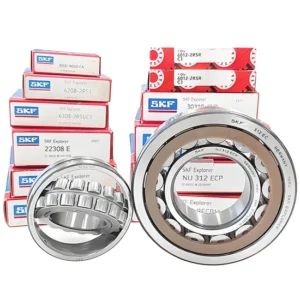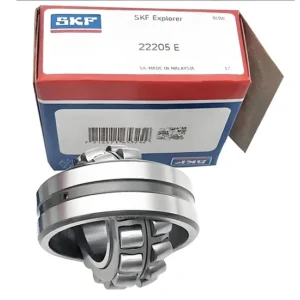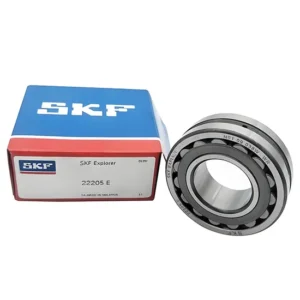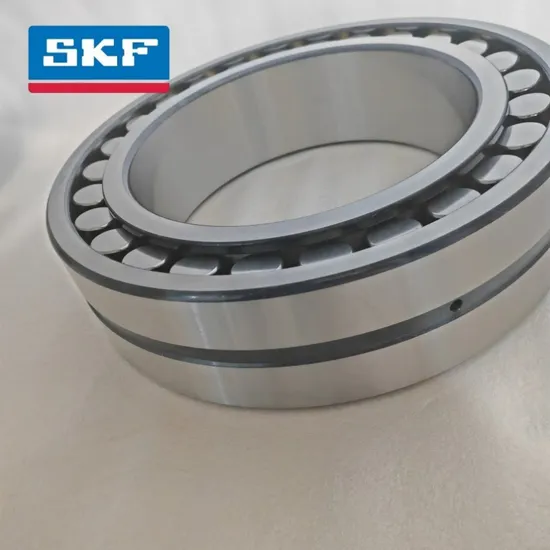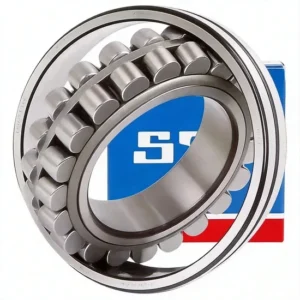
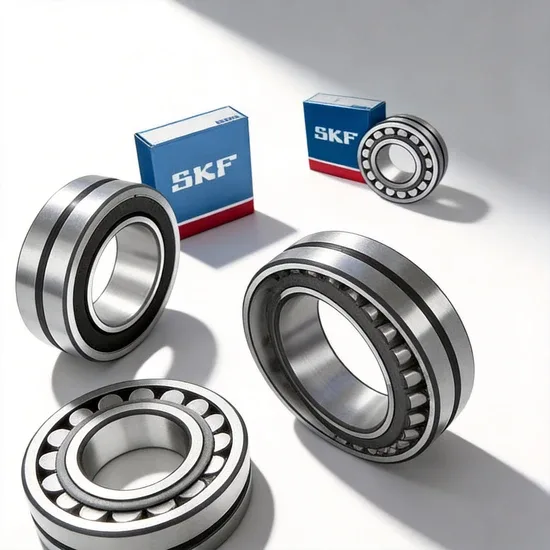
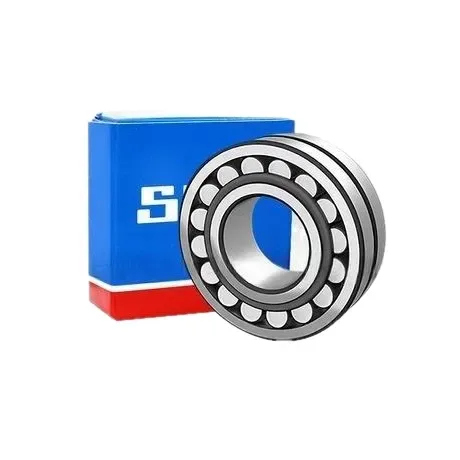

Description
Authorized Channel Sourcing — every 22316E spherical roller bearing ships with batch-linked traceability paperwork back to the manufacturer’s production facility.
Technical Specifications
| Parameter | Value |
|---|---|
| Designation | 22316E Spherical Roller Bearing |
| Bearing Type | Spherical Roller Bearing |
| Bore Diameter (d) | 80 mm |
| Outside Diameter (D) | 170 mm |
| Width (B) | 58 mm |
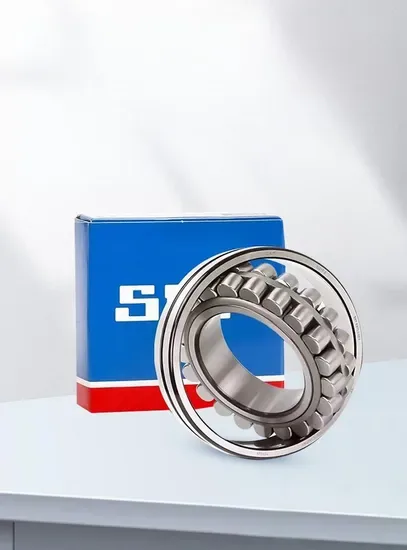
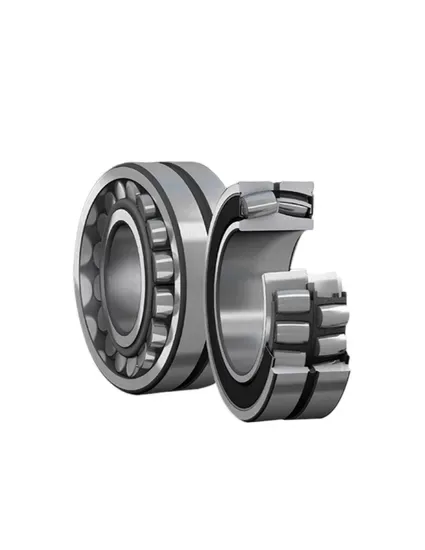
| Internal Design | E — reinforced internal geometry for increased load capacity |
| Number of Rows | Two |
| Bore Type | Cylindrical |
| Cage Material | To be confirmed at inquiry |
| Clearance Class | To be confirmed at inquiry |
| Seal or Shield Type | Open |
| Precision Class | Standard |
Cage material, clearance class, and specific brand variant depend on the selected manufacturer and must be confirmed against the brand catalog at the time of order.
Application Suitability
| Industry | Typical Applications |
|---|---|
| Mining & Crushing | Crusher eccentric shaft, jaw crusher pitman |
| Steel & Metallurgy | Continuous caster guide rolls, roll table bearings |
| Pulp & Paper | Paper machine press section, dryer cylinder journals |
| Material Handling | Vibrating screen side plate, feeder drive shafts |
What the E Suffix Actually Does on a Vibrating Screen
Reinforced roller geometry inside the 22316E carries heavier shock loads than a standard 22316 design without the suffix.
I watched a quarry replace vibrating screen bearings twice in one season because someone matched the base 22316 number but ordered a non-E variant. The screen ran 900+ RPM with constant impact from aggregate. Within weeks, the inner ring raceway showed spalling. The E internal design shifts load distribution across a larger roller-to-raceway contact area, which matters when the screen frame is flexing under several tons of material per hour [NEED_CITE: spherical roller bearing E suffix load capacity versus standard design]. Mismatches like this are a significant share of premature failures we see on sites that treat the suffix as optional.
How the 22316E Meets Crusher and Screen Demands
Crushers and vibrating screens subject bearings to combined radial and axial loads with continuous shock peaks. The 22316E spherical roller bearing handles that through its self-aligning capability, which absorbs minor shaft deflection and housing misalignment without edge-loading the rollers. The 80 mm bore and 170 mm outside diameter sit in a common envelope shared across major brands, so replacement sourcing is straightforward when cross-referenced correctly. We match clearance, cage type, and precision grade across SKF, NSK, FAG, TIMKEN, NTN, and KOYO — not just the base digits — so the replacement drops in without field surprises.
Load, Speed, and Contamination Realities
These bearings operate under predominantly radial loads with moderate axial components from shaft misalignment or belt tension. Vibrating screens run at sustained rotational speeds with continuous centrifugal force on the cage, while crusher eccentrics see repeated shock pulses. Ambient temperatures near heat sources can push the inner ring to expand, making clearance selection critical — standard CN clearance risks thermal binding where C3 or C4 would accommodate growth. Contamination from dust and slurry demands attention to housing seals and re-greasing intervals, since the bearing itself ships open [NEED_CITE: contamination effect on spherical roller bearing fatigue life]. Installation on cylindrical bores typically uses induction heating to expand the inner ring, and correct fit tolerance prevents creep on the shaft journal.
Inside the 80×170×58 Envelope
The 58 mm width gives this series its high load capacity relative to narrower spherical roller variants. The E suffix indicates a reinforced internal design — optimized roller profile and cage geometry that increases the number and size of rolling elements, improving dynamic load rating and extending calculated L10 life under equivalent loading. The open configuration means lubrication flows through the bearing freely, which is essential in vibrating screens where oil mist or grease purging flushes out particle contamination. Without a cage material stamp, buyers should verify whether the bearing uses a machined brass cage (favored for high-vibration, high-shock service) or a pressed steel cage (lighter, suitable for moderate conditions). Clearance class directly determines whether the bearing survives the thermal gradient between a hot shaft and a cooler housing.
What Wrong Sourcing Decisions Really Cost
A bearing that matches on the base 22316 number but ships with incorrect clearance or an unsuitable cage material can fail within weeks of installation. ISO 15243 classifies the resulting damage patterns — spalling, cage fracture, thermal discoloration — each pointing back to a selection or sourcing error [NEED_CITE: bearing failure mode classification per ISO 15243]. Unplanned downtime on a crusher or screen costs far more in lost production than the price difference between a verified 22316E and a cheaper substitute. Counterfeit bearings with cloned markings and soft inner rings pass visual checks but collapse under real load, sometimes taking the shaft and housing with them.
How We Protect Your Procurement
Every 22316E we source moves through authorized distributor channels, so the paperwork traces back to the manufacturer’s production facilities rather than a trading desk. Our cross-reference process aligns clearance class, cage material, and precision grade across all six brands we cover — SKF, NSK, FAG, TIMKEN, NTN, and KOYO — before we present the interchange to you. We provide QR code verification pathways through brand official apps, so your receiving team can authenticate before the bearing leaves the crate. Country-of-origin documentation and HS code data ship with each order for customs clearance. If the application involves unusual vibration amplitude, temperature, or loading, we review the selection against the operating parameters before the quote goes out.
Documentation & Authenticity
- Supplier Certificate of Conformity linked to specific batch and lot numbers for full material traceability
- Third-party dimensional inspection report verifying bore, outside diameter, and width tolerances against spec
- Country-of-origin certificate supporting import compliance and buyer-side verification requirements
- QR code scan verification through the brand official app confirming authentic 22316E designation and production origin
- Material certificates documenting steel grade and heat treatment compliance for the bearing rings and rollers
Storage, Handling & Mounting
- Keep the 22316E in sealed original packaging until the day of mounting to prevent corrosion on the open raceways, especially in humid storage areas near crusher or mill sites
- Use clean cotton or nitrile gloves when handling the bearing — skin moisture on the 170 mm outer ring surface initiates contact corrosion that shortens service life
- Mount using induction heating for the 80 mm cylindrical bore inner ring; heat to the recommended temperature range and install promptly before contraction compromises the shaft fit
- Re-lubricate immediately after installation since this open bearing has no integrated seal — the housing seal and grease purging schedule become your contamination defense
- Store horizontally if stacking is necessary to prevent brinelling on the roller-to-raceway contact points under the 58 mm wide bearing’s own weight
Start the 22316E Technical Review
Share your operating parameters — load, speed, temperature, vibration amplitude, and housing details — so we can confirm the correct clearance class and cage material for your application. If you have an OEM equipment number, we can run a full cross-reference check across brands and return an alignment-verified interchange. Reach out to request the documentation package and confirm current batch availability and lead time for the 22316E spherical roller bearing supplier you need.
Frequently Asked Questions
Q: How do I verify that a cross-reference for the 22316E is truly equivalent?
A: Base number matching is not enough. Confirm that the replacement carries the same E reinforced internal design, identical clearance class (CN, C3, or C4), the same cage material (brass or pressed steel), and equivalent precision grade. Our cross-reference check covers all of these parameters across SKF, NSK, FAG, TIMKEN, NTN, and KOYO before presenting the interchange.
Q: What does the E suffix mean on this spherical roller bearing?
A: The E suffix indicates a reinforced internal design with optimized roller geometry and cage configuration. This increases the bearing’s load-carrying capacity and extends calculated fatigue life compared to a standard 22316 without the E designation — important in high-shock applications like crushers and vibrating screens.
Q: How can I confirm bearing authenticity and avoid counterfeits?
A: Genuine bearings carry traceable batch markings and can be verified through the brand’s official app via QR code. We source exclusively through authorized distributor channels and provide Certificate of Conformity documentation with every shipment. Counterfeit bearings often show inconsistencies in marking quality, weight, or packaging that our pre-shipment inspection catches.
Q: Which clearance class should I choose for high-temperature vibrating screen service?
A: When the shaft runs hotter than the housing — common near heat sources or under heavy friction — thermal expansion reduces internal clearance. C3 or C4 clearance compensates for this, preventing thermal binding and cage seizure. Standard CN clearance is suitable only when temperature differentials remain minimal.
Q: What cage material options are available, and how do they affect performance?
A: Machined brass cages handle high-vibration, high-shock environments typical of crushers and screens. Pressed steel cages are lighter and suit moderate-duty conditions. The cage choice directly affects the bearing’s ability to maintain roller spacing under vibration, so it must align with your actual operating profile.
Get Your 22316E Quotation with Full Documentation
Send us your application parameters or OEM equipment number, and we will return a verified cross-reference with clearance, cage, and precision alignment plus current lead time.