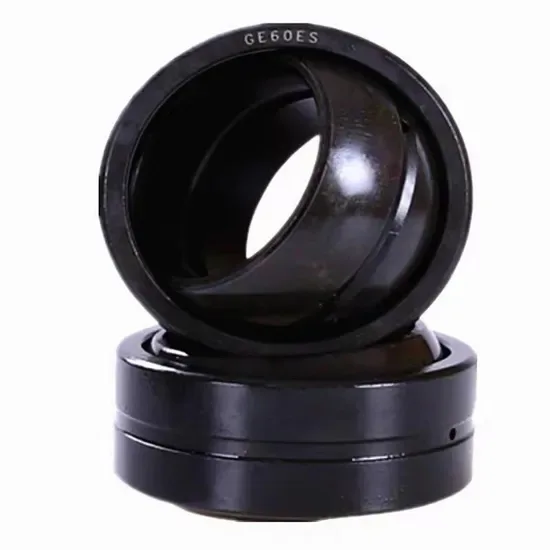
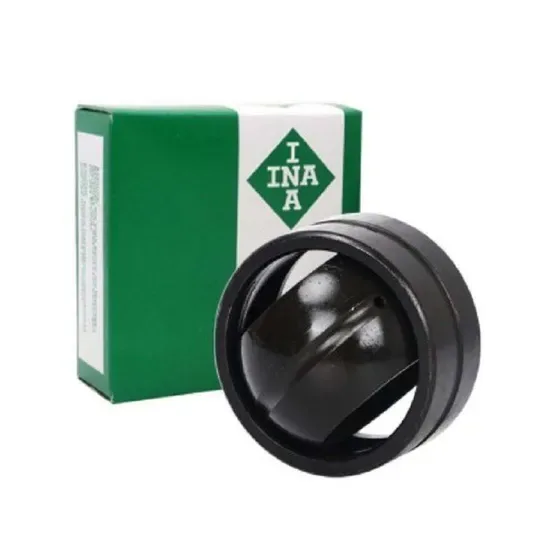


Description
Authorized Channel Sourcing — Batch traceability and conformity documentation accompany every GE530-DO shipment from verified distributor networks.
Technical Specifications
| Parameter | Value |
|---|---|
| Designation | GE530-DO (Generic) |
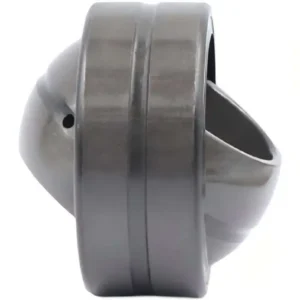
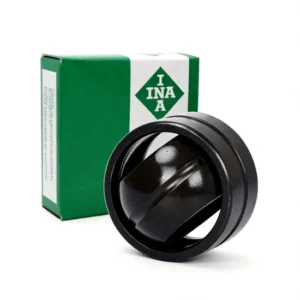
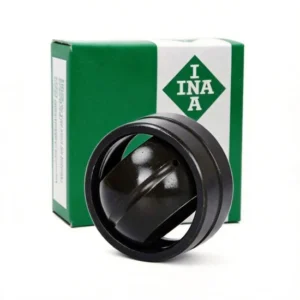
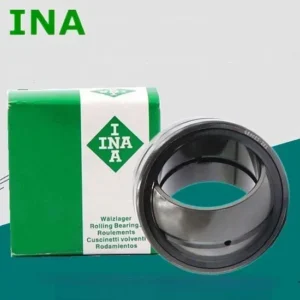
| Bearing Type | Spherical Plain Bearing |
| Bore Diameter (d) | 530 mm |
| Outside Diameter (D) | 710 mm |
| Ball Diameter | 620 mm |
| Weight | 289.400 kg |
| Ball Material | Bearing Steel |
| Precision Class | P0 |
| Origin | China |
The suffix DO listed for this designation requires confirmation against the manufacturer’s current catalog before final procurement — verify sliding surface type and lubrication features with the supplier.
Application Suitability
| Industry | Typical Applications |
|---|---|
| Mining and Bulk Handling | Stacker reclaimer luffing joints, boom pivot bearings |
| Material Handling | Heavy-duty slewing joints, radial load pivoting assemblies |
| Industrial Machinery | Large-bore oscillating joints under sustained radial loads |
What Happens When the Sliding Pair Is Wrong on a 530 mm Bore Joint
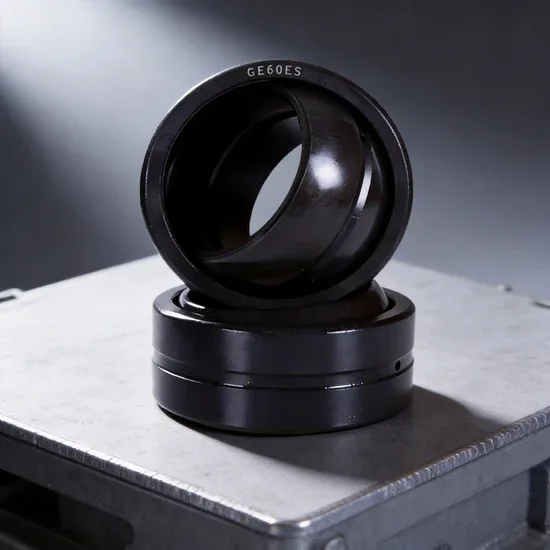
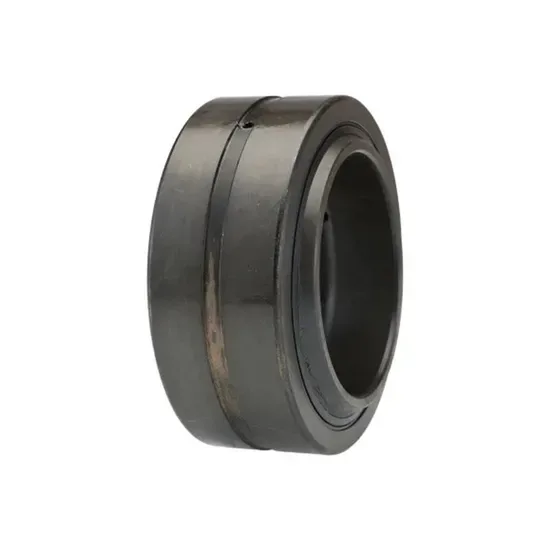
A steel-on-steel GE530-DO spherical plain bearing 530x710mm steel on steel will survive heavy oscillation where a PTFE-lined substitute extrudes and seizes within months.
Years ago, a cement plant called me because their stacker reclaimer boom dropped mid-shift. The luffing joint had seized — someone had quietly substituted a PTFE-lined spherical plain bearing for the specified steel-on-steel type. Under heavy oscillation at elevated ambient temperatures, the liner extruded out of the contact zone. A 530 mm bore joint is not a place for undocumented substitutions. That kind of failure shuts down the entire material handling circuit until the boom is lowered safely and the joint rebuilt. [NEED_CITE: spherical plain bearing failure modes under heavy oscillation and elevated temperature]
How This Bearing Fits the Stacker Reclaimer Load Profile
The GE530-DO spherical plain bearing 530x710mm steel on steel carries the kind of slow, heavy oscillating loads that define bulk handling pivots. In a stacker reclaimer luffing joint, the bearing accommodates angular misalignment while sustaining radial forces from the boom weight and material load. Steel-on-steel sliding surfaces distribute contact pressure across a broad area, which matters when the joint cycles through partial arcs under varying tonnage. I’ve seen procurement teams focus on bore diameter and stop there — but the sliding pair, lubrication path, and load cycle all have to align for the joint to run past the first year of service.
Oscillating Load, Ambient Heat, and the Lubrication Question
Large-bore pivoting joints in mining and bulk handling operate in dust-laden, thermally stressful environments. Radial loads dominate the luffing joint, but shock loading occurs whenever the boom meets resistance — a packed chute, a dense material pocket. Ambient temperatures near conveyors and crushers regularly climb, which shortens grease life and accelerates wear on any sliding contact surface. Re-lubrication intervals must match the actual oscillation frequency and ambient conditions, not a generic schedule. [NEED_CITE: lubrication interval adjustment for oscillating bearings in high-temperature industrial environments] Open spherical plain bearings depend entirely on the external sealing and re-greasing discipline of the installation — miss a cycle and the sliding surfaces score.
Inside the Steel-on-Steel Contact Design
The bearing steel used for both inner and outer rings defines how this joint handles load. Unlike PTFE-lined alternatives that rely on a thin polymer layer to reduce friction, steel-on-steel contact pairs can carry substantially higher static and dynamic loads because the full ring cross-section shares the stress. P0 precision meets standard ISO tolerance requirements for general industrial spherical plain bearings, which is appropriate for luffing joints where running accuracy is secondary to load capacity and shock resistance. The 530 mm bore and 710 mm OD place this bearing firmly in the heavy-duty category — dimensions that demand careful handling during installation and proper housing fit to avoid distortion under load. The 289 kg weight alone means this joint requires crane support and controlled alignment during mounting.
The Hidden Cost of an Undocumented Substitution
Correct selection paired with traceable sourcing keeps a stacker reclaimer running through its planned maintenance windows. Wrong sliding pair selection — swapping steel-on-steel for PTFE-lined without engineering review — leads to liner extrusion and unplanned downtime that idles upstream and downstream equipment simultaneously. Insufficient re-lubrication on steel-on-steel surfaces produces scoring that progresses to seizure, sometimes damaging the housing bore in the process. Counterfeit bearings with soft inner rings and cloned markings pass casual visual inspection but fail under load because the material hardness is nowhere near specification. ISO 15243 classifies these outcomes under distinct failure categories, and each one traces back to a procurement decision made before the bearing ever reached the site. [NEED_CITE: bearing failure classification per ISO 15243 and cost of unplanned downtime in bulk handling]
What We Bring to the Table on a 530 mm Bore Inquiry
Every GE530-DO we source ships with a Certificate of Conformity and batch traceability from authorized distributor channels — not from unverified middlemen who cannot answer questions about the sliding pair. We cross-reference bore, OD, width, and clearance across SKF, FAG, NTN, and other major brands so procurement teams can substitute with confidence when lead times force a change. Origin documentation accompanies each shipment for import compliance, which matters when customs in the destination country demand proof of manufacturing origin. Material certificates confirm bearing steel grade for the rings. Third-party dimensional inspection reports are available before dispatch so you can verify fit before the bearing crosses an ocean.
Documentation & Authenticity
- Supplier Certificate of Conformity tied to the GE530-DO batch and lot number for full procurement traceability
- Material certificate confirming bearing steel grade for inner ring, outer ring, and ball element
- Third-party dimensional inspection report covering bore, OD, and ball diameter before shipment
- Country-of-origin documentation prepared for customs clearance in destination markets
- HS code and import compliance support included with the shipping documentation package
Storage, Handling & Mounting
- Keep the GE530-DO in its original protective wrapping until mounting — at 289 kg, surface damage from improper slinging is a real risk during warehouse moves
- Store horizontally on a flat, supported surface to prevent outer ring distortion; a bearing of this bore diameter is susceptible to ovality if left standing on edge
- Apply clean grease to the steel-on-steel sliding surfaces immediately before installation if the bearing has been in storage beyond the manufacturer’s recommended shelf life
- Use controlled lifting equipment rated for the 289.4 kg weight with soft slings to protect the OD surface during housing insertion
- Verify housing bore and shaft fit dimensions before mounting — P0 precision tolerances require proper interference or clearance fits to avoid joint binding under load
Start Your GE530-DO Specification Review
Share your luffing joint load parameters, oscillation frequency, and ambient operating conditions so we can confirm the steel-on-steel configuration suits your application. Provide the OEM equipment number if you are replacing an existing bearing — we will run the cross-reference and flag any suffix discrepancies before quoting. Request the full documentation package with your inquiry so you have the COC, material certificates, and origin paperwork ready for your compliance team.
Frequently Asked Questions
Q: How do I confirm the GE530-DO is the correct sliding surface type for my application?
A: Confirm the load type, oscillation frequency, and ambient temperature range with your engineering team. Steel-on-steel suits heavy radial loads with slow oscillation; if your application involves higher speeds or lighter loads, a PTFE-lined alternative may be specified by the OEM. We provide sliding pair verification against the manufacturer catalog before confirming the order.
Q: What documentation ships with the bearing for import compliance?
A: Each GE530-DO ships with a Certificate of Conformity, material certificate, dimensional inspection report, batch traceability, and country-of-origin documentation. HS code support is included for customs clearance in your destination country.
Q: How do I cross-reference this bearing against other brands?
A: We match bore diameter, outside diameter, width, sliding surface type, and precision class across SKF, FAG, NTN, TIMKEN, and other major brands. Base number matching alone is not sufficient — the sliding pair and lubrication features must align for the replacement to function correctly in your joint.
Q: What are the re-lubrication requirements for steel-on-steel spherical plain bearings in bulk handling?
A: Re-lubrication intervals depend on oscillation frequency, load magnitude, ambient temperature, and dust exposure. We recommend consulting the OEM maintenance manual for the specific equipment and adjusting intervals based on grease condition monitoring at scheduled inspections.
Q: Can I get a dimensional inspection before shipment?
A: Yes. Third-party dimensional inspection covering bore, OD, ball diameter, and width is available before dispatch. This confirms fit against your housing and shaft specifications before the bearing leaves our facility.
Confirm Your Stacker Reclaimer Joint Specification
Send your application parameters or OEM equipment number and we will return a cross-reference review with full documentation availability.
[result]
Authorized Channel Sourcing — Batch traceability and conformity documentation accompany every GE530-DO shipment from verified distributor networks.
Technical Specifications
| Parameter | Value |
|---|---|
| Designation | GE530-DO (Generic) |
| Bearing Type | Spherical Plain Bearing |
| Bore Diameter (d) | 530 mm |
| Outside Diameter (D) | 710 mm |
| Ball Diameter | 620 mm |
| Weight | 289.400 kg |
| Ball Material | Bearing Steel |
| Precision Class | P0 |
| Origin | China |
The suffix DO listed for this designation requires confirmation against the manufacturer’s current catalog before final procurement — verify sliding surface type and lubrication features with the supplier.
Application Suitability
| Industry | Typical Applications |
|---|---|
| Mining and Bulk Handling | Stacker reclaimer luffing joints, boom pivot bearings |
| Material Handling | Heavy-duty slewing joints, radial load pivoting assemblies |
| Industrial Machinery | Large-bore oscillating joints under sustained radial loads |
What Happens When the Sliding Pair Is Wrong on a 530 mm Bore Joint
A steel-on-steel GE530-DO spherical plain bearing 530x710mm steel on steel will survive heavy oscillation where a PTFE-lined substitute extrudes and seizes within months.
Years ago, a cement plant called me because their stacker reclaimer boom dropped mid-shift. The luffing joint had seized — someone had quietly substituted a PTFE-lined spherical plain bearing for the specified steel-on-steel type. Under heavy oscillation at elevated ambient temperatures, the liner extruded out of the contact zone. A 530 mm bore joint is not a place for undocumented substitutions. That kind of failure shuts down the entire material handling circuit until the boom is lowered safely and the joint rebuilt. [NEED_CITE: spherical plain bearing failure modes under heavy oscillation and elevated temperature]
How This Bearing Fits the Stacker Reclaimer Load Profile
The GE530-DO spherical plain bearing 530x710mm steel on steel carries the kind of slow, heavy oscillating loads that define bulk handling pivots. In a stacker reclaimer luffing joint, the bearing accommodates angular misalignment while sustaining radial forces from the boom weight and material load. Steel-on-steel sliding surfaces distribute contact pressure across a broad area, which matters when the joint cycles through partial arcs under varying tonnage. I’ve seen procurement teams focus on bore diameter and stop there — but the sliding pair, lubrication path, and load cycle all have to align for the joint to run past the first year of service.
Oscillating Load, Ambient Heat, and the Lubrication Question
Large-bore pivoting joints in mining and bulk handling operate in dust-laden, thermally stressful environments. Radial loads dominate the luffing joint, but shock loading occurs whenever the boom meets resistance — a packed chute, a dense material pocket. Ambient temperatures near conveyors and crushers regularly climb, which shortens grease life and accelerates wear on any sliding contact surface. Re-lubrication intervals must match the actual oscillation frequency and ambient conditions, not a generic schedule. [NEED_CITE: lubrication interval adjustment for oscillating bearings in high-temperature industrial environments] Open spherical plain bearings depend entirely on the external sealing and re-greasing discipline of the installation — miss a cycle and the sliding surfaces score.
Inside the Steel-on-Steel Contact Design
The bearing steel used for both inner and outer rings defines how this joint handles load. Unlike PTFE-lined alternatives that rely on a thin polymer layer to reduce friction, steel-on-steel contact pairs can carry substantially higher static and dynamic loads because the full ring cross-section shares the stress. P0 precision meets standard ISO tolerance requirements for general industrial spherical plain bearings, which is appropriate for luffing joints where running accuracy is secondary to load capacity and shock resistance. The 530 mm bore and 710 mm OD place this bearing firmly in the heavy-duty category — dimensions that demand careful handling during installation and proper housing fit to avoid distortion under load. The 289 kg weight alone means this joint requires crane support and controlled alignment during mounting.
The Hidden Cost of an Undocumented Substitution
Correct selection paired with traceable sourcing keeps a stacker reclaimer running through its planned maintenance windows. Wrong sliding pair selection — swapping steel-on-steel for PTFE-lined without engineering review — leads to liner extrusion and unplanned downtime that idles upstream and downstream equipment simultaneously. Insufficient re-lubrication on steel-on-steel surfaces produces scoring that progresses to seizure, sometimes damaging the housing bore in the process. Counterfeit bearings with soft inner rings and cloned markings pass casual visual inspection but fail under load because the material hardness is nowhere near specification. ISO 15243 classifies these outcomes under distinct failure categories, and each one traces back to a procurement decision made before the bearing ever reached the site. [NEED_CITE: bearing failure classification per ISO 15243 and cost of unplanned downtime in bulk handling]
What We Bring to the Table on a 530 mm Bore Inquiry
Every GE530-DO we source ships with a Certificate of Conformity and batch traceability from authorized distributor channels — not from unverified middlemen who cannot answer questions about the sliding pair. We cross-reference bore, OD, width, and clearance across SKF, FAG, NTN, and other major brands so procurement teams can substitute with confidence when lead times force a change. Origin documentation accompanies each shipment for import compliance, which matters when customs in the destination country demand proof of manufacturing origin. Material certificates confirm bearing steel grade for the rings. Third-party dimensional inspection reports are available before dispatch so you can verify fit before the bearing crosses an ocean.
Documentation & Authenticity
- Supplier Certificate of Conformity tied to the GE530-DO batch and lot number for full procurement traceability
- Material certificate confirming bearing steel grade for inner ring, outer ring, and ball element
- Third-party dimensional inspection report covering bore, OD, and ball diameter before shipment
- Country-of-origin documentation prepared for customs clearance in destination markets
- HS code and import compliance support included with the shipping documentation package
Storage, Handling & Mounting
- Keep the GE530-DO in its original protective wrapping until mounting — at 289 kg, surface damage from improper slinging is a real risk during warehouse moves
- Store horizontally on a flat, supported surface to prevent outer ring distortion; a bearing of this bore diameter is susceptible to ovality if left standing on edge
- Apply clean grease to the steel-on-steel sliding surfaces immediately before installation if the bearing has been in storage beyond the manufacturer’s recommended shelf life
- Use controlled lifting equipment rated for the 289.4 kg weight with soft slings to protect the OD surface during housing insertion
- Verify housing bore and shaft fit dimensions before mounting — P0 precision tolerances require proper interference or clearance fits to avoid joint binding under load
Start Your GE530-DO Specification Review
Share your luffing joint load parameters, oscillation frequency, and ambient operating conditions so we can confirm the steel-on-steel configuration suits your application. Provide the OEM equipment number if you are replacing an existing bearing — we will run the cross-reference and flag any suffix discrepancies before quoting. Request the full documentation package with your inquiry so you have the COC, material certificates, and origin paperwork ready for your compliance team.
Frequently Asked Questions
Q: How do I confirm the GE530-DO is the correct sliding surface type for my application?
A: Confirm the load type, oscillation frequency, and ambient temperature range with your engineering team. Steel-on-steel suits heavy radial loads with slow oscillation; if your application involves higher speeds or lighter loads, a PTFE-lined alternative may be specified by the OEM. We provide sliding pair verification against the manufacturer catalog before confirming the order.
Q: What documentation ships with the bearing for import compliance?
A: Each GE530-DO ships with a Certificate of Conformity, material certificate, dimensional inspection report, batch traceability, and country-of-origin documentation. HS code support is included for customs clearance in your destination country.
Q: How do I cross-reference this bearing against other brands?
A: We match bore diameter, outside diameter, width, sliding surface type, and precision class across SKF, FAG, NTN, TIMKEN, and other major brands. Base number matching alone is not sufficient — the sliding pair and lubrication features must align for the replacement to function correctly in your joint.
Q: What are the re-lubrication requirements for steel-on-steel spherical plain bearings in bulk handling?
A: Re-lubrication intervals depend on oscillation frequency, load magnitude, ambient temperature, and dust exposure. We recommend consulting the OEM maintenance manual for the specific equipment and adjusting intervals based on grease condition monitoring at scheduled inspections.
Q: Can I get a dimensional inspection before shipment?
A: Yes. Third-party dimensional inspection covering bore, OD, ball diameter, and width is available before dispatch. This confirms fit against your housing and shaft specifications before the bearing leaves our facility.
Confirm Your Stacker Reclaimer Joint Specification
Send your application parameters or OEM equipment number and we will return a cross-reference review with full documentation availability.