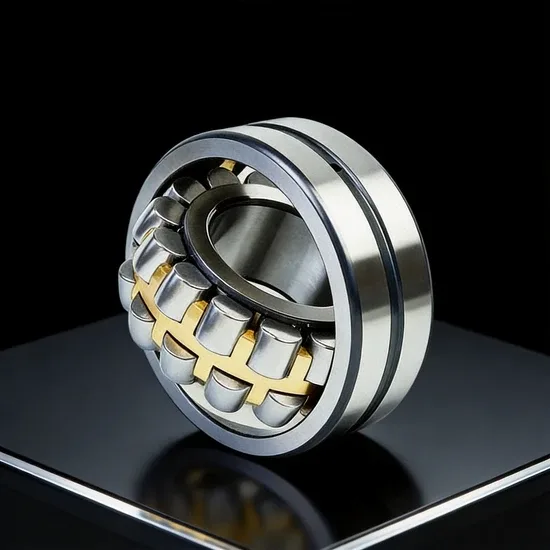


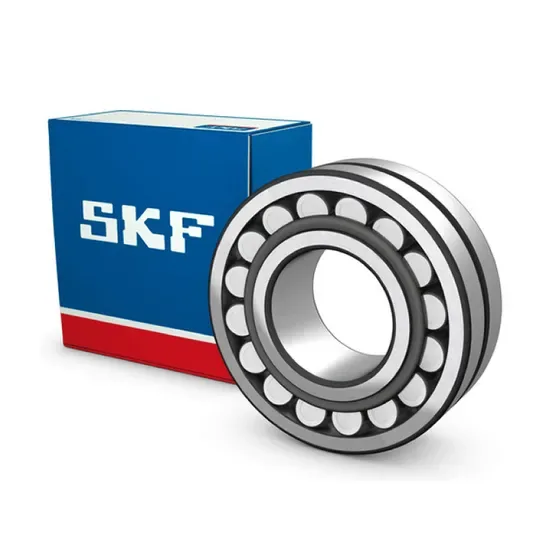
Description
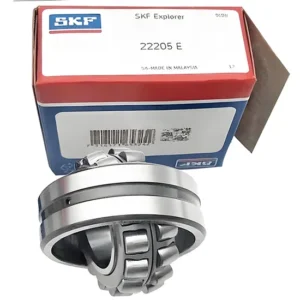
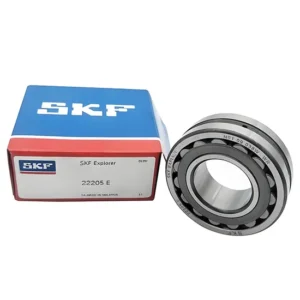
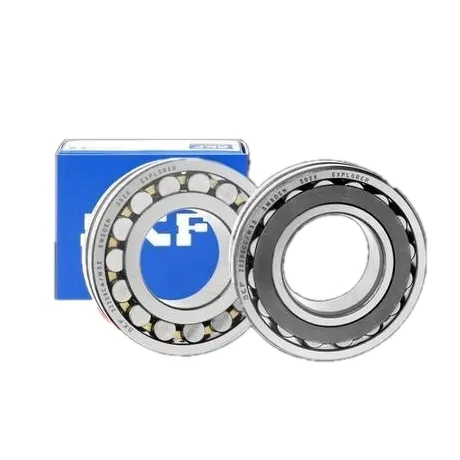
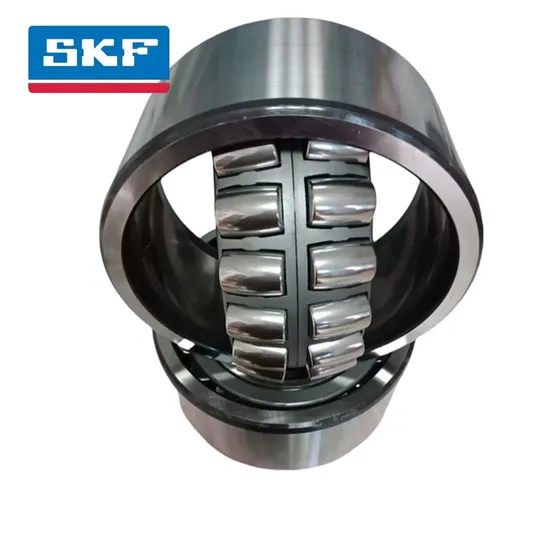
Authorized Sourcing Channels — Batch-traceable 21319E spherical roller bearings supplied with verifiable documentation from established manufacturer networks, ensuring origin clarity before shipment reaches your port.
Technical Specifications
| Parameter | Value |
|---|---|
| Designation | 21319E CC/W33 MB (generic) |
| Bearing Type | Spherical Roller Bearing |
| Bore Diameter (d) | 95mm |
| Width (B) | 45mm |
| Cage Material | Machined brass cage, inner ring centered (MB) / Pressed steel cage, inner ring centered (CC) |
| Internal Design | Optimized internal design (E suffix) |
| Lubrication Feature | Annular groove and three lubrication holes in outer ring (W33) |
| Clearance Class | Normal radial internal clearance (CN default) |
| Bore Type | Cylindrical |
| Number of Rows | Two |
| Standards | ISO 15 / ISO 281 / ISO 15243 |
Note: CC (pressed steel cage) and MB (machined brass cage) are distinct cage designations originating from different manufacturer conventions. Their simultaneous appearance in a single identifier is non-standard; the actual cage type fitted must be confirmed against the manufacturer catalog before ordering.
Application Suitability
| Industry | Typical Applications |
|---|---|
| Mining and crushing | Crusher eccentric shaft, vibrating screen exciter mechanism |
| Steel and metallurgy | Rolling mill guide roller, continuous caster segment roll |
| Industrial machinery | Paper machine dryer cylinder, industrial gearbox output shaft |
| Material handling | Heavy-duty conveyor pulley, bucket elevator drive |
What a Cage Material Mix-Up Costs on a Vibrating Screen
The difference between a CC pressed steel cage and an MB machined brass cage is not cosmetic — it determines whether the bearing survives continuous vibration or disintegrates within weeks.
I have stood next to vibrating screens in Gulf-region aggregate plants where the screen was down because somebody matched the base number 21319 perfectly but ignored the cage suffix entirely. The replacement bearing carried a pressed steel cage into an application that demanded the shock-absorbing mass and guidance stability of machined brass. Under continuous high-frequency vibration and heavy radial load, the lighter cage fatigued at the weld points, fragmented, and scored the raceway. The downtime cost far exceeded what a correct 21319E CC/W33 MB spherical roller bearing supplier would have charged for the right unit in the first place. Cross-reference errors like this are not rare — they are a significant share of preventable field failures [NEED_CITE: rolling bearing failure mode classification per ISO 15243].
How the Right Cage and Lubrication Groove Match the Application
When a vibrating screen or crusher eccentric demands sustained operation under shock loads and contamination, the machined brass cage (MB) in this 21319E bearing provides the inertia and structural continuity that pressed steel simply cannot match at this scale. The W33 annular groove with three lubrication holes in the outer ring ensures that fresh grease reaches the roller paths even when the bearing operates in orientations where gravity works against distribution. We have supplied this configuration to maintenance teams who previously burned through bearings every few months, only to discover that their OEM specified MB and W33 together for a reason — the brass cage tolerates the vibration spectrum while the lubrication groove extends relubrication intervals under dusty, high-temperature conditions typical of crushing and screening circuits.
Load, Speed, and Temperature Realities in Heavy Industry
Spherical roller bearings in crusher and vibrating screen service face combined radial and axial loading with frequent shock transients — not steady-state conditions that catalog ratings assume. The 21319E’s optimized internal geometry spreads contact stress across a larger roller-raceway interface, which matters when ambient temperatures regularly exceed 50°C in Gulf and Central Asian summer operations and thermal expansion begins consuming internal clearance. At these temperatures, grease oxidation accelerates, making the W33 lubrication feature essential rather than optional — it provides a reliable path for purging degraded grease and introducing fresh lubricant without dismounting. Installation practices matter equally: cylindrical bore bearings at this size range demand controlled induction heating to avoid thermal shock to the rings, and the fit tolerances on both shaft and housing must account for the operating temperature differential [NEED_CITE: bearing mounting practices and thermal expansion effects on clearance].
Decoding the Suffix Stack: E, CC, W33, and MB
The E suffix denotes an optimized internal design with larger or more rollers, improving load distribution and extending fatigue life under the heavy radial loads typical of this size class. The W33 suffix adds an annular groove and three lubrication holes to the outer ring — a feature that field maintenance crews rely on when relubrication intervals are measured in weeks rather than months. The CC designation, originating from SKF’s convention, specifies a pressed steel cage with a guide ring on the inner ring, designed for moderate-speed applications where weight savings matter. The MB designation, also from SKF’s system, specifies a machined brass cage centered on the inner ring — heavier, more resistant to vibration fatigue, and better suited to shock loading. Because these two cage designations address different operating profiles, specifying the correct one for your application is the single most consequential decision in this bearing’s selection process.
What Happens When Sourcing Decisions Ignore the Suffix Stack
Ordering a 21319 bearing by base number alone and accepting whatever cage or clearance arrives is a gamble with unplanned downtime as the stake. A CN clearance installed where C3 was specified will seize when thermal expansion closes the internal gap under load — the bearing locks solid, the shaft stops, and the production line halts until the unit is cut out and replaced. Counterfeit bearings with soft inner rings and cloned packaging pass casual visual inspection but fail catastrophically within operating hours, often damaging adjacent components. ISO 281 provides the framework for calculating rated bearing life, but that calculation assumes genuine materials, correct clearance, and proper cage selection — none of which are guaranteed when sourcing skips verification [NEED_CITE: ISO 281 bearing life calculation assumptions and material quality]. The hidden cost is never just the bearing; it is the lost production, the emergency freight, and the collateral damage to shafts and housings.
Why Procurement Engineers Verify the Supply Chain Before the Price
Every 21319E CC/W33 MB spherical roller bearing we ship traces back through authorized distributor channels with documentation that survives import scrutiny — not secondary market purchases with unverifiable provenance. Our cross-reference database aligns cage type, clearance class, and precision grade across SKF, FAG, NSK, NTN, TIMKEN, and KOYO designations, so substitution decisions are made with full suffix alignment rather than base-number hope. When a maintenance manager in a cement plant sends us an OEM equipment number, we return not just a part number but a verified interchange with cage and clearance confirmed. Material certificates confirming bearing steel grade accompany each shipment, and dimensional inspection reports verify ISO 15 tolerances before the bearing leaves our facility. Country-of-origin documentation is prepared proactively for import clearance, eliminating the customs delays that strand shipments at port.
Documentation & Authenticity
- Supplier Certificate of Conformity referencing batch and lot numbers for each 21319E bearing shipped
- Material certificate confirming GCr15 or 100Cr6 bearing steel grade with heat treatment traceability
- Dimensional inspection report verifying bore, OD, width, and runout against ISO 15 tolerances
- Country-of-origin certificate prepared for import documentation requirements in Middle East, African, and Latin American markets
- HS code classification and import compliance support included with shipping documentation
- QR code verification pathway through brand official apps for units sourced from participating manufacturers
Storage, Handling & Mounting
- Retain original sealed packaging until mounting; premature exposure risks contamination of the W33 lubrication groove with particulate matter that compromises initial grease distribution
- For the MB machined brass cage configuration, handle with clean gloves to prevent skin oils from initiating corrosion on the exposed cage surface before installation
- Induction heating to the manufacturer-specified temperature range is mandatory for this bore size; cold press-fitting risks ring fracture or cage deformation
- After mounting, verify that the W33 outer ring lubrication holes align with the housing grease inlet before securing the housing cover
- In vibrating screen and crusher applications, establish a relubrication schedule immediately after commissioning — the W33 groove is designed for active purging, not passive retention
- Store horizontally in original packaging if bearings will not be mounted within typical lead timeframes to prevent static deformation of the raceway under the roller set weight
Request a Verified Cross-Reference and Documentation Package
Share your application parameters — load spectrum, operating speed, ambient temperature range, and OEM equipment number — so we can confirm whether MB or CC is the correct cage selection for your installation. We will return a verified cross-reference across the six brands we cover, with clearance and cage suffixes aligned, along with available lead time and the complete documentation package your import process requires.
Frequently Asked Questions
Q: What is the practical difference between the CC pressed steel cage and the MB machined brass cage in a 21319E bearing?
A: The CC pressed steel cage is lighter and suitable for moderate-speed applications with steady loading. The MB machined brass cage carries more mass, providing superior guidance stability under vibration, shock loads, and frequent load reversals typical of crushers and vibrating screens. The correct choice depends on your specific operating conditions, not just the base bearing number.
Q: How do I verify that a cross-reference from another brand truly matches my 21319E CC/W33 MB specification?
A: Matching the base number 21319 is insufficient. The substitute must carry the same internal design optimization (E equivalent), the same cage type and centering method, and the same lubrication groove feature (W33 equivalent). Clearance class must also be aligned — substituting CN where C3 is required causes thermal seizure. We provide cross-reference verification across SKF, FAG, NSK, NTN, TIMKEN, and KOYO with all suffix parameters confirmed.
Q: What does the W33 suffix mean, and when is it necessary?
A: W33 indicates*outer ring. This feature is essential when the bearing operates in contaminated or high-temperature environments where regular relubrication purges degraded grease from the roller paths. In vibrating screen and crusher applications, W33 significantly extends service intervals compared to bearings without this feature.
Q: How can I distinguish genuine 21319E bearings from counterfeits before installation?
A: Genuine bearings carry verifiable batch and lot traceability, material certificates confirming bearing steel composition, and dimensional conformance to ISO 15 tolerances. Many manufacturers now provide QR code verification through official apps. Counterfeit units often exhibit soft inner rings, cloned packaging with printing inconsistencies, and absent or unverifiable documentation chains.
Q: What relubrication interval is appropriate for a 21319E with W33 in a vibrating screen application?
A: Relubrication intervals depend on operating temperature, contamination level, vibration intensity, and grease type. The W33 groove enables active purging of degraded grease, but the schedule must be established based on your specific site conditions and monitored through temperature and vibration trending rather than calendar dates alone.
Confirm Your 21319E Specification and Request Documentation
Send us your OEM equipment number or application parameters for a verified cross-reference, confirmed cage selection, and a complete documentation package with your next inquiry.